
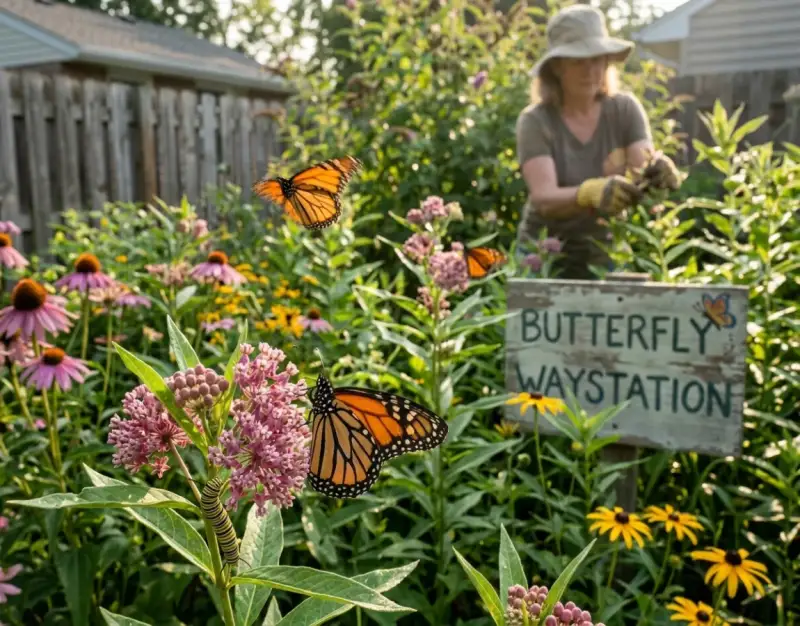
Every autumn, one of the planet’s most astonishing natural phenomena unfolds across the skies of North America: the multi-generational, 3,000-mile migration of the monarch butterfly (Danaus plexippus). Weighing less than a single gram, these delicate insects navigate complex thermal currents, mountain passes, and vast agricultural expanses to reach the high-altitude oyamel fir forests of central Mexico or the coastal pine groves of California. Yet over the past three decades, this iconic journey has been placed under existential threat. Habitat fragmentation, modern agricultural herbicide practices that eliminate native milkweed, urban sprawl, and climate instability have combined to drive eastern monarch populations down by more than 80 percent, while western monarch numbers have experienced even more dramatic declines. What was once an abundant ribbons-in-the-sky migration has turned into a desperate conservation challenge requiring immediate, landscape-level intervention.
In response to this ecological crisis, a transformative shift in conservation philosophy has emerged. Wildlife biology is no longer confined to distant national parks or wilderness preserves; it has moved directly into residential neighborhoods, suburban backyards, urban community gardens, and corporate green spaces. The establishment of dedicated butterfly waystations—certified micro-habitats engineered specifically to provide food, shelter, and breeding grounds for monarchs—represents a decentralized, grassroots solution to a continental problem. By transforming sterile turfgrass lawns into rich biological corridors, everyday citizens are actively restoring the ecological stepping stones that monarchs require to survive their epic journey. This human-led effort reflects a broader movement where local volunteers address overlooked community challenges—much like how volunteer builders construct physical mobility solutions in Building Wheelchair Ramps for Free: The Retired Carpenters Reclaiming Mobility for Seniors, home gardeners apply hands-on craft to build critical ecological infrastructure.
This comprehensive guide explores the mechanics of monarch conservation, examining the precise biological requirements of Danaus plexippus and delivering a step-by-step blueprint for designing, establishing, and managing a high-impact monarch waystation. Whether you control a quarter-acre suburban yard, a community garden plot, or a compact urban balcony, the principles detailed below will empower you to convert your space into a productive sanctuary for one of North America’s most vulnerable pollinator species.
Foundational Principles & Mechanics of Monarch Conservation
To construct an effective monarch waystation, one must first master the biological dynamics governing the monarch life cycle. Monarchs undergo complete metamorphosis across four distinct stages: egg, larva (caterpillar), pupa (chrysalis), and adult butterfly. Unlike generalist pollinators that can utilize a wide spectrum of plants for both reproduction and feeding, monarch caterpillars are obligate specialists. They can feed exclusively on plants within the milkweed family (genus Asclepias and select closely related genera). Milkweed leaves contain complex chemical compounds known as cardenolides (cardiac glycosides). As caterpillars consume milkweed foliage, they sequester these toxins within their tissue, conferring a bitter taste and toxic defense mechanism that deters avian and insect predators throughout their adult life.
The monarch annual lifecycle relies on multiple generations working in sequence. Spring heralds the departure of overwintering monarchs from Mexico and California as they journey northward. Generation 1 lays eggs on southern milkweed, producing larvae that mature into adult butterflies before continuing the push north. Generations 2 and 3 continue this northward expansion through the Midwest, Northeast, and Canada, living standard adult lifespans of two to six weeks focused entirely on mating and egg laying. However, Generation 4—born in late summer and early autumn—is fundamentally different. Triggered by shortening daylight, shifting sun angles, and temperature fluctuations, these individuals enter reproductive diapause. Rather than allocating energy to reproduction, they dedicate all nutritional intake to accumulating lipid (fat) reserves. This "super-generation" lives up to eight months, flying thousands of miles south to overwinter before starting the cycle anew the following spring.
Key Biological Insight: A monarch waystation must serve dual ecological functions. It must provide host plants (milkweed) for breeding generations in late spring and summer, and rich high-carbohydrate nectar sources for migrating generations in early to late autumn to supply the lipid energy reserves mandatory for long-distance flight and overwintering survival.
According to research guidelines established by Monarch Watch—the national organization governing waystation certification—an effective sanctuary must meet baseline spatial and floral criteria. A functional waystation requires a minimum contiguous or aggregate footprint of 135 square feet, receives at least six hours of direct sunlight daily, features at least 10 individual milkweed plants comprised of two or more native species, and incorporates a diverse sequence of nectar-producing herbaceous perennials blooming continuously across spring, summer, and autumn.
Step-by-Step Strategic Blueprint for Building a Monarch Waystation
1. Site Selection and Microclimate Optimization
Solar Exposure and Wind Dynamics
Monarchs are cold-blooded insects that depend entirely on external radiant heat to warm their flight muscles. Select an installation area that receives between 6 and 8 hours of unobstructed, direct sunlight daily. South- or southeast-facing site orientations provide optimal morning thermal energy, allowing butterflies to elevate their body temperatures above the required ~55°F (13°C) threshold early in the day. Because fragile butterfly wings are vulnerable to structural damage from high-velocity wind gusts, position the waystation against windbreaks such as native shrub borders, wooden privacy fencing, or structural walls. Ensure these windbreaks do not cast long shadows over core floral zones during peak midday sunlight.
Soil Chemistry and Micro-Relief
Analyze your soil chemistry before introducing plant stock. Most native milkweed species thrive in neutral to slightly acidic soil (pH 6.0 to 7.0), though specific native species adapt well to alkaline clay or sandy loam. Avoid synthetic fertilizers rich in high-nitrogen ratios; excess nitrogen encourages soft, overly lush vegetative growth that renders plants vulnerable to aphid infestations and reduces key defensive cardenolide concentrations. Introduce micro-relief—gentle topographic variations such as low mounds, rock swales, and shallow depressions—to mimic natural prairie micro-habitats and manage water retention across wet and dry micro-zones.
2. Native Milkweed Selection and Propagation Protocols
Regional Asclepias Taxa and Eco-Zoning
Success depends on choosing milkweed species native to your specific eco-region. Non-native species disrupt natural migratory patterns and harbor damaging pathogens. Select species suited to your location:
- Eastern & Midwestern Regions: Common Milkweed (Asclepias syriaca), Swamp Milkweed (Asclepias incarnata), and Butterfly Weed (Asclepias tuberosa).
- Western & Intermountain Regions: Showy Milkweed (Asclepias speciosa), Narrowleaf Milkweed (Asclepias fascicularis), and Horsetail Milkweed (Asclepias subverticillata).
- Southern & Coastal Regions: Aquatic Milkweed (Asclepias perennis) and Green Antelopehorn (Asclepias viridis).
Integrating at least two to three native milkweed species ensures varied leaf textures, blooming timelines, and moisture tolerances, providing dependable egg-laying sites throughout the season.
Seed Stratification, Germination, and Root Establishment
Native milkweed seeds exhibit physiological dormancy requiring cold, moist stratification to trigger germination. If starting from seed, mix seeds into damp sand or vermiculite, place them in a sealed plastic bag, and refrigerate at 34°F to 38°F (1°C to 3°C) for 30 to 60 days before sowing indoors in spring. Alternatively, practice winter sowing outdoors in ventilated containers. When buying nursery stock, choose plants with well-established root systems. Avoid plants treated with systemic neonicotinoid pesticides, which contaminate all plant tissue—including leaves, nectar, and pollen—and prove lethal to monarch larvae and adult butterflies.
3. Continuous Nectar Fueling Architectures
Seasonal Bloom Staggering (Spring to Autumn)
Adult monarchs require a continuous supply of floral nectar to maintain energy for flight, courtship, and egg production. Design your garden bed using a continuous bloom architecture that spans three distinct seasonal windows:
- Spring Window (May - June): Wild Lupine (Lupinus perennis), Golden Alexander (Zizia aurea), Blazing Star (Liatris spp.), and Wild Geranium (Geranium maculatum) fuel returning adults arriving from southern regions.
- Summer Window (July - August): Purple Coneflower (Echinacea purpurea), Black-Eyed Susan (Rudbeckia hirta), Wild Bergamot (Monarda fistulosa), and Joe-Pye Weed (Eutrochium purpureum) support peak breeding populations.
- Autumn Migration Window (September - October): New England Aster (Symphyotrichum novae-angliae), Seaside Goldenrod (Solidago sempervirens), Showy Goldenrod (Solidago speciosa), and Mistflower (Conoclinium coelestinum) deliver high-calorie nectar needed for autumn flight reserves.
Plant Architecture and Floral Morphology
Butterflies possess long, tubular proboscises optimized for sipping liquid nectar. Group flowering plants in dense, single-species clusters (minimum 3x3 foot drifts) rather than isolated individual specimens. Large, concentrated masses of floral color create visual radar signals that attract migrating monarchs flying high overhead. Select plants with flat composite heads (such as asters and coneflowers) or dense vertical spikes (such as blazing stars) that provide stable landing platforms for foraging butterflies.
4. Hydration, Basking, and Shelter Infrastructure
Mud Puddling and Mineral Provisioning
Adult monarchs cannot drink directly from open, deep water sources like deep birdbaths or ponds, which carry high risks of drowning. Instead, they obtain essential moisture, sodium, and micro-minerals through a behavior called "puddling." Construct a puddling station by setting a shallow ceramic saucer or metal tray at ground level. Fill it with coarse river sand, fine gravel, and clean composted leaf mold. Keep the medium consistently moist using non-chlorinated water. Adding a small pinch of unrefined sea salt or liquid kelp extract provides vital trace minerals that male monarchs transfer to females during mating to increase egg viability.
Thermal Basking Platforms and Windbreaks
Incorporate flat, dark-colored natural fieldstones or granite flagstones directly into the sunniest micro-zones of the waystation. These stones absorb solar heat rapidly, creating warm perches where monarchs can bask, raise their core body temperatures, and warm their flight muscles on cool mornings. Surround these basking rocks with medium-to-tall native ornamental grasses—such as Little Bluestem (Schizachyrium scoparium) or Switchgrass (Panicum virgatum)—which soften wind currents, create sheltered roosting perches, and offer overnight protection during rainstorms.
5. Organic Management and IPM Protocols
Eradicating Chemical Interventions
A monarch waystation must remain completely free of synthetic chemical treatments. Broad-spectrum insecticides, lawn grubs controls, and systemic treatments kill beneficial monarch caterpillars just as readily as target yard pests. Avoid synthetic herbicides like glyphosate, which destroy native wild host plants in adjacent yard edges. Embrace a realistic ecological aesthetic: damaged, chewed milkweed leaves indicate a functional, successful breeding habitat.
Managing Parasites (OE) and Predators
Monarchs face significant biological pressures from native predators (such as assassin bugs, predatory stink bugs, paper wasps, and spiders) and harmful pathogens. The most damaging pathogen is Ophryocystis elektroscirrha (OE), a microscopic protozoan parasite. OE spores accumulate on milkweed leaves, are eaten by larvae, and replicate inside the developing caterpillar, emerging as deformed, weakened, or short-lived adults. To mitigate OE risk, stick exclusively to native deciduous milkweed species that naturally die back to the ground every winter. This annual dieback resets the environment and naturally purges accumulated OE spores from the landscape.
6. Certification, Monitoring, and Community Science Integration
Official Waystation Certification Metrics
Once your garden reaches structural maturity and meets the physical criteria—adequate spatial area, multi-species native milkweed density, continuous nectar coverage, and organic management—submit your site metrics to national tracking registries like Monarch Watch or local native plant initiatives. Certification supplies educational signage that turns your private yard into an inspiring public statement, encouraging neighbors to rethink suburban landscaping norms.
Participatory Science Tagging and Bio-Data Collection
Take your conservation impact further by participating in citizen-science monitoring networks. Organizations like the Monarch Larva Monitoring Project (MLMP) track egg and caterpillar densities over time, while Monarch Watch administers an autumn tagging program. Applying small, lightweight, non-invasive vinyl tracking tags to the underside of adult monarch wings allows researchers to trace individual migration paths down to overwintering roosts in Mexico, yielding valuable data on migration survival rates and flight corridors.
Real-World Case Studies & Field Scenarios
To demonstrate how these strategies perform in practice, consider two real-world restoration scenarios comparing traditional approaches with scientifically optimized waystation designs.
Scenario A: Suburban Lawn Conversion (The 0.25-Acre Transformation)
In a suburban neighborhood in Naperville, Illinois, a property owner converted a 300-square-foot section of high-maintenance Kentucky bluegrass into a dedicated monarch waystation.
In Year 1 (Unoptimized Baseline), the owner planted non-native Tropical Milkweed (Asclepias curassavica) alongside generic nursery flower mixes pre-treated with systemic insecticides. While butterflies visited the site, caterpillar survival remained below 5%, with high rates of chrysalis failure driven by unsuspected systemic pesticide exposure and late-season OE parasite buildup.
In Year 2 (Optimized Waystation Protocol), the landscape was redesigned. The owner removed the non-native stock and installed 15 native Common Milkweed (A. syriaca) and 10 Swamp Milkweed (A. incarnata) plants sourced from certified pesticide-free native nurseries. They paired these host plants with heavy drifts of autumn-blooming New England Aster and Showy Goldenrod. The site added a sand-and-gravel puddling station and micro-windbreaks using Little Bluestem grass.
Results: By Year 3, MLMP monitoring recorded 142 eggs laid across the season, with an estimated 48 larvae successfully completing pupation—a 900%+ increase in productive recruitment. The dense autumn nectar plantings served as a major refueling hub for dozens of southbound migrating monarchs throughout September.
Scenario B: High-Density Urban Rooftop & Balcony Network
An urban garden collective in downtown Chicago created a series of connected micro-waystations across 12 high-rise balcony spaces and a shared rooftop garden. Facing strong wind exposure and limited container soil volumes, the group utilized 15-gallon fabric containers packed with high-organic potting mix, installing low-stature Narrowleaf Milkweed alongside deep-rooting native perennials like Butterfly Weed (A. tuberosa) and Purple Coneflower.
To shield fragile visitors from high-altitude city winds, the team installed clear polycarbonate windbreaks around container perimeters. They added shallow puddling trays enriched with trace mineral salts to every balcony unit.
Results: Despite being elevated 4 to 8 stories above city streets, the urban micro-corridor attracted reproductive females within three weeks of spring installation. Over two seasons, the network recorded 86 monarch caterpillars successfully reaching the chrysalis stage. This project demonstrated that vertical, small-footprint urban environments can function as valuable stopover hubs when thoughtfully engineered.
These grassroots transformations highlight a broader truth: profound societal and ecological change often stems from small, compassionate, locally driven actions. Just as outreach initiatives share real stories to foster human empathy—such as those chronicled in Voices of the Homeless: Real Stories from the People We Walk Past Every Single Day—building a butterfly waystation gives communities a direct, hands-on way to extend practical care to vulnerable wild populations.
Critical Mistakes & How to Avoid Them
Even well-intentioned conservationists can fall into common traps that compromise the safety and effectiveness of their butterfly waystations. Review these five major mistakes and their proven solutions:
-
Planting Non-Native Tropical Milkweed (Asclepias curassavica) in Temperate Zones
The Mistake: Tropical milkweed is easy to grow and produces attractive orange flowers, but in temperate climates, it does not die back naturally in autumn. This encourages monarchs to stop migrating and breed late into the season, leaving their offspring vulnerable to fatal early freezes. It also allows high concentrations of the microscopic parasite Ophryocystis elektroscirrha (OE) to build up on persistent leaves.
The Countermeasure: Plant only native milkweed species specific to your eco-region. If tropical milkweed is already installed in your garden, cut it down completely to ground level every autumn (by early September) to eliminate pathogen buildup and encourage natural southward migration.
-
Purchasing Insecticide-Treated Nursery Plants
The Mistake: Buying milkweed or nectar plants from conventional big-box retail centers that use systemic neonicotinoids (such as imidacloprid or dinotefuran). These long-lasting chemical compounds travel into every part of the plant, poisoning caterpillars that consume the leaves and adults that drink the nectar.
The Countermeasure: Sourcing plant stock strictly from dedicated native plant nurseries that explicitly certify their operations as 100% neonicotinoid-free. When in doubt, grow your native plants from certified organic seed using cold stratification techniques.
-
Ignoring the Autumn Migration Nectar Gap
The Mistake: Designing a garden that blooms heavily during June and July but fades completely by late August. This leaves late-season "super-generation" monarchs without the high-carbohydrate nectar fuel required to build critical fat reserves for their thousands-of-miles flight south.
The Countermeasure: Allocate at least one-third of your waystation layout to autumn-blooming native perennials, particularly native goldenrods (Solidago spp.), asters (Symphyotrichum spp.), and frost asters. These late bloomers deliver high nectar yields well into October.
-
Over-Sanitizing Gardens During Autumn and Spring Cleanups
The Mistake: Cutting down dry plant stems, raking away leaf litter, and clear-cutting garden beds every fall. This manicured approach destroys overwintering chrysalises, native bee nests, and beneficial predatory insects that control aphid outbreaks naturally.
The Countermeasure: Practice "lazy gardening" by leaving dead plant stems standing throughout the winter. Delay garden cleanup until spring temperatures remain consistently above 50°F (10°C) for several consecutive days, protecting hibernating beneficial life.
-
Failing to Maintain Adequate Host Plant Mass (The Starvation Trap)
The Mistake: Planting only one or two isolated milkweed specimens. A single mature monarch caterpillar can consume entire branches of foliage during its fifth instar phase. Under-provisioned gardens leave hungry caterpillars to starve before reaching pupation.
The Countermeasure: Establish a minimum of 10 to 15 individual milkweed plants per waystation site. Group them close together in high-density patches to allow hungry caterpillars to crawl safely between plants without traveling across open ground where predators lurk.
Creating safe, welcoming spaces requires thoughtfulness—whether you are revitalizing a habitat for migratory insects or organizing uplifting youth experiences like Surprise Prom Dress Shopping: Giving Foster Teens a Night They Will Never Forget. Attending to key design details ensures your efforts make a lasting, positive difference.
Comprehensive Comparison Table: Native Asclepias Species
Selecting the ideal native milkweed species requires matching your local soil type, moisture availability, and sunlight conditions with species-specific growth profiles. The semantic comparison table below highlights five top North American native milkweeds suited for waystation integration:
| Botanical & Common Name | Native Eco-Region | Soil & Moisture Profile | Sunlight Need | Average Height | OE Parasite Risk Mitigation Profile |
|---|---|---|---|---|---|
| Asclepias syriaca (Common Milkweed) |
Midwest, East, & Northeast US / Eastern Canada | Adaptable; dry to moist loam, clay, or sandy soils | Full Sun (6+ hours) | 3 - 5 feet | High Immunity Support: Native winter dieback completely purges surface spores; high cardenolide concentration. |
| Asclepias incarnata (Swamp / Rose Milkweed) |
Midwest, East, South, & Intermountain West | Moist to wet clay, rich organic soils, rain gardens | Full Sun to Partial Shade | 3 - 4 feet | Excellent: Low foliage retention in late fall forces total seasonal pathogen reset; ideal for home gardens. |
| Asclepias tuberosa (Butterfly Weed) |
East, Midwest, South, & Southwest US | Very dry, sandy, gravelly, well-drained poor soils | Full Sun | 1 - 2 feet | Excellent: Low cardenolides but highly resistant to disease; deep taproot ensures strong spring re-emergence. |
| Asclepias fascicularis (Narrowleaf Milkweed) |
West Coast, Great Basin, Pacific Northwest | Dry to medium moisture, clay, rocky, lean soils | Full Sun to Partial Sun | 2 - 3 feet | Superior for West: Essential native replacement for invasive tropical milkweed across California & West Coast. |
| Asclepias speciosa (Showy Milkweed) |
Western US, Great Plains, Intermountain West | Dry to moist, well-drained loams, clay, gravel | Full Sun | 2 - 4 feet | High Resilience: Tough perennial structure withstands dry summer conditions; drops leaves cleanly in winter. |
Frequently Asked Questions (FAQ)
1. How do I keep oleander aphids from destroying my native milkweed without using chemicals?
Oleander aphids (Aphis nerii) are bright yellow, soft-bodied insects that frequently crowd milkweed stems in mid-to-late summer. While they look alarming, healthy mature native milkweeds can tolerate substantial aphid populations without dying. Avoid applying synthetic or botanical insecticidal soaps; these treatments destroy delicate monarch eggs and kill young larvae feeding nearby.
The safest, most effective control strategy is manual management. Use a firm, direct spray of clean water from your garden hose to knock aphid clusters off stems early in the morning. Alternatively, wear garden gloves and crush aphid colonies by sliding your fingers upward along infected stems. Within a few weeks, natural predators like ladybug larvae
Be the first to share a gentle reflection on this story.