
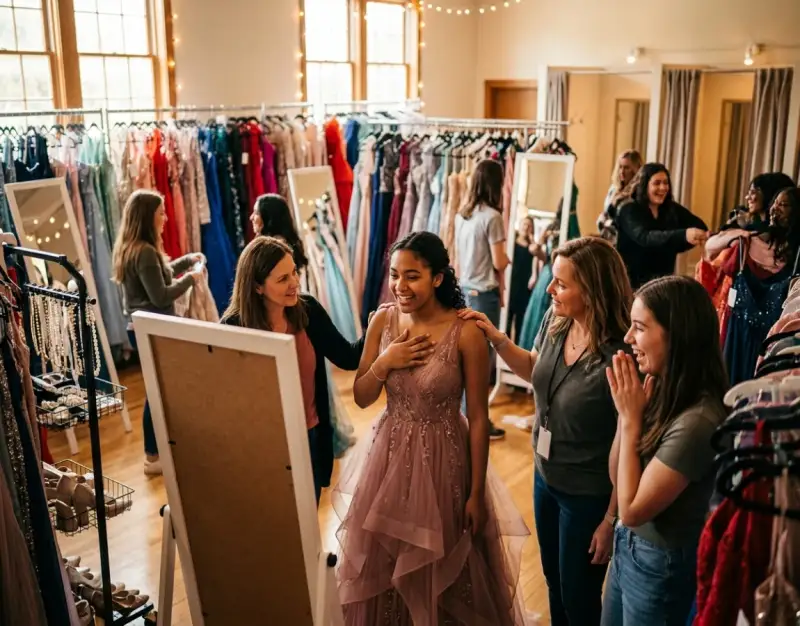
For most high school seniors, prom represents a defining rite of passage—a radiant evening of laughter, celebration, and cherished memories captured in photographs that last a lifetime. However, for youth navigating the foster care system, this milestone often feels unattainable. Confronted with frequent placement disruptions, financial constraints, and the pervasive trauma of systemic instability, foster teens frequently view high school prom not as an exciting celebration, but as another stark reminder of the socio-economic barriers that set them apart from their peers. When basic survival, emotional safety, and educational continuity are daily struggles, the high cost of formal wear, alterations, shoes, and styling accessories becomes an impossible hurdle.
In recent years, a transformative movement within human kindness initiatives has fundamentally redefined how communities support young people in care. Moving away from standard hand-me-down clothing drives, innovative non-profit organizations, social workers, and grassroots coalitions are hosting surprise prom dress shopping sprees designed explicitly around dignity-affirming, VIP retail experiences. These events do not merely distribute free attire; they curate high-end, trauma-informed pop-up boutiques where foster youth receive personalized styling, professional alterations, full beauty consultations, and unconditional celebration. By replacing pity with empowerment, these initiatives transform what could be an overwhelming expense into an unforgettable journey of self-discovery, belonging, and joy.
This flagship publication provides an exhaustive analysis of the operational mechanics, psychological impacts, and community-building strategies required to execute a world-class surprise prom dress shopping initiative for foster youth. Through deep strategic frameworks, real-world case studies, and actionable operational blueprints, we explore how grassroots advocates and civic organizers can mobilize local resources to transform lives—one dress, one tuxedo, and one heart-to-heart connection at a time.
Foundational Principles & Mechanics of Dignity-Based Philanthropy
To fully grasp the transformative power of a surprise prom dress shopping event, one must understand the core psychological and operational frameworks that separate transactional charity from dignity-based empowerment. Traditional charitable interventions often emphasize volume over experience, resulting in environments where recipients feel processed rather than valued. For foster teens—who frequently experience a loss of autonomy due to institutional decisions made on their behalf—the medium through which aid is delivered is just as critical as the aid itself.
At the center of this movement are several key mechanics:
- Trauma-Informed VIP Architecture: Designing physical pop-up spaces that mirror high-end fashion boutiques, complete with private dressing suites, personal shoppers, velvet ropes, and tailored refreshments, ensuring teens feel honored rather than patronized.
- Agency and Autonomy Restoration: Guaranteeing that every participant exercises 100% decision-making power over their attire, accessories, and styling choices, directly countering the historic lack of control foster youth experience regarding their personal belongings and living environments.
- Placement Mobility Mitigation: Providing complete, turnkey prom solutions (dresses, suits, undergarments, tailoring, jewelry, shoes, and tickets) so that sudden changes in foster care placement do not compromise a teen's ability to attend their event.
- Holistic Identity Validation: Cultivating an inclusive environment that caters to all body types, skin tones, gender expressions, and cultural stylistic preferences through expansive inventory sourcing and trained, empathetic volunteers.
By grounding community events in these fundamental mechanics, organizers transition from simply providing formal wear to actively mending emotional scars. When a young person steps in front of a mirror wearing a perfectly tailored gown or suit selected by their own voice, the experience reinforces their intrinsic worth and signals that their community is deeply invested in their happiness.
Step-by-Step Strategic Blueprint for Community Implementation
1. Building the Infrastructure: Logistics, Sourcing, and Partnerships
1.1 Securing Sizing Diversity and High-End Inventory Sourcing
The foundational integrity of any prom fashion event rests upon the quality and diversity of its inventory. A common failure point in community clothing drives is the accumulation of outdated, damaged, or severely restricted clothing options. To build an empowering environment for foster teens, organizers must institute rigorous procurement standards. Establish direct partnerships with bridal registries, formalwear designers, local boutiques, and national retail chains to secure current-season donations, floor samples, and deadstock inventory. Aim for a zero-compromise inventory policy where every garment is inspected, professionally dry-cleaned, and pristine before touching the racks.
Size inclusivity is non-negotiable. Foster youth encompass every body type, and nothing diminishes a young person's self-esteem faster than arriving at an event only to find a limited selection in their size. Sourcing strategies must intentionally over-index on inclusive sizing, ensuring robust inventories ranging from size 00 to 32+. Furthermore, organizers should curate a wide selection of adaptive formal wear catering to teens with physical disabilities or sensory sensitivities, ensuring seamless accessibility across the entire shopping floor.
Beyond traditional gowns, comprehensive inventory strategies must incorporate tuxedo and suit options, gender-neutral formalwear, dynamic footwear collections, clutches, shapewear, and new, unopened undergarments. Partnering with ethical apparel brands ensures that every young person, regardless of gender identity or expression, steps into a wardrobe that matches their authentic self.
1.2 Venue Selection: Creating a High-End Boutique Atmosphere
The physical environment dictates the emotional tone of the entire experience. Hosting an event in a stark gymnasium or chaotic warehouse risks reinforcing feelings of institutionalization. Instead, secure upscale event spaces, boutique hotel ballrooms, or commercial retail spaces that can be transformed into luxurious pop-up shops. The venue must feature ample natural light, spacious fitting rooms with full-length mirrors, soft seating for supportive guardians or social workers, and dedicated stations for alterations and cosmetics.
Logistically, the venue must strictly comply with local privacy regulations and safety protocols for vulnerable youth. Ensure secure, private check-in areas that shield participants from media intrusion or public sightlines. Micro-environments within the venue—such as a quiet, low-sensory relaxation lounge with soft lighting and noise-canceling accommodations—provide essential retreat spaces for youth who may experience sensory overload or emotional distress during the event.
Visual merchandising plays an extraordinary role in elevating the experience. Utilize polished garment racks, color-coordinated displays, elegant lighting fixtures, and red-carpet pathways. When teens walk through the doors, the atmosphere should instantly signal that this day was meticulously crafted solely to celebrate them.
2. Trauma-Informed Volunteer Training and Personal Styling
2.1 Sensitivity Training for Personal Stylists and Volunteer Staff
Every volunteer interacting with foster youth must undergo comprehensive, mandatory trauma-informed care training prior to the event. Foster youth frequently navigate complex psychological landscapes shaped by loss, unstable living conditions, and hyper-vigilance. Personal stylists—the volunteers paired one-on-one with teens to guide their shopping journey—must be equipped to communicate with profound empathy, active listening, and absolute non-judgment.
Training modules must explicitly outline boundaries regarding physical touch, personal questions, and body language. Volunteers must never ask about a teen's foster status, biological family, or living arrangement. Conversations should focus entirely on fashion preferences, school aspirations, favorite music, and prom excitement. Volunteers must understand how to read non-verbal cues indicating distress, sensory overload, or discomfort, knowing when to give a teen space or seamlessly hand off support to on-site licensed social workers.
Furthermore, volunteers should be trained in unconditional positive reinforcement. Their role is not to critique or steer choices based on personal tastes, but to serve as dedicated cheerleaders who validate every choice the teen makes, amplifying their confidence at every turn.
2.2 Navigating Emotional Triggers and Body Positivity
Apparel shopping can trigger intense body dysmorphia, anxiety, and vulnerability, particularly for teens who have lacked regular access to well-fitting clothes. Personal stylists must be trained in body-positive language, consciously avoiding phrases that frame a person's body as problematic (e.g., "This dress hides your hips" or "You're too short for this style"). Instead, focus on how the garment makes the teen feel: "Does this feel comfortable?" or "Look at how your eyes light up in this color!"
In moments where a desired size is unavailable or a garment does not fit as expected, stylists must navigate the situation with tact and discretion. Stylists should handle all size fetching behind the scenes, presenting options without focusing on tag numbers. By removing the stigma often associated with clothing sizes, volunteers create a safe haven where teens feel appreciated, beautiful, and fully accepted.
To deepen community support structures, many organizations find inspiration in complementary grassroots acts of care. For example, local sewing circles and craft guilds often contribute handmade wraps or accessories, echoing the comfort highlighted in The Therapeutic Power of Knitting for Charity: How Handmade Blankets Soothe Anxiety, proving how physical items infused with community love offer profound emotional regulation for vulnerable individuals.
3. The Full-Service VIP Shopping Experience Day
3.1 The Red Carpet Arrival and Concierge Greeting
The operational flow of the shopping day should reflect a seamless, high-touch luxury concierge experience. Upon arrival, each teen is welcomed by a enthusiastic host team, given a customized credential, and assigned a dedicated personal stylist who stays with them throughout their stay. To protect privacy and foster intimate connections, schedule participants in staggered arrival cohorts, avoiding overwhelming crowds and long queues.
The journey begins in a welcome lounge featuring complimentary refreshments, mocktails, and live, low-volume acoustic music or DJ sets that set an upbeat, celebratory mood. Social workers and foster parents are invited to relax in a luxury waiting lounge equipped with pampering amenities of their own, allowing the teens to enjoy their shopping experience independently while knowing their caregivers are nearby.
Each teen leads their stylist through structured yet unhurried "shopping zones" categorized by style, color, and size. Stylists carry selected options to spacious, private dressing rooms, ensuring that the process feels calm, personal, and entirely centered on the young person's preferences.
3.2 Alterations, Accessories, Beauty, and Glam Stations
Rarely does a formal dress or suit fit perfectly off the rack. A critical differentiator of top-tier prom events is the integration of an on-site, real-time tailoring station staffed by professional seamstresses and tailors. Whether shortening a hem, taking in a waistline, or adjusting shoulder straps, instant alterations guarantee that every teenager leaves with a garment customized to fit their unique silhouette flawlessly.
Once the dress or suit is chosen and fitted, participants transition to the accessory boutique. Here, they select matching footwear, evening bags, jewelry, and wraps. Professional beauty consultants are available at dedicated makeup and hair-styling consultation bars, offering mini-makeovers, personalized beauty tutorials, and complimentary full-sized cosmetics gift sets curated for diverse skin tones and hair textures.
The experience culminates at the "Glamour Reveal" station—a private photo setup complete with ring lights, professional photographers, and full-length mirrors. Here, teens see their completed look for the first time, capturing formal portraits that are printed and framed on-site, providing a tangible, permanent reminder of their radiance and strength.
4. Cross-Sector Collaboration: Engaging Local Business & Community
4.1 Mobilizing Local Dry Cleaners, Tailors, and Beauticians
Sustaining a high-impact, recurring prom initiative requires building an ecosystem of local business partnerships. Engage regional dry-cleaning franchises to inspect, spot-treat, and press thousands of donated garments free of charge. Local tailoring guilds, design school students, and alterations shops can be mobilized to donate professional hours during the shopping weekend, solving one of the most expensive barriers in formal wear procurement.
Cosmetology schools, salon owners, and independent makeup artists represent another vital partner tier. By donating their time on the day of the event—or providing gift certificates for hair styling and nail services on prom night itself—these professionals extend the impact of the initiative straight into the community, ensuring teens feel fully supported through the actual night of their event.
Local businesses often discover that participating in these targeted service days creates deep employee engagement and fosters long-term civic pride. When local enterprise aligns directly with social impact, community resilience strengthens dramatically across sectors.
4.2 Integrating Multi-Tiered Community Support Initiatives
Formalwear is only one element of personal dignity. Successful initiatives often cross-collaborate with broader community support networks to address interconnected socio-economic challenges faced by foster families. For instance, connecting foster parents with practical community resources ensures that broader home pressures are alleviated prior to major milestones.
Organizers often partner with organizations offering practical aid—such as Community Laundromats Offering Free Wash Days: A Simple Gesture That Means Everything—ensuring foster families have reliable access to basic hygiene and garment care long after the prom season concludes. Aligning high-visibility event drives with core daily-living aid networks creates a robust safety net for vulnerable households.
By framing prom support within this broader ecosystem of community care, advocates transform a single celebratory event into a gateway for comprehensive family stabilization and support.
5. Sustaining Post-Event Connections and Empowerment
5.1 Wrap-Around Support and Transition Coaching
The emotional high of a prom dress giveaway must not end when the event doors close. For aging-out foster youth (ages 17–21), high school graduation and senior prom mark a precarious transition into independent adulthood. Forward-thinking organizations leverage the trust built during the prom shopping experience to connect youth with long-term mentorship, educational scholarships, financial literacy programs, and housing assistance resources.
During the event registration process, youth can opt into career network programs or request information regarding college application support. Case managers and youth advocates can follow up in the weeks post-prom, maintaining the positive momentum established during the shopping spree. By using the prom event as an empathetic, low-pressure entry point, organizations build enduring relationships that support youth through critical life transitions.
These post-event connections prove to aging-out youth that their community's investment in them extends far beyond a single evening, cultivating a lasting sense of security and trust.
5.2 Holistic Spaces for Healing and Recovery
The stress experienced by youth within the foster care system often requires multifaceted emotional outlets and safe spaces for healing. Beyond mentorship and academic coaching, introducing foster youth to restorative, therapeutic environments can profoundly impact their long-term resilience.
Many community coalitions coordinate post-prom recreational days or weekend wellness retreats, introducing youth to nature-based therapy and animal sanctuary visits. Similar to the restorative work detailed in Rescuing Farm Animals: The Sanctuary Giving Abused Livestock a Lifetime of Safety, exposing traumatized youth to environments centered on rescue, healing, and gentle care fosters deep psychological safety and empathy processing. These holistic touchpoints help youth build emotional regulation tools as they step into independent adulthood.
Real-World Case Studies & Operational Scenarios
To illustrate the tangible difference between poorly executed clothing drives and trauma-informed VIP shopping experiences, let us analyze two contrasting operational scenarios based on real-world execution data.
Scenario A: The Traditional Rack-and-Box Clothing Drive (Failed Approach)
A civic group collected 1,000 donated formal dresses and opened a gymnasium for foster youth to select attire. Dresses were sorted roughly by color rather than size, packed onto overcrowded metal racks. Lighting was stark, fitting rooms consisted of makeshift sheet partitions, and no tailors or accessories were available. Volunteers, while well-intentioned, frequently made unsolicited comments about sizing, and participants had to sift through damaged or outdated items.
- Participant Turnout: 35% of registered youth departed without selecting a dress.
- Reported Youth Experience: 62% reported feeling self-conscious or overwhelmed; several reported feeling like "charity cases."
- Operational Flaw: Focus on garment quantity over personal dignity, absence of trauma training, zero sizing strategy, and poor environment control.
Scenario B: The VIP Dignity Boutique (Best-Practice Execution)
A regional coalition partnered with local corporate sponsors, professional stylists, and child welfare agencies to host a two-day pop-up boutique in an upscale event venue. Inventory featured 2,500 pristine, current-style dresses (sizes 00–32), adaptive formal options, and custom tuxedo packages. Each teen was assigned a trained personal shopper, enjoyed a private fitting suite, received live alterations, visited a beauty station, and received a framed portrait.
- Participant Turnout: 98% participant satisfaction rate; 100% of youth selected complete, tailored outfits.
- Reported Youth Experience: 96% reported a dramatic increase in self-confidence; 91% stated they felt deeply valued by their community.
- Key Success Drivers: Strict quality control, trauma-informed volunteer prep, full-spectrum sizing, real-time tailoring, and high-end visual merchandising.
"When I walked into the room, I expected boxes of old clothes. Instead, I saw a bright, gorgeous boutique with a stylist who cared about what *I* wanted. For the first time in my life, I felt like a princess, not a case file number."
— Maya R., Former Foster Youth & High School Senior
Critical Mistakes & How to Avoid Them
Organizing a high-stakes community event for vulnerable youth requires navigating complex logistical and psychological dynamics. Below are the top five costly mistakes made by event organizers and the precise countermeasures required to mitigate them.
-
Mistake: Treating Donated Formal Wear as a "Thrift Dump"
The Danger: Accepting stained, torn, severely outdated, or dirty garments communicates to youth that they deserve second-best.
Countermeasure: Establish strict intake criteria. Inspect every item immediately upon donation. Reject or repurpose anything needing heavy repair, and partner with dry cleaners to ensure 100% pristine presentation. -
Mistake: Neglecting Sizing and Style Inclusivity
The Danger: Running out of larger sizes (18+) or failing to provide non-binary/masculine formalwear leaves youth feeling excluded and alienated.
Countermeasure: Actively purchase or targetedly solicit plus-size and gender-diverse options prior to opening general donation channels. Maintain a minimum inventory ratio of 3 dresses/suits per participant across all size tiers. -
Mistake: Allowing Media & Unvetted Visitors Free Access
The Danger: Filming or photographing foster youth without strict legal releases violates state/federal privacy laws and can compromise youth safety and emotional comfort.
Countermeasure: Enforce strict media policies. Restrict press to pre-event setup hours. Require photo releases signed by legal guardians before any photography occurs in designated zones only. -
Mistake: Underestimating On-Site Tailoring Demands
The Danger: Gowns and suits that do not fit properly cause frustration and disappointment on prom night, negating the event's goals.
Countermeasure: Recruit professional seamstresses and tailors equipped with portable sewing stations, hem tape, and quick-alteration tools. Schedule mandatory fitting sign-offs before garments are packaged. -
Mistake: Failing to Address Transportation Barriers
The Danger: Foster parents and group homes often lack the time or resources to transport youth to central event venues, leading to high drop-out rates.
Countermeasure: Coordinate subsidized ride-share vouchers, mobile shuttle buses, or direct transportation partnerships with local foster care agencies to guarantee seamless access.
Comprehensive Strategy Comparison
To assist organizers in selecting the appropriate model for their geographic area, available budget, and community scale, the following semantic table evaluates three primary operational models for formalwear giveaways.
| Strategy Metric | Traditional Clothes Drive | Mobile Drive-Thru Model | VIP Dignity Pop-Up Boutique |
|---|---|---|---|
| Dignity & Emotional Impact | Low (Feels institutional/transactional) | Moderate (Convenient, but impersonal) | Exceptional (High-touch, empowering) |
| Resource & Logistics Demands | Low (Basic racks, minimal staff) | Moderate (Pre-packaged kits, transport hubs) | High (Venue, stylists, tailors, glam team) |
| Personalization & Fit Quality | Poor (Unfitted off-the-rack selection) | Fair (Based on self-reported sizes) | Perfect (Custom real-time alterations) |
| Trauma-Informed Environment | Rarely Integrated | Minimal Application | Core Design Foundation |
| Long-Term Engagement Potential | Negligible | Low | High (Connects youth to wrap-around services) |
Frequently Asked Questions (FAQ)
How do organizers maintain client confidentiality and safety during prom shopping events?
Confidentiality is maintained by implementing strict check-in protocols and non-disclosure agreements for all staff and volunteers. Event locations are kept private and shared only with verified foster families, group home supervisors, and social workers. Photography is strictly managed: professional photo stations operate on an opt-in basis with written guardian consent, ensuring that no identifying pictures of youth in state custody are shared publicly without authorization.
Additionally, volunteers receive specific instructions never to tag participants on social media or request personal contact details. These protocols safeguard the physical safety and privacy of youth while allowing them to enjoy their experience without anxiety.
What happens if a foster teen has a sudden placement change right before prom?
Sudden placement changes are an unfortunate reality within the foster care system. To prevent a move from disrupting a teen's prom plans, organizers provide complete "prom kits" on the shopping day. This includes the tailored dress or suit, shoes, accessories, undergarments, and an emergency contact card for the organization's event coordinator.
If a teen relocates to a different school district, project coordinators work directly with local case managers to coordinate transportation, ensure prom ticket transfers, or connect the youth with local allies so they can still attend their event seamlessly, regardless of geographical shifts.
How can local businesses get involved if they do not sell formalwear?
Businesses outside the fashion industry play a critical role in supporting these initiatives. Corporate partners can sponsor venue rental costs, fund dry-cleaning accounts, sponsor catered meals and refreshments, or provide gift cards for transportation and post-prom activities. Professional service firms can also encourage staff to volunteer as personal shoppers, event logistics crews, or setup teams during corporate service days.
Furthermore, businesses can host internal accessory drives, collecting new shoes, jewelry, or unopened cosmetics, providing valuable inventory while building team unity around a meaningful civic cause.
How do you accommodate gender-nonconforming and LGBTQ+ foster youth?
Inclusivity is integrated into every aspect of event design. Inventories feature a wide spectrum of formal attire, including tuxedos, tailored suits, elegant jumpsuits, and traditional gowns across all sizing categories. Dressing areas feature private, non-gendered fitting suites, ensuring every participant feels safe and respected.
Personal stylists undergo dedicated equity and inclusion training to ensure gender-affirming interactions. Volunteers use preferred names and pronouns, guiding participants based on personal aesthetic preferences rather than traditional gender expectations.
What is the average lead time required to plan a large-scale prom dress giveaway?
Executing a high-touch, VIP prom event requires approximately six to eight months of forward planning. Sourcing high-quality inventory, securing corporate sponsorships, and booking appropriate venues must begin in early autumn for a spring event. Volunteer recruitment and trauma-informed training modules typically launch three months prior to the event date.
Establishing close coordination with regional child welfare agencies
Be the first to share a gentle reflection on this story.