
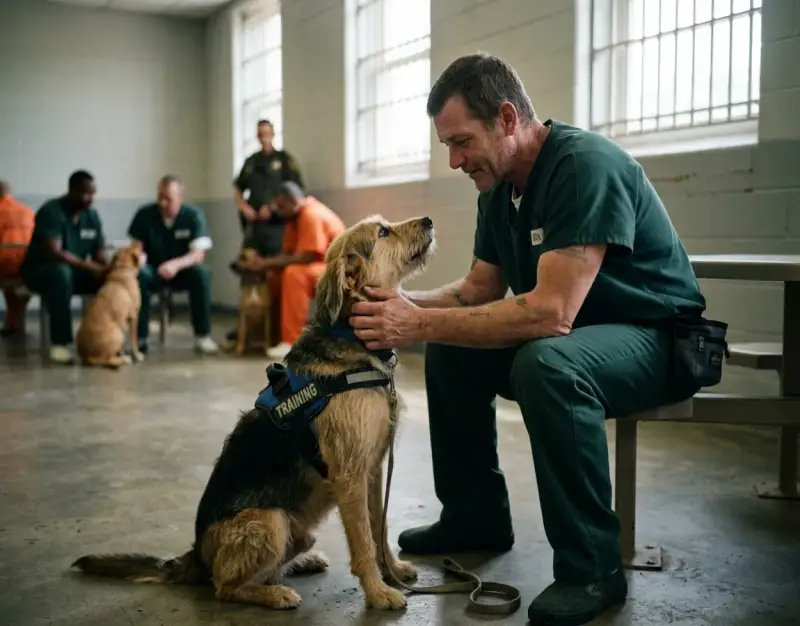
Inside the high-security perimeter of a maximum-correction facility, the heavy iron doors clang shut, sealing out the chaotic noise of the outside world. Yet, down block C, an entirely different sound echoes off the cinderblock walls: the soft, rhythmic click of claws on linoleum, punctuated by a low, contented tail thud. Here, an incarcerated man who has spent decades hardening his exterior against a violent environment sits cross-legged on a thin mattress, gently guiding a trembling, frightened rescue dog through a basic obedience command. In this quiet moment, the razor wire fades into the background. The inmate is no longer defined solely by his criminal docket number; he is a handler, a teacher, and, crucially, a healer.
For decades, the corrections system operated under a strictly punitive model, built on isolation, containment, and deterrence. However, a quiet revolution has been sweeping through modern penology, shifting the paradigm toward restorative justice and genuine transformation. At the vanguard of this movement are innovative human-animal bonds initiatives that bring dogs, cats, and even horses behind prison walls. These programs do far more than simply occupy inmates' time; they fundamentally rewire the emotional circuitry of individuals who have often experienced severe trauma, alienation, and social disconnection. By caring for a vulnerable living creature, inmates learn patience, empathy, and emotional regulation—qualities that are essential for successful reentry into society.
This comprehensive investigation explores the intricate mechanisms behind prison animal programs, examining how rescue dog training and structured pet interactions catalyze profound psychological healing. Just as communities find resilience and renewal through public art initiatives, as seen in projects like Uplifting Communities: How Community Murals Are Healing Blighted Urban Neighborhoods, institutional environments are being radically transformed by creative, compassionate interventions. By analyzing the scientific underpinnings, operational frameworks, and real-world outcomes of these programs, we uncover a powerful blueprint for reducing recidivism and fostering lasting human rehabilitation.
Foundational Principles and Mechanisms of Human-Animal Therapy
To understand why introducing animals into a correctional facility yields such dramatic psychological results, we must examine the biological and psychological architecture of the human-animal bond. At its core, this bond is an evolutionary attachment mechanism. Humans are hardwired to connect with other living beings, and when that connection is established with a non-judgmental animal, it bypasses the defensive cognitive barriers that typically hinder interpersonal communication. Inmates, who frequently struggle with profound trust issues, find it vastly easier to open up to an animal that does not know their criminal history and cares nothing for their past mistakes.
From a neurochemical perspective, interacting with animals triggers the release of oxytocin—often referred to as the "bonding hormone"—while simultaneously suppressing cortisol, the primary stress hormone. In a hyper-vigilant prison environment where inmates constantly scan for threats, the presence of a calm, affectionate animal induces a physiological state of safety. This biochemical shift allows the prefrontal cortex, responsible for impulse control and rational decision-making, to regain control over the amygdala's fight-or-flight responses. Consequently, participants in these programs experience a marked reduction in anxiety, depression, and institutional disciplinary infractions.
Furthermore, caring for a rescue animal introduces a vital sense of agency and purpose. Many incarcerated individuals have lived lives characterized by powerlessness, chaotic environments, and destructive choices. Being entrusted with the daily care, feeding, and training of a living creature shifts the inmate from a passive recipient of punishment to an active provider of care. This inversion of roles fosters deep moral development, as participants begin to understand the tangible consequences of their actions on the well-being of another sentient being.
Structuring Prison Animal Programs: A Step-by-Step Operational Blueprint
Establishing a successful animal program within a correctional facility requires meticulous planning, rigorous safety protocols, and deep cross-sector collaboration between prison administrators, animal shelters, and specialized behavioral trainers. Below is an exhaustive blueprint detailing how these transformative programs are built, managed, and sustained.
Phase 1: Needs Assessment and Institutional Buy-In
Before a single paw steps foot inside a prison, organizers must conduct a comprehensive environmental and cultural assessment of the facility. This involves evaluating the physical layout of housing units, assessing security classifications, and gauging the openness of wardens, guards, and administrative staff. Without internal buy-in, even the most well-funded animal program will face insurmountable bureaucratic hurdles.
During this foundational stage, program coordinators draft airtight standard operating procedures (SOPs) that address liability, veterinary care, quarantine protocols, and emergency evacuation procedures. Security is paramount; clear guidelines must dictate which inmates are eligible based on behavioral records rather than just offense types. Staff training is equally critical, ensuring that correctional officers understand the therapeutic goals of the program and can support the human-animal bond without compromising facility safety.
Phase 2: Rigorous Inmate Selection and Screening
The integrity and success of rescue dog training initiatives depend heavily on selecting the right human participants. An open-door policy invites operational failure; instead, programs utilize a highly competitive application and interview process. Inmates must typically demonstrate a sustained clean disciplinary record for a specified period, express a genuine willingness to learn, and commit to the intensive multi-month training schedule.
Candidates undergo psychological screenings to evaluate their frustration tolerance, emotional stability, and capacity for empathy. Priority is often given to long-term or life-sentence inmates who serve as stabilizing anchors within the facility's population. By investing in these individuals, facilities create internal leadership tiers where veteran handlers mentor incoming participants, cultivating a subculture of accountability and mutual respect.
Phase 3: Animal Assessment and Shelter Partnerships
The animals selected for prison programs are almost exclusively rescues sourced from overcrowded municipal shelters, where they face high euthanasia rates due to behavioral quirks, fearfulness, or a lack of basic socialization. Establishing a pipeline with local shelters requires rigorous veterinary screening to ensure that incoming animals are fully vaccinated, temperament-tested, and free of zoonotic diseases.
Professional animal behaviorists evaluate each dog or cat to match their temperament with the specific skill set and emotional profile of the assigned inmate handler. For example, a high-energy, reactive rescue dog might be paired with an exceptionally patient, calm inmate who can provide the structured environment necessary for behavioral rehabilitation. This dual-healing model means that as the inmate rehabilitates the animal, the animal simultaneously rehabilitates the inmate.
Phase 4: Curriculum Development and Positive Reinforcement Training
Training a rescue dog inside a prison is a masterclass in behavioral science. Programs utilize strictly positive reinforcement methodologies—rewarding desired behaviors with treats, praise, and play while ignoring or redirecting undesirable ones. Inmates undergo formal classroom instruction in animal husbandry, canine psychology, clicker training mechanics, and veterinary first aid.
The curriculum progresses systematically from basic obedience (sit, stay, come) to advanced tasks such as service dog preparation, therapy animal certification, or advanced agility. As inmates teach these commands, they are forced to master their own emotional states. A handler who is frustrated, angry, or impatient will immediately cause anxiety in the animal, leading to training setbacks. Thus, the dog serves as an instant mirror, reflecting the inmate's internal emotional volatility and demanding immediate self-correction.
Phase 5: Evaluation, Graduation, and Reentry Transitions
The culmination of a prison animal program is marked by a formal graduation ceremony—a poignant event that brings together correctional staff, shelter directors, and sometimes even adopting families. The rescue dog, now fully housebroken, obedience-trained, and socialized, is certified and prepared for permanent adoption into the community.
While the adoption of the dog is a joyous milestone, it introduces a profound emotional test for the inmate handler: grief and separation. Program administrators provide structured grief counseling and support groups to help inmates process the departure of their animal companion. Crucially, this grief is reframed as a successful completion of duty; handlers learn that the ultimate goal of their sacrifice is to give a vulnerable animal a second chance at life in a loving home, mirroring the second chance the inmates themselves are striving to achieve.
Real-World Case Studies: Triumph and Operational Failure
Examining practical implementations of prison animal programs reveals stark differences between well-managed initiatives and those plagued by systemic neglect. To illustrate these dynamics, we examine two contrasting case studies based on empirical observations across American correctional facilities.
Case Study A: The Paws for Progress Initiative (Successful Execution)
At a medium-security men's facility in the Pacific Northwest, the "Paws for Progress" program integrates shelter rescue dogs into a specialized housing unit where selected inmates live alongside their canine charges 24/7. Funded through private grants and shelter partnerships, the program maintains a strict 1:1 inmate-to-dog ratio.
Methodology and Metrics: Over a five-year tracking period, the facility documented a 68% decrease in violent disciplinary infractions among program participants compared to the general prison population. Furthermore, recidivism rates for graduates who completed the full twelve-month program plummeted to 12%, drastically lower than the state average of 48%. Correctional officers reported a significantly calmer housing unit, noting that inmates utilized peer mediation and conflict resolution techniques learned through managing canine behavioral issues.
Key Takeaways: The success of Paws for Progress hinged on three factors: round-the-clock bonding, rigorous professional oversight by certified animal behaviorists, and a clear, transparent pathway for inmates to earn vocational certifications in professional dog training.
Case Study B: The Overburdened Shelter Pipeline (Common Failure)
Conversely, a regional prison in the Midwest attempted to fast-track an animal fostering program without adequate administrative infrastructure or vetting protocols. Eager to project a progressive image, the facility accepted forty high-stress rescue dogs from multiple overcrowded kill-shelters in a single month, assigning them to inmates with minimal screening.
The Breakdown: Without proper behavioral evaluations, several aggressive, traumatized dogs were placed with inmates who lacked the skills to handle reactive animals. Within three weeks, two dog-on-dog fights broke out in the cell block, resulting in minor injuries to both animals and an inmate. Panic ensued among correctional staff who viewed the program as a severe security liability. The warden immediately suspended the initiative, returning all dogs to the shelters and leaving participating inmates feeling abandoned, demoralized, and deeply distrustful.
Lessons Learned: This failure underscores the absolute necessity of scaling programs sustainably. Rushing implementation, bypassing rigorous behavioral screenings, and failing to provide continuous professional oversight will invariably jeopardize the safety of both humans and animals, destroying years of advocacy in a matter of weeks.
Critical Mistakes in Prison Animal Programs and How to Avoid Them
Even with noble intentions, administrators and organizers frequently stumble into predictable pitfalls when launching and maintaining animal-based rehabilitation initiatives. Recognizing these missteps is essential for long-term programmatic survival.
- Mistake 1: Treating Animals as Mere Recreation Rather Than Therapeutic Tools. When programs are viewed simply as entertainment or facility perks, funding gets cut at the first sign of budget strain, and staff training is deprioritized. Countermeasure: Embed animal programs directly into the facility's formal mental health and vocational education frameworks, tracking measurable clinical outcomes to prove their institutional value.
- Mistake 2: Inadequate Veterinary and Emergency Protocols. Failing to establish immediate access to veterinary care creates immense anxiety for inmates and exposes the facility to animal welfare violations. Countermeasure: Partner with local veterinary clinics willing to provide pro-bono or contracted emergency services, and establish clear on-site triage protocols for correctional staff.
- Mistake 3: Neglecting Handler Mental Health and Separation Grief. Forcing an inmate to surrender a trained dog without emotional support can trigger severe depressive episodes and behavioral regression. Countermeasure: Implement mandatory post-graduation debriefing sessions, peer support groups, and immediate transition planning into a new training cycle with a fresh rescue animal.
- Mistake 4: Poor Inmate-Animal Matching. Pairing high-anxiety or reactive animals with inexperienced or emotionally volatile handlers guarantees friction and training failure. Countermeasure: Enforce a mandatory multi-week orientation where professional trainers assess compatibility before permanent housing assignments are finalized.
- Mistake 5: Failing to Educate Correctional Officers. When guards view animal programs with suspicion or resentment, they may undermine rules or create a hostile environment for handlers. Countermeasure: Conduct comprehensive staff orientation programs that emphasize how animal bonding directly improves facility safety, reduces violence, and eases shift management.
Comparative Analysis of Prison Rehabilitation Modalities
To contextualize the unique efficacy of rescue dog training within the broader correctional landscape, the following table compares various rehabilitation modalities across critical operational and psychological metrics.
| Rehabilitation Modality | Primary Focus | Empathy & Emotional Impact | Recidivism Reduction Potential | Operational Cost & Resource Burden |
|---|---|---|---|---|
| Rescue Dog Training | Human-animal bonding, behavioral conditioning, vocational skill-building | Extremely High (Fosters unconditional empathy and accountability) | Very High (Significant drop in repeat offenses observed) | Moderate (Relies heavily on shelter partnerships and grants) |
| Traditional Group Therapy | Cognitive behavioral restructuring, talking through trauma | Moderate (Intellectualizes emotion; lacks visceral grounding) | Moderate (Effective only when paired with holistic support) | Low to Moderate (Requires licensed psychological staff) |
| Vocational Trades Training | Hard skills (welding, carpentry, computer coding) | Low (Focuses exclusively on economic utility) | Moderate to High (Employment secures reentry stability) | High (Requires expensive equipment and specialized facilities) |
| Substance Abuse Programs | Addiction recovery, trigger identification, 12-step immersion | Moderate (Addresses internal coping mechanisms) | High (Directly targets a primary driver of incarceration) | Moderate (Requires specialized counselors and continuous testing) |
Frequently Asked Questions About Prison Animal Programs
Are prison animal programs dangerous for the inmates or the animals?
When properly structured, vetted, and supervised, prison animal programs are exceptionally safe. Comprehensive screening protocols ensure that only non-aggressive, health-cleared rescue animals enter the facility, while psychological evaluations ensure that participating inmates possess the emotional stability required for animal handling. Professional animal behaviorists oversee all daily interactions, and strict safety guidelines govern housing and training sessions to prevent incidents.
What happens to the rescue dogs after they finish their training?
Upon completing their multi-month training curriculum, the dogs graduate and are typically made available for adoption by the general public, placed with families of veterans with PTSD, or assigned as working service animals. These dogs leave the facility fully housebroken, socialized, and equipped with advanced obedience skills, making them highly sought-after companions in the community.
How do these programs impact the overall prison environment?
The introduction of animals consistently creates a calming, stabilizing effect across entire housing units. Correctional staff frequently report a noticeable drop in noise levels, tension, and aggressive posturing among inmates. The presence of animals encourages prosocial behaviors, improves morale, and fosters a sense of community responsibility that benefits both inmates and staff.
Do inmates get paid or receive certifications for training rescue dogs?
While compensation varies by state and facility, many programs operate as formal vocational apprenticeships. Inmates earn nationally recognized certifications in animal handling, pet grooming, or obedience training. These credentials provide tangible employment opportunities upon release, helping former inmates secure stable jobs in veterinary clinics, animal shelters, and professional training facilities.
How are these programs funded, given typical state budget constraints?
The vast majority of prison animal programs operate at little to no cost to taxpayers. They are typically sustained through public-private partnerships, non-profit animal shelter grants, private donations, and proceeds generated by adoption fees or merchandise sales. This financial model makes them highly attractive to cash-strapped departments of correction looking for cost-effective rehabilitation tools.
Strategic Roadmap and Final Takeaway
As we look toward the next two to five years, the integration of human-animal bonds into correctional systems is poised for exponential growth. Driven by mounting empirical data proving their efficacy in reducing recidivism and transforming institutional culture, prison animal programs are transitioning from fringe experimental projects into core pillars of modern restorative justice. Innovations such as expanded trauma-informed care models, specialized service dog pipelines, and digital mentoring tools will further amplify the reach and impact of these initiatives.
Just as grassroots initiatives revitalize neglected public spaces—mirroring the community-building spirit found in efforts like Social Change Agents: How Grassroots Clean-Up Crews Are Revitalizing Urban Rivers—prison animal programs prove that rehabilitation is not about erasing the past, but about cultivating growth in barren soil. By extending unconditional trust and responsibility to those society has often written off, we ignite a powerful cycle of mutual healing. The ultimate takeaway is clear: when we teach an incarcerated individual how to save a rescue animal, we provide them with the ultimate tools to save themselves.
Be the first to share a gentle reflection on this story.