
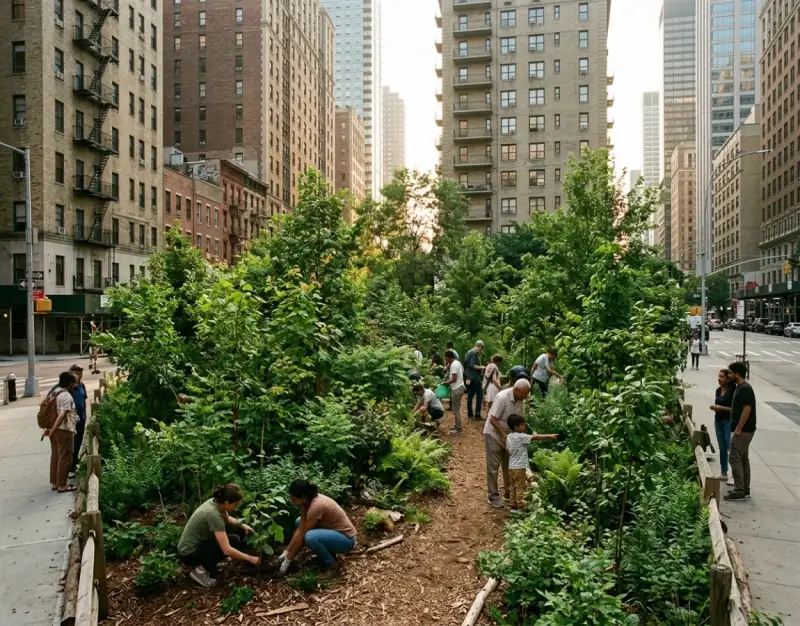
In an era defined by rapid urbanization, soaring carbon emissions, and the relentless expansion of concrete infrastructure, our cities have increasingly transformed into sterile heat islands. Towering steel facades and endless stretches of asphalt have systematically pushed out native flora and fauna, disconnecting urban populations from the raw, restorative power of the natural world. Yet, nestled within the cracks of this concrete hegemony, a profound ecological renaissance is quietly taking root. Across the globe, municipalities, grassroots activists, and visionary environmentalists are embracing an innovative approach to urban forestry that is turning traditional landscape architecture completely on its head.
This movement—embodying the spirit of global goodness—is fundamentally rewriting how humanity coexists with nature in the twenty-first century. Rather than relying on decades-long reforestation timelines or sprawling suburban parks that require immense maintenance, environmental planners are looking toward hyper-dense, lightning-fast ecosystems. Through the targeted deployment of urban micro forests, communities are reclaiming vacant lots, highway medians, and industrial brownfields, transforming them into thriving pockets of biodiversity. These initiatives are not merely aesthetic upgrades; they represent a scientifically rigorous, data-backed defense against climate change, air pollution, and the alarming loss of urban wildlife habitats.
At the center of this paradigm shift is an acute understanding that urban environments can no longer afford to treat nature as an afterthought. As urban planners race to implement comprehensive green cities initiatives, the demand for actionable, scalable, and high-impact environmental strategies has never been more urgent. Whether we look at community-driven social projects like Collaborative Welfare: Pairing Senior Mentors With At-Risk Youth for Life-Changing Guidance or municipal-scale ecological engineering, the core ethos remains the same: transformative change requires intentional human stewardship. In this exhaustive guide, we explore the mechanics, strategic blueprints, and profound global impact of micro-forests, offering a masterclass in how to bring wild nature back to the heart of the concrete jungle.
Foundational Principles and Mechanics of Micro-Forests
To truly grasp the revolutionary nature of urban micro-forests, one must first deconstruct the biological and ecological principles that govern them. Traditional urban forestry typically involves planting single species of ornamental trees spaced far apart, surrounded by manicured lawns. While visually pleasing, these traditional plantings function more like green street furniture than actual ecosystems. They require constant irrigation, chemical fertilizers, and extensive manual weeding because they lack the complex, self-sustaining relationships found in mature natural woods.
By contrast, the modern micro-forest model—most famously pioneered by Japanese botanist Akira Miyawaki—relies on an astonishingly dense planting strategy. Under the miyawaki method planting framework, up to three to five native tree and shrub saplings are planted per square meter. This extreme density intentionally mimics the conditions of a disturbed forest edge, triggering fierce, natural competition for sunlight. Deprived of horizontal breathing room, the saplings shoot upward at breathtaking speeds—often growing up to ten times faster than trees in conventional plantations—while simultaneously developing extraordinarily deep, interconnected root systems.
The mechanics of these pockets of wilderness extend far beyond rapid vertical growth. Because the canopy closes within just two to three years, sunlight is effectively blocked from reaching the ground, naturally suppressing invasive weeds and locking precious moisture into the soil. A rich subterranean network of mycorrhizal fungi quickly establishes itself, facilitating nutrient exchange between diverse plant species. Within a remarkably short window of five to ten years, a managed micro-forest evolves into a self-sustaining, maintenance-free ecosystem capable of supporting hundreds of species of insects, birds, and small mammals right in the middle of bustling metropolitan centers.
The Miyawaki Method: Step-by-Step Implementation Blueprint
1. Comprehensive Site Assessment and Soil Conditioning
The success of any micro-forest begins long before the first sapling touches the earth; it starts with a rigorous scientific audit of the target plot. Practitioners must conduct comprehensive soil testing to determine pH levels, existing compaction rates, and nutrient composition. Urban soils are notoriously degraded, often contaminated with construction debris, heavy metals, and compacted layers of clay or gravel.
Once baseline data is secured, the soil must be deeply remediated and aerated, often to a depth of at least one meter. Organic amendments—such as compost, coconut coir, rice husks, and animal manure—are thoroughly tilled into the earth to drastically improve water retention and microbial activity. This crucial preparation phase ensures that the dense root systems of the upcoming forest can penetrate deeply without hitting impenetrable urban strata, setting the stage for rapid, healthy biological expansion.
2. Native Species Selection and Stratification
A true micro-forest is not a random collection of trees; it is a meticulously researched replica of the region's native, climax forest ecosystem. Botanists and landscape architects must study historical regional ecologies to curate a plant palette divided into distinct vertical layers: canopy trees, sub-canopy trees, shrubs, and understory groundcover. Sourcing must strictly focus on native species to ensure that local pollinators and wildlife can immediately integrate into the new habitat.
During this stage, saplings are categorized by their mature height and light requirements. The ratio is carefully calibrated—typically consisting of 60 to 70 percent canopy and sub-canopy species, supplemented by robust understory shrubs. By utilizing thirty to fifty distinct native species within a relatively small plot, the micro-forest builds biological resilience against disease, pests, and the unpredictable weather patterns associated with a changing global climate.
3. High-Density Random Planting Execution
Abandoning traditional aesthetic rows in favor of natural chaos is the hallmark of the Miyawaki technique. Saplings are planted in a deliberately random, highly concentrated pattern, ensuring that no two identical species stand immediately adjacent to one another. Volunteers, community members, and ecological technicians work side-by-side, digging small pits and nesting the young trees closely together.
This high-density approach fosters an intense community spirit and accelerates the educational outreach of the project. Just as humanitarian efforts like Voices of Change: The Chef Who Turned His Michelin-Star Kitchen Into a Soup Kitchen demonstrate the power of direct, community-engaged action, planting a micro-forest brings neighbors together with a shared sense of environmental purpose. The sheer physical density—three trees per square meter—transforms a barren urban patch into a dense green thicket in record time.
4. Mulching, Irrigation, and Early Maintenance
Immediately following the intense planting day, the entire plot must be heavily blanketed with organic mulch, typically five to ten centimeters deep, using straw, wood chips, or shredded bark. This heavy protective layer acts as a thermal blanket, shielding the vulnerable soil and delicate root systems from extreme urban heat fluctuations while locking in vital moisture during dry spells.
For the first two to three years, rigorous watering is required during dry periods, alongside initial weeding to give the native saplings a competitive edge. However, unlike traditional parks that demand perpetual chemical treatments and mowing, external human intervention drops off a metaphorical cliff after year three. Once the canopy completely closes, the forest becomes entirely self-reliant, operating as a closed-loop biological system that requires no fertilizers, pesticides, or artificial mowing.
Ecological and Climatic Benefits in Urban Centers
Combating the Urban Heat Island Effect
Concrete, asphalt, and steel buildings absorb solar radiation during the day and slowly radiate that heat back into the atmosphere at night, creating localized microclimates known as urban heat islands. These artificial heat domes significantly increase energy consumption for air conditioning, exacerbate respiratory illnesses, and pose severe health risks to vulnerable urban populations during extreme heatwaves. Urban micro-forests serve as highly efficient, natural cooling towers capable of dramatically altering neighborhood temperatures.
Through the dual processes of shading and evapotranspiration—whereby trees release moisture into the air through their leaves—micro-forests can lower ambient surface temperatures by several degrees Celsius within their immediate vicinity. By strategically scattering these verdant pockets across dense metropolitan grids, urban planners can break up continuous expanses of heat-trapping pavement, creating comfortable, cooler microclimates for pedestrians and local residents alike.
Air Purification and Particulate Matter Capture
Urban air quality remains a critical public health crisis, with millions of city-dwellers breathing air heavily polluted by vehicular exhaust, industrial emissions, and particulate matter (PM2.5 and PM10). Micro-forests act as biological filtration units, capturing airborne pollutants on their extensive leaf surfaces and absorbing hazardous gases like carbon dioxide, sulfur dioxide, and nitrogen oxides through their stomata.
The multi-layered structure of a dense micro-forest is particularly effective at trapping particulate matter. As polluted wind blows through the dense thicket of diverse canopy heights and shrub layers, particulate matter settles onto the foliage and is subsequently washed safely down into the soil during rain events. This natural scrubbing mechanism measurably improves localized air quality, protecting the health of nearby residential communities, schools, and commercial districts.
Stormwater Management and Urban Flood Mitigation
As cities pave over natural earth with impermeable surfaces, heavy rainfall events frequently overwhelm antiquated stormwater infrastructure, leading to destructive urban flooding and the overflow of raw sewage into local waterways. Micro-forests function as powerful urban sponges, offering a nature-based solution to hydrological management that vastly outperforms traditional concrete drainage systems.
The combination of amended, highly porous soil, deep organic mulch, and extensive root networks allows micro-forests to absorb massive volumes of rainwater instantly. Instead of rushing off impermeable streets into overloaded storm drains, rainwater infiltrates deep into the water table, replenishing depleted subterranean aquifers and significantly reducing peak runoff volumes during severe storm events.
Social, Economic, and Community Well-Being Impacts
Mental Health Restoration and Biophilic Urbanism
Human beings possess an innate evolutionary affinity for the natural world—a concept known as biophilia. Prolonged separation from nature in sterile urban environments has been directly linked by psychologists to rising rates of anxiety, depression, and cognitive fatigue. Urban micro-forests bring wild, sensory-rich nature directly to the doorsteps of everyday citizens, offering a powerful antidote to modern urban stress.
Access to pockets of greenery has been scientifically proven to lower cortisol levels, reduce blood pressure, and enhance mental clarity. Whether integrated near apartment complexes, office parks, or healthcare facilities, micro-forests provide accessible spaces for mindfulness, reflection, and gentle recreation. When combined with compassionate community initiatives such as Human-Animal Bonds: The Horse Sanctuary That Heals Veterans Suffering From PTSD, these green spaces become vital therapeutic landscapes that foster holistic healing and emotional resilience.
Fostering Community Cohesion and Environmental Stewardship
The creation of an urban micro-forest is rarely an isolated bureaucratic endeavor; it is inherently a communal ritual. From initial soil preparation and species selection to planting days and ongoing observation, micro-forest projects unite diverse community members around a tangible, positive goal. Neighbors of all ages, socioeconomic backgrounds, and cultural traditions work side-by-side in the dirt, forging strong social bonds.
This hands-on participation cultivates a deep sense of local ownership and environmental pride. When citizens actively help plant and nurture a micro-forest in their neighborhood, vandalism drops dramatically, and community vigilance over local environmental health increases. Schools frequently utilize these living laboratories for hands-on science education, teaching children the fundamentals of botany, ecology, and climate science through direct, immersive experience.
Enhancing Urban Biodiversity Corridors
Concrete development fractures natural habitats into isolated, disconnected fragments, trapping wildlife populations and leading to local extinctions. Urban micro-forests act as critical stepping stones—or ecological stepping stones—that bridge these gaps, creating interconnected wildlife corridors across otherwise impassable urban landscapes.
Even a small pocket forest measuring just a few hundred square meters can quickly become a haven for native birds, beneficial insects, butterflies, amphibians, and small mammals. By providing reliable sources of food, shelter, and breeding grounds, these micro-habitats successfully draw diverse fauna back into the city, restoring the delicate web of life and boosting overall urban biodiversity resilience.
Global Case Studies: Successes and Lessons Learned
To understand the practical viability of micro-forest initiatives, one must examine real-world deployments across diverse global contexts. In cities ranging from Tokyo and Chennai to Rotterdam and São Paulo, municipal authorities and grassroots organizations have demonstrated how small parcels of land can yield monumental ecological dividends.
Case Study 1: The Afforestation Movement in Chennai, India
Facing severe groundwater depletion and intense urban heat island effects, environmental organizations in Chennai partnered with local municipal bodies to implement dozens of Miyawaki-style micro-forests across vacant urban plots, school grounds, and temple lands. Using strictly indigenous tree species adapted to the local tropical climate, these projects achieved full canopy closure within two and a half years.
Results & Metrics: Monitored sites showed an average temperature drop of 2°C to 4°C directly under the canopy compared to adjacent paved areas. Furthermore, local groundwater recharge rates improved significantly, and over thirty species of birds and butterflies—previously absent from the immediate area—returned within three years. The primary lesson learned was the absolute necessity of engaging local neighborhood committees for long-term watering oversight during the vulnerable first two summers.
Case Study 2: Urban Green Pockets in Rotterdam, Netherlands
In densely populated European cities like Rotterdam, finding large tracts of land for traditional parks is virtually impossible. City planners turned to the micro-forest model to reclaim neglected patches of land around housing estates, industrial zones, and highway interchanges. These initiatives were specifically designed to address urban stormwater management and improve pedestrian air quality.
Results & Metrics: Utilizing a curated mix of native oaks, birches, and understory shrubs, these pockets absorbed up to 80% more stormwater runoff during torrential downpours compared to surrounding turfgrass lawns. The project also highlighted a critical lesson regarding soil compaction: mechanical heavy equipment used in initial urban site prep must be carefully managed to avoid destroying sub-surface soil structure, reinforcing the importance of thorough manual aeration and organic amendment.
Critical Mistakes and How to Avoid Them
While urban micro-forests are remarkably resilient once established, improper planning and execution during the critical first two years can lead to project failure. Practitioners must navigate several common pitfalls to ensure their green initiatives thrive.
1. Neglecting Proper Soil Preparation and Compaction Remediation
The single most common mistake made by enthusiastic planners is planting saplings directly into hard, unamended urban clay or construction fill. Urban soils are often suffocated by heavy machinery and lack the organic matter necessary to support rapid root growth. Countermeasure: Never skip comprehensive soil testing and deep mechanical or manual loosening paired with heavy organic compost integration. Roots must be able to plunge downward effortlessly.
2. Failing to Source Strictly Native Species
Choosing aesthetically pleasing ornamental or exotic trees because they grow quickly or offer colorful flowers can severely undermine the ecological integrity of a micro-forest. Exotic species often fail to support local pollinators and can become invasive bullies that crowd out native flora. Countermeasure: Conduct thorough historical botanical research to ensure 100% of the selected canopy trees, shrubs, and groundcovers are strictly native to the immediate ecoregion.
3. Underestimating Initial Irrigation and Maintenance Needs
A common misconception is that because micro-forests mimic wild nature, they require zero human intervention from day one. During the first two dry seasons, young saplings are exceptionally vulnerable to severe drought stress before their deep root networks are fully established. Countermeasure: Establish a dedicated, reliable watering schedule—supplemented by drip irrigation or volunteer watering groups—for the first 24 to 36 months, alongside consistent thick mulching.
4. Poor Site Selection and Sunlight Restrictions
Planting a micro-forest in the shadow of towering skyscrapers or deep beneath overhead utility lines creates immediate long-term conflicts. While high density is encouraged, trees ultimately require adequate sunlight to drive photosynthesis and achieve proper canopy closure. Countermeasure: Evaluate the solar trajectory of the proposed site across all four seasons to ensure the plot receives at least six hours of direct sunlight daily.
5. Lack of Community Engagement and Long-Term Oversight
Treating a micro-forest project as a purely top-down municipal installation without involving local residents often leads to neglect, accidental damage, or community resistance. Countermeasure: Involve local schools, neighborhood associations, and volunteers in every phase of planting and monitoring. Local buy-in guarantees long-term protection and transforms the forest into a cherished community asset.
Comprehensive Comparison of Urban Greening Approaches
| Greening Approach | Establishment Speed | Maintenance Required | Biodiversity Impact | Water Efficiency |
|---|---|---|---|---|
Be the first to share a gentle reflection on this story.