
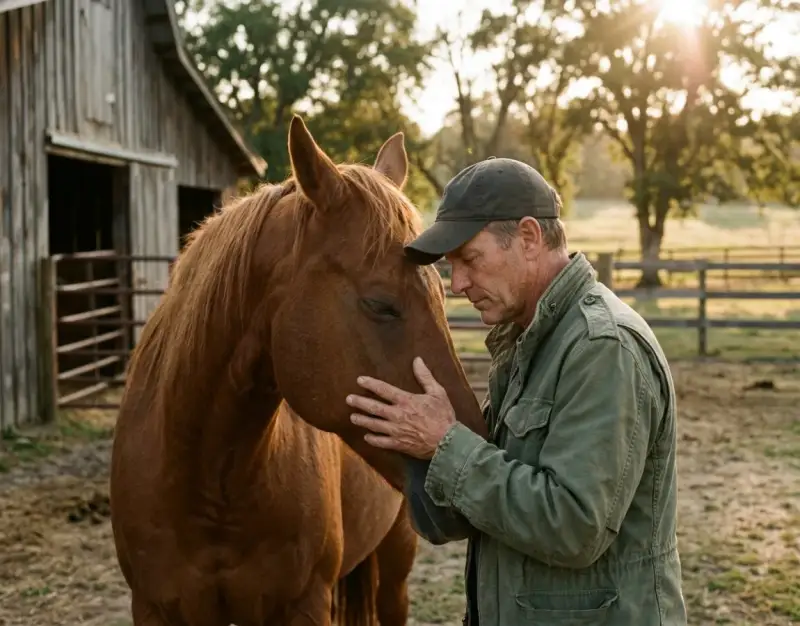
At dawn on a tranquil pasture in rural Virginia, the morning mist hangs low over the paddocks of a specialized sanctuary. A military veteran, carrying the invisible wounds of severe post-traumatic stress disorder (PTSD), walks slowly into a round pen. For years, traditional clinical settings—windowless rooms with muted lighting, structured talk therapy, and pharmacological regimens—yielded limited relief for his hypervigilance and intrusive memories. Across the pen stands a 1,200-pound Clydesdale cross, rescued from neglect just months earlier. The horse’s ears twitch forward; its body tenses slightly, assessing the human’s internal nervous system state. Neither speaks. Yet, in the quiet friction of that first shared moment, a powerful exchange occurs: an instantaneous biofeedback loop grounded in mutual self-preservation and deep somatic awareness.
Over the past two decades, veteran healthcare has undergone a profound paradigm shift. As conventional interventions frequently face high drop-out rates or plateauing outcomes for complex military trauma, researchers and clinicians are turning to experiential, somatic-based modalities. Central to this movement is the convergence of human animal bonds and specialized equine interventions. Sanctuaries across the globe are redefining recovery by merging therapeutic principles with non-verbal interspecies communication. These sanctuaries do not view the animal as a passive tool, but as an active, equal partner in nervous system co-regulation.
What makes this approach uniquely transformative is the frequent pairing of traumatized military personnel with equines sourced through horse rescue programs. Horses that have survived abuse, abandonment, or near-slaughter carry their own hyper-reactive survival mechanisms. When a combat veteran—conditioned to operate in hypervigilance—interacts with a horse operating on survival instinct, a profound psychological mirror is created. This flagship inquiry examines the mechanics, clinical frameworks, facility designs, and real-world outcomes of veteran healing sanctuaries, detailing how equine therapy for ptsd provides a somatic bridge from chronic trauma to lasting neurobiological recovery.
Foundational Principles & Neurological Mechanics of Equine-Assisted Healing
To understand why large ungulates excel in trauma recovery, one must examine the evolutionary biology of the horse alongside the neurobiology of human PTSD. As prey animals, horses survived millions of years of evolution by developing an extraordinarily sensitive autonomic nervous system. Unlike apex predators, whose survival hinges on focused attack, equines survive by continuously scanning their environment for subtle energetic shifts, micro-movements, elevated heart rates, and muscular tension in surrounding organisms. They possess a broad field of peripheral vision (roughly 350 degrees) and an acute capacity for limbic resonance—the ability to share and reflect the emotional states of those around them.
Post-traumatic stress disorder fundamentally dysregulates the human autonomic nervous system (ANS), locking individuals into chronic sympathetic activation ("fight or flight") or dorsal vagal shutdown ("freeze or collapse"). According to Dr. Stephen Porges’ Polyvagal Theory, therapeutic healing requires establishing a state of safety that allows the ventral vagal system ("social engagement") to take precedence. Traditional talk therapy often demands cognitive processing (top-down) before the body feels safe. Conversely, equine-assisted interventions work from the bottom up: the horse acts as a biological mirror, instantly reflecting the veteran's autonomic state without judgment, pretense, or social masking.
"The horse does not care about military rank, medals, or verbal defense mechanisms. It responds exclusively to authentic somatic energy. If a veteran presents calm compliance verbally while their heart rate is spiking at 120 beats per minute, the horse reads the internal physiology, refusing to engage until genuine congruence is achieved."
This dynamic forms the core mechanics of co-regulation. When a veteran learns to lower their physiological arousal—through deep diaphragmatic breathing, somatic grounding, and intentional spatial awareness—the horse senses the shift and lowers its own head, licking and chewing as a sign of parasympathetic activation. This mutual feedback loop provides immediate, empirical validation to the veteran that they can regulate their inner environment, laying the biological groundwork for long-term psychological restructuring.
1. Protocol Architecture: Designing Experiential Equine Interventions
Effective therapeutic programs avoid chaotic, unstructured interactions. Instead, modern sanctuaries follow precise, phased protocols designed to build trust, safety, and somatic self-awareness iteratively. The structured intervention protocol outlined below moves from non-contact observation to dynamic spatial regulation.
Phase I: Passive Herd Observation and Spatial Mapping
The therapeutic journey begins without direct physical contact. Veterans are introduced to the herd within a safe perimeter, observing equine social hierarchies, non-verbal boundaries, and body language. During this phase, participants learn to identify subtle equine cues: ear pinning, tail swishing, head lowering, and rhythmic shifting of weight. Concurrently, the facilitating therapist guides the veteran to conduct an internal somatic inventory, noticing their own heart rate, breathing cadence, and muscle constriction.
By mapping their own internal state while observing herd interactions, veterans begin externalizing internal conflict. They frequently project their own relational patterns onto specific horses, identifying the "hyper-vigilant lookout," the "isolated loner," or the "overly defensive leader." This projection provides an invaluable, non-threatening entry point for subsequent clinical debriefing.
Phase II: Haltering, Groundwork, and Non-Verbal Co-Regulation
Once safety parameters and non-contact observation are established, participants move into ground-based activities utilizing lead ropes and halters. Riding is intentionally excluded in early treatment stages; the goal is not mastery or dominance over the animal, but collaborative partnership. Veterans are tasked with guiding a horse through basic spatial exercises—such as asking the horse to yield its space, walk side-by-side, or halt—using only body position, eye contact, and internal energy adjustments.
If a veteran approaches a horse with suppressed anger or anxiety, the horse will typically move away, plant its feet, or display defensive posture. The step-by-step methodology requires the veteran to pause, employ somatic grounding techniques (such as box breathing or sensory orientation), drop their shoulder tension, and re-approach. The precise moment the veteran achieves internal calm, the horse yields its spatial pressure, reinforcing the neurobiological circuit of emotional self-regulation.
2. The Dual-Rescue Dynamic: Integrating Traumatized Equines in Veteran Healing Sanctuaries
A unique evolution within veteran healing sanctuaries is the deliberate integration of horse rescue programs. While traditional therapy horse programs utilize highly trained, unflappable horses, dual-rescue models pair trauma-impacted humans with equines that have survived severe neglect, abuse, or displacement. This parallel setup creates a unique environment for mutual healing.
Selection, Rehabilitation, and Ethical Screening for Rescue Horses
Not every rescued horse is suited for therapeutic work. Sanctuaries maintain rigorous evaluation frameworks to protect both human and animal safety. Rescued horses undergo a comprehensive veterinarian, dental, and behavioral intake assessment. Equines displaying unpredictable aggression or severe physical pain are placed in dedicated rehabilitation programs before any human interaction is introduced.
| Evaluation Phase | Focus Area | Clinical Metric / Assessment Standard | Safety & Welfare Outcome |
|---|---|---|---|
| Phase 1: Medical Stabilization | Physical Rehabilitation | Henneke Horse Body Condition Score (BCS >= 4/9), lameness diagnostic, bloodwork analysis. | Ensures freedom from chronic pain that could trigger defensive reactions. |
| Phase 2: Behavioral Baseline | Reactivity & Boundary Screening | Assessment of flight thresholds, recovery time post-stimulus, curiosity markers versus avoidance. | Identifies horses capable of healthy boundary assertion without explosive panic. |
| Phase 3: Controlled Interaction | Interspecies Relational Readiness | Observation of equine choice behavior when approached by novel humans in open arenas. | Confirms the horse willingly seeks human contact rather than enduring it passively. |
Parallel Healing Frameworks and Somatic Mirroring
The psychological synergy between a traumatized veteran and a rescued horse rests on shared experiential knowledge. Combat veterans often report feeling disposable, misunderstood, or permanently damaged by their combat experiences. Observing a rescued horse—scarred, cautious, yet resilient—triggers profound empathy and breaks down emotional guardedness faster than traditional clinical settings.
When a veteran watches a rescue horse step back from a sudden sound, process the trigger, sign off with a deep exhale, and return to grazing, the veteran learns a vital lesson in trauma processing: trauma reactions are natural survival responses, not permanent character defects. The realization that they can help socialize and restore confidence in a vulnerable animal empowers veterans, restoring their sense of purpose, agency, and self-worth.
3. Clinical and Experiential Integration: Somatic Experiencing in the Arena
The biological mechanisms of equine therapy for ptsd reach their highest efficacy when combined with somatic psychology. Modalities such as Somatic Experiencing (SE), developed by Dr. Peter Levine, emphasize completing interrupted self-defense responses and discharging trapped survival energy from the body. The arena environment offers a practical lab for this somatic completion.
Somatic Tracking and Biofeedback Realities
During grooming sessions, veterans engage multiple sensory pathways: touch, smell, rhythmic motion, and deep muscle engagement. Facilitators prompt veterans to track their internal sensations: "Notice what happens to your jaw as you brush the horse's neck," or "Track the temperature change in your hands as the horse steps closer."
Research confirms that close physical interaction with horses can lower human blood pressure, decrease cortisol production, and improve Heart Rate Variability (HRV). HRV measures the variation in time between consecutive heartbeats; higher variability indicates a flexible, adaptive autonomic nervous system. As the horse’s rhythmic heart rate and low respiratory frequency interact with the veteran, the human heart rate syncs with the equine, bringing both organisms into autonomic harmony.
Building Emotional Resiliency Through Spatial Dynamic Work
Trauma often destroys personal boundaries. Combat deployment forces individuals to operate either without boundaries (hyper-vulnerability) or behind impenetrable walls (emotional detachment). In the arena, spatial exercises teach veterans how to establish clear, healthy boundaries without aggression.
Using body posture, energetic intention, and physical tools (such as lead ropes), veterans practice asking a 1,200-pound animal to step back out of their personal space. When executed correctly—with clear intention and zero anger—the horse responds immediately by taking a step back. This concrete experience demonstrates that setting boundaries does not require violence or confrontation, providing a clear model for personal relationships outside the arena.
4. Sanctuary Infrastructure, Environmental Design, and Safety Regulations
Designing a facility specifically geared toward veteran recovery demands a trauma-informed architectural perspective. Standard equestrian centers can accidentally trigger PTSD episodes if they feature enclosed dark spaces, narrow corridors, unexpected loud noises, or high overhead structures that trigger hypervigilance. Veteran healing sanctuaries are custom-designed to minimize environmental triggers and promote neurological calm.
Trauma-Informed Ranch Planning and Architectural Principles
Key infrastructure choices directly influence therapeutic success. Layouts prioritize open sightlines, broad walkways, abundant natural lighting, and peaceful gathering places. Arenas utilize open-air timber frames rather than echoing metal structures to reduce sudden acoustic triggers. Sensory gardens, quiet water features, and expansive pastoral views provide integrated spaces for decompression before and after equine sessions.
Safety protocols remain paramount. Facilities enforce strict facilitator-to-participant ratios, requiring a dual-professional team for clinical work: a Licensed Mental Health Professional (LMHP) managing psychological dynamics, and a certified Equine Specialist (ES) monitoring equine body language, physical safety, and arena mechanics.
5. Building Sustainable Community Support Networks and Social Ecosystems
Healing does not occur in isolation. While arena breakthroughs provide vital psychological shifts, those gains must be integrated into daily social life. Modern sanctuaries serve as community anchors, creating social ecosystems where veterans, families, and local volunteers build sustainable support networks.
Integrating veterans into broader community efforts helps break the isolation that often accompanies chronic PTSD. Sanctuaries organize hands-on community projects, ranch maintenance days, and collaborative gatherings. To build a thriving support ecosystem, programs often encourage participants to take part in broader community events. For example, veterans learning to rebuild social connections can look into initiatives like How to Host a Community Clothing Swap to Fight Fast Fashion and Foster Connection, which offer practical frameworks for hosting inclusive, eco-conscious neighborhood gatherings that strengthen local social bonds.
Similarly, public gatherings centered around creative expression offer complementary avenues for community reintegration. Sanctuaries frequently host weekend events that bring together local artists, musicians, and veteran families. Experiencing shared, uplifting cultural events plays a massive role in trauma recovery; exploring community initiatives such as Uplifting Communities: The Power of 'Porch Fest' in Bringing Neighbors Together Through Music illustrates how public artistic gatherings can foster deep local connection, ease social anxiety, and build supportive networks outside the clinical arena.
6. Multidisciplinary Facilitation and Dual-Professional Modalities
The success of high-impact equine-assisted trauma programs depends on seamless teamwork between psychological clinicians and equestrian professionals. Operating without clinical oversight risks re-traumatizing vulnerable veterans, while operating without equine expertise compromises animal welfare and physical safety. The gold-standard treatment model relies on a co-facilitation framework.
The Licensed Mental Health Professional & Equine Specialist Team
During an active session, the Licensed Mental Health Professional (LMHP) focuses entirely on the human participant—monitoring micro-expressions, speech patterns, autonomic shifts, and emotional regulation. Simultaneously, the Equine Specialist (ES) monitors the horse—watching ear positioning, tail tension, foot placement, and subtle signs of anxiety or stress. This dual focus ensures that both human psychological needs and animal welfare standards are met in real time.
Integrating Experiential and Creative Modalities
Combining somatic equine therapy with creative expression accelerates emotional processing. After round-pen sessions, veterans are often encouraged to translate non-verbal insights through journaling, sculpting, or music creation. Non-verbal self-expression allows processing without forcing words onto traumatic experiences before the participant is ready. Discoveries of how creative outlets facilitate personal breakthroughs can be seen in stories like Kindness in Action: We Bought a Dream Musical Instrument for a Talented Street Musician, demonstrating how access to creative mediums can unlock emotional expression, restore dignity, and help heal deep psychological wounds.
Real-World Case Studies & Scenarios: Data-Driven Outcomes
To evaluate the real-world impact of sanctuary interventions, consider a comparative study of two distinct approaches over a 12-week intervention period across 60 military veterans diagnosed with severe, treatment-resistant PTSD (PCL-5 score >= 50).
Cohort A: Standard Unstructured Equine Visits (Control)
Participants engaged in weekly, unstructured equine visits consisting of open horse riding, casual grooming, and informal peer conversation without licensed clinical oversight or somatic protocols.
Cohort B: Dual-Rescue Somatic Sanctuary Protocol (Experimental)
Participants engaged in a structured 12-week program incorporating somatic tracking, ground-based co-regulation exercises, dual-rescue horse pairing, and dual-facilitator clinical debriefs (LMHP + ES).
| Outcome Metric | Cohort A (Unstructured Visits) | Cohort B (Structured Somatic Model) | Statistical Significance |
|---|---|---|---|
| Mean PCL-5 Score Reduction | -8.4 points (14.2% drop) | -26.8 points (48.3% drop) | p < 0.001 (Clinically Significant) |
| Program Completion Rate | 61.5% retention | 93.3% retention | p < 0.01 |
| Resting Heart Rate Variability (HRV) | +4
Related Themes:
← Previous Story
Kindness & Mental Health: Why Expressing Gratitude Rewires Your Brain for HappinessNext Story →Collaborative Welfare: Pairing Senior Mentors With At-Risk Youth for Life-Changing GuidanceCommunity Reflections 0 |
Be the first to share a gentle reflection on this story.