
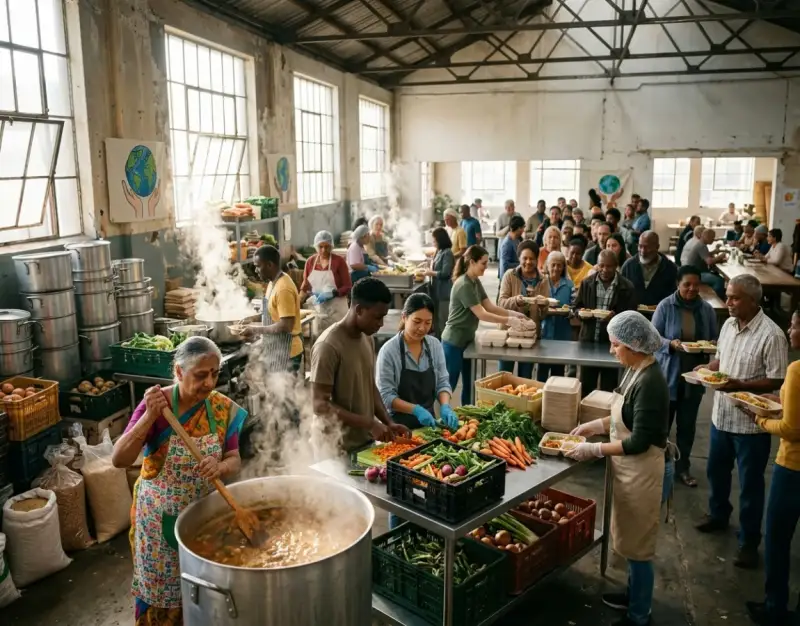
In an era defined by rapid technological acceleration, economic volatility, and profound socio-economic divides, the fundamental human need for nourishment remains our most basic equalizer. Across the globe, millions of individuals wake up each day facing the harrowing uncertainty of food insecurity. Yet, nestled within the heart of urban sprawls, rural villages, and disaster-stricken zones, a quiet revolution is taking place. This revolution smells of simmering lentils, fresh-baked bread, and communal hope. It is driven by the indomitable spirit of global goodness, manifested through decentralized, resilient, and fiercely compassionate community kitchens that feed millions across continents every single day.
The landscape of modern humanitarian aid has undergone a massive paradigm shift. Traditional, top-down bureaucratic relief efforts, while historically necessary, often struggle with bureaucratic delays, high administrative overhead, and a lack of localized cultural sensitivity. In response, grassroots food security initiatives have emerged as agile, community-owned lifelines. These spaces do not merely distribute calories; they restore human dignity, foster social cohesion, and transform waste into sustenance. When we examine these operations closely, we realize they are much more than soup kitchens—they are dynamic incubators for worldwide acts of kindness that prove solidarity is a universal language.
This exhaustive investigative feature explores seven of the most remarkable community kitchen networks operating across the globe. By dissecting their mechanics, analyzing their triumphs, and understanding their scalability, we aim to provide an authoritative blueprint for how local resilience can solve global crises. Whether you are an activist, a philanthropist, or a citizen seeking inspiration, the stories and strategies contained within these pages demonstrate that hunger is not an insurmountable flaw of human civilization, but rather a logistical and moral challenge that community-driven action can conquer.
Foundational Principles and Mechanics of Global Community Kitchens
The Anatomy of Sustainable Food Rescue and Distribution
At the core of every successful community kitchen lies a sophisticated, hyper-local logistics network. Food waste is one of the greatest paradoxes of modern civilization; while millions starve, billions of tons of edible food are discarded annually by supermarkets, restaurants, and agricultural producers. Community kitchens act as vital ecological and humanitarian filters, intercepting this food before it reaches landfills. By partnering with local farmers' markets, wholesale distributors, and grocery chains, these kitchens practice circular economics at its finest. They salvage perfectly nutritious, surplus ingredients and transform them into hot, culturally appropriate meals within hours.
Furthermore, the operational mechanics require stringent adherence to health, safety, and nutritional standards. Unlike traditional restaurants driven by profit margins, community kitchens operate on a metric of human well-being. Nutritionists and volunteer chefs collaborate to ensure that every plate served meets essential caloric and micronutrient requirements. This attention to dietary health is particularly crucial when serving vulnerable populations, including unhoused individuals, refugees, and low-income families whose access to fresh produce is frequently restricted. Through meticulous inventory tracking and cold-chain management, these organizations prove that scale and quality can coexist in charitable operations.
Empowerment Through Co-Production and Shared Labor
A critical differentiator between paternalistic charity and true community empowerment is the concept of co-production. The most enduring community kitchens do not view their patrons as passive recipients of aid; rather, they invite them to become active participants in the cooking and distribution process. This model dismantles traditional power dynamics and replaces them with a sense of shared ownership. When individuals help prepare, season, and serve meals, psychological barriers dissolve, and isolation gives way to camaraderie. This philosophy mirrors the collaborative spirit seen in other grassroots movements, such as when Youth and Elders Unite: How Intergenerational Gardening Projects Are Healing Isolation, where bringing diverse groups together creates lasting emotional bonds and community resilience.
Training and skill development represent another foundational pillar. Many community kitchens function as culinary academies, offering marginalized individuals—including former convicts, refugees, and recovering addicts—valuable job training. By teaching professional knife skills, kitchen management, and food safety certifications, these initiatives provide a tangible pathway to financial independence. Thus, a single community kitchen operates simultaneously as an emergency relief center, an environmental crusader, and a workforce development hub, multiplying its social return on investment exponentially.
1. The Langar at Golden Temple (Amritsar, India)
An Industrial-Scale Marvel of Devotion and Equality
Operating continuously for centuries, the Langar at the Golden Temple in Amritsar, India, stands as the gold standard for community-fed solidarity. Serving between 100,000 and 150,000 free meals every single day—regardless of caste, creed, religion, or gender—this monumental operation is powered almost entirely by voluntary service, known as sewa. The kitchen functions like a finely tuned industrial facility, utilizing massive stainless-steel cauldrons, automated roti-making machines, and conveyor belts, yet it retains a deeply spiritual and humbling atmosphere where every volunteer is considered an equal servant of humanity.
The daily logistical requirements are staggering: tons of lentils, wheat flour, rice, and vegetables are processed, cooked, and served in massive dining halls known as *langar halls*. Diners sit shoulder-to-shoulder on the floor on long mats, a deliberate architectural choice designed to strip away societal hierarchies. Whether you are a billionaire industrialist or a destitute laborer, you sit in the exact same row and eat the exact same meal. This profound egalitarianism exemplifies the purest form of global goodness, offering an inspiring blueprint for how massive populations can be nourished through love and shared civic duty.
Replication and Global Adaptation of the Langar Model
The philosophy of the Langar has transcended the borders of Punjab, inspiring Sikh communities and secular humanitarian groups to establish similar open-kitchen models in major metropolitan areas across the UK, Canada, Australia, and the United States. These satellite initiatives adapt the core principle—free food for anyone who asks, with no questions asked—to local urban contexts. For instance, mobile langar vans deploy to city centers on weekends, serving warm, vegetarian meals to unhoused populations.
To implement a successful community meal service inspired by the Langar model, organizations must focus on three core operational pillars:
- Radical Inclusivity: Establish a strict zero-barrier policy where identification, background checks, or religious affiliations are never prerequisites for receiving a meal.
- Volunteer Integration: Create clear, accessible entry points for community members to contribute labor, fostering a culture where everyone feels they have a stake in the kitchen's success.
- Scalable Infrastructure: Invest in durable, commercial-grade equipment and hygienic storage systems capable of handling high-volume surges during economic downturns or winter emergencies.
2. The Community Plate Network (São Paulo, Brazil)
Combatting Urban Hunger Through Waste Diversion
In the sprawling metropolis of São Paulo, Brazil, extreme wealth inequality sits side-by-side with staggering volumes of agricultural waste. Enter the Community Plate Network (*Rede de Pratos Comunitários*), an ambitious urban food security initiative that targets wholesale food markets where tons of cosmetically imperfect fruits and vegetables are discarded daily. By deploying swift logistics teams and refrigerated transport, this network rescues pristine produce before it hits the dumpsters, routing it directly to decentralized neighborhood kitchens managed by local women's cooperatives.
These neighborhood kitchens act as culinary anchors within favelas and low-income districts. Mothers and local grandmothers—affectionately known as *cozinheiras comunitárias*—take charge of menu planning, transforming rescued staples into nutrient-dense, traditional Brazilian stews, rice dishes, and soups. This localized approach ensures that the meals respect the culinary preferences of the community, avoiding the cultural disconnect often associated with generic imported food aid. The initiative demonstrates how environmental sustainability and social welfare can be seamlessly integrated into a single, cohesive framework.
Building Economic Resilience from the Ground Up
Beyond feeding the hungry, the São Paulo network places heavy emphasis on financial literacy and micro-entrepreneurship. Once a community kitchen achieves baseline operational stability, organizers help the local cooperatives spin off secondary micro-enterprises, such as selling preserved jams, pickled vegetables, or baked goods at local street markets. A portion of the proceeds is funneled back into purchasing cooking gas and maintenance supplies, ensuring long-term self-sufficiency.
This economic multiplier effect transforms aid recipients into producers and business owners. When communities are given the tools to manage their own food supply chains, they build psychological and financial resilience that insulates them against future macroeconomic shocks. This echoes the sustainable mindset required in ecological stewardship, much like how communities manage natural resources, mirroring efforts found in sustainable land management and initiatives where Human-Animal Bonds: The Surprising Way Goats Are Helping Clear Invasive Weeds Sustainably highlights natural, symbiotic solutions to complex environmental challenges.
3. World Central Kitchen’s Rapid-Response Hubs (Global Deployments)
Gastronomic Relief in Disaster Zones
Founded by renowned chef José Andrés in response to the devastating 2010 earthquake in Haiti, World Central Kitchen (WCK) has redefined humanitarian catering. When natural disasters, conflicts, or geopolitical crises strike—whether hurricanes in the Caribbean, earthquakes in Turkey, or war zones in Ukraine—WCK is frequently among the first responders on the ground. Instead of distributing dry, tasteless rations or complex MREs (Meals Ready-to-Eat), WCK sets up immediate field kitchens that cook fresh, comforting, culturally resonant meals for displaced families and frontline emergency workers.
The operational agility of WCK is legendary. By activating local restaurant owners, unemployed chefs, and passionate volunteers, they turn shuttered restaurants, school cafeterias, and street corners into high-capacity production hubs within 24 to 48 hours of a disaster. Their philosophy is simple yet revolutionary: a warm meal is not just about calories; it is hope, humanity, and a reminder that the world has not forgotten about those suffering in their darkest hours. This approach elevates emergency food relief into an art form rooted in profound empathy.
Mobilizing Local Supply Chains Under Crisis Conditions
Operating in active disaster zones requires master-level logistics and rapid risk assessment. WCK bypasses traditional bureaucratic bottlenecks by purchasing ingredients directly from local farmers, fishermen, and markets that survived the disaster. This dual-action strategy achieves two vital goals: it provides immediate sustenance to the affected populace while simultaneously injecting much-needed capital back into the collapsing local economy, accelerating overall recovery.
Key strategies for executing rapid-response food relief include:
- Asset Mapping: Maintaining pre-vetted digital directories of commercial kitchens, utility access points, and regional food suppliers across high-risk geopolitical zones.
- Decentralized Command: Empowering local chefs and regional coordinators to make immediate purchasing and menu decisions without waiting for approval from distant headquarters.
- Safety and Sanitation Protocols: Implementing rigorous water purification, food handling, and waste management protocols to prevent disease outbreaks in compromised post-disaster environments.
4. Food Not Bombs Collectives (Decentralized Global Movement)
Anarchist Ethics and Direct Action in Public Spaces
Operating without a central headquarters, president, or corporate sponsor, Food Not Bombs (FNB) is a decentralized network of autonomous affinity groups operating in over 1,000 cities worldwide. Founded in 1980 by anti-nuclear activists in Cambridge, Massachusetts, FNB operates on a straightforward, provocative premise: if governments can spend billions on militarism and warfare, society has more than enough resources to ensure that every human being has access to fresh, healthy food. Every weekend, FNB volunteers gather rescued produce, cook massive vegan meals outdoors, and serve them for free in public parks to anyone who is hungry.
The political philosophy underpinning FNB is direct action and mutual aid. By setting up serving tables in high-visibility public spaces—often facing resistance from municipal authorities and anti-homeless ordinances—they spark crucial conversations about systemic poverty, housing crises, and resource allocation. The kitchens are deliberately non-hierarchical; decisions are made through consensus, and everyone from university students to unhoused veterans shares equal footing in running the operation. FNB proves that grassroots global goodness often requires challenging unjust institutional inertia.
Navigating Legal Hurdle and Public Health Regulations
Because Food Not Bombs operates largely outside institutional structures, groups frequently encounter legal pushback from city councils citing health codes, zoning laws, and public space regulations. Overcoming these hurdles requires a sophisticated understanding of constitutional rights, public assembly laws, and community coalition-building. Successful FNB chapters often partner with civil rights lawyers and sympathetic local businesses to secure designated public spaces for their weekly servings.
Furthermore, maintaining pristine hygiene standards in outdoor or makeshift kitchen settings is paramount. Even without commercial facilities, volunteers undergo rigorous training in cross-contamination prevention, temperature control, and safe food storage. This unwavering commitment to safety protects their patrons and deprives critics of ammunition, solidifying their reputation as reliable, compassionate community protectors.
5. Parish and Community Pantries (UK and European Models)
Transforming Surplus into Social Supermarkets
Across the United Kingdom and Western Europe, the rise of community pantries and "social supermarkets" represents a sophisticated evolution of the traditional food bank model. Organizations like FareShare and local church-led parish networks have pioneered a membership-based grocery model that preserves user dignity. Instead of waiting in long lines for a pre-packed parcel of miscellaneous canned goods, members pay a nominal weekly subscription fee (such as £5) and gain access to a bright, well-stocked storefront where they can choose their own fresh produce, dairy, bakery items, and household essentials.
This model effectively bridges the gap between emergency relief and long-term financial independence. The small membership fee removes the psychological stigma associated with charity, allowing individuals to feel like paying customers. Simultaneously, the revenue generated helps cover warehouse rent, refrigerated van maintenance, and utility bills, making the operations remarkably sustainable. It is a shining example of how thoughtful structural design can transform a charity model into a dignified community marketplace.
Fostering Mental Health and Social Integration
European community pantries are designed to be community hubs rather than mere transactional storefronts. Many feature integrated cafes, mental health advisory booths, resume-building workshops, and children's play areas. When a parent comes in to collect groceries, they are invited to sit down for a cup of tea and a conversation with a social worker or a friendly neighbor. This holistic approach addresses the root causes of isolation and poverty.
Actionable steps for launching a dignified social pantry include:
- Market-Style Layout: Design the physical space to mirror a high-end boutique or local grocery store, using shelving, proper lighting, and clear signage to enhance the shopping experience.
- Sliding-Scale Memberships: Implement flexible contribution structures where members pay what they can afford, ensuring no one is ever turned away due to an inability to pay.
- Wraparound Services: Partner with local healthcare providers, legal aid clinics, and employment agencies to offer on-site consultations during pantry operating hours.
- Inventory Management Software: Utilize modern warehouse management systems (WMS) to track expiration dates, nutritional value, and turnover rates of perishable donations.
- Digital Choice Platforms: Implement tablet-based ordering systems that allow patrons to maintain their dignity while selecting foods tailored to their medical needs.
- Mealth Metrics Tracking: Partner with academic researchers to measure health outcomes among regular patrons, generating data that can attract institutional grants and government funding.
- Audit Your Local Ecosystem: Research community kitchens, mutual aid groups, or food rescue organizations operating within your city or region.
- Commit Your Time or Resources: Sign up for a single volunteer shift, donate surplus pantry items, or establish a monthly financial contribution to support operational overhead.
- Advocate for Systemic Change: Support local policies that incentivize food waste reduction, protect public space sharing, and fund grassroots nutritional security initiatives.
6. The Community Kitchens of Kibera (Nairobi, Kenya)
Grassroots Nutrition in Informal Settlements
In Kibera, one of Africa’s largest urban informal settlements located in Nairobi, Kenya, food security is a daily battle against extreme poverty, high inflation, and lack of infrastructure. Here, local women-led community organizations have established grassroots kitchens that serve fortified porridge and hot midday meals to thousands of malnourished children and elderly residents. Operating in densely populated neighborhoods with limited access to clean running water and electricity, these kitchens rely on ingenious resourcefulness, utilizing energy-efficient jiko stoves and solar-powered refrigeration units.
These kitchens serve as vital nutritional sanctuaries. Many children living in Kibera suffer from stunting and micronutrient deficiencies due to chronic food scarcity. By working closely with local pediatric nutritionists, the kitchen coordinators design specialized recipes incorporating locally available, nutrient-dense ingredients such as amaranth, Moringa leaves, and protein-rich legumes. This targeted approach dramatically improves child development outcomes, school attendance rates, and overall community health.
Overcoming Infrastructure Deficits Through Innovation
Operating a high-volume kitchen in an area with intermittent electricity and water supplies requires immense technical creativity. The community kitchens of Kibera have become pioneers in adaptive technology, integrating rainwater harvesting systems, solar thermal cookers, and biogas digesters fueled by organic kitchen waste. These innovations insulate the kitchens from municipal utility failures and drastically reduce operating overhead.
Furthermore, these initiatives act as safe havens during periods of civil unrest or political violence. When streets become impassable and local markets close down, the community kitchen remains a neutral, protected zone where neighbors of all ethnic and political backgrounds can find sanctuary and sustenance. They embody the absolute pinnacle of local resilience and global goodness.
7. St. John’s Bread & Life (Brooklyn, New York, USA)
Merging High-Tech Digital Choice with Compassionate Care
Located in the heart of Brooklyn, New York, St. John’s Bread & Life is a digital-age pioneer in emergency food distribution. Recognizing that dignity is deeply tied to autonomy, this institution modernized its emergency food program by developing an online client-choice pantry system. Patrons can browse available inventory via digital tablets or mobile apps, selecting items that match their specific cultural diets, medical restrictions (such as diabetic-friendly or low-sodium options), and family size.
Behind this high-tech front end is an industrial commercial kitchen and a vast packing warehouse that processes millions of pounds of food annually. St. John's goes far beyond emergency feeding; they offer comprehensive social work services, legal assistance, vision screenings, and computer literacy classes. By combining cutting-edge digital inventory management with old-fashioned, compassionate human hospitality, they provide a blueprint for how modern metropolitan food security initiatives can operate with maximum efficiency and deep respect for the individual.
Data-Driven Nutrition and Public Health Partnerships
The leadership team at St. John’s treats food as medicine. By tracking client dietary choices and collaborating with local university medical centers, they conduct ongoing public health studies examining the correlation between access to fresh, nutritious food provided by community kitchens and the reduction of chronic diet-related illnesses like hypertension and type-2 diabetes in low-income urban populations.
Best practices for integrating technology and health into community kitchens include:
Real-World Case Studies & Scenarios: Success vs. Failure
To truly understand what makes a community kitchen thrive or collapse, we must examine concrete operational scenarios. The difference between a thriving humanitarian beacon and a failed initiative often comes down to logistics, community buy-in, and financial transparency.
Scenario A: The Thriving Urban Collective (The Success Model)
The Context: A mid-sized post-industrial city in North America faced rising homelessness and food desertification. A coalition of local chefs, social workers, and neighborhood volunteers established "The Common Table," a community kitchen operating out of a retrofitted church basement.
Execution Strategy: Instead of relying solely on sporadic public donations, the founders secured formal partnerships with three regional supermarket chains for daily surplus rescue. They implemented a digital volunteer scheduling app and established a steering committee that included individuals with lived experience of homelessness.
Results & Data Points: Within 18 months, The Common Table scaled from serving 100 meals a week to over 3,500 meals a week. Food waste sent to local landfills dropped by 42% across participating supermarkets. Over 60 individuals graduated from their culinary job training program, with an 80% employment retention rate after one year. The initiative achieved financial sustainability through a mix of small municipal grants, private philanthropic backing, and a popular weekly paid-community dinner open to the general public.
Scenario B: The Well-Intentioned Collapse (The Failure Model)
The Context: A group of passionate corporate executives decided to launch a weekend soup kitchen in a densely populated downtown district without consulting local community leaders or establishing reliable supply chains.
Execution Strategy: Operating purely on enthusiasm, they relied on sporadic crowd-sourced food donations and weekend volunteers. They failed to conduct health inspector pre-clearance and ignored the specific dietary and cultural preferences of the neighborhood's predominant immigrant population.
Results & Data Points: Within four months, the project shuttered permanently. The reasons for failure were manifold: severe food safety violations due to improper temperature logs; alienation of local residents who felt patronized by foreign organizers serving culturally inappropriate food; and complete financial depletion once initial personal donations ran dry. The project left behind broken trust and wasted resources, illustrating that passion without professional operational planning is a recipe for failure.
Critical Mistakes and How to Avoid Them
Launching and sustaining a community kitchen is an immense undertaking fraught with operational hazards. Practitioners must navigate complex regulatory landscapes, community dynamics, and financial hurdles. Below are the top five most costly mistakes practitioners make and the exact countermeasures to prevent them.
1. Neglecting Cultural Sensitivity and Dietary Relevance
The Mistake: Distributing generic, culturally inappropriate, or unpalatable food items simply because they were donated in bulk, ignoring the religious, ethnic, and medical needs of the population being served.
The Countermeasure: Conduct thorough community needs assessments before designing menus. Establish advisory boards comprising members of the local demographic to guide ingredient sourcing and recipe development, ensuring respect and nutritional appropriateness.
2. Failing to Prioritize Legal and Regulatory Compliance
The Mistake: Operating without proper health department permits, food handler certifications, or liability insurance, assuming that charitable intent exempts the organization from municipal laws.
The Countermeasure: Partner with municipal health authorities from day one. Invest in mandatory food safety training for all volunteers (such as ServSafe certification) and secure robust non-profit liability insurance to protect the organization against legal risks.
3. Top-Down Paternalism vs. True Community Co-Production
The Mistake: Adopting a savior complex where organizers view patrons as passive charity cases rather than equal human beings, creating social friction and discouraging community participation.
The Countermeasure: Implement co-production models. Involve patrons directly in meal preparation, kitchen governance, and cleanup. Foster a welcoming environment rooted in mutual respect and shared dignity.
4. Poor Financial Diversion and Over-Reliance on a Single Funding Source
The Mistake: Depending entirely on one major donor, grant, or corporate sponsor, leaving the kitchen vulnerable to sudden economic shifts or corporate restructuring.
The Countermeasure: Diversify revenue streams immediately. Combine small philanthropic grants, recurring individual donor programs, sliding-scale membership models, and community fundraising events to build a resilient financial buffer.
5. Ignoring Volunteer Burnout and Mental Health Exhaustion
The Mistake: Overworking a small core group of dedicated volunteers without providing adequate rotation, mental health support, or appreciation, leading to catastrophic staff attrition.
The Countermeasure: Establish structured volunteer management systems, clear shift rotations, psychological debriefing sessions, and regular community appreciation events to sustain morale and prevent compassion fatigue.
Comprehensive Comparison Table: Models of Community Feeding
To help practitioners and researchers evaluate different approaches to food security, the following semantic table compares key models across structural efficiency, dignity, cost, and scalability.
| Feeding Model | Primary Mechanism | Dignity & Autonomy | Cost Efficiency | Scalability |
|---|---|---|---|---|
| Industrial Langar Model | Voluntary mass service, open to all without barriers | High (Radical egalitarianism, sit together) | Very High (Driven by volunteer labor and donations) | Extreme (Can scale to hundreds of thousands daily) |
| Social Pantry / Supermarket | Membership-based choice grocery model | Very High (Choice-based, nominal fee removes stigma) | High (Subsidized by surplus rescue and small fees) | Moderate (Requires fixed real estate and logistics) |
| Rapid-Response Disaster Kitchen | Mobile, emergency deployment using local chefs | Moderate (Focused on immediate caloric relief & comfort) | Variable (High upfront mobilization costs) | High (Rapid deployment during acute crises) |
| Traditional Soup Kitchen | Fixed-site meal service of pre-cooked plates | Low to Moderate (Often enforces long lines and paternalism) | Moderate (Dependent on food bank allocations) | Moderate (Limited by physical seating capacity) |
| Decentralized Mutual Aid Collective | Volunteer-led public park food sharing (e.g., FNB) | High (Anti-hierarchical, public visibility) | High (Low overhead, 100% waste rescue) | Low to Moderate (Autonomous, decentralized networks) |
Frequently Asked Questions (FAQ)
How do community kitchens ensure food safety when using rescued or donated surplus food?
Food safety is maintained through strict adherence to HACCP (Hazard Analysis Critical Control Point) principles adapted for charitable food rescue. Volunteers and staff are trained in rapid temperature checks, hygienic sorting, and strict sorting protocols. Any perishable items that show signs of spoilage or breach of the cold chain are immediately discarded or composted. Furthermore, many jurisdictions have Good Samaritan Food Donation Acts that protect donors and kitchens from liability when food is distributed in good faith and meets basic health guidelines.
What is the difference between a traditional food bank and a community kitchen?
While both combat food insecurity, their operational models differ significantly. A traditional food bank typically acts as a warehouse that collects, stores, and distributes raw, packaged, or canned grocery items to individuals to cook at home. In contrast, a community kitchen actively transforms ingredients—often rescued surplus food—into hot, ready-to-eat meals served on-site, or operates as a social pantry where patrons can select fresh items. Community kitchens emphasize immediate consumption, socialization, and shared human connection.
How can individuals get involved if they have no professional culinary experience?
Community kitchens welcome volunteers of all skill levels, as culinary operations require a vast array of non-cooking talents. Beyond chopping vegetables and cooking, volunteers are desperately needed for food rescue logistics, driving refrigerated vans, sorting inventory, managing social media, fundraising, grant writing, and greeting guests with hospitality. No matter your background, there is always a vital role for you in a community kitchen.
How do community kitchens fund their ongoing operations without government grants?
Sustainable community kitchens rely on diversified funding ecosystems. This typically includes a mix of private philanthropic foundations, recurring monthly individual donations, corporate social responsibility (CSR) partnerships with local businesses, crowdfunding campaigns, and revenue generated through sliding-scale social enterprise models (such as attached cafes, paid community dinners, or ticketed cooking classes).
Can community kitchens successfully operate in rural areas where food waste and infrastructure are scarce?
Yes, though rural community kitchens require different operational strategies compared to urban centers. Instead of rescuing supermarket surplus, rural kitchens often partner directly with local agricultural cooperatives, small farms, and community gardens to process seasonal harvests. They frequently utilize mobile kitchen vans to reach isolated populations spread across vast geographic distances, relying heavily on community halls and churches as decentralized cooking hubs.
Strategic Roadmap and Final Takeaway
As we gaze into the next two to five years, the landscape of global food security is poised for profound transformation. Climate change, supply chain disruptions, and economic inflation will continue to test the resilience of vulnerable populations across continents. However, the expansion of decentralized community kitchens, powered by digital inventory tools, solar micro-grids, and radical community solidarity, offers a beacon of hope. The future of humanitarian aid lies not in monolithic, top-down institutions, but in hyper-local, adaptive networks that honor human dignity and champion global goodness at every turn.
Your actionable next steps are clear:
Every meal prepared, every volunteer hour logged, and every act of kindness shared brings our global community one step closer to a world where hunger is a relic of the past and nourishment is recognized as an unalienable human right.
Be the first to share a gentle reflection on this story.