
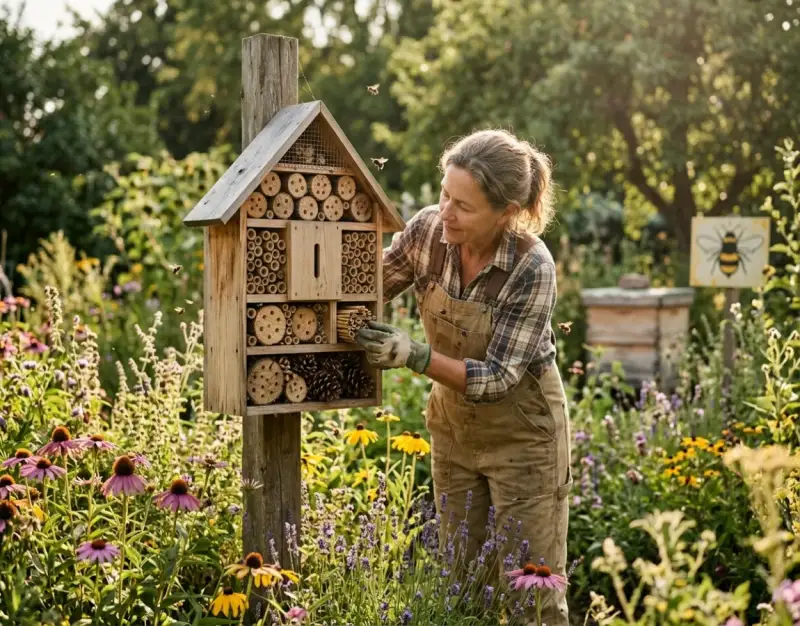
At the break of dawn in a quiet suburban cul-de-sac, while most of the neighborhood lies asleep, a quiet ecological renaissance is taking place. Beneath the sprawling leaves of native purple coneflowers and wild bergamot, tiny solitary bees emerge from hollow plant stems and subterranean burrows to begin their daily forage. This is not a pristine state park or a multi-million-dollar conservation preserve. It is a residential yard, transformed by an ordinary citizen into a high-functioning bee sanctuary. Across the globe, thousands of these micro-habitats are silently appearing in backyards, rooftop gardens, urban community plots, and forgotten roadside strips, forming a decentralized defense network against an unprecedented ecological crisis.
For decades, insect decline was treated by mainstream environmentalism as a distant, abstract problem. Today, the reality is stark and impossible to ignore. Global pollinator populations—encompassing wild bumblebees, solitary mason bees, leafcutters, and mining bees—are facing compound anthropogenic pressures. Industrial agriculture, characterized by vast monocultures and systemic neonicotinoid insecticides, has decimated floral diversity and fragmented natural habitats. Climate change has uncoupled long-standing phenological synchronies, causing flowers to bloom before their native pollinators emerge from winter dormancy. However, a fundamental paradigm shift has taken place: conservation is no longer viewed as the exclusive domain of federal agencies and large non-profits. Urban and suburban landscapes are being recognized as critical refuges capable of supporting higher insect diversity than heavily sprayed agricultural fields.
Establishing a successful bee sanctuary requires far more than scattering a packet of generic wildflower seeds across a patch of grass. True ecological restoration demands a deep, science-based understanding of pollinator biology, floral phenology, nesting hydrology, and chemical mitigation. When designed with intentionality, even a modest quarter-acre lot or urban patio can function as an essential biological node, providing high-quality nectar, protein-dense pollen, non-toxic drinking water, and safe overwintering sites. This comprehensive guide serves as an authoritative blueprint for ordinary citizens seeking to master the art and science of pollinator conservation, transforming ordinary spaces into thriving, resilient havens for our planet's most vital species.
Foundational Principles & Mechanics of Pollinator Ecosystems
To construct an effective bee sanctuary, one must first dismantle the common misconception that saving the bees is synonymous with managed honeybee (Apis mellifera) keepership. While honeybees play an important role in commercial agriculture, they are a domesticated, livestock species native to Europe and Africa. In many urban environments, over-managed honeybee hives can actually outcompete vulnerable native wild bees for scarce floral resources. True environmental conservation focuses on preserving and restoring the thousands of native, wild pollinator species—such as bumblebees (Bombus spp.), mason bees (Osmia spp.), and leafcutter bees (Megachile spp.)—that have co-evolved alongside native plant species over millions of years.
The operational mechanics of a functional sanctuary revolve around four non-negotiable pillars: continuous forage availability, structural nesting substrate, non-toxic micro-environments, and hydrological access. Native pollinators operate within extraordinarily small foraging radiuses compared to honeybees. While a honeybee can fly up to three to five miles for forage, small solitary bees may only travel 200 to 500 feet from their nest during their entire adult life cycle. Consequently, all essential life-support elements must exist in tight spatial proximity within the sanctuary network.
Furthermore, native bees exhibit highly specialized dietary and life-history adaptations. Oligolectic bees, for instance, rely exclusively on pollen from specific native plant families or genera to feed their larvae; without those specific host plants, the species disappears. Additionally, roughly 70% of wild bee species are ground-nesters requiring undisturbed, bare soil, while the remaining 30% are cavity-nesters utilizing dead wood, hollow reeds, or beetle tunnels. Understanding these precise mechanics allows sanctuary managers to move past superficial aesthetic gardening and engineer habitats that yield quantifiable ecological returns.
Step-by-Step Strategic Blueprint for Building a Bee Sanctuary
1. Site Selection, Mapping, and Microclimate Optimization
Solar Exposure Analysis and Thermal Regulation
Insects are ectothermic organisms whose metabolic rate, flight capability, and foraging efficiency depend entirely on ambient environmental temperatures. When selecting and designing a site for a bee sanctuary, maximizing morning solar exposure is paramount. Native bees must warm their flight muscles to approximately 85°F to 95°F before taking flight. Positioning your core forage zone and nesting structures in a south- or southeast-facing orientation ensures that early morning sunlight strikes the sanctuary, allowing bees to initiate foraging hours before cooler, shaded areas warm up.
Beyond solar alignment, thermal regulation requires establishing micro-windbreaks. Cold, gusty winds rapidly deplete a pollinator's energy reserves and make precise flight landing difficult. Strategic placement of dense, non-invasive native shrubs, stone walls, or wooden living fences along the windward boundary (typically north or northwest) creates a calm microclimate. This ambient shelter retains ambient heat and drastically reduces the energy cost incurred by foraging bees as they navigate between blooms and nests.
Finally, consider the ground-level thermal dynamics. Incorporating thermal mass into your sanctuary landscape—such as natural fieldstones, dark gravel patches, or exposed clay mounds—creates localized heat reservoirs. These features absorb solar radiation during peak daylight hours and gradually re-radiate warmth into the immediate micro-habitat during cool early spring mornings and late autumn afternoons, effectively extending the daily operational window for native pollinators.
Establishing Chemical Buffer Zones and Soil Remediation
Even the most meticulously planted garden can become an ecological trap if exposed to chemical drift from adjacent properties. Establishing a functional sanctuary requires defining clear buffer zones along all property boundaries. High-density evergreen hedges, such as native junipers, arborvitae, or thick shrubs, act as physical biological filters that trap airborne drift from neighbor-applied synthetic pesticides, lawn herbicides, and mosquito barrier sprays before they reach your primary foraging zones.
Prior to planting native flora, you must audit and remediate the underlying soil chemistry. Heavy history of synthetic fertilizer application or chemical lawn treatments can create high nitrogen levels and chemical residues that disrupt native plant development and harm ground-nesting bees. Conducting a comprehensive soil test allows you to assess heavy metal contamination, pH, and organic matter levels. Avoid hyper-enriching native plant beds with high-nitrogen commercial composts; most native flora thrive in lean, well-draining soils, and excessive nutrients encourage lush foliage at the expense of floral blooms.
If past soil contamination is confirmed, consider phytoremediation strategies—using deep-rooted, non-invasive native plants to draw out toxins—or build raised bio-retention beds filled with clean, locally sourced topsoil and native sub-soil mixtures. Protecting the soil integrity is vital, as subterranean nesting bees spend up to eleven months of their yearly life cycle incubating within the top 2 to 12 inches of topsoil.
2. Native Flora Selection and Year-Round Bloom Succession
Mapping Bloom Phenology for Continuous Nectar and Pollen Supply
The single greatest nutritional hazard facing urban and suburban pollinators is the "forage gap"—a period during the growing season when no nectar or pollen sources are blooming in the immediate area. To build a resilient sanctuary, you must engineer a continuous bloom succession schedule that spans from early spring (when queens emerge from hibernation) through late fall (when overwintering reproductive females prepare for diapause).
Early spring phenology requires heavy reliance on native woody trees and shrubs, which produce massive volumes of pollen and nectar before herbaceous perennials emerge. Species like native willows (Salix spp.), serviceberry (Amelanchier), redbud (Cercis canadensis), and wild plums offer indispensable early-season calories. As spring turns to summer, the sanctuary should transition into taproots and composite flowers, such as milkweeds (Asclepias), purple coneflower (Echinacea purpurea), and coreopsis, which provide high-protein pollen during peak brood-rearing months.
Late-season bloom continuity is critical for overwintering survival. In late summer through late autumn, goldenrods (Solidago spp.) and native asters (Symphyotrichum spp.) must dominate the landscape. Goldenrod pollen is exceptionally rich in lipids and proteins required by bumblebee queens to build fatty tissue prior to winter hibernation. A sanctuary designed with at least three distinct, heavily blooming plant species active during every single month of the growing season will permanently sustain resident wild bee populations.
Prioritizing Native Genotypes Over Ornamental Hybrids
The commercial nursery industry is saturated with highly modified cultivars and exotic ornamental plants bred for showy, double-petaled flowers, unique foliage colors, or sterile seed production. From an ecological perspective, these human-engineered plants are often useless to pollinators. Double-flowered cultivars frequently have their nectar glands and stamens mutated into extra petals, physically blocking access to pollen or eliminating it entirely.
When procuring material for your sanctuary, always prioritize straight species native flora indigenous to your specific eco-region. Native plants co-evolved alongside local bee populations; their chemical signaling, floral morphology, and nectar production timing are precisely calibrated to match the sensory apparatus and physical morphology of native wild bees. For instance, short-tongued solitary bees require open, dish-shaped flowers like native wild strawberry or black-eyed Susans, while long-tongued bumblebees are specialized to forage on deep tubular flowers like beardtongue (Penstemon).
Furthermore, research demonstrates that engaging in environmental stewardship yields measurable psychological benefits, mirroring the phenomena explored in The Compassion Contagion: Why Doing Good for Others Boosts Your Own Immune System, where altruistic action enhances immune response and psychological resilience. By cultivating native botanical ecosystems, gardeners lower personal stress markers while restoring critical biodiversity loss within their hyper-local geography.
3. Nesting Habitat Infrastructure for Solitary and Social Bees
Soil Conservation and Substrate Preparation for Ground-Nesting Bees
While artificial "bee hotels" receive substantial attention in urban gardening media, approximately 70% of the world's 20,000+ bee species build their nests subterraneanly. Ground-nesting wild bees (such as miner bees, sweat bees, and cellared bees) require open access to exposed, uncompacted soil. Heavy lawn turf, thick wood chip mulch layers, and dense plastic weed barriers completely destroy subterranean nesting opportunities.
To construct ground-nesting infrastructure, clear small patches (2x2 feet or larger) of vegetation in full solar exposure areas. The soil should be left bare or lightly stabilized with sparse, clumping native grasses. Native solitary bees prefer well-draining sandy loam or clay-sand mixes that allow them to excavate vertical tunnels ranging from a few inches to over two feet deep without structural collapse. Avoid tilling these zones, as soil inversion destroys existing tunnel networks and crushes developing larvae.
Additionally, create sloped or mounded soil features within the sanctuary. Vertical clay banks or sloped dirt mounds mimic natural riverbanks and eroded hillsides, offering perfect drainage during heavy rain events. This structural variation prevents water from pooling in nest entrances, preventing larval mortality caused by fungal infections like chalkbrood.
Designing Cavity-Nesting Infrastructure for Mason and Leafcutter Bees
The remaining 30% of native bee species nest in above-ground cavities, including hollow plant stems, abandoned beetle borings in dead wood, and crevices in stone. To accommodate these species, reserve standing dead trees (snags) wherever safety permits, or install fallen logs and coarse woody debris directly into flower beds. Wood-boring beetles will create natural cavities that mason and leafcutter bees swiftly claim.
If constructing targeted artificial nest structures—such as mason bee houses—strict design standards must be observed to avoid turning the nest into a pathogen breeding ground. Avoid plastic tubes or sealed block systems that trap moisture and encourage mold growth. Instead, use natural, breathable materials such as hollow phragmites reeds, natural bamboo, or precision-drilled wooden blocks lined with replaceable parchment paper tubes. Drill holes must range in diameter from 1/8 inch to 3/8 inch to accommodate diverse species, with a depth of at least 5 to 6 inches to ensure correct female-to-male egg laying ratios.
Position these structures at least 4 to 6 feet above the ground, facing southeast under a protective roof overhang to shield the tubes from direct rain and wind. Crucially, these artificial habitats require annual maintenance: harvest and clean cocoons in late fall, and replace paper liners or natural reeds annually to prevent the lethal build-up of parasitic wasps and Krombeini mites.
4. Eliminating Chemical Toxicity and Managing Pathogen Vectors
Implementing Absolute Organic Pest Management (IPM)
A true sanctuary operates under a zero-tolerance policy for synthetic pesticides, systemic neonicotinoids (e.g., imidacloprid, thiamethoxam), organophosphates, and broad-spectrum synthetic pyrethroids. Systemic chemicals are absorbed by the plant's vascular system and expressed in nectar and pollen at sub-lethal concentrations. While these doses may not kill an adult bee instantly, they impair navigation, reduce learning capacity, weaken immune responses, and dramatically lower queen reproductive success.
Replace synthetic chemical interventions with a holistic Integrated Pest Management (IPM) framework. Cultivate biological pest control by attracting natural predators such as ladybugs, lacewings, hoverflies, and predatory beetles. Accept minor insect damage on foliage as a normal sign of a healthy micro-ecosystem. When pest outbreaks threaten key botanical assets, utilize mechanical barriers, hand-picking, or direct high-pressure water streams to dislodge insect clusters.
If organic sprays become absolutely mandatory, restrict applications exclusively to OMRI-listed horticultural oils or insecticidal soaps. Apply these treatments strictly at dusk after all wild bees have ceased foraging for the day, and never apply any direct or indirect treatment—even organic ones—onto open floral blooms where bees land.
Preventing Parasitic and Fungal Vectors Across Wild Populations
As wild and managed bees interact within urban refugia, micro-sanctuaries can accidentally act as hotspots for disease transmission if sanitary conditions fail. Nosema parasites, Black Queen Cell Virus, and Deformed Wing Virus can spill over from managed honeybee colonies into native wild bumblebee populations via shared flowers. Keeping sanctuary floral density high reduces the viral load on individual blooms by spreading foraging traffic across thousands of distinct flowers.
Maintain strict sanitization protocols around artificial nesting sites. Never allow nesting blocks to remain in place for multiple years without thorough cleaning or reed replacement. Accumulated larval feces, pollen mite debris, and damp organic waste invite fungal pathogens like Ascosphaera aggregata (chalkbrood), which can wipe out an entire generation of cavity-nesting mason bees.
If you maintain backyard honeybee hives on the same land asset as your wild bee sanctuary, manage Varroa destructor mite populations aggressively using soft organic treatments like formic or oxalic acid. High mite loads in unmanaged domestic hives increase viral shedding onto surrounding vegetation, directly threatening adjacent wild pollinator populations.
5. Water Feature Engineering and Hydration Systems
Constructing Safe, Shallow Pollinator Drinking Stations
Bees require consistent access to non-contaminated water for metabolic hydration, thermoregulation of their nests, and diluting crystallized honey or stored pollen reserves. However, open, steep-sided water bodies like traditional birdbaths, pools, or deep ponds represent lethal drowning hazards for small insects. A sanctuary must incorporate intentionally designed shallow water infrastructure.
Construct pollinator drinking stations using wide, shallow basins filled with natural river rocks, coarse gravel, or natural cork floats. The stones must protrude above the water line, providing stable, dry landing platforms where bees can safely alight, lower their proboscis to the waterline, and drink without risking falling into deep water. Alternatively, shallow birdbaths can be packed with river stones and mosses, keeping the water level adjusted precisely flush with the tops of the stones.
Place drinking stations in warm, wind-protected areas close to primary floral foraging beds. Bees prioritize water sources that offer safe footing, elevated mineral content, and ambient warmth over cold, deep water features situated in windy zones.
Maintaining Water Quality and Preventing Vector Mosquito Breeding
Stagnant, unmanaged water features rapidly degrade into biological hazards, accumulating foul bacteria, algae toxins, and becoming breeding grounds for vector mosquitoes (such as Culex and Aedes species). Water stations must be routinely refreshed to maintain purity and prevent the accumulation of bird droppings, which introduce pathogenic bacteria.
To eliminate mosquito breeding without using chemical larvicides, rinse out and replace standing water in small shallow bowls every three to four days—a timeline shorter than the minimum egg-to-pupae lifecycle of mosquitoes. For larger pond features or self-contained recirculating water streams, install solar-powered pumps or small bubblers. Continuous water movement deters mosquito oviposition while keeping the water oxygenated and fresh.
If standing water volume is too large to drain regularly, treat the water exclusively with Bacillus thuringiensis israelensis (BTI) dunks. BTI is a naturally occurring soil bacterium that targets mosquito and blackfly larvae exclusively, presenting zero toxicity to bees, wildlife, humans, or beneficial aquatic organisms.
6. Community Mobilization and Micro-Sanctuary Networks
Creating Urban Pollinator Corridors Across Neighborhoods
While an isolated home sanctuary provides immense local value, its biological capacity is bounded by its geographic footprints. Native pollinators thrive when individual sanctuaries are linked into continuous, urban-suburban pollinator corridors. By connecting adjacent backyards, school grounds, corporate parks, and public right-of-ways, communities create high-volume biological transit routes that allow wild bees to disperse, mate, and maintain healthy genetic diversity.
Engaging neighbors to convert monoculture turf grass lawns into micro-refugia relies on visible, attractive landscaping choices and clear educational outreach. Installing simple, professional signage—such as "Certified Native Pollinator Habitat"—signals to the community that an un-mown, floral-rich yard is an intentional ecological haven rather than a neglected lot. Lawn reduction initiatives, such as converting 30% of front-yard grass into native perennial borders, drastically cut municipal water use while scaling habitat corridors.
Furthermore, much like the youth movement detailed in Voices for the Voiceless: The Inspiring Teen Activists Fighting Animal Testing Worldwide, grassroots ecological initiatives are increasingly led by passionate citizens who refuse to accept institutional inaction. Neighborhood coalitions can successfully petition local municipalities to alter mowing schedules along public highway medians, reduce park herbicide spraying, and pass native plant protection ordinances.
Citizen Science Tracking and Long-Term Biodiversity Monitoring
Transforming a sanctuary from a personal passion project into a contributor to global conservation science requires active monitoring and data collection. Citizen scientists serve as the eyes and ears of conservation biology, tracking insect abundance, species range shifts, and phenology changes across regions that academic researchers cannot physically cover.
Participate in established monitoring programs such as iNaturalist, the Great Sunflower Project, or regional Bumble Bee Atlases. By taking clear macro photographs of wild bees utilizing your sanctuary flora and uploading them with temporal and location tags, you feed real-time biodiversity metrics into global scientific databases like the Global Biodiversity Information Facility (GBIF).
Additionally, keeping a physical logbook of bloom dates, insect sightings, weather conditions, and nesting tube occupancy allows you to evaluate your sanctuary's success over time. Observing which plant species attract the highest diversity of wild solitary bees enables continuous optimization of your botanical collection year after year.
Similarly, this dedicated work mirrors the quiet dedication seen in Restoring Forgotten Graves: Volunteers Who Clean Up and Honor Abandoned Cemeteries, where urban pollinator advocates are reclaiming neglected spaces, replacing weeds and concrete with life-sustaining native ecosystems through steady, community-driven labor.
Real-World Case Studies & Field Scenarios
Scenario A: The 0.25-Acre Suburban Lawn Conversion (High-Impact Success)
In 2021, an urban residence in suburban Ohio systematically converted a 0.25-acre traditional Bermuda grass lawn into an engineered native bee sanctuary. The baseline survey revealed a monoculture turf environment with zero nesting sites and only 2 recorded insect species (primarily non-native European honeybees passing through).
The conversion strategy prioritized three actions: eliminating 80% of turf grass using sheet mulching, installing 35 straight-species native perennials mapped for early spring to late autumn bloom succession, and establishing a 100-sq-ft bare clay-sand ground-nesting patch alongside sanitized mason bee nesting cabinets. By year three, biological surveys documented 48 distinct wild bee species, including the federally vulnerable Rusty Patched Bumble Bee (Bombus affinis). Soil metrics showed a 40% increase in
Be the first to share a gentle reflection on this story.