
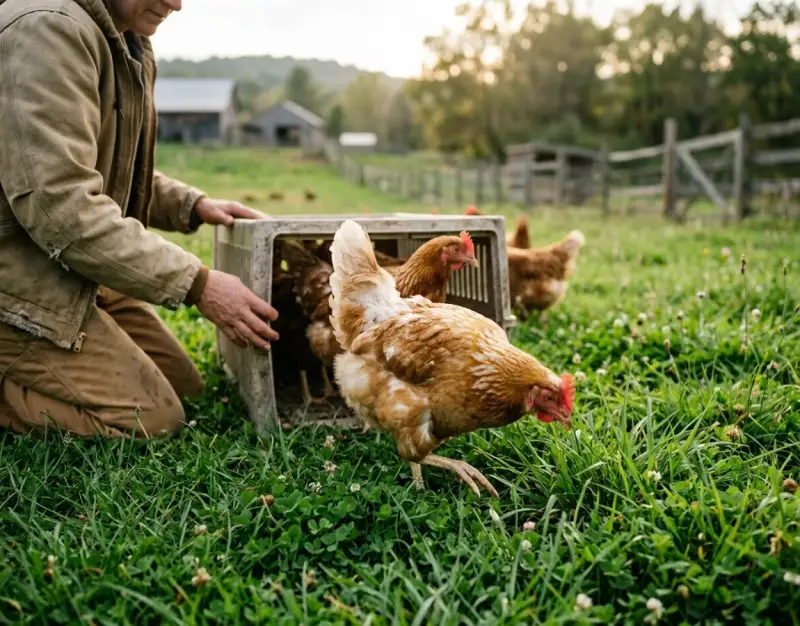
The dawn breaks entirely differently over a sanctuary pasture than it does inside the sterile, shadowed confines of a commercial industrial egg production facility. For millions of hens trapped within the conventional battery cage system, the universe is measured in square inches of rusted wire mesh, the ceaseless clatter of automated feeding chains, and the harsh, artificial glare of fluorescent lighting that never truly dims. These birds spend their brief, intensely managed production cycles standing on sloping wire floors designed to roll eggs away instantly, their claws deformed, their feathers worn down to raw skin, and their spirits systematically broken by systemic confinement. Yet, when these spent hens are liberated and brought to a compassionate animal rescue, a remarkable transformation unfolds as their feet finally touch living earth, blades of green grass, and warm sunlight for the very first time.
In recent years, shifting consumer consciousness and dedicated grassroots advocacy have catalyzed a profound movement centered on the rehabilitation of industrial egg-laying hens. What was once viewed merely as a commercial disposal issue by massive agricultural conglomerates is now recognized by compassionate animal advocates as an urgent rescue imperative. Organizations, sanctuaries, and dedicated backyard chicken keepers are stepping up to intercept hens slated for premature depulation, offering them a second chance at a dignified life. This transition, however, is far from straightforward. Moving a bird from an environment of extreme sensory deprivation to the dynamic, unpredictable ecosystem of a backyard or pasture requires specialized knowledge, deep patience, and an unwavering commitment to physiological and psychological rehabilitation.
At its core, rescuing battery hens is not simply about changing an animal's physical location; it is about rewriting a traumatized life narrative. The bond forged between humans and these resilient birds highlights the profound capacity for healing found within the broader human-animal connection. Much like Anonymous Scholarship: The Retired Teacher Who Funded College Tuitions for an Entire Class, which demonstrated how quiet, deliberate acts of generosity can alter destinies on a mass scale, rescuing industrial hens represents a collective refusal to let vulnerable lives be forgotten by the machinery of mass production. This comprehensive guide will explore the systemic realities of battery farming, map out the strategic blueprints for successful rehabilitation, examine common pitfalls, and provide an exhaustive framework for transforming a traumatized industrial hen into a vibrant, grass-scratching sanctuary resident.
Understanding the Industrial Reality of Battery Hens
The Anatomy of the Battery Cage System
To successfully rehabilitate a rescued hen, one must first comprehend the profound physiological and psychological impact of the environment from which she came. Traditional battery cages pack anywhere from four to ten birds into wire enclosures where each animal is allotted less space than a single sheet of letter paper. This extreme spatial restriction prevents basic natural behaviors such as wing-flapping, dust-bathing, ground-scratching, and perching. The wire flooring, while efficient for waste management, causes severe foot deformities, bumblefoot, and keel bone fractures due to chronic pressure and the lack of supportive flat surfaces.
Furthermore, the artificial lighting schedules manipulated by commercial producers trick the hens’ endocrine systems into unnatural, hyper-accelerated egg production. A commercial layer is bred to expend an immense amount of calcium and protein to produce an egg almost daily. By the time these birds reach 18 to 24 months of age—often referred to in the industry as "spent"—their bodies are heavily depleted. Their calcium reserves are heavily taxed, leading to osteoporosis-like brittleness, and their reproductive tracts are prone to fatal disorders such as egg yolk peritonitis, internal laying, and salpingitis. Understanding these baseline medical vulnerabilities is the first critical step in providing targeted post-rescue care.
The Psychological Toll of Confinement
Beyond the physical degradation, battery hens suffer profound psychological trauma that manifests as unusual behavioral anomalies upon release. Deprived of environmental enrichment, many newly rescued hens exhibit stereotypies—repetitive, non-functional behaviors such as pacing, incessant head-weaving, or obsessive feather-pecking born of chronic stress and frustration. Because they have never seen an open sky, overhead movement from passing clouds, flying birds, or airplanes can trigger panic attacks, causing the hens to pile on top of one another in terror.
Social dynamics within industrial cages are also severely disrupted. Lacking the space to establish natural pecking orders or escape aggressive conspecifics, birds often develop hyper-reactive startle responses and acute social anxiety. When introduced to a sanctuary setting, these hens do not immediately recognize grass, dirt, or open water as safe or beneficial. Their first encounter with a blade of grass is often met with hesitation or fear. Unraveling this deeply ingrained institutional conditioning requires a structured, gentle approach that prioritizes sensory acclimation and slow integration into natural surroundings.
The Rescue Pipeline and Legal Frameworks
Intercepting hens from industrial operations involves navigating a complex landscape of agricultural biosecurity, commercial contracts, and animal welfare laws. Commercial egg facilities operate under stringent biosecurity protocols designed to prevent outbreaks of avian influenza and other devastating pathogens. Consequently, walk-on rescues are rarely permitted. Instead, animal rescue organizations and sanctuaries typically coordinate mass depopulations directly with farm owners or corporate liaisons just prior to scheduled slaughter or replacement cycles.
Transporting spent hens demands meticulous planning. Cramming traumatized birds into poorly ventilated crates can induce fatal shock, especially given their fragile bone density. Rescuers must utilize specialized transport crates lined with soft, absorbent bedding, ensuring proper ventilation and minimizing transport duration. Upon arrival at the sanctuary or private rescue, birds undergo immediate triage, where experienced handlers assess feather loss, parasite infestation, and overall body condition score, establishing an individualized baseline medical chart for each incoming flock member.
Preparing the Sanctuary Environment for Arrival
Designing a Low-Stress Quarantine and Transition Zone
The immediate post-rescue phase is the most critical window in a battery hen’s journey. Rushing a newly liberated bird directly out into a sprawling, open pasture with established flock members is a recipe for disaster. Instead, incoming rescue chickens require a dedicated, predator-proof transition zone or quarantine coop that bridges the gap between industrial confinement and free-range life. This space should be meticulously sanitized, well-ventilated, and free from sharp edges, high drop-offs, or complex obstacles that could injure clumsy, weak-muscled birds.
Flooring within the transition zone requires careful consideration. Because battery hens have tender feet unaccustomed to rough ground, initial bedding should consist of deep, clean straw or soft wood shavings layered over secure, predator-proof hardware cloth. Low-profile perching bars—placed only a few inches off the ground—should be introduced gradually, allowing birds with severe keel deformities to choose whether or not they feel stable enough to roost. Food and water must be placed at multiple low-level stations so that weaker hens do not have to compete aggressively or travel excessive distances to nourish themselves.
Nutritional Rehabilitation and Calcium Support
A battery hen’s nutritional needs diverge significantly from those of a healthy, mature backyard layer. Years of forced, high-volume egg production deplete systemic nutrient stores, requiring a carefully calibrated dietary rehabilitation protocol. Immediately upon arrival, birds should be provided with a high-quality, easily digestible complete layer feed supplemented with free-choice oyster shell for calcium replenishment, alongside insoluble grit to aid in the digestion of newly introduced whole grains and fibrous forage.
To combat systemic inflammation and support tissue repair, many avian veterinarians and experienced sanctuary directors recommend incorporating immune-boosting supplements such as poultry multivitamin electrolytes and probiotics into the drinking water for the first week. Additionally, introducing nutrient-dense whole foods like scrambled eggs (yes, chickens readily eat cooked eggs and benefit from the protein), finely chopped dark leafy greens, and soaked grains can stimulate lagging appetites and kickstart digestive motility after days of commercial mash diets.
Gradual Outdoor Acclimation and Grass Introduction
The moment of first contact with grass is momentous, yet it must be managed with scientific precision to prevent digestive shock and psychological panic. Industrial hens have digestive tracts adapted solely to processed, pulverized feed; introducing raw, fibrous pasture grass abruptly can cause severe crop impaction or sour crop. For the first several days in the transition coop, handlers should bring small, finely hand-chopped clumps of fresh grass or dandelion greens indoors, allowing the birds to sample vegetation in a secure, controlled environment.
Once the hens display curiosity and digestive stability, they can be introduced to natural sunlight and living earth via a secure, fully enclosed ground run or a movable chicken tractor. This protected enclosure allows them to experience the sights, sounds, and tactile sensations of the pasture without exposing them to aerial predators or overwhelming open spaces. Over a period of two to three weeks, as their leg muscles strengthen and their confidence builds, the doors can be opened to allow fully free-range exploration under watchful human eyes.
Medical Triage and Healing Common Industrial Ailments
Addressing Severe Feather Loss and Skin Vulnerability
Due to chronic abrasion against wire cage walls and stress-induced feather pecking from overcrowded cage mates, the vast majority of rescue chickens arrive with significant feather loss—ranging from bald breasts and rumps to near-total denudation. Without the thermal insulation of feathers, these birds are acutely vulnerable to hypothermia in cooler weather and severe sunburn during summer months. Sanctuary managers must monitor ambient temperatures closely, utilizing supplemental heat lamps or heated shelter spaces during cold nights, and breathable, lightweight chicken saddles to protect raw, exposed skin from solar radiation and secondary pecking.
Skin care during this phase involves regular inspection for external parasites such as northern fowl mites, scaly leg mites, and lice, which thrive on stressed, weakened hosts. Safe, veterinarian-approved dusting powders or topical treatments should be administered immediately upon arrival. As the hens’ nutritional status improves and they enter their first post-rescue molt, new feathers will begin to push through. This feather regeneration process demands exceptionally high protein intake—often requiring a temporary switch to a high-protein grower or feather-fix feed to support rapid keratin synthesis.
Managing Skeletal Degradation and Foot Health
The skeletal system of a battery hen tells the story of industrial intensification. Cage layer fatigue, a form of severe osteoporosis induced by calcium mobilization from bones into eggshells, leaves many rescue hens with fragile, easily fractured bones. Handlers must design habitats that minimize vertical movement; ramps should replace ladders, and nesting boxes should be situated at floor level to prevent jumping injuries. Pain management, supervised by an avian veterinarian, is often necessary during the initial weeks as hens adjust to moving their atrophied joints and weak musculature.
Bumblefoot—a stubborn, staphylococcal bacterial infection of the footpad characterized by hard black cores and painful swelling—is similarly ubiquitous among former battery hens. Treatment requires a meticulous surgical or soaking protocol: softening the foot in warm Epsom salt baths, carefully debriding necrotic tissue, applying antiseptic dressings, and bandaging the foot securely. Ensuring that these birds transition from abrasive wire mesh to soft bedding, deep wood mulch, and lush, dew-kissed grass is essential for preventing the recurrence of pododermatitis and allowing their scarred footpads to heal.
Reproductive Tract Maintenance and End-of-Life Comfort
Because industrial breeding has hardwired these hens to produce eggs at an unsustainable rate, reproductive disorders remain the leading cause of mortality among rescue chickens. Even after rescue, many hens will continue to cycle aggressively for months. To mitigate the life-threatening risks of internal laying, egg binding, and reproductive tumors, many sanctuaries work with veterinarians to implement hormonal suppression therapies, such as deslorelin acetate implants, which temporarily halt ovulation and allow the hen's reproductive tract to rest and regress.
For hens whose reproductive systems have already sustained irreversible damage, palliative care and emotional comfort take precedence. Integrating a balanced lifestyle that mirrors natural circadian rhythms helps stabilize hormonal surges. When practicing mindfulness and observation during these quiet sanctuary evenings, caring for a fragile, recovering animal fosters a profound sense of inner peace—much like The Science of Gratitude Journals: How Writing Down Three Good Things Changes Your Brain, where intentional focus on positive transformation reshapes cognitive well-being for both the caregiver and the recipient of care.
Social Integration and Flock Dynamics
Navigating the Pecking Order with Established Residents
Introducing newly rescued battery hens to an existing sanctuary flock is a delicate sociological balancing act. Established chickens possess a deeply entrenched hierarchy—the pecking order—and view outsiders with immediate suspicion and territorial aggression. Because rescue hens arrive physically weakened, terrified, and socially naive, direct integration without a buffer period can result in severe bullying, injury, or even mortality. A successful integration strategy relies on the "look, don't touch" methodology.
Sanctuary operators utilize side-by-side enclosures—often constructed with wire fencing or chicken wire partitions within the main coop—that allow the two groups to see, hear, and smell one another for a minimum of one to two weeks. This barrier phase diminishes the novelty factor and enables the rescue hens to observe flock routines from a position of safety. When physical integration finally occurs, it should take place in a sprawling, open pasture with multiple feeding and watering stations, ensuring that subordinate or slower-moving birds can easily escape aggressive pursuits.
Overcoming Learned Helplessness and Behavioral Recovery
Learned helplessness is a profound psychological condition observed frequently in animals subjected to inescapable, chronic stress. Many battery hens, upon being placed into an open pasture for the first time, will not run, scratch, or explore; instead, they will freeze in place, huddle in a corner, or stare blankly at the horizon, paralyzed by the sudden removal of boundaries. Breaking through this psychological barrier requires gentle, consistent human presence and environmental encouragement.
Sanctuary workers often act as surrogate flock leaders, sitting quietly among the hens, scattering high-value treats like mealworms in the grass, and demonstrating scratching motions with their hands to trigger latent, instinctive behaviors. Over time, curiosity overcomes fear. Once one brave hen takes her first tentative peck at a grub or scratches a furrow in the soil, the flock dynamic shifts. Imitation is a powerful driver in avian behavior, and soon the entire group will engage in dust-bathing and foraging, reclaiming the natural instincts suppressed by industrial agriculture.
The Therapeutic Human-Animal Bond
The relationship that develops between a rescued battery hen and her human caregiver is transformative. Animals that have known humans exclusively as sources of fear, confinement, and automated manipulation slowly learn to associate human presence with safety, warmth, and abundance. This rehabilitation process requires immense emotional intelligence and patience. Handlers learn to read subtle micro-cues—relaxed tail carriage, soft vocalizations, and the closing of eyes during gentle head strokes—that signal growing trust.
This deep bond extends beyond individual animal welfare; it anchors human communities in empathy and stewardship. Engaging volunteers, local schools, and community members in the rehabilitation of rescue chickens fosters a culture of compassion that ripples outward into broader lifestyle choices. As caretakers witness a broken, featherless bird blossom into a confident, golden-plumed forager running across green pastures, they experience a profound validation of their own capacity to effect meaningful, healing change in the world.
Building Sustainable Infrastructure and Enrichment
Designing Pasture Rotation and Foraging Zones
Giving industrial hens their first taste of grass is only the beginning of a long-term land management commitment. Chickens are highly effective foragers, but concentrated scratching and manure deposition can rapidly denude a small pasture, turning vibrant green sward into a barren, muddy wasteland. To prevent environmental degradation and maintain optimal biosecurity, sustainable sanctuaries employ rotational grazing systems—often utilizing movable chicken tractors or subdivided paddock rotation.
Establishing perennial forage crops tailored for poultry—such as white clover, perennial ryegrass, chicory, and alfalfa—provides continuous nutritional enrichment while supporting soil health. Well-managed pastures allow chickens to harvest essential vitamins, omega-3 fatty acids, and micro-nutrients directly from living plants and insects, vastly improving egg quality (for those hens still laying) and overall immune function. Integrating sustainable soil practices ensures that the sanctuary ecosystem thrives harmoniously alongside its avian residents.
Environmental Enrichment for Cognitive Stimulation
Because battery hens spend their formative months in stark, stimulus-poor environments, ongoing cognitive enrichment is vital to prevent boredom, feather-pecking, and stereotypic behaviors in sanctuary life. Enrichment should target all avian senses. Tactile enrichment can include designated dust-bathing pits filled with a mixture of fine sand, diatomaceous earth, and dried wood ash, which are essential for natural plumage maintenance and parasite control.
Visual and auditory enrichment can be introduced through hanging vegetable pinatas (such as whole cabbages or pumpkins suspended at eye level), stump piles that encourage climbing and exploration, and buried treat logs that stimulate natural scratching instincts. Providing a dynamic, ever-changing landscape encourages neural plasticity and helps repair the cognitive deficits induced by prolonged confinement. A stimulated hen is a healthy, resilient hen capable of fully enjoying her retirement years.
Integrating Sustainable Practices into Sanctuary Operations
Running an ethical animal sanctuary requires a holistic approach to resource management that mirrors the natural cycles of the earth. Waste management, feed procurement, and habitat maintenance should be approached through an ecological lens. For instance, bedding materials soiled with chicken manure and nitrogen-rich pasture waste can be systematically composted, transforming agricultural byproducts into rich, organic fertilizer for sanctuary gardens—a process mirrored in community-level sustainability efforts such as How Start a Community Compost Program: Turning Food Waste Into Neighborhood Gold.
By closing the loop between animal care, land stewardship, and organic gardening, sanctuaries model a sustainable blueprint for coexistence. Every aspect of infrastructure—from rainwater harvesting systems for automatic chicken waterers to solar-powered coop lighting—reinforces the core mission of Caring Connections: fostering a balanced, harmonious relationship between humans, animals, and the natural environment.
Real-World Case Studies and Scenarios
Scenario A: The Sunny Meadows Sanctuary Intervention
In the spring of 2023, Sunny Meadows Animal Sanctuary coordinated the rescue of 250 spent white Leghorn hens from a high-density industrial facility in the Midwest. Recognizing the extreme vulnerability of the incoming flock, the sanctuary team prepared a climate-controlled quarantine barn lined with deep, clean wheat straw and equipped with low-level radiant heaters. Upon arrival, veterinary technicians performed individual triage, identifying severe calcium depletion, advanced feather loss, and moderate bumblefoot across 40 percent of the flock.
Instead of releasing the birds into the main pasture, the sanctuary implemented a structured three-week transition protocol. During week one, birds were kept indoors with electrolyte-supplemented water, high-protein mash, and small, hand-distributed clumps of finely chopped orchard grass. By week two, the hens were granted access to a covered outdoor aviary where they experienced direct sunlight and natural breezes for the first time. By week four, fully integrated into rotational pasture paddocks, the flock exhibited robust foraging behaviors, a 92 percent survival rate through the critical initial window, and complete feather regeneration by autumn.
Scenario B: The Backyard Co-Op Pitfall and Recovery
Contrast the structured success of Sunny Meadows with the cautionary tale of a well-meaning suburban backyard keeper who acquired twelve spent battery hens directly from a commercial farm transport truck. Eager to give the birds an immediate "natural" life, the owner bypassed quarantine entirely and placed the fragile hens straight into an open backyard containing an established, dominant flock of Rhode Island Reds, with no transition fencing or nutritional adjustments.
The results were disastrous. The established flock instantly attacked the traumatized, featherless newcomers, resulting in two fatalities from severe pecking trauma within forty-eight hours. Simultaneously, the sudden dietary switch from commercial mash to raw, lush clover caused severe crop impaction in three other hens, requiring emergency veterinary intervention. The owner was forced to rapidly construct a separate quarantine enclosure, implement a strict nutritional recovery protocol, and utilize a slow, two-month side-by-side barrier integration strategy. This cautionary scenario underscores why patience, quarantine protocols, and scientific methodology are non-negotiable in rescue operations.
Critical Mistakes to Avoid When Rescuing Battery Hens
- Skipping Quarantine Protocols: Introducing unquarantined rescue hens directly into an existing flock risks spreading hidden pathogens, external parasites, and infectious diseases while inviting immediate territorial violence. Always maintain a strict minimum two-week quarantine and observation window.
- Abrupt Dietary Transitions: Forcing traumatized, grain-dependent industrial hens onto raw, fibrous pasture grass without gradual introduction can cause fatal crop impaction, sour crop, and severe digestive distress. Introduce greens incrementally in chopped, controlled amounts.
- Ignoring Calcium and Skeletal Vulnerabilities: Failing to provide supplemental calcium, oyster shell, and low-profile living arrangements can result in catastrophic bone fractures and egg-binding episodes in hens whose skeletal systems are severely depleted by intensive laying.
- Underestimating Thermal Vulnerability: Releasing severely denuded, featherless battery hens into cold, windy, or excessively sunny environments without protective saddles or supplemental shelter leads rapidly to hypothermia or solar dermatitis.
- Rushing Social Integration: Forcing timid, cage-shocked rescue birds to compete immediately with aggressive, established flock leaders for food and shelter causes severe psychological trauma. Always utilize side-by-side barrier integration phases.
Comprehensive Comparison Table: Industrial Confinement vs. Sanctuary Rehabilitation
| Metric / Parameter | Industrial Battery System | Sanctuary Rehabilitation Model |
|---|---|---|
| Living Space per Bird | Less than 67 square inches (wire mesh) | Unrestricted pasture access + spacious coop bedding |
| Dietary Profile | Highly pulverized, uniform commercial mash | Balanced layer feed, calcium supplements, fresh forage, and insects |
| Natural Behaviors | Suppressed entirely (no scratching, dust-bathing, or perching) | Encouraged and supported through environmental enrichment |
| Veterinary & Medical Care | Flock-level medication; spent birds culled at 18-24 months | Individualized triage, parasite treatment, hormonal implants, and palliative care |
| Social Structure | Overcrowded, hyper-aggressive, high-stress stocking densities | Harmonious flock integration with established pecking order buffers |
| Lifespan Expectancy | Truncated prematurely to 1.5–2 years due to commercial depreciation | Extended natural retirement lifespan (3–7+ years of dignified life) |
Frequently Asked Questions
Do rescue battery hens still lay eggs, and should I let them?
Yes, rescue battery hens will typically continue to lay eggs for a period after their rescue, driven by their artificial genetic conditioning. However, because their bodies are heavily depleted and prone to fatal reproductive disorders, many sanctuaries and veterinarians recommend encouraging natural regression. This can be achieved by leaving broken eggs in nesting boxes for them to consume (reclaiming lost nutrients) or utilizing hormonal implants prescribed by an avian veterinarian to pause ovulation, giving the hen's reproductive tract a much-needed, life-extending rest.
How do I teach a battery hen that has never seen grass to actually walk on it?
Battery hens often freeze or show visible fear when first exposed to open grass because the open space and tactile sensation are completely alien to them. The key is gradual, pressure-free exposure. Start by placing small clumps of fresh, chopped grass inside their secure transition coop. Once they accept this, use a fully enclosed ground run or chicken tractor placed on the lawn, allowing them to observe the outdoors from safety. Scatter high-value treats like mealworms in the grass to entice them, and let them take their time exploring at their own pace.
What are the most common health issues to look out for in rescue chickens?
The most prevalent medical challenges include severe feather loss and sunburn, bumblefoot (pododermatitis) from wire flooring, calcium deficiency leading to cage layer fatigue and bone fractures, external parasites such as mites and lice, and internal reproductive tract disorders like egg-binding and internal laying. Immediate veterinary triage upon arrival, combined with a nutrient-rich rehabilitation diet and proper foot care, is essential for addressing these systemic vulnerabilities successfully.
How long does it take for a battery hen to regrow her feathers?
Feather regeneration depends heavily on the hen's nutritional status, age, and general health, but it typically occurs during her first post-rescue molt, which often triggers within a few months of transitioning to a lower-stress environment with proper nutrition. To support rapid keratin synthesis and healthy feather regrowth, caretakers should temporarily supplement their diet with high-protein feeds, dark leafy greens, and essential amino acids.
Can rescue chickens successfully integrate with an existing backyard flock?
Yes, rescue chickens can integrate successfully with established flocks, but direct, unmanaged introduction almost always leads to severe bullying or injury. Successful integration requires a strict barrier phase—such as housing the rescues in an adjacent, partitioned section of the coop for at least two weeks so both groups can adjust to each other's presence safely. When physical integration finally occurs, it should happen in a large, open space with multiple feeding stations so subordinate birds can easily escape tension.
Strategic Roadmap and Final Takeaway
The journey of rescuing battery hens and introducing industrial egg-laying chickens to their first taste of grass stands as a powerful testament to the resilience of nature and the depth of the human-animal bond. Over the next two to five years, the animal welfare landscape is projected to see a significant expansion in grassroots sanctuary networks, driven by heightened public awareness of industrial farming practices and an increased demand for ethical, cruelty-free rescue initiatives. As more municipalities and individuals embrace backyard chicken keeping and sanctuary adoption, the methodologies for rehabilitating traumatized industrial animals will continue to be refined through veterinary science and compassionate community action.
Your actionable next step is clear: whether you are preparing to adopt your first pair of rescue hens, supporting a local animal sanctuary through volunteering and donations, or educating your community on the realities of industrial agriculture, every informed action counts. By transforming a sterile industrial survivor into a grass-scratching, sun-bathing sanctuary resident, you participate in a profound act of healing—proving that no life is beyond redemption and that compassion, when put into intentional practice, can literally change the world from the ground up.
Be the first to share a gentle reflection on this story.