
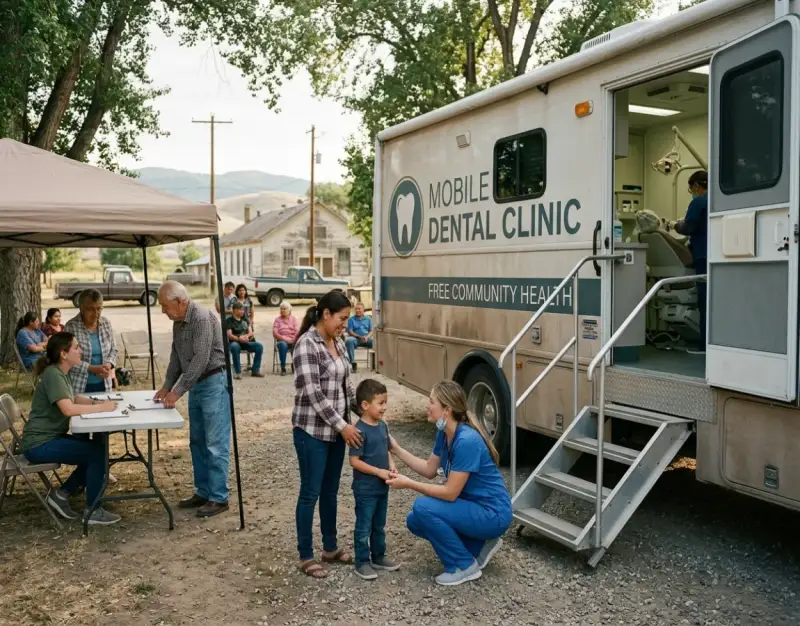
Dawn breaks over an isolated valley in Appalachia, painting the jagged mountain ridges in shades of amber and slate. In the center of a gravel church parking lot, a massive, custom-built tractor-trailer hums quietly to life. Inside this state-of-the-art medical unit, dental instruments are meticulously sterilized, diagnostic imaging screens flicker on, and a team of dedicated practitioners prepares for another grueling day on the front lines of rural welfare. For miles around, residents have lived for decades without access to basic preventative dental care, enduring chronic toothaches, systemic infections, and the quiet, crushing indignity of untreated dental decay. Today, however, that narrative begins to change.
The modern healthcare landscape in isolated regions is defined by profound geographic, economic, and systemic disparities. While urban centers boast specialized medical complexes and an abundance of practitioners, rural communities frequently find themselves trapped in healthcare deserts. Hospitals close, private dental practices find it economically unviable to operate in low-population zones, and transportation barriers render even regional clinics entirely out of reach. Into this void steps the mobile dental clinic—a transformative, highly adaptable intervention designed to deliver free healthcare directly to the doorsteps of those who need it most. By bringing comprehensive dental services where they are most scarce, these rolling operatories are rewriting the rules of community health and proving that access to wellness is a fundamental human right, not a geographic privilege.
At its core, the expansion of mobile dental initiatives represents a paradigm shift in how we approach collaborative welfare projects. Much like the profound systemic transformations explored in stories of grassroots empowerment—such as the inspiring community mobilization seen when Anonymous Scholarship: The Retired Teacher Who Funded College Tuitions for an Entire Class—true systemic uplift relies on targeted, localized generosity meeting institutional resourcefulness. This article will deconstruct the anatomy of a successful mobile dental operation, explore the structural mechanics required to sustain free healthcare delivery in remote regions, and provide an exhaustive blueprint for activists, healthcare administrators, and community leaders aiming to bridge the devastating rural health divide.
Foundational Principles and Mechanics of Mobile Dentistry
Understanding how a mobile dental unit operates requires looking past the gleaming exterior of the vehicle and examining the complex logistical framework that keeps it moving. At its foundational level, a mobile dental clinic is an autonomous or semi-autonomous clinical environment built into a motorized vehicle, an RV chassis, or a pull-behind trailer. These units are engineered to replicate the absolute highest standards of a brick-and-mortar dental office while navigating treacherous mountain roads, muddy farm tracks, and cramped municipal spaces. Every square inch of space is optimized to house dental chairs, high-speed suction units, X-ray machines, sterilization autoclaves, and comprehensive supply inventories.
The operational mechanics rely heavily on self-sufficiency. Because these units frequently park in municipal lots, school yards, or community center grounds where utility hookups are nonexistent or unreliable, they must be equipped with onboard diesel generators, fresh-water holding tanks, gray-water collection systems, and medical-grade air compressors. Furthermore, infection control protocols must be rigidly maintained despite the constraints of a mobile footprint. Waterlines are treated and tested continuously, biohazard waste management is strictly regulated, and digital electronic health record (EHR) systems must synchronize securely via satellite or cellular broadband to ensure continuity of patient data across multiple geographic sites.
Beyond the physical machinery, the core philosophy of mobile dentistry rests on preventative outreach and cultural competency. Providing free healthcare in rural environments is not simply a matter of parking a truck and unlocking the door; it requires building profound trust within tight-knit, often skeptical rural communities. Practitioners must understand local social dynamics, collaborate with regional faith-based organizations and agricultural cooperatives, and dismantle the historical intimidation associated with clinical dental settings. When executed correctly, these foundational principles transform a temporary clinical visit into an enduring bridge of trust and lifelong wellness.
Strategic Blueprint for Launching a Rural Mobile Dental Program
1. Assessing Regional Need and Mapping Geographic Deserts
The genesis of any successful mobile dental initiative is rigorous, data-driven needs assessment. Before purchasing a vehicle or recruiting staff, organizers must map out target regions using public health data, census demographics, and school district health surveys. Identifying areas with high poverty rates, low median household incomes, and a severe shortage of dentists per capita is critical. Planners must evaluate travel times from isolated settlements to the nearest operating dental office, paying close attention to public transportation deficits and seasonal weather hazards that can isolate communities for months at a time.
Once geographic deserts are identified, conducting ground-level qualitative research is essential. Organizers should host town halls, meet with local county extension agents, and consult with regional food banks and community health centers. Asking the right questions uncovers hidden barriers: Are working parents unable to take time off to travel two hours for a routine filling? Do elderly residents lack vehicles capable of navigating unpaved roads? By compiling quantitative health metrics alongside qualitative human stories, project leaders can design an operational route that maximizes impact and ensures resources are deployed where the deficit is absolute.
2. Securing Funding, Grants, and Sustainable Financial Models
Operating a mobile dental clinic is capital-intensive. Initial expenditures include purchasing and retrofitting a specialized vehicle, which can easily range from two hundred thousand to over half a million dollars, depending on the number of operatories and diagnostic capabilities. Ongoing operational costs—such as fuel, insurance, vehicle maintenance, dental consumables, personal protective equipment, and professional salaries—demand a resilient, diversified funding strategy. Relying on a single revenue stream is a recipe for premature insolvency.
To achieve financial sustainability, programs must blend philanthropic grants, government subsidies, corporate sponsorships, and, where applicable, sliding-scale fee structures or Medicaid reimbursement models. Securing federal grants from agencies like the Health Resources and Services Administration (HRSA) or partnering with regional hospital networks can provide foundational capital. Additionally, community foundations and corporate philanthropy often jump at the chance to support tangible, highly visible welfare projects. Just as cultivating personal resilience through mindfulness can profoundly alter an individual's outlook—much like the psychological shifts detailed in discussions on The Science of Gratitude Journals: How Writing Down Three Good Things Changes Your Brain—securing long-term financial health for a welfare project requires establishing daily habits of rigorous financial tracking, donor stewardship, and transparent impact reporting.
3. Recruiting and Retaining Passionate Clinical and Support Staff
The finest equipment in the world is useless without the human talent required to wield it with skill and compassion. Staffing a mobile dental clinic presents unique recruitment challenges. Dentists, dental hygienists, dental assistants, and administrative coordinators must possess not only immaculate clinical credentials but also a profound tolerance for unpredictability, exceptional interpersonal skills, and a genuine passion for public health advocacy. Working in tight quarters on the road can test even the most patient temperaments, making team chemistry an absolute priority.
Retention strategies must go beyond competitive baseline compensation. Program directors should offer flexible scheduling, continuing education stipends, and opportunities for staff rotation between urban centers and rural field assignments to prevent burnout. Furthermore, cultivating a deep sense of mission-driven camaraderie is vital. When practitioners witness firsthand the immediate relief of a chronic abscess or the joyful tears of a patient who can finally smile without shame, the inherent value of their grueling work crystallizes. Creating a supportive, highly appreciative organizational culture ensures that staff remain dedicated to the long-term mission of rural welfare.
4. Navigating State Regulations, Licensure, and Compliance
Deploying a mobile healthcare unit across county and state lines requires navigating a labyrinth of legal, regulatory, and administrative requirements. Dental practice acts vary dramatically from jurisdiction to jurisdiction, dictating what procedures can be performed outside of a traditional facility, the level of direct or indirect supervision required for dental hygienists, and the specific protocols mandated for waste disposal and infection control. Failing to secure the appropriate permits can result in crippling fines, legal liability, and sudden operational shutdowns.
Compliance checklists must be meticulously managed by administrative leadership. This includes ensuring all participating dentists and hygienists hold active, unencumbered licenses within the specific state of operation, verifying commercial vehicle registrations and heavy-duty operators' insurance, and adhering strictly to federal HIPAA regulations regarding the storage and transmission of patient health records. Collaborating with state dental boards during the planning phase establishes a proactive, transparent relationship that often expedites permit approvals and safeguards the program against unexpected legal vulnerabilities.
5. Community Outreach, Scheduling, and Patient Intake Systems
Building a pristine mobile dental clinic is an empty victory if patients do not show up on day one. Reaching historically underserved populations requires culturally sensitive, multi-channel outreach strategies that transcend traditional digital marketing. In many isolated rural areas, high-speed internet is a luxury, and residents rely heavily on local word-of-mouth, community bulletin boards, announcements at Sunday church services, and flyers distributed through local food pantries and agricultural co-ops.
Intake and scheduling systems must be exceptionally user-friendly and barrier-free. Requiring complex online registration forms can instantly alienate elderly patients or those with limited digital literacy. Implementing a robust telephone hotline staffed by bilingual coordinators, partnering with local schools to distribute consent forms for pediatric sealants, and training local community health workers to act as liaisons are proven methods for driving attendance. By embedding the clinic into the everyday rhythm of the town, organizers can ensure steady appointment books and maximum community engagement.
Real-World Case Studies: Successes and Failures on the Ground
To truly grasp the dynamics of mobile dental interventions, one must examine concrete field deployments where strategies were tested against the unforgiving realities of rural poverty. Consider the case of the *Appalachian Smiles Collaborative*, a regional initiative launched in 2018 to serve three economically depressed coal-mining counties in southwestern Virginia. Armed with a two-operatory retrofitted motorhome, a dedicated team of public health dentists set out to provide free preventative and restorative care to uninsured adults and children.
In its first year, the project faced near-catastrophic failure due to poor logistical planning and an underestimation of local skepticism. The mobile unit was parked in an industrial park far from residential centers, assuming patients would arrange transport. Attendance was abysmal, hovering below fifteen percent capacity. Furthermore, mechanical generator failures during a bitter winter freeze threatened to rupture the internal water lines, halting operations for weeks and draining financial reserves. The leadership team was forced to step back, re-evaluate their entire model, and implement sweeping structural reforms.
The turnaround of the *Appalachian Smiles Collaborative* serves as a masterclass in adaptive public health management. The project leaders partnered directly with county school systems and rural churches, repositioning the mobile unit directly on school grounds during weekdays and church parking lots on weekends. They hired local community health workers—trusted faces from within the valley—to conduct home visits and dispel rumors about the clinic's intentions. They also instituted a warm, welcoming intake environment complete with hot coffee and educational games for children. Within twelve months, patient volume surged by 450%, establishing the clinic as a beloved staple of regional welfare. The lessons learned from this transformation mirror the resilience required to enact profound, compassionate change, much like the tireless advocacy seen in agricultural rescue initiatives such as Rescuing Battery Hens: Giving Industrial Egg-Laying Chickens Their First Taste of Grass, where persistence and empathy ultimately overcome systemic neglect.
Critical Mistakes in Mobile Dentistry and How to Avoid Them
Launching and operating a mobile dental clinic is fraught with hidden operational hazards. Recognizing these pitfalls before they compromise your mission can save your organization from financial ruin and community disillusionment.
- Underestimating Maintenance and Mechanical Realities: The constant vibration of rough rural roads takes an immense toll on sensitive dental equipment and vehicle chassis. Countermeasure: Establish a mandatory weekly maintenance schedule, retain a dedicated fleet mechanic, and build a robust emergency equipment repair fund into your annual budget.
- Neglecting Cultural Barriers and Local Trust: Imposing a clinical program onto an isolated community without local endorsement breeds suspicion and low utilization. Countermeasure: Partner with grassroots leaders, hire local staff, and spend time listening to community concerns before rolling into town.
- Flawed Financial Projections and Overreliance on Grants: Assuming grant funding will flow indefinitely without building diversified revenue streams or community-backed sustainability models. Countermeasure: Diversify funding through sliding-scale fees, corporate partnerships, Medicaid billing integration, and local philanthropic support.
- Inadequate Data Security and HIPAA Violations: Storing sensitive patient records on unencrypted local laptops or transmitting data over insecure cellular connections in remote valleys. Countermeasure: Invest in secure, cloud-based EHR systems with offline caching capabilities and enforce strict data-handling protocols across all team members.
- Ignoring Seasonal Weather and Geographic Hazards: Scheduling deployments in remote mountain passes during winter storm seasons or flood plains during spring thaws. Countermeasure: Design flexible, weather-adaptive routing schedules with secondary backup locations that remain accessible year-round.
Comprehensive Comparison: Traditional Clinics vs. Mobile Dental Units
| Operational Metric | Traditional Brick-and-Mortar Clinic | Mobile Dental Clinic Unit |
|---|---|---|
| Geographic Reach | Fixed location; patients must travel to the facility. | Highly flexible; drives directly to underserved populations. |
| Initial Capital Outlay | Extremely high real estate and construction costs. | Moderate to high vehicle purchase and outfitting costs. |
| Overhead & Maintenance | High building maintenance, property taxes, and utility bills. | Vehicle insurance, fuel, generator maintenance, and mobile repairs. |
| Patient Accessibility | Limited by rural transportation deficits and distance. | Exceptional; removes travel barriers by parking locally. |
| Services Provided | Full spectrum of comprehensive, multi-specialty dentistry. | Focused primarily on preventative, restorative, and urgent care. |
Frequently Asked Questions (FAQ)
What types of dental procedures can be performed in a mobile dental clinic?
Mobile dental clinics are surprisingly well-equipped to perform a wide variety of dental procedures. While highly complex surgical operations or extensive orthodontic work are typically reserved for specialized fixed facilities, mobile units routinely handle comprehensive exams, professional cleanings, digital X-rays, fluoride treatments, dental sealants, composite and amalgam fillings, simple extractions, and emergency treatments for acute pain and abscesses. Many advanced units also fabricate and deliver temporary crowns and basic removable prosthetics.
How are mobile dental clinics funded, and is the care truly free for patients?
Funding models for mobile dental clinics vary widely. Many operate as non-profit organizations or public-private partnerships funded through a combination of federal and state health grants, private philanthropic foundations, corporate sponsorships, and individual donations. Whether the care is entirely free depends on the specific mission of the organization. Some clinics operate on a 100% free-care model for uninsured low-income individuals, while others utilize a sliding-scale fee structure or bill Medicaid and private insurance to help offset operational expenses and ensure long-term program sustainability.
How do mobile clinics maintain strict sterilization standards on the road?
Infection control in a mobile dental clinic is held to the exact same rigorous standards as any traditional brick-and-mortar dental office. Mobile units are outfitted with medical-grade autoclaves (steam sterilizers) that use heat, pressure, and time to thoroughly sterilize all reusable dental instruments between patients. Furthermore, units utilize self-contained or city-hookup water systems equipped with specialized anti-retraction valves and chemical treatments to ensure waterlines remain entirely free of biofilm and microbial contamination.
Who is eligible to receive treatment at a mobile dental clinic?
Eligibility criteria are determined by the specific sponsoring organization or grant requirements governing each mobile unit. Some clinics specifically target school-aged children in low-income districts to provide preventative sealants and exams. Others focus on elderly populations residing in rural nursing homes or isolated communities, uninsured adults, agricultural migrant workers, or homeless populations. Most clinics publish clear eligibility guidelines and host community registration drives prior to their deployment in any given town.
How can a community request a visit from a mobile dental clinic?
If your community is suffering from a severe shortage of dental care access, the first step is to research regional non-profit health organizations, state dental association public health committees, and community foundation networks operating within your state. Many mobile programs maintain open scheduling request portals on their websites, allowing local municipal leaders, school principals, church administrators, or health advocates to submit formal applications for route consideration.
Strategic Roadmap and Final Takeaway
As we look toward the horizon of community health over the next two to five years, the role of mobile dental clinics in rural welfare will only expand. Emerging technological advancements—such as ultra-portable digital radiography, tele-dentistry consultations powered by satellite broadband, and advanced eco-friendly power systems—are making mobile units lighter, faster, and infinitely more capable than ever before. These innovations promise to push the boundaries of healthcare equity deeper into the most isolated corners of our society.
The overarching takeaway for Caring Connections readers, activists, and health advocates is clear: healthcare justice is not a passive dream; it is an active, logistical triumph achieved through meticulous planning, unwavering compassion, and collaborative welfare initiatives. Whether you are looking to support an existing mobile dental fleet through philanthropy, advocate for progressive state-level health policies, or help organize a local grassroots visit in your rural hometown, every action counts. By rolling up our sleeves and meeting vulnerable populations where they live, we can eradicate preventable dental pain and ensure that every individual is met with the dignity of a healthy, radiant smile.
Be the first to share a gentle reflection on this story.