
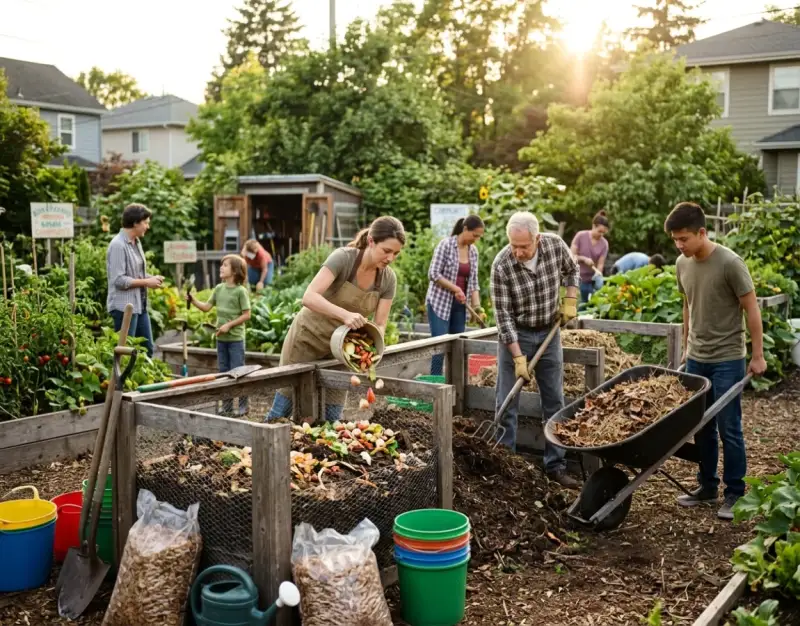
Every single day, thousands of tons of nutrient-dense organic matter are quietly tossed into municipal waste streams, hauled across cities at great financial and environmental expense, and buried deep within sanitary landfills. Sealed away from oxygen and sunlight, this buried bounty decomposes anaerobically, producing massive plumes of methane—a greenhouse gas significantly more potent than carbon dioxide in trapping atmospheric heat. Yet, this linear disposal model represents a profound systemic disconnect from the cyclical rhythms of nature. By failing to intercept food scraps and yard trimmings at the hyper-local level, communities forfeit an extraordinary opportunity to heal their local soils, build civic resilience, and foster deep neighborhood connections.
The paradigm of municipal waste management is shifting rapidly. Forward-thinking municipalities, grassroots neighborhood associations, and passionate environmental advocates are recognizing that waste is merely a design flaw. Across cities and towns worldwide, decentralized organic recycling initiatives are proving that when neighbors band together to manage their discarded food scraps, remarkable transformations occur. This comprehensive sustainability guide explores the exact mechanics of establishing a thriving neighborhood initiative. Whether you are driven by a passion for climate action or simply want to enrich your community gardens with "neighborhood gold," this manual outlines everything you need to know about community composting and achieving zero waste goals.
Starting a collective organic recycling initiative requires much more than simply piling banana peels and coffee grounds in a corner of a park. It demands a sophisticated understanding of biological decomposition, micro-climate management, community psychology, volunteer coordination, and municipal compliance. When approached with proper planning, education, and collective enthusiasm, a local organic diversion project becomes an anchor for environmental stewardship. As we examine how local grassroots efforts intersect with broader ecological movements, we find parallels in other forms of civic engagement, much like how young advocates organize Youth-Led Cleanups: The Kids Picking Up Tons of Trash to Save Their Local Beaches to protect fragile coastal ecosystems. Let us dive deep into the science, strategy, and operational blueprint required to turn neighborhood organic waste into life-giving soil.
Foundational Principles and Mechanics of Decomposition
The Biological Alchemy of Composting
At its core, composting is a controlled biological process in which diverse populations of microorganisms—including bacteria, fungi, actinomycetes, and protozoa—break down complex organic materials into a dark, crumbly, nutrient-rich soil amendment known as humus. This biochemical transformation requires a delicate balance of four fundamental ingredients: carbon, nitrogen, oxygen, and moisture. Without a proper understanding of these microscopic dynamics, piles can quickly become anaerobic, odorous, and biologically stagnant.
Carbon-rich materials, commonly referred to as "browns," provide the structural framework and energy source for microbial life. These include dry leaves, shredded cardboard, straw, sawdust, and wood chips. Conversely, nitrogen-rich materials, known as "greens," supply the essential proteins and amino acids necessary for microbial reproduction and growth. Greens encompass fresh fruit and vegetable scraps, coffee grounds, green garden waste, and fresh grass clippings. Achieving the optimal C:N ratio—ideally around 30 parts carbon to 1 part nitrogen—ensures rapid, thermophilic decomposition that destroys pathogens and weed seeds while eliminating unpleasant odors.
Furthermore, moisture and aeration are the twin engines of biological activity. Microorganisms require water to transport nutrients and maintain cellular functions; an ideal moisture content resembles a wrung-out sponge, roughly 40% to 60%. Simultaneously, adequate oxygen is non-negotiable for aerobic bacteria to thrive. When a pile is turned or structurally aerated with coarse bulking agents, oxygen floods the interstitial spaces, fueling rapid microbial metabolism and generating internal temperatures between 130°F and 160°F (54°C to 71°C).
The Four Phases of the Composting Cycle
Understanding the life cycle of a healthy compost batch helps site managers troubleshoot problems and optimize processing times. The process begins with the mesophilic phase, where moderate-temperature bacteria and fungi begin breaking down easily accessible sugars and starches. As these microbes respire, they release metabolic heat, rapidly driving up the internal temperature of the pile within the first few days.
Next comes the critical thermophilic phase. Here, heat-loving thermophilic bacteria take over, driving temperatures into the 130°F to 160°F range. This intense thermal window is vital for a community-scale operation because it naturally sanitizes the input materials, destroying human pathogens, plant diseases, and weed seeds that might otherwise contaminate finished garden amendments. Site managers must monitor this phase closely, turning the pile when temperatures peak to ensure all exterior material is cycled into the scorching core.
Following the thermophilic stage is the cooling phase, during which easily degradable compounds are exhausted, and temperatures gradually recede back toward ambient levels. This drop allows mesophilic microorganisms, along with macro-organisms like earthworms, sowbugs, and beetles, to reinoculate the pile and begin the final stage: maturation or curing. During the curing phase, complex humic substances form, stabilizing the material into a gentle, pH-neutral soil conditioner safe for delicate seedlings and mature crops alike.
Step 1: Assessing the Landscape and Building a Core Team
Mapping Neighborhood Needs and Site Selection
Before sourcing a single bin or accepting your first bucket of food scraps, you must conduct a thorough asset and needs assessment of your neighborhood. Identify potential stakeholder groups, including community garden members, local urban farmers, neighborhood associations, and environmentally conscious residents. Determine whether your target area lacks municipal organic collection or if residents are eager for a localized, highly engaged drop-off model where they can actively participate in the soil-building journey.
Selecting the right physical site is perhaps the single most critical determinant of long-term success. Look for a location that is easily accessible by foot, bicycle, and potentially cargo bike or vehicle, yet sufficiently buffered from residential living rooms to prevent nuisance concerns. The site must be flat, well-drained, and situated on a permeable surface like bare earth or gravel rather than asphalt, allowing beneficial soil microbes to migrate into the piles and excess moisture to drain safely.
Water access is another non-negotiable requirement. Piles must remain moist to support microbial life, meaning a hose bib or rain barrel system must be within close proximity. Additionally, consider security and visibility; sites tucked completely out of sight are more prone to illegal dumping, vandalism, and rodent nesting, whereas semi-visible community spaces encourage accountability and civic pride.
Assembling a Dedicated Leadership Coalition
No community compost program can survive on the shoulders of a single overworked champion. To build a resilient initiative, you must recruit a diverse leadership team with complementary skill sets. Seek out individuals with expertise in project management, communications, logistics, fundraising, and—most importantly—hands-on organic waste management.
Establish clear roles and responsibilities within your core committee. You will need a Site Manager to oversee pile turning, temperature logging, and maintenance; a Volunteer Coordinator to manage scheduling and onboarding; a Communications Director to handle neighborhood outreach and educational signage; and a Financial Officer to track grants, community donations, and operational expenses. As organizational research in behavioral psychology demonstrates, when communities collaborate toward shared pro-social outcomes, the positive psychological ripple effects can be empirically tracked across the population, reflecting findings similar to studies where researchers observed how Can Kindness Be Measured? What Researchers Discover When They Tracked 1,000 Acts of Good within urban neighborhoods.
Host regular planning meetings, utilize digital collaboration tools like shared drives and messaging apps, and create transparent standard operating procedures (SOPs). By distributing leadership responsibilities early, you prevent burnout and ensure the project remains robust even if key individuals step down.
Step 2: Designing the Physical Infrastructure and Equipment Selection
Choosing Your Composting System Architecture
The physical layout of your site will depend on your anticipated volume, available space, and labor capacity. There are three primary system architectures suited for community-scale operations: three-bin wooden or wire enclosures, continuous-flow tumbler systems, and aerated static piles (ASPs).
The three-bin system is the gold standard for neighborhood sites. Constructed from rot-resistant lumber (such as cedar or salvaged pallets) or heavy-gauge hardware cloth, this system features three distinct compartments. Bin 1 is used for active collection and initial mixing of fresh inputs. Bin 2 houses the active thermophilic pile where materials are transferred and thoroughly aerated. Bin 3 serves as the curing and maturation zone, where finished compost sits undisturbed until harvest. This sequential workflow creates an organized, highly efficient processing rhythm.
For sites with extreme space constraints or heavy rodent pressure, modular compost tumblers or secure bin networks can be effective. Tumblers allow for effortless aeration via manual rotation, though their total volumetric capacity is often limited compared to open-air bins. Regardless of the architecture chosen, ensure your structures are robust enough to withstand seasonal weather extremes and heavy daily use.
Essential Tools, PPE, and Processing Gear
Equipping your site properly ensures that volunteer shifts are safe, efficient, and enjoyable. Make a comprehensive checklist of necessary gear and secure them before launching operations. Essential tools include:
- Long-stemmed compost thermometers: Crucial for monitoring thermophilic temperatures to ensure pathogen destruction.
- Pitchforks and manure forks: Ergonomic forks with 4 to 5 tines designed for lifting and aerating heavy organic materials.
- Shovels and square-point spades: For moving finished compost, turning pile edges, and cleaning the site.
- Heavy-duty wheelbarrows or garden carts: To transport browns, unfinished materials, and finished humus across the site.
- Hoses with spray nozzles and watering wands: To maintain optimal moisture levels throughout dry summer months.
- Personal Protective Equipment (PPE): Sturdy work gloves, dust masks or N95 respirators for handling dry materials or turning dusty piles, and eye protection.
Establish a secure storage shed or weatherproof deck box on-site to house these tools. Missing or damaged tools are a frequent point of friction for volunteer-run projects, so implement a strict sign-in/sign-out protocol or keep containers securely padlocked with combinations shared only among active core volunteers.
Step 3: Establishing Intake Protocols and Feedstock Management
Defining Acceptable and Unacceptable Materials
The golden rule of community composting is simple: garbage in, garbage out. Because community sites rely heavily on volunteer participation, clear, unambiguous guidelines regarding what can and cannot be accepted are vital. Contamination is the number one killer of community compost programs, introducing plastics, chemicals, and pests that can ruin months of hard work.
Acceptable items generally include fruit and vegetable scraps, coffee grounds and unbleached paper filters, tea bags (staple-free), crushed eggshells, nut shells, shredded plain paper and cardboard, yard trimmings, green leaves, and soft garden waste. These items provide an optimal balance of micro-nutrients and structural carbon when managed correctly.
Unacceptable items must be strictly prohibited and clearly communicated through signage and orientation sessions. Prohibit meat, fish, dairy, oils, fats, and grease, as these high-protein and lipid-rich substances take significantly longer to break down and act as a flashing beacon for rats, raccoons, and neighborhood scavenging pets. Also exclude pet waste (which contains persistent pathogens and pharmaceuticals), chemically treated lumber, diseased plants, and plastic-lined or glossy paper products.
Implementing a Smooth Drop-Off System
How you collect materials from neighborhood participants dictates the cleanliness and odor profile of your site. The most successful community programs utilize a bucket-swap model or a secure drop-off kiosk. In a bucket-swap system, participants pay a nominal membership fee or commit to volunteer hours in exchange for a clean, sealable 5-gallon bucket. They fill the bucket at home, bring it to the community site during designated hours, empty it into the active intake bin, and swap it for a freshly sanitized bucket.
Alternatively, if you utilize a 24/7 drop-off kiosk, participants can bring scraps in their own containers. However, this model requires a strict "cover your scraps" rule. Every time a participant dumps a bucket of wet greens into the intake bin, they must immediately shovel two scoops of dry carbonaceous material (browns) over the top. This simple behavioral rule—known as the "Browns Blanket"—traps odors, deters insects, and maintains the proper C:N ratio before site managers even touch the pile.
Step 4: Managing Operations, Monitoring, and Troubleshooting
Daily and Weekly Site Maintenance Routines
Consistency is the secret ingredient to operational success. Establish a structured maintenance calendar outlining daily, weekly, and monthly tasks. During daily checks, site managers or rotating volunteers should inspect the active intake bins, ensure the Browns Blanket is fully intact, check for any signs of animal intrusion or illegal dumping, and ensure all tools are properly stored.
Weekly routines involve more intensive labor. Measure internal temperatures across multiple points in your active piles using your long-stemmed thermometer and log the data in a shared digital spreadsheet. Turn the active pile (Bin 2) at least once every 7 to 14 days, moving material from the outer edges into the center core where microbial activity is highest. Adjust moisture levels by spraying water as you turn the pile if the material feels dry.
Monthly tasks include clearing weeds around the perimeter of the bins, inspecting wooden structures for structural integrity or rot, and evaluating the maturation progress of Bin 3. Keeping a meticulous logbook helps you identify seasonal trends—such as increased moisture during spring rains or a deficit of carbon sources during summer—allowing you to proactively adjust your management strategies.
Diagnosing and Solving Common Operational Headaches
Even the most meticulously managed community compost site will occasionally encounter biological imbalances. Recognizing the symptoms of a troubled pile and applying immediate countermeasures will save your project from failure.
| Symptom / Issue | Root Cause | Immediate Corrective Action |
|---|---|---|
| Strong ammonia or rotten-egg odor | Pile is anaerobic; too much nitrogen (greens) and moisture, lack of oxygen. | Turn the pile immediately to introduce oxygen; add copious amounts of dry carbon (shredded leaves, cardboard, wood chips). |
| Pile is cold and will not heat up | Pile is too small, too dry, or lacks sufficient nitrogen (greens). | Enlarge the pile volume (minimum 3x3x3 feet), add fresh green kitchen scraps, and water thoroughly until damp. |
| Presence of pests (rats, mice, flies) | Exposed food scraps, inclusion of prohibited items (meat, dairy, oils). | Ensure a thick 6-inch layer of carbon covers all fresh inputs; remove any meat/dairy products; repair bin hardware. |
| Excessive moisture / waterlogged pile | Too much rain infiltration, lack of drainage, or over-watering. | Turn the pile on a dry day, mix in dry absorptive materials like straw or wood shavings, and cover with a breathable tarp. |
By training your core volunteer team to diagnose these four common issues swiftly, you ensure that minor imbalances are corrected before they escalate into neighborhood complaints or public health concerns.
Step 5: Community Engagement, Education, and Outreach
Transforming Waste Management into Neighborhood Education
A community compost program is much more than a waste diversion tool; it is a living classroom and a catalyst for social cohesion. To maximize community buy-in, incorporate educational programming directly into your site operations. Host seasonal workshops on backyard composting, soil biology, regenerative gardening, and zero-waste living.
Partner with local schools, scout troops, and youth organizations to bring students on-site for hands-on learning experiences. Observing the steaming core of an active compost pile and discovering wriggling red wigglers in a vermiculture bin sparks a lifelong appreciation for ecological cycles in young minds. These educational initiatives align perfectly with broader civic empowerment efforts, demonstrating how collective care for the environment mirrors the global push for accessible learning seen when organizations foster educational parity, echoing the spirit of programs like The Global Classroom: How Online Mentorship is Bridging the Educational Gap in Developing Nations.
Design clear, highly visual signage featuring multilingual graphics and infographics. Because neighborhoods are often diverse, ensuring your communication materials cross language barriers guarantees that every resident feels welcomed and empowered to participate in the local sustainability effort.
Celebrating the Harvest: Closing the Loop
The ultimate reward of community composting is harvesting the finished humus—the rich, dark "neighborhood gold" that brings the entire cycle to completion. Do not let this valuable resource sit unused. Create a transparent, celebratory policy for distributing finished compost back to the community that made it possible.
Organize an annual "Harvest Day" or "Soil Celebration" event. Invite participating residents, local gardeners, and municipal officials to help screen and bag the finished compost. Allocate a portion of the harvest directly to neighborhood contributors for their home container gardens, donate a substantial share to local community gardens and tree-planting initiatives, and consider selling a small portion to fund ongoing site maintenance and tool upgrades.
Sharing the physical fruits of collaborative labor reinforces the value of community composting. When residents see their discarded carrot peels and coffee grounds transformed into vibrant tomatoes and lush flowers in local public spaces, the abstract concept of sustainability becomes a tangible, joyful reality.
Real-World Case Studies & Scenarios
To truly understand what makes or breaks a community composting initiative, we can examine two contrasting real-world scenarios based on actual municipal and grassroots case studies.
Scenario A: The Oakridge Neighborhood Success Story
In Oakridge, a dense urban neighborhood plagued by illegal dumping and overflowing municipal bins, a grassroots collective formed "Oakridge Soil Stewards." Securing a vacant corner of a local community garden, the team installed a heavy-duty three-bin wooden system and recruited 35 founding household members via a localized social media campaign.
What made Oakridge successful from day one was their rigorous onboarding protocol. Every participating household was required to attend a 30-minute orientation session covering contamination protocols, the Browns Blanket rule, and bin-swap mechanics. They established a robust team of four co-managers who rotated weekly maintenance duties and logged internal pile temperatures religiously. Within twelve months, Oakridge diverted over 12,000 pounds of organic waste from landfills, produced 4 tons of high-grade compost for local urban agriculture plots, and fostered a tight-knit neighborhood community.
Scenario B: The Maple Street Collapse
Conversely, the Maple Street Organic Initiative launched with tremendous initial fanfare but collapsed within six months. Driven by enthusiasm rather than operational planning, organizers placed an open-topped pile in a remote public park without securing water access, defining clear intake rules, or assigning leadership roles.
Within weeks, well-meaning residents began dumping raw meat scraps, greasy takeout containers, and dog waste into the unattended pile. Without a carbon source (browns) or moisture management, the pile went anaerobic, releasing pungent odors that drew immediate complaints from neighboring homeowners. Rodents infested the site, and the municipal parks department ultimately issued a cease-and-desist order, hauling the entire mess to the landfill. The core lesson? Enthusiasm without structural governance, education, and active management is a recipe for ecological failure.
Critical Mistakes and How to Avoid Them
Learning from the failures of others is the hallmark of a resilient community publisher and project leader. Avoid these top five costly mistakes when launching your program:
- Neglecting Carbon Supplies (The Brown Drought): Failing to stockpile adequate dry carbon materials (leaves, wood chips, shredded cardboard) guarantees an anaerobic, foul-smelling pile. Countermeasure: Always maintain a carbon reserve at least three times the volume of your expected weekly green inputs before launching intake.
- Poor Community Communication and Onboarding: Assuming everyone intuitively knows how to compost leads directly to severe contamination. Countermeasure: Implement mandatory resident orientations, clear visual signage at eye level, and an active volunteer feedback loop.
- Ignoring Vector and Pest Control: Leaving food scraps exposed on the surface of bins invites rats, mice, and raccoons. Countermeasure: Enforce the Browns Blanket rule strictly, prohibit animal proteins and fats entirely, and use 1/4-inch hardware cloth on bin bottoms if rodent pressure is high.
- Failing to Monitor Moisture and Aeration: Piles left unattended become bone-dry in summer or waterlogged swamps in autumn, halting decomposition entirely. Countermeasure: Establish a weekly maintenance schedule for turning piles and checking internal moisture levels.
- Relying on a Single Hero: Burning out the sole project founder collapses the entire initiative when life circumstances change. Countermeasure: Build a diversified core committee and distribute operational tasks across an engaged volunteer roster.
Frequently Asked Questions
What happens if someone dumps plastic or prohibited items into our community compost bins?
Contamination is an inevitable challenge for any community-scale composting project. When volunteers or site managers discover plastics, metals, or prohibited food waste during daily inspections or pile turning, these items must be physically removed immediately. If contamination is recurrent, reinforce educational messaging through your community newsletter, update drop-off signage with graphic "Yes/No" visuals, and consider implementing supervised drop-off hours rather than a 24/7 unmonitored kiosk until compliance improves.
Do we need legal permits or municipal approval to start a community compost program?
Permitting requirements vary significantly depending on your geographic location, municipal zoning laws, and the total volume of organic material processed weekly. In many jurisdictions, small-scale neighborhood composting sites operating under specific thresholds (such as processing less than a certain cubic yardage per week) are exempt from commercial solid waste permits. However, it is always best to consult your local health department, sanitation bureau, or urban planning office early in the planning phase to ensure full compliance and build positive municipal partnerships.
How do we handle odors during the summer months without alienating nearby neighbors?
Healthy, aerobic compost piles do not smell bad; they emit a rich, earthy aroma reminiscent of a damp forest floor. If your site produces foul odors, it indicates that the pile has gone anaerobic due to excess moisture, insufficient carbon, or a lack of oxygen. The immediate remedy is to turn the pile thoroughly to introduce fresh air and fold in large volumes of dry carbon materials like wood shavings or shredded leaves. Maintaining strict adherence to the prohibition of meat, dairy, and oily foods will also eliminate the primary catalysts for unpleasant smells.
Can we compost compostable bioplastics and serviceware at a community site?
Generally, community compost sites should strictly prohibit commercially manufactured "compostable" bioplastics, PLA cups, and serviceware. While these items are engineered to break down in industrial composting facilities that maintain sustained high temperatures and specialized microbial conditions over 60 to 90 days, typical community-scale three-bin systems rarely maintain the rigorous thermal parameters required to digest them completely. Sticking strictly to organic food scraps and yard trimmings ensures a pure, high-grade finished product free of persistent plastic fragments.
How long does it take for raw food scraps to transform into finished, usable compost?
The total decomposition timeline depends heavily on your management diligence, seasonal temperatures, carbon-to-nitrogen balance, and turning frequency. Under optimal thermophilic management with regular aeration, active decomposition takes between 8 to 12 weeks. However, following the active phase, the material must undergo a curing or maturation phase for an additional 4 to 8 weeks to stabilize chemically. In total, expect a cycle of 3 to 6 months from initial drop-off to harvesting rich, dark neighborhood gold.
Strategic Roadmap and Final Takeaway
As we look toward the next two to five years, the intersection of urban agriculture, climate resilience, and decentralized waste management will become increasingly vital. Municipalities worldwide are facing escalating landfill tipping fees, tightening climate regulations, and a growing public demand for actionable ecological solutions. Community composting stands at the forefront of this movement, bridging the gap between individual behavioral change and systemic environmental repair.
By transforming neighborhood food waste into nutrient-dense soil amendments, we do far more than divert tonnage from local landfills; we rebuild the fractured ecological relationships that sustain human life. We cultivate civic pride, foster intergenerational education, and turn vacant urban corners into verdant pockets of biodiversity. Take the first step today: map your neighborhood, gather your passionate allies, build your bins, and begin your journey toward turning waste into neighborhood gold.
Be the first to share a gentle reflection on this story.