
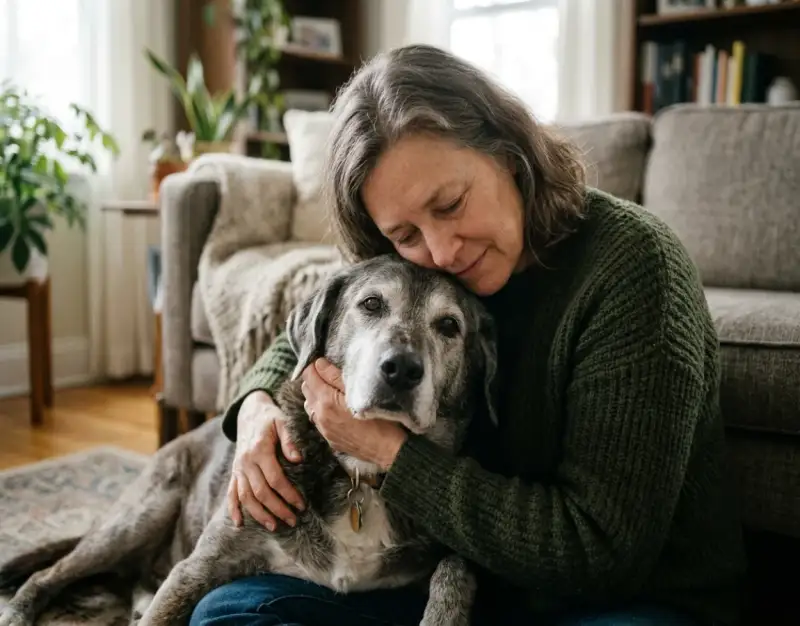
The afternoon sun cuts through the living room window, casting a warm, amber glow across a hardwood floor where a golden-hued Labrador retriever lies completely at ease. Her muzzle is frosted with white, her eyes carry the gentle, knowing depth of an old soul, and her breathing is a steady, rhythmic cadence of pure tranquility. This is not the frantic, hyper-kinetic energy of a six-month-old puppy chewing baseboards or demanding endless fetch sessions at three in the morning. This is the grounded, profound presence of an adopted senior dog. Across animal shelters and rescue organizations worldwide, a quiet crisis persists: while puppies and young dogs frequently find fast-tracked paths to suburban homes, older pets routinely face agonizingly long stays behind chain-link fences. Yet, for those enlightened families who choose to open their hearts and homes to these golden-years companions, the reward is an unmatched, deeply transformative bond.
Examining current industry trends within animal welfare reveals a striking dichotomy. Shelters are increasingly overcrowded, driven by post-pandemic lifestyle shifts, economic pressures, and housing constraints. Within these facilities, senior dog adoption rates lag significantly behind those of younger counterparts due to pervasive, outdated myths regarding medical costs, behavioral baggage, and a shortened time horizon. However, forward-thinking rescue advocates and veterinary behavioral scientists are working tirelessly to dismantle these misconceptions. What has fundamentally changed is our collective understanding of animal cognition, emotional capacity, and geriatric veterinary medicine. Modern medical breakthroughs allow older dogs to live vibrant, pain-free lives well into their double-digit years, meaning an adoption choice made today can yield five, seven, or even ten years of magnificent companionship.
The core thesis of this comprehensive guide is simple yet revolutionary: adopting an older rescue pet does not mean settling for less time; it means stepping into a masterclass of pure, unadulterated unconditional love. When you bypass the chaotic puppy phase, you intercept an animal at their most emotionally receptive, appreciative, and stable state. Throughout this deep-dive exploration, we will unpack the physiological mechanics of aging canines, provide a rigorous step-by-step strategic blueprint for successful integration, analyze real-world case studies, expose critical operational mistakes to avoid, and map out the future trajectory of senior pet advocacy. Whether you are an experienced pet parent or contemplating your very first rescue journey, this manifesto will illuminate the extraordinary depth, empathy, and community-building power inherent in honoring our oldest canine citizens.
Foundational Principles and Mechanics of Senior Canine Welfare
To truly appreciate the magnitude of senior dog adoption, one must first deconstruct the underlying biology, sociology, and psychological mechanisms that govern older rescue animals. Unlike human children, whose developmental trajectories are linear and heavily reliant on parental instruction, canines navigate life stages compressed into a fraction of our years. Generally categorized as "senior" around seven years of age—though this varies heavily by breed, with giant breeds reaching senior status closer to five and toy breeds closer to ten—these animals undergo profound physiological transformations that directly shape their behavioral landscape.
At the center of senior canine welfare is the principle of emotional maturity. Just as human societies rely on the wisdom, patience, and empathetic stabilization provided by elder populations—a dynamic brilliantly explored in community projects focusing on intergenerational connection, such as Bridging the Generational Divide: How Senior Citizens and Preschoolers Are Healing Each Other—older dogs bring an innate emotional equilibrium to household dynamics. Their neurological pathways are fully formed; the erratic hormone surges of adolescence are a distant memory. This physiological stability translates into an animal that can read human micro-expressions, adjust its energy levels to match yours, and offer a soothing, grounding presence during times of high household stress.
Furthermore, understanding the physiological mechanics of geriatric canines requires recognizing that an older body houses a rich, complex history. Many senior shelter dogs are surrender casualties—animals who lost their lifelong homes due to human life disruptions such as divorce, foreclosure, or the passing of an owner, rather than any behavioral fault of their own. Consequently, these pets possess a profound, innate capacity for grief, resilience, and eventual redemption. When a senior dog realizes they have been given a second lease on life, the gratitude they exhibit is palpable. Their neurological reward systems light up with intense relief, forming an attachment bond that is often described by veteran fosters as almost spiritual in its intensity.
The Senior Pet Adoption Blueprint: Phase-by-Phase Integration
Assessing Your Household Environment and Readiness
Before initiating the senior dog adoption process, you must conduct a rigorous, objective audit of your living space, schedule, and financial preparedness. Older dogs require specific environmental accommodations to ensure their comfort and safety. Evaluate your home for slipping hazards; hardwood and tile floors can present formidable obstacles for arthritic joints. Strategic placement of non-slip runner rugs, ramps leading up to favorite sofas or beds, and orthopedic memory foam mattresses can dramatically enhance an older dog's quality of life. Additionally, examine your daily routine to ensure you can provide the calm, predictable environment that senior pets crave.
Financially, prospective adopters must look beyond the initial adoption fee to project ongoing geriatric care costs. Older pets may require specialized diets, joint supplements, regular blood panels, and routine veterinary monitoring for conditions like dental disease, kidney decline, or arthritis. However, counter to popular belief, these expenses are frequently offset by lower initial training costs and the absence of destructive puppy teething phases. Establishing a dedicated pet healthcare savings fund or investing in specialized pet insurance tailored for older animals is a vital tactical step that guarantees peace of mind before the animal ever crosses your threshold.
Selecting the Right Match: Assessing Personality Over Breed
The matchmaking phase is where structural success or failure is determined. When visiting shelters or foster networks, resist the temptation to select a dog based purely on aesthetic appeal or superficial breed stereotypes. Instead, engage deeply with shelter staff, foster parents, and behavior coordinators to uncover the animal's true personality profile. Ask precise, targeted questions: How does the dog react to unexpected loud noises? What is their baseline energy level indoors? Are they comfortable being handled around sensitive areas like paws, ears, and tails?
Observe the dog in varied settings. A senior dog in a high-stress kennel environment may present as lethargic or withdrawn, masking a playful, affectionate disposition that only emerges once they decompress in a quiet room. Conversely, an outwardly exuberant older dog might have hidden stamina limitations due to early-stage heart murmurs or joint dysplasia. Request complete veterinary records and behavioral notes. Prioritize compatibility with your specific lifestyle—whether you are an active retiree looking for steady walking companions or a busy remote worker seeking a quiet, slumbering office assistant.
Executing the Decompression Protocol (The 3-3-3 Rule)
Bringing a senior rescue home requires strict adherence to the proven 3-3-3 rule of animal adoption: 3 days to decompress, 3 weeks to learn the routine, and 3 months to feel completely at home. During the first three days, your new companion will be experiencing sensory overload and residual shelter shock. Resist the urge to parade the dog around the neighborhood, host welcome-home parties, or introduce them to every extended family member and neighborhood pet. Instead, establish a quiet, designated "safe zone"—a cozy crate or quiet corner outfitted with familiar bedding and water.
During this critical decompression window, maintain a rigidly predictable schedule for feeding, elimination breaks, and quiet time. Keep interactions calm, gentle, and low-pressure. Allow the dog to dictate the pace of physical affection. By letting them approach you on their own terms, you build foundational trust. Remember that older dogs have established habits; patience is your greatest tool as you gently guide them toward understanding your household's unique rhythm and household rules.
Advanced Health Management and Veterinary Care for Older Dogs
Proactive Senior Wellness Screenings and Diagnostics
Welcoming an older rescue necessitates shifting from reactive veterinary care to a proactive, preventative wellness model. Upon adoption, schedule a comprehensive geriatric health assessment with your veterinarian. This initial baseline exam should include thorough blood panels (complete blood count and serum chemistry) to evaluate organ function, a thyroid panel, urinalysis, blood pressure measurement, and diagnostic imaging such as radiographs to check for spinal degeneration, heart enlargement, or joint abnormalities.
Catching age-related conditions in their subclinical stages is the secret to extending your senior dog’s active years. For instance, early detection of chronic kidney disease allows for dietary modifications that can stall progression by years. Similarly, identifying early-stage cognitive dysfunction syndrome (canine cognitive decline) empowers you to introduce supplements, mental enrichment, and medications that preserve neurological health and mitigate confusion or anxiety.
Nutritional Optimization and Joint Preservation Strategies
Dietary requirements shift dramatically as a dog crosses into their senior years. Older metabolism slows down, muscle mass naturally decreases (sarcopenia), and digestive efficiency changes. Consult your veterinarian to transition your adopted senior to a scientifically formulated senior diet that features highly digestible proteins to maintain muscle mass, balanced phosphorus levels to protect kidney health, and moderate calorie counts to prevent weight gain, which exacerbates joint stress.
Joint health management is paramount for almost all senior dogs. Incorporating veterinary-approved nutraceuticals such as glucosamine, chondroitin sulfate, omega-3 fatty acids (EPA and DHA), and green-lipped mussel extract can significantly reduce systemic inflammation and lubricate cartilage. For dogs showing signs of osteoarthritis, modern veterinary medicine offers revolutionary therapeutic options, including monoclonal antibody injections (such as Librela) that safely target nerve growth factor to relieve joint pain without taxing the liver and kidneys the way traditional NSAIDs can.
Behavioral Enrichment and Cognitive Stimulation in Later Life
Tailoring Physical Exercise for Aging Canines
A common misconception is that senior dogs no longer require physical exercise. While grueling five-mile runs and frantic games of high-speed fetch are no longer appropriate, physical activity remains vital for maintaining cardiovascular health, joint mobility, muscle tone, and mental well-being. The golden rule of senior exercise is short, frequent, and low-impact. Swap out explosive ball-throwing sessions for structured, leisurely sniffari walks where the dog is permitted to explore environmental scents at their own pace.
Swimming is an exceptional, low-impact exercise for senior dogs with severe arthritis or hip dysplasia, provided their cardiac health has been cleared by a veterinarian. Always monitor your older pet for signs of fatigue, heavy panting, stiffness, or reluctance to rise afterward. Adjust your routines dynamically based on weather conditions as well; senior dogs are significantly more vulnerable to extreme heat and cold due to compromised thermoregulation systems.
Mental Exercise and Sensory Games to Fight Cognitive Decline
Just as physical muscles atrophy without use, canine brains require continuous stimulation to ward off cognitive decline. Mental enrichment for senior dogs should focus on engaging their primary remaining senses: scent and hearing. Introduce puzzle toys, interactive treat-dispensing mats, and snuffle boxes that challenge them to use their formidable noses to forage for hidden kibble or high-value rewards.
Teach your senior dog new, low-stress tricks or reinforcement games that require minimal physical exertion, such as "touch" (target training with the nose), paw-targeting, or chin rests for grooming cooperation. This not only keeps their neurological pathways firing actively but also reinforces a powerful cooperative bond between you and your pet. Mental exhaustion is often far more satisfying and calming for an older dog than physical exhaustion, leading to deeply restful sleep and reduced nocturnal pacing.
Creating a Safe, Accessible Environment for Your Golden-Years Companion
Home Modification Masterclass: Eliminating Household Hazards
Adapting your home for a senior rescue dog is an act of profound empathy. As vision, hearing, and mobility begin to wane, simple household items can transform into hidden hazards. Start by evaluating lighting. Older dogs with developing cataracts or nuclear sclerosis struggle significantly in dim light; installing warm-toned nightlights in hallways, bathrooms, and along the path to their water bowl prevents startling and accidental collisions.
Floor traction is arguably the single most critical modification. Cover all slick surfaces—such as hardwood, tile, and laminate—with non-skid rubber-backed runners and area rugs, creating secure pathways through the home. If your senior dog needs to access high beds or human furniture, construct or purchase sturdy, carpeted pet ramps with gentle inclines rather than steps, which can put immense shearing force on arthritic front wrists and shoulders.
Managing Sensory Deficits: Deafness and Blindness in Older Dogs
Many senior rescue dogs arrive with varying degrees of sensory impairment. A deaf or blind dog can live an exceptionally rich, happy, and fulfilling life with minor behavioral adjustments from their human family. If your dog is losing their hearing, transition away from vocal commands and establish a robust vocabulary of hand signals and tactile cues, such as a gentle floor stomp to create a vibration or a soft touch on the shoulder to signal attention.
For visually impaired dogs, the cardinal rule is never to rearrange your furniture without careful supervision. Allow the dog to map the environment using their whiskers and body sides. You can also utilize scent cues—such as a dab of essential oil safe for dogs or distinct textured mats—placed strategically near doorways, food bowls, and stairs to serve as navigational beacons. Patience, consistency, and a calm demeanor will help your sensory-impaired senior navigate their golden years with absolute confidence.
Real-World Case Studies & Scenarios
To ground these strategic principles in reality, let us examine two contrasting case studies drawn from real shelter data and rescue rehabilitation records.
Case Study A: The Successful Integration of Barnaby
Barnaby, an eleven-year-old German Shepherd mix, was surrendered to an over-capacity municipal shelter after his elderly owner passed away. He exhibited severe lethargy, refused to eat for the first forty-eight hours, and displayed pronounced stiffness in his hind quarters. Adopters Michael and Sarah approached Barnaby’s adoption with clinical precision. They implemented the 3-3-3 rule strictly, designating a quiet guest bedroom as his decompression zone. They immediately scheduled a geriatric veterinary exam, which diagnosed moderate hip dysplasia and dental disease.
Michael and Sarah placed non-skid runners across every hallway, initiated a regimen of joint supplements and pain management under veterinary supervision, and transitioned him to a high-protein senior diet. They replaced intense neighborhood walks with gentle, twenty-minute sniffing strolls. Within three weeks, Barnaby’s appetite returned in full force. By month three, his tail was wagging consistently upon waking, and he had integrated seamlessly into family movie nights. Barnaby lived three joyous, pain-free, deeply cherished years as the anchor of their household, proving that senior rescue yields profound emotional dividends.
Case Study B: The Pitfalls of Over-Stimulation (A Cautionary Tale)
In contrast, consider the journey of rescue adopter David, who welcomed a nine-year-old Boxer named Buster. Eager to "make up for lost time" in the shelter, David brought Buster home on a Saturday and immediately invited ten extended family members over for a backyard barbecue, followed by a long trip to a bustling public dog park the next day. Buster, suffering from underlying age-related heart murmurs and severe sensory fatigue, experienced acute stress. He snapped defensively when an off-leash dog rushed him at the park, resulting in an emergency veterinary visit for exhaustion and trauma.
The failure here was a total disregard for the emotional fragility and physical limitations of a senior rescue animal. Buster was forced into environments that exceeded his cognitive and physiological bandwidth. Fortunately, after consulting with a certified veterinary behaviorist, David reversed course, implemented strict decompression protocols, cancelled social visits for a month, and rebuilt trust slowly. While Buster eventually recovered, the initial setback caused weeks of unnecessary anxiety for the dog. The lesson is unequivocal: senior dogs require quiet reverence, not chaotic spectacles.
Critical Mistakes and How to Avoid Them
Navigating senior dog adoption successfully requires avoiding the most common pitfalls that trip up even well-intentioned pet parents. Here are the five most costly mistakes and their exact countermeasures:
- Mistake: Skipping the Initial Comprehensive Geriatric Veterinary Exam.
Countermeasure: Never assume an older dog is healthy just because they look fine on the outside. Book a full senior blood panel, thyroid check, and joint evaluation within the first week of adoption to establish a medical baseline. - Mistake: Rushing the Decompression Phase.
Countermeasure: Honor the 3-3-3 rule religiously. Keep the home environment quiet, limit visitors, cancel trips to busy public spaces, and let the dog initiate social interactions at their own comfortable pace. - Mistake: Ignoring Environmental Safety Hazards.
Countermeasure: Conduct a rigorous home audit for slipping hazards. Install non-skid rugs on all hard floors, add ramps to beds and sofas, and ensure adequate ambient lighting to prevent falls. - Mistake: Maintaining Inappropriate Exercise Regimes.
Countermeasure: Ditch high-impact activities like sprinting and long-distance fetch. Replace them with short, frequent sniffari walks and mentally stimulating puzzle toys that protect aging joints. - Mistake: Neglecting Proactive Dental and Organ Health Monitoring.
Countermeasure: Implement a daily dental hygiene routine and partner with your veterinarian for semi-annual wellness checkups to catch kidney, liver, and cognitive issues in their earliest, most treatable stages.
Comprehensive Comparison Table: Senior Dogs vs. Puppies
To assist you in evaluating the logistical and emotional realities of pet adoption, review the detailed semantic comparison matrix below:
| Metric / Consideration | Senior Dog Adoption | Puppy Adoption |
|---|---|---|
| Energy & Activity Level | Calm, balanced, low-to-moderate; matches human downtime easily. | Relentless, high-energy, requires constant physical redirection. |
| House-Training Status | Usually fully house-trained; understands basic indoor etiquette. | Zero baseline training; requires intensive, round-the-clock potty training. |
| Chewing & Destruction Risk | Minimal; adult dentition is settled, no teething behavior. | Extremely high; constant threat to shoes, furniture, and electrical cords. |
| Personality Predictability | Fully formed temperament; what you see is what you get. | A blank slate; adult personality evolves unpredictably over 1-2 years. |
| Time Commitment (Daily) | Moderate; focused on gentle walks, medical management, and companionship. | Massive; requires constant supervision, socialization, and active training. |
| Veterinary Care Focus | Proactive geriatric care, joint support, and organ function monitoring. | Vaccination series, parasite prevention, and spay/neuter surgery. |
| Emotional Resonance | Immediate, profound gratitude; deep, soul-stirring unconditional love. | Gradual attachment built through months of intensive foundational training. |
Frequently Asked Questions
Are senior dogs harder to train than puppies?
This is one of the most persistent myths in animal rescue. In reality, senior dogs are often significantly easier to train than puppies because they possess longer attention spans, fully developed neurological focus, and a strong desire to please their human companions. While old habits can occasionally require patience to redirect, older dogs master basic obedience commands, house rules, and household routines with remarkable speed.
What are the typical veterinary expenses for an adopted senior dog?
Veterinary costs for older dogs typically involve routine senior wellness blood panels, joint supplements, dental cleanings, and monitoring for age-related conditions such as arthritis or minor organ decline. While these ongoing expenses can be higher than those of a young puppy, they are often balanced out by the absence of emergency veterinary visits resulting from puppy mishaps, accidental ingestion of foreign objects, and costly spay/neuter surgeries.
How do I introduce a senior rescue dog to existing pets in my home?
Introductions should always occur slowly, on neutral territory, and under strict supervision. Allow the animals to sniff each other briefly before separating them. Never force a direct face-to-face meeting in a confined space. Maintain separate feeding areas and living zones during the initial decompression phase to eliminate resource-guarding triggers, gradually increasing shared time as mutual trust builds.
How can I tell if my senior dog is in pain?
Dogs are masters at masking physical discomfort as an evolutionary survival mechanism. Subtle signs of pain in senior dogs include reluctance to climb stairs or jump onto the couch, stiffness when rising from a resting position, excessive licking of a specific joint, decreased grooming, altered breathing rates, subtle changes in temperament, or uncharacteristic hesitation before moving across slick floors.
How can I make my home more accessible for an aging dog?
Accessibility modifications are straightforward and deeply impactful. Cover all hardwood and tile flooring with non-skid runner rugs to prevent slipping. Place memory foam orthopedic beds in quiet, draft-free areas away from high-traffic household commotion. Use carpeted ramps for elevated surfaces, install nightlights for nighttime navigation, and ensure food and water bowls are raised to comfortable heights to eliminate neck and shoulder strain.
Strategic Roadmap and Final Takeaway
As we look forward over the next two to five years, the landscape of animal welfare is poised for a profound cultural renaissance. With pet advocacy expanding into grassroots community organizing—comparable to the citizen-led mobilization seen in environmental initiatives like The Secret Life of Bee Sanctuaries: How Ordinary Citizens Are Saving Our Pollinators—societal perceptions of aging animals are shifting dramatically. Municipal shelters are increasingly investing in dedicated "senior sanctuaries" and foster-to-adopt programs that eliminate financial barriers, while veterinary pharmacology continues to introduce breakthrough therapies that make geriatric pet care more manageable and affordable than ever before.
Your actionable next step is clear: do not let the fear of a shortened timeline deter you from experiencing one of the greatest joys life has to offer. Visit your local shelter or rescue network today, look past the frosted muzzles and grey-tinged paws, and meet an older dog waiting for their second chance. By choosing senior dog adoption, you are not merely offering a home to an animal in need; you are opening the door to an extraordinary, transformative bond defined by wisdom, profound gratitude, and the absolute purest form of unconditional love.
Be the first to share a gentle reflection on this story.