
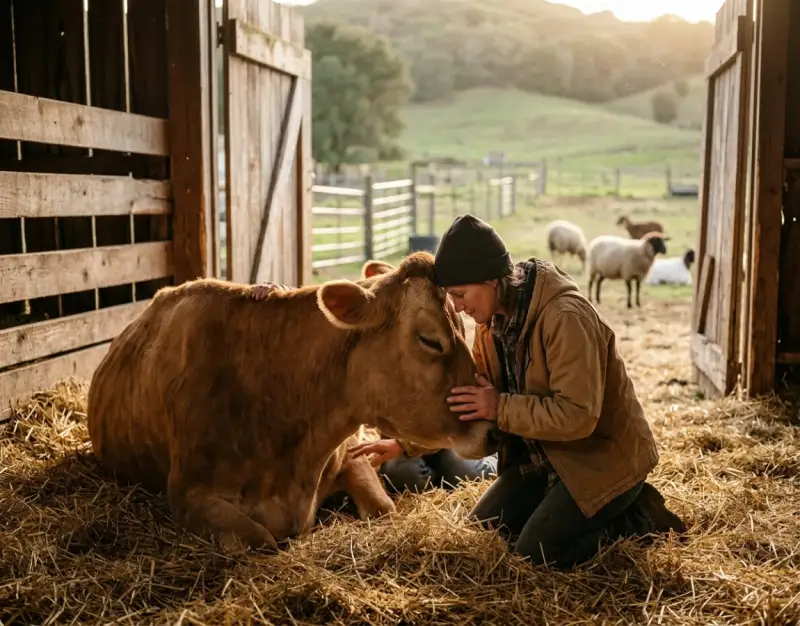
As the first light of dawn breaks across a serene forty-acre pasture, a nine-hundred-pound Holstein steer named Barnaby steps into the cool morning dew. Two years ago, Barnaby’s reality was starkly different: confined to a cramped, concrete-floored enclosure, suffering from chronic joint infections and severe malnutrition after being discarded by an industrial dairy operation. Today, his world is defined not by processing schedules or economic productivity, but by open fields, specialized veterinary care, and the peaceful rhythm of sanctuary life. Barnaby’s story is far from an isolated miracle—it represents a growing, highly organized movement across the globe dedicated to rescuing livestock and restoring their inherent dignity.
Over the past two decades, the field of farm animal rescue has undergone a profound structural shift. What once began as small, informal rescue efforts driven by passionate individuals has evolved into a sophisticated discipline governed by non-profit management principles, specialized large-animal medicine, biosecurity protocols, and trauma-informed behavioral science. Today, a modern farm animal sanctuary operates at the intersection of emergency medical triage, agricultural law, ecological land management, and public educational advocacy. Industry data indicates that public awareness surrounding livestock sentience and animal welfare has reached an all-time high, driving increased donor support and demanding greater professionalization within rescue organizations.
This authoritative article serves as an exhaustive guide to the mechanics, operational strategies, and ethical frameworks that define successful livestock rescue operations. From navigating complex law enforcement confiscations to constructing species-appropriate habitats and maintaining long-term financial stability, this deep dive provides animal welfare professionals, supporters, and advocates with an actionable blueprint for giving abused and neglected livestock a lifetime of safety and compassionate care.
1. Foundational Principles and Operational Mechanics of Livestock Sanctuaries
To fully understand the modern rescue paradigm, one must first distinguish between a temporary animal shelter, a production farm, and a true permanent sanctuary. Unlike domestic pet shelters that focus primarily on temporary intake and adoption, a farm animal sanctuary provides a non-exploitative, permanent home where animals are recognized as individuals rather than commodities or economic units. In this environment, animals are never bred, sold, eaten, or utilized for commercial yield such as milk, wool, or eggs. Every decision—from feed formulation to pasture management—is driven entirely by the holistic well-being of the resident.
The operational mechanics of rescuing livestock require a deep understanding of production animal genetics, behavior, and physiological stress responses. Commercial livestock breeds—such as Cornish Cross chickens, broad-breasted turkeys, and industrial Yorkshire pigs—have been selectively bred over generations for rapid growth and high production output. As a result, these animals frequently face severe health complications early in life, including congestive heart failure, metabolic bone disease, severe arthritis, and foot conditions like pododermatitis. Sanctuary caregivers must therefore deploy specialized palliative care, weight management protocols, and custom environmental adaptations to mitigate the biological burden carrying these genetic traits imposes.
Furthermore, establishing a functional sanctuary requires strict adherence to institutional biosecurity and herd mechanics. When intake occurs from situations of extreme neglect or legal seizures, animals often arrive carrying contagious pathogens, parasites, or zoonotic diseases. Establishing an airtight quarantine protocol—complete with isolated housing, dedicated boots and protective gear, footbaths, and comprehensive blood and fecal diagnostics—is the vital first line of defense protecting existing sanctuary residents from catastrophic disease outbreaks.
2. Emergency Intake, Extraction, and Biosecure Transportation Protocols
Field Assessment, Legal Custody, and Extraction Methodologies
Rescuing livestock from situations of extreme neglect, abandonment, or farm closures requires meticulous legal coordination and field assessment. Before any rescue team steps foot on a property, legal ownership or official custody must be established through local law enforcement, humane officers, or legal surrenders. Entering a property without legal authorization risks civil liabilities and criminal charges that can jeopardize the survival of the rescue organization. Field responders must conduct an immediate physical triage to identify acute life threats, assessing hydration levels, systemic shock, mobility status, and immediate respiratory distress.
Once legal clear-through is secured, the extraction process demands calm, low-stress animal handling techniques. Large animals, particularly cattle and pigs that have experienced trauma or human abuse, exhibit heightened flight zones and intense fear responses. Rescuers must utilize visual barriers, solid flight-zone steering, and quiet movements rather than shouting or physical force. Utilizing hydraulic drop-deck trailers, custom ramp inclines, and deep straw bedding ensures that weak or injured animals can board transport vehicles safely without risking fractures or soft-tissue injury.
Biosecurity Measures and Quarantine Operations
Upon arrival at the sanctuary facility, newly rescued animals must immediately enter a strict quarantine phase lasting between thirty and sixty days, depending on the species and medical history. This period prevents the introduction of lethal infectious diseases such as Bovine Viral Diarrhea (BVD), Caprine Arthritis Encephalitis (CAE), Marek’s disease in poultry, or contagious ecthyma (orf). The quarantine facility should be physically isolated downwind from primary pastures, featuring independent drainage, dedicated equipment, and footbaths containing broad-spectrum veterinary disinfectants.
During quarantine, veterinary staff perform extensive diagnostic screenings. These include complete blood counts (CBC), serum chemistry panels, targeted infectious disease PCR testing, external parasite treatments for lice and mites, and comprehensive fecal flotation analysis for internal parasites. Only after an animal receives two consecutive negative diagnostic panels and demonstrates psychological stabilization is it cleared for integration into the main sanctuary population. Developing a safe physical facility for wild or domestic creatures shares architectural principles with smaller habitat projects, much like learning How to Build a Backyard Bird Sanctuary: Attracting Wildlife and Protecting Biodiversity, where environmental controls and predator safety form the cornerstone of animal security.
3. Comprehensive Veterinary Care and Rehabilitative Medicine
Managing Chronic Production-Breed Ailments
Production breeds brought into sanctuary environments present unique veterinary challenges rarely encountered in traditional veterinary school curricula, which historically focus on herd health management for production output rather than individual longevity. Sanctuary veterinary care requires individual geriatric management. For instance, commercial turkeys and broiler chickens often suffer from rapid muscle accumulation relative to bone density, leading to tendon ruptures and severe bumblefoot (ulcerative pododermatitis). Treatment plans necessitate custom padded boots, joint supplements, weight-controlled diets, and daily physical therapy.
In large ruminants such as cows and sheep, years of standing on wet, manure-laden concrete in factory farms often lead to advanced digital dermatitis, sole ulcers, and chronic arthritis. Sanctuaries implement routine hoof trimming schedules overseen by certified functional hooftrimmers, hydrotherapy, and custom anti-inflammatory regimens using systemic NSAIDs, joint injections, and daily physical rehabilitation. Addressing these physiological ailments requires substantial financial investment and continuous monitoring by skilled caregiver teams.
Psychological Healing and Trauma Decompression
Physical healing represents only one aspect of a successful rescue; psychological recovery is equally vital. Farm animals possess complex emotional lives, sophisticated social structures, and long-term memories. Animals rescued from abuse or social isolation often exhibit severe stress behaviors, including stereotypic pacing, chronic hyper-vigilance, unprovoked aggression, or profound apathy. Sanctuary caregivers utilize positive reinforcement training, desensitization, and trauma-informed handling to help animals rebuild trust with humans.
Decompression requires providing an environment where animals exercise total agency over their daily lives. Giving a rescued pig the autonomy to choose when to wallow, forage, or sleep without human interference drastically reduces cortisol levels. Over time, gentle interaction—such as soft vocal cues, hand-feeding treats, and gentle grooming—helps recondition the animal's nervous system, replacing fear responses with curiosity and trust.
4. Designing Species-Specific Infrastructure and Pasture Governance
Pasture Rotational Schemes and Land Stewardship
Sustaining a large-scale farm animal sanctuary requires careful ecological management. Uncontrolled grazing by large herds of cattle, horses, and goats quickly degrades topsoil, destroys native vegetation, and creates mud hazards that foster parasitic vectors and foot rot. Sanctuaries must implement intensive rotational grazing systems, dividing acreage into multiple paddocks connected by centralized laneways. Animals move to fresh paddocks once vegetation is grazed down to four to six inches, allowing pastures time to rest, regenerate, and break internal parasite life cycles naturally.
Soil management protocols also include regular soil testing, aerating heavily trafficked zones, and implementing sacrificial winter yards (paddock areas dedicated to cold-weather use to protect primary pastures). Proper drainage infrastructure—including French drains, gravel pathways, and bioswales—prevents standing water, safeguarding both hoof health and local watershed quality from nutrient run-off.
Building Adaptive Shelters for Geriatric and Special-Needs Livestock
Traditional farm barns are rarely designed for aged or physically challenged animals. Modern sanctuary structures incorporate universal design principles tailored to animal biomechanics. Barn doors must be widened to prevent crowding and hip injuries among herd members. Floors should feature textured, slip-resistant rubber matting over concrete foundations to provide cushioning for arthritic joints and prevent disastrous slips.
Furthermore, climate control is critical. Heavy production breeds struggle with thermal regulation during extreme summer heatwaves and winter deep-freezes. Barns must be outfitted with industrial high-volume, low-speed (HVLS) fans, automated misting systems, infrared heating units, and deep-straw bedding zones. For animals with mobility impairments, soft sand beds or custom sling-support systems within padded stalls prevent pressure sores and maintain circulation during acute rehabilitation phases.
5. Sanctuary Financial Governance, Ethics, and Sustainability
Multi-Stream Revenue Models and Long-Term Capital Reserves
The single greatest operational threat facing livestock rescues is financial instability. The cost of food, bedding, specialized veterinary procedures, and labor for large animals is immense, often exceeding thousands of dollars per animal annually. To ensure long-term viability, sanctuaries must move away from reactive emergency fundraising toward structured multi-stream financial models. These models incorporate recurring monthly animal sponsorships, legacy gifts, foundation grants, commercial merchandise sales, and structured public educational tours.
Establishing an operational reserve fund equal to six to twelve months of operating expenses is a critical safeguard. This reserve cushions the sanctuary against economic downturns, unexpected veterinary emergencies, or large-scale confiscation intakes. Exceptional instances of sudden funding, similar to the transformative impact described in Surprise Tuition Grant: The Stranger Who Walked Into a Trade School and Paid Off Every Student's Balance, demonstrate how major philanthropic investments can permanently elevate an institution's operating capacity and secure its long-term future.
Staff Management, Volunteer Training, and Operational Safety
Operating a sanctuary is labor-intensive and physically demanding work. High turnover and compassion fatigue are prevalent risks among sanctuary staff and volunteers. Sustainable organizations prioritize human infrastructure by offering fair wages, comprehensive health coverage, clear safety protocols, and mental health support resources. Safety compliance must strictly adhere to occupational health standards, given that working around two-thousand-pound animals carries inherent risks of crushing, kicking, or trampling injuries.
Every volunteer and staff member must undergo rigorous training programs covering animal body language, emergency containment procedures, and proper lifting mechanics. Implementing standardized operating procedures (SOPs) for daily feeding, medication administration, and barn cleaning ensures consistent care for the animals while minimizing operational risk.
6. Educational Advocacy and Legal Protections for Agricultural Animals
Public Outreach and Human-Animal Bond Transformation
While direct rescue saves individual lives, systemic change requires transforming public perception regarding livestock. Sanctuaries serve as vital educational hubs where the public can interact with farm animals as individual beings rather than food products. Controlled, educational visitor tours foster profound empathy by allowing visitors to witness the unique personalities, social intelligence, and affection of pigs, cows, sheep, and turkeys.
Sanctuaries also extend their educational reach through school field trips, virtual classroom visits, and community outreach programs. By integrating hands-on learning with environmental education, sanctuaries inspire broader shifts toward plant-based living, ethical consumerism, and elevated animal protection standards across society. Building community connections and public infrastructure often mirrors civic woodworking and public enrichment projects, such as building educational kiosks using frameworks similar to How to Build a Free Little Library in Your Front Yard: A DIY Woodworking Guide to distribute educational literature and host community learning hubs.
Advocating Legal Reform and Policy Protection
Beyond regional outreach, leading sanctuaries actively engage in legal advocacy to reform agricultural welfare policies. Standard state anti-cruelty statutes in many jurisdictions contain explicit exemptions for "accepted agricultural practices," leaving billions of farm animals without basic legal protections against severe neglect and pain. Sanctuaries collaborate with legal organizations to challenge these exemptions, file amicus briefs in landmark welfare cases, and support legislation mandating larger space requirements, the elimination of gestation crates and battery cages, and stricter transport laws.
By leveraging medical data, behavioral observations, and concrete evidence collected from rescued residents, sanctuaries provide expert testimony in legislative hearings. This research-grounded advocacy bridges the gap between frontline rescue work and legislative policy, driving durable systemic protections for all agricultural animals.
7. Real-World Case Studies: Operational Successes vs. Organizational Failures
Examining real-world operational scenarios provides invaluable lessons for established sanctuaries and aspiring rescue founders alike. The following case studies highlight how operational methodology directly impacts animal outcomes and institutional stability.
Case Study 1: The Multi-Species Emergency Extraction (Operational Success)
Scenario: A regional sanctuary was contacted by law enforcement to rescue 85 animals (including 12 cows, 30 goats, 15 pigs, and 28 poultry) from a severely flooded, foreclosed farm property where the owner had abandoned the facility.
Execution: The sanctuary deployed a trained disaster response team equipped with five livestock trailers, a portable corral system, and an emergency mobile veterinary kit. Upon arrival, the veterinary team conducted field triage, tagging animals by medical priority. The animals were transported to an off-site temporary quarantine staging area funded by emergency grant reserves. Over sixty days, all animals received diagnostic testing, parasite clearing, and microchipping.
Outcome: 100% of the flock and herd were successfully rehabilitated without introducing any pathogens to the main sanctuary grounds. Forty animals were permanently integrated into the sanctuary, while forty-five goats and sheep were placed in vetted foster homes via a formal adoption network. The campaign raised over $120,000 in dedicated emergency donations due to transparent digital reporting and clear media management.
Case Study 2: The Unplanned Intake Crisis (Organizational Failure)
Scenario: An enthusiastic, newly established sanctuary accepted 40 adult commercial pigs from an illegal breeding operation without conducting intake health assessments, securing financial reserves, or verifying pasture fencing capacity.
Failure Breakdown: Within two weeks of arrival, multiple pigs began displaying severe respiratory symptoms due to undetected Swine Influenza and Mycoplasma hyopneumoniae. Lacking a quarantine zone, the infection rapidly spread to the sanctuary's existing pig population. Additionally, the inadequate perimeter fencing allowed several large boars to break out into neighboring properties, causing property damage and municipal conflict. Veterinary bills exceeded $35,000 within thirty days, completely exhausting the organization’s bank accounts.
Resolution & Lessons Learned: The sanctuary was forced to hand over operational management to an established regional shelter network to prevent animal mortality. The key lesson: emotional motivation without strict adherence to biosecurity protocols, quarantine procedures, and financial budgeting leads to catastrophic operational failure and compromised animal welfare.
8. Five Critical Mistakes in Livestock Rescue and Prevention Strategies
"Compassion without strict operational discipline, biosecurity, and long-term financial budgeting is not rescue—it is simply deferred neglect."
-
Expanding Beyond True Financial and Spatial Capacity ("The Over-Capacity Trap"):
The Mistake: Saying "yes" to every rescue request due to emotional distress, resulting in overcrowded pastures, depleted financial reserves, degraded land, and compromised individual care standards.
Prevention Strategy: Establish strict, non-negotiable capacity limits based on available acreage, staff-to-animal ratios, and dedicated life-care financial reserves. Maintain a minimum six-month operating buffer per animal before accepting new intake commitments.
-
Failing to Implement Rigorous Intake Quarantine Protocols:
The Mistake: Allowing new arrivals into contact with established herds immediately upon rescue, leading to catastrophic infectious disease outbreaks.
Prevention Strategy: Enforce a mandatory 30-to-60-day isolation period in a designated, biosecure quarantine zone. Perform comprehensive diagnostic panels, double parasite screenings, and complete physical examinations before herd introduction.
-
Applying Domestic Pet Care Frameworks to Production Livestock:
The Mistake: Treating large livestock like oversized dogs or cats, ignoring specific nutritional, podiatric, behavioral, and herd structure requirements.
Prevention Strategy: Employ specialized large-animal veterinarians, experienced hooftrimmers, and certified agricultural caregivers. Design feeding programs tailored to specific ruminant, swine, and avian physiological requirements.
-
Neglecting Pasture Infrastructure and Environmental Stewardship:
The Mistake: Allowing animals continuous year-round access to the same pastures, resulting in total vegetative destruction, severe soil erosion, toxic weed proliferation, and high parasite burdens.
Prevention Strategy: Implement structured rotational paddock systems, maintain sacrifice lots during wet seasons, perform regular soil testing, and enforce active parasite management cycles.
-
Relying Exclusively on Single-Source or Reactive Emergency Fundraising:
The Mistake: Depending entirely on social media crisis pleas or single major donors to cover routine daily operating costs.
Prevention Strategy: Diversify revenue streams by launching structured recurring monthly sponsorship programs, applying for non-profit foundation grants, hosting educational tours, building endowment funds, and establishing corporate partnerships.
9. Comprehensive Operational Comparison Matrix
The table below provides a detailed side-by-side comparative analysis of the four primary organizational models within the animal shelter and sanctuary sector, detailing operational focus, financial demands, biosecurity requirements, and public accessibility.
| Operational Model | Primary Mission Focus | Annual Cost per Animal | Biosecurity Level Required | Public Tour Accessibility | Long-Term Scalability |
|---|---|---|---|---|---|
| Lifetime Farm Sanctuary | Permanent compassionate care, advocacy, education | High ($2,500 – $8,000+) | Very High (Strict quarantine & herd separation) | Moderate to High (Controlled, scheduled tours) | Moderate (Constrained by acreage & life-care funding) |
| Temporary Rescue & Rehoming | Emergency extraction, rehabilitation, adoptable placement | Moderate ($800 – $2,500) | High (Rapid turnaround quarantine protocols) | Low (Focus on foster networks & adopters) | High (Higher animal throughput via adoptions) |
| Hobby / Micro-Rescue | Personal passion project, localized animal rescue | Variable ($1,000 – $4,000) | Low to Moderate (Often lacks formal isolation facilities) | Very Low (Private residential property) | Very Low (Vulnerable to founder burnout) |
| Municipal Humane Shelter | Stray control, public safety, domestic pet adoption | Low to Moderate ($300 – $1,200) |
Be the first to share a gentle reflection on this story.