
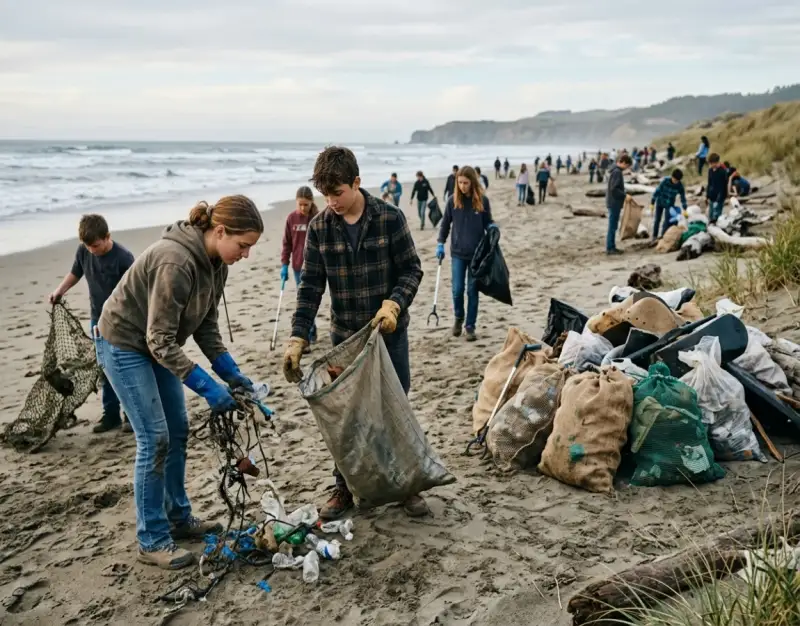
Along the sun-drenched coastlines of California, the rocky shores of Maine, and the bustling public beaches of the Gulf Coast, a quiet yet seismic revolution is underway. It is not being orchestrated by multi-national corporations, government environmental agencies, or academic think tanks. Instead, it is being led by a demographic often stereotyped as apathetic or glued to digital screens: Gen Z and late-stage Millennials. Armed with heavy-duty garbage bags, handheld grabbers, sorting buckets, and an unwavering moral clarity, these youth cleanup initiatives are turning the tide on marine debris. Across the globe, organized youth movements are reclaiming their coastlines, proving that intergenerational climate despair can be alchemized into tangible, boots-on-the-ground ecological restoration.
The urgency of this grassroots mobilization cannot be overstated. Oceanographers and marine biologists estimate that millions of metric tons of plastic enter our oceans annually, breaking down into microplastics that infiltrate the marine food web, choke wildlife, and eventually make their way into human bodies. For decades, traditional conservation methods relied on top-down regulatory frameworks that moved at a glacial pace. However, what has fundamentally changed in the current decade is the democratization of environmental activism. Through decentralized digital organizing, social media mobilization, and hyper-local awareness campaigns, modern teen environmentalists are bypassing bureaucratic red tape. They are proving that individual and collective localized actions scale rapidly when amplified by modern connectivity, bridging the gap between local coastal preservation and global ecological survival—much like the grassroots momentum documented when examining how communities scale impact, a phenomenon similarly explored in research on altruism and behavioral tracking, such as the insights shared in Can Kindness Be Measured? What Researchers Discovered When They Tracked 1,000 Acts of Good.
The core thesis of this movement is that youth-led cleanups are not merely aesthetic exercises in picking up trash; they are sophisticated incubators for civic leadership, scientific data collection, and systemic policy advocacy. When a group of high school students gathers on a Saturday morning to rake microplastics from the sand or pull discarded fishing nets from the surf, they are participating in a holistic educational paradigm. They are learning marine ecology, supply-chain economics, public relations, and municipal governance in real time. This comprehensive guide explores the mechanics of youth-led cleanups, offering a strategic blueprint for organizing, scaling, and sustaining these vital efforts to protect our shorelines for generations to come.
Foundational Principles and Mechanics of Coastal Cleanups
Understanding Marine Debris Dynamics
To execute an effective cleanup, youth organizers must first understand the physics and origin of marine debris. Trash on a beach rarely originates from beachgoers alone; rather, it is a symptom of a global linear economy. Ocean currents, tidal movements, and storm drains transport waste from urban centers miles inland directly into marine ecosystems. Plastics dominate this waste stream, accounting for up to 80% of all marine litter. Because plastics do not biodegrade—they merely photodegrade into smaller, increasingly toxic pieces—every bottle cap, straw, and synthetic fragment left on the sand represents a permanent hazard to coastal biodiversity.
Teen environmentalists approach this crisis not just as a cleanup challenge, but as a data-gathering opportunity. By utilizing standardized citizen-science protocols, such as those established by the Ocean Conservancy, youth cleanups record every item collected. This transforms a simple weekend trash pick into a robust scientific dataset. Municipalities and policymakers often rely on this crowdsourced data to draft local ordinances banning single-use plastics, polystyrene containers, and plastic bags. Thus, the mechanical act of bending down to pick up a wrapper is simultaneously an act of political lobbying.
The Psychology of Youth Environmental Engagement
Climate anxiety is a defining psychological condition for modern youth. Constantly bombarded by apocalyptic headlines regarding melting ice caps, rising sea levels, and collapsing ecosystems, young people frequently experience feelings of powerlessness and existential dread. Youth-led cleanups serve as a powerful antidote to this paralysis. By engaging in localized activism, participants transition from passive consumers of bad news to active agents of healing.
This psychological shift relies on self-efficacy—the belief in one’s ability to execute behaviors necessary to produce specific performance attainments. When a teenager sees a polluted stretch of sand transformed into a pristine ecosystem in the span of three hours, their brain registers a direct, unmistakable cause-and-effect correlation. This immediate positive reinforcement fosters resilience, community belonging, and lifelong environmental stewardship. Furthermore, these cleanups often serve as community hubs, drawing diverse groups of youth together and fostering mentorship models that mirror successful educational interventions seen in programs like The Global Classroom: How Online Mentorship is Bridging the Educational Gap in Developing Nations.
Strategic Blueprint: Launching and Scaling a Youth Cleanup Movement
Phase 1: Mobilization and Core Team Assembly
The foundation of any successful youth cleanup is a dedicated, organized core leadership team. Relying on a single passionate individual is a recipe for burnout; sustainable local activism requires distributed responsibility. Organizers should begin by recruiting peers from school environmental clubs, local community centers, and athletic teams, assigning specific roles such as logistics coordinator, safety officer, social media director, and data collection lead.
Once the core team is established, digital mobilization tools must be leveraged to build momentum. Platforms like Instagram, TikTok, and Discord are invaluable for reaching Gen Z demographics. Content should be dynamic, featuring before-and-after imagery of local beaches, behind-the-scenes planning sessions, and educational snippets about local marine life. Establishing a clear, compelling brand identity for the cleanup initiative transforms it from a school chore into an attractive, high-status community event.
Phase 2: Securing Permits, Partnerships, and Supplies
Operating a public event on a municipal beach requires navigating bureaucratic requirements long before the first volunteer arrives. The core team must contact local city councils, parks and recreation departments, or coastal commission offices well in advance. Securing necessary permits ensures legal compliance, guarantees that municipal waste management will collect the gathered trash afterward, and often unlocks access to city-owned equipment like waste bins and parking passes.
Simultaneously, building local business partnerships can solve logistical hurdles. Local hardware stores, cafes, and eco-friendly brands are often eager to sponsor youth initiatives by donating supplies. Essential equipment includes heavy-duty trash bags, recycling bins, gloves, grabber tools, first-aid kits, hand sanitizer, and hydration stations to reduce single-use plastic consumption at the event itself. Establishing these community bridges creates a multi-stakeholder ecosystem that supports the cleanup long-term.
Phase 3: Data Collection and Scientific Integration
A cleanup without data is merely moving trash from the sand to a landfill. To maximize impact, youth organizers must integrate structured data collection into their operations. Volunteers should be divided into small teams, with designated "data captains" equipped with clipboards and tally sheets. Every item collected—from cigarette butts and plastic cutlery to abandoned fishing gear—is systematically categorized and counted.
This data is subsequently uploaded to national or international databases, such as the International Coastal Cleanup database. Environmental scientists use this granular information to track pollution trends, identify primary corporate polluters, and advocate for systemic legislative changes. When teen environmentalists walk into a city council meeting bearing spreadsheets detailing that 60% of local beach litter consists of takeout containers from three specific local vendors, their advocacy moves from emotional appeal to undeniable empirical evidence.
Phase 4: Post-Cleanup Processing and Waste Diversion
The responsibilities of a cleanup crew do not end when the sun sets on the beach. Proper waste management and diversion are critical components of ethical environmental stewardship. Simply throwing all collected debris into a single municipal dumpster defeats half the purpose of the exercise. Instead, the collected waste must be rigorously sorted.
Items should be separated into recyclables, organic waste, hazardous materials (such as batteries or medical waste), and general landfill waste. Furthermore, forward-thinking youth groups partner with specialized upcycling organizations that transform rigid plastics into art installations, skateboards, or clothing items. This circular economy approach demonstrates to volunteers that waste can be reimagined as a resource, reinforcing broader sustainability principles.
Phase 5: Advocacy, Policy, and Scaling Impact
The ultimate goal of a sustainable youth cleanup movement is rendering itself obsolete through systemic change. Once a youth group has accumulated months or years of cleanup data, they are uniquely positioned to spearhead policy advocacy campaigns. Organizers should translate their field findings into press releases, op-eds for local newspapers, and petitions directed at municipal officials.
Scaling this impact involves mentoring neighboring schools and communities to launch their own independent cleanup chapters. By creating open-source toolkits, hosting webinars, and establishing regional youth environmental coalitions, local activists can transform isolated weekend events into a coordinated, statewide or national movement. This scalability ensures that the momentum generated by teen environmentalists outlasts the high school tenure of its original founders.
Real-World Case Studies and Scenarios
Case Study A: The Gulf Coast Coastal Guardians
In 2022, a coalition of high school students in Galveston, Texas, noticed an alarming increase in plastic debris washing ashore following severe tropical storms. Frustrated by the slow municipal response, they formed the "Gulf Coast Coastal Guardians." Rather than organizing random cleanups, they partnered with a local marine biology lab to establish a rigorous microplastic sampling protocol.
During their first major community cleanup, 150 teen volunteers removed over 1.2 tons of trash in a single morning. Crucially, their detailed data logs revealed that plastic beverage bottles and bottle caps constituted nearly 45% of all debris. Armed with these statistics, the student leaders petitioned the city council to install water refill stations along the boardwalk and implement a ban on single-use plastics at municipal parks. Within a year, the city adopted the ordinance, demonstrating how youth-led cleanups serve as powerful catalysts for municipal legislative reform.
Case Study B: The Pitfall of Unstructured Volunteerism
Conversely, consider the cautionary tale of a youth group in a Pacific Northwest coastal town that attempted to organize a massive cleanup without adequate logistical preparation or safety protocols. Failing to coordinate with the local parks department, they lacked proper waste disposal permits. When 200 enthusiastic teenagers collected three tons of debris, they left it piled in massive, unorganized heaps at the public parking lot.
Because municipal waste management was not notified, the trash sat unattended for days, attracting wildlife, scattering back into the dunes during a windstorm, and ultimately creating a larger ecological hazard than the original litter. Furthermore, a lack of first-aid planning resulted in several minor injuries from rusted metal shards and broken glass. This scenario highlights the absolute necessity of structured planning, legal permitting, and rigorous safety oversight in executing successful youth environmental actions—comparable to the care needed when establishing delicate ecological habitats like those detailed in Saving the Monarchs: The Backyard Waystations Keeping a Vulnerable Butterfly Alive.
Critical Mistakes in Youth Cleanups and How to Avoid Them
Even the most well-intentioned youth-led cleanup initiatives can falter if they fall into common operational traps. Understanding these pitfalls allows organizers to protect their volunteers, preserve local ecosystems, and maximize their long-term impact.
- Neglecting Safety Protocols and Liability Management: Beaches are fraught with hidden hazards, including biohazards, hypodermic needles, sharp glass, unstable cliffs, and heavy surf. Countermeasure: Always mandate closed-toe shoes, thick gloves, and safety briefings. Require parental consent waivers for underage participants, and ensure at least one adult supervisor or certified first-aid responder is present at all times.
- Failing to Coordinate with Municipal Waste Services: Collecting tons of trash without an exit strategy leaves organizers with mountains of garbage that cannot legally or logistically be disposed of in standard residential bins. Countermeasure: Establish formal communication with local sanitation departments weeks prior to the event to arrange dumpster drop-offs, pickup schedules, and recycling sorting guidelines.
- Treating Cleanups as Isolated Events: Organizing a single Earth Day cleanup and walking away for the rest of the year yields minimal long-term ecological or behavioral change. Countermeasure: Establish a recurring calendar—such as monthly or quarterly cleanups—and pair them with educational workshops, school assemblies, and policy advocacy campaigns to build sustained momentum.
- Ignoring Data Collection and Impact Measurement: Picking up trash without logging types and quantities turns the initiative into a temporary cosmetic fix rather than a scientific movement. Countermeasure: Implement standardized citizen-science data sheets for every volunteer team, transforming cleanups into actionable research projects that fuel legislative advocacy.
- Burnout and Lack of Leadership Succession: When founding student leaders graduate, many youth-led initiatives collapse because institutional knowledge and administrative control were centralized in too few hands. Countermeasure: Build a formal mentorship structure within the core team, actively recruiting and training younger students (e.g., freshmen and sophomores) to shadow senior leaders and inherit operational responsibilities smoothly.
Comprehensive Comparison Table: Cleanup Strategies and Methodologies
| Strategy Metric | Traditional Unstructured Cleanup | Modern Youth-Led Data-Driven Cleanup | Systemic Policy-Integrated Cleanup |
|---|---|---|---|
| Primary Focus | Aesthetic removal of visible surface trash. | Comprehensive waste removal paired with citizen science data logging. | Data-backed legislative advocacy and corporate accountability. |
| Engagement Model | Casual, ad-hoc volunteer turnouts. | Organized teen networks leveraging social media and school clubs. | Multi-generational coalitions partnering with legal and scientific experts. |
| Impact Duration | Short-term (beach looks clean for a few days). | Medium-term (identifies pollution trends and local hotspots). | Long-term (prevents pollution at the source through legal bans and ordinances). |
| Educational Value | Basic awareness of litter issues. | Deep dive into marine ecology, supply chains, and data analysis. | Mastery of civic engagement, public speaking, and municipal governance. |
Frequently Asked Questions
How can younger children safely participate in youth-led beach cleanups?
While teenagers often lead the organizational efforts, younger children (elementary and middle school students) can be vital participants when assigned age-appropriate tasks. Organizers should establish designated "low-hazard zones," such as upper beach dunes away from the surf line or rocky outcroppings. Younger participants should be paired with adult supervisors or older teen mentors. Instead of handling sharp debris or heavy items, they can focus on collecting small, highly visible items like plastic bottle caps, wrappers, and cigarette butts using handheld grabbers. This ensures safety while instilling a lifelong ethic of environmental care at an early age.
Do youth cleanup groups need official nonprofit status to operate?
No, youth cleanup groups do not require 501(c)(3) nonprofit status to organize successful events. Many student-led initiatives operate effectively under the umbrella of their high school environmental clubs, local community centers, or by partnering with established environmental nonprofits that can act as fiscal sponsors. Operating informally or under an existing sponsor avoids heavy administrative burdens, allowing youth leaders to focus their energy entirely on logistics, volunteer recruitment, and environmental advocacy on the ground.
How do youth cleanups successfully engage corporate polluters or local businesses?
Youth groups engage businesses through data-backed, constructive dialogue rather than aggressive confrontation. By presenting quantitative data proving that a significant percentage of local beach litter originates from specific local vendors (such as takeout containers from nearby restaurants), youth leaders can approach business owners with collaborative solutions. Many businesses are eager to protect their brand reputation and will willingly transition to biodegradable packaging, sponsor cleanup supplies, or fund water refill stations once presented with clear, undeniable local impact data compiled by teen environmentalists.
What are the best digital tools for organizing a youth-led environmental movement?
Modern youth mobilization relies heavily on a digital ecosystem of collaborative and social platforms. Instagram and TikTok are essential for visual storytelling, recruitment, and viral awareness campaigns. For internal organization and logistics, Discord servers allow core teams to manage departments like safety, marketing, and data collection. Google Workspace or Notion provides centralized hubs for sharing permits, waiver forms, and data spreadsheets. Additionally, citizen-science apps like Clean Swell allow volunteers to log debris directly into global databases straight from their smartphones.
How can educators integrate youth cleanups into official school curricula?
Educators can integrate cleanups into academic curricula by connecting fieldwork to interdisciplinary subjects. In biology and environmental science classes, cleanup data can be used for statistical analysis, ecosystem modeling, and biodiversity studies. In social studies and English classes, students can study municipal policy, write persuasive essays on single-use plastics, or draft mock legislation based on their field findings. By turning a Saturday cleanup into a holistic project-based learning experience, schools bridge theoretical classroom knowledge with real-world civic responsibility.
Strategic Roadmap and Final Takeaway
As we look toward the next two to five years, the trajectory of youth-led environmental activism points toward unprecedented integration, technological enhancement, and policy influence. We are moving away from isolated, feel-good weekend cleanups toward hyper-connected, data-driven regional coalitions. Emerging technologies—such as AI-powered image recognition apps that automatically categorize marine debris from smartphone photos and drone-assisted mapping of coastal pollution hotspots—will increasingly empower teen environmentalists to operate with scientific precision.
The ultimate takeaway for communities, educators, and policymakers is clear: youth-led cleanups are not merely about picking up garbage. They are incubators for the next generation of environmental scientists, policy makers, and civic leaders. When we support, resource, and amplify the voices of teen environmentalists, we do more than save our local beaches—we restore faith in collective human agency. By transforming passive climate despair into active coastal restoration, these young changemakers prove that even the most overwhelming global crises can be addressed through persistent, organized, and deeply localized action.
Be the first to share a gentle reflection on this story.