
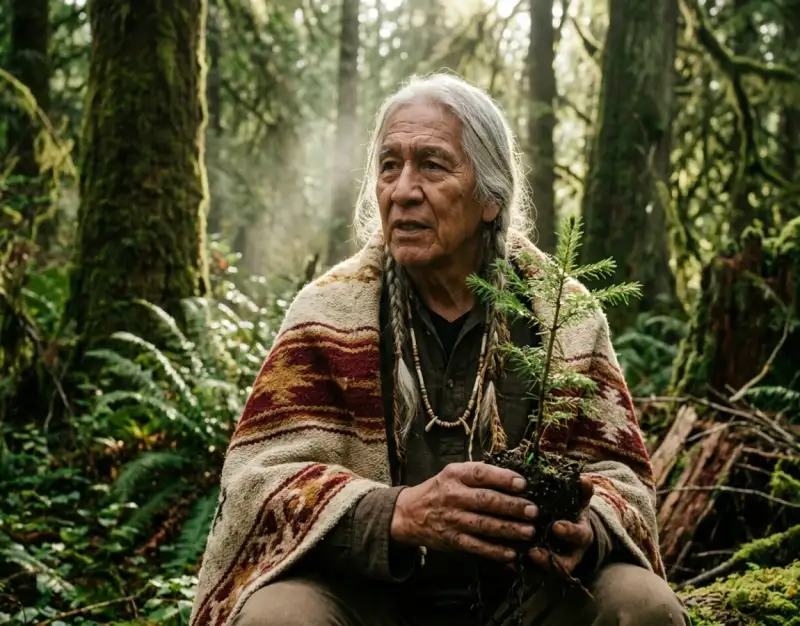
Deep within the world’s most biodiverse ecosystems, a quiet revolution is unfolding, driven not by high-tech corporate initiatives or academic think tanks, but by ancestral guardians who have stewarded their lands for millennia. The modern environmental movement has increasingly come to realize that contemporary crises—ranging from runaway climate change to catastrophic biodiversity collapse—cannot be resolved solely through futuristic engineering. Instead, true sustainability requires listening to the voices of change who carry millennia of empirical ecological data encoded in oral histories, spiritual practices, and traditional governance models. This intersection of ancient heritage and modern science represents one of the most critical paradigm shifts of our time, redefining how humanity interacts with the biosphere.
For generations, industrial development and colonial expansion marginalized indigenous populations, systematically dismissing traditional ecological knowledge as primitive or unscientific. However, contemporary environmental conservation has reached a devastating impasse, proving that technocratic solutions often fail to account for the complex, hyper-local feedback loops that indigenous stewards understand intuitively. What has fundamentally changed in recent years is the institutional validation of traditional knowledge systems. Scientists, policymakers, and international bodies are waking up to empirical data showing that lands managed by indigenous peoples harbor significantly higher biodiversity and lower deforestation rates than state-managed parks or commercial reserves. This realization is transforming how we approach global ecological restoration.
At Caring Connections, we recognize that true environmental healing is inextricably linked to social justice, cultural sovereignty, and community welfare. Just as we explore community-driven support systems—such as learning How to Organize a Free Neighborhood Coat Drive That Actually Dignifies Recipients—we must apply that same standard of dignity, respect, and self-determination to the indigenous communities safeguarding our planet’s lungs. The core thesis of this article is that preserving ancient ecological wisdom is not merely an act of historical nostalgia or cultural charity; it is an absolute survival imperative for the human species. By examining the foundational principles, strategic blueprints, and real-world applications of indigenous stewardship, we can forge a resilient path forward that honors both people and the planet.
Foundational Principles and Mechanics of Traditional Ecological Knowledge
To understand why indigenous wisdom is so potent in the realm of environmental conservation, one must first deconstruct the mechanics of Traditional Ecological Knowledge (TEK). Unlike Western reductionist science, which often isolates variables in laboratory settings, TEK is holistic, relational, and cumulative. It views humans not as external exploiters or even detached observers of nature, but as active, accountable participants in an intricate web of reciprocal obligations. Every plant, animal, waterway, and geological formation is understood as a relative deserving of respect, which naturally establishes an ethical boundary against over-extraction and ecological degradation.
The mechanics of TEK operate through adaptive management refined over hundreds of generations. Indigenous elders and land tenders observe seasonal shifts, animal migration patterns, and soil health indicators with a granularity that modern satellite monitoring often misses. This localized expertise allows communities to detect early warning signs of ecosystem stress long before they manifest as systemic collapses. Furthermore, TEK relies heavily on oral traditions, storytelling, and ceremonial practices to encode conservation laws into cultural fabric. These mechanisms ensure that ecological ethics are passed down seamlessly from elders to youth, creating an intergenerational accountability loop that corporate or governmental policies frequently struggle to replicate.
Moreover, the integration of indigenous wisdom into modern conservation frameworks requires shifting from extractive relationships to reciprocal partnerships. When scientists and conservationists collaborate with indigenous elders, they do not merely extract data; they honor a living epistemology. This relational approach mirrors other community-care frameworks, such as initiatives focused on adolescent well-being, comparable to how communities understand Therapy Dogs in Schools: How Canine Companions Are Lowering Student Anxiety by creating supportive, responsive environments where healing and growth happen naturally. In both contexts, systemic health is achieved by aligning human systems with natural, relational rhythms rather than imposing rigid, top-down mandates.
Strategic Blueprint: Documenting and Honoring Elder Knowledge
Establishing Culturally Safe Engagement Protocols
The first step in preserving ancient ecological wisdom is establishing respectful, consent-based engagement protocols with indigenous elders and knowledge keepers. Historically, academic and governmental researchers have exploited indigenous knowledge without giving proper attribution, compensation, or control over how data is used. Practitioners must dismantle these extractive habits by adopting community-led research methodologies where indigenous councils dictate the terms of engagement, data sovereignty, and publication rights.
To implement this practically, organizations should co-create Memorandum of Understanding (MOUs) with tribal leaders before initiating any documentation project. These documents must explicitly state that the community retains ownership of their traditional knowledge, ensuring that sensitive sacred sites or proprietary medicinal plant locations are protected from commercial biopiracy. Culturally safe engagement also involves investing time in relationship-building, attending community gatherings without an agenda, and demonstrating long-term commitment to the community's broader sovereignty goals.
Designing Intergenerational Oral History Archives
Once ethical frameworks are established, the next phase involves capturing and preserving oral histories before this irreplaceable knowledge is lost. Elders passing away without passing on their wisdom represents an irreversible cultural and ecological extinction event. Modern technological tools—such as high-definition audio-visual recording, geospatial mapping software, and digital archiving platforms—can be deployed directly by indigenous youth trained as documentarians, bridging the gap between ancient heritage and digital preservation.
Practitioners should facilitate workshops where youth interview elders about local flora, fauna, weather forecasting, and sustainable land management techniques in their native languages. This dual-benefit approach not only preserves critical ecological data for scientific analysis but also revitalizes indigenous languages and reinforces cultural identity among younger generations. Insiders recommend ensuring that all archived materials are stored in secure, decentralized formats controlled entirely by the tribe, preventing outside entities from locking access behind paywalls or exploiting the data.
Strategic Blueprint: Translating TEK into Modern Conservation Policy
Integrating Indigenous Land Management into Public Policy
Preserving ancient wisdom is purely academic unless it actively influences contemporary environmental conservation policy. Governments and NGOs must move beyond tokenistic consultations and grant indigenous nations direct management authority over ancestral public lands. This involves rewriting conservation legislation to recognize traditional land-tending practices—such as cultural burning, rotational harvesting, and restorative agroforestry—as legally protected scientific methodologies rather than unregulated activities.
Policy advocates should work closely with legislative bodies to establish co-management boards where indigenous leaders hold equal voting power with state and federal agencies. Case studies from around the globe consistently show that when indigenous communities regain stewardship of national parks and protected areas, biodiversity rebounds dramatically. Practitioners must build rigorous, empirical policy briefs that translate qualitative indigenous insights into quantitative metrics that policymakers understand, bridging the gap between traditional narratives and bureaucratic requirements.
Scaling Cultural Fire Management and Ecosystem Restoration
One of the most urgent applications of indigenous wisdom is the revival of cultural burning practices to combat catastrophic wildfires. For centuries, colonial governments outlawed indigenous controlled burns, leading to an unnatural accumulation of underbrush and tinder-dry forests. Today, as climate change intensifies fire seasons, environmental agencies are desperately turning to indigenous fire practitioners who understand how to apply low-intensity ground fires that clear debris, stimulate native seed germination, and protect old-growth trees.
To scale this practice successfully, modern fire departments and forestry services must establish apprenticeship programs where indigenous elders train contemporary firefighters in cultural burning techniques. This requires shifting the operational paradigm from emergency suppression to proactive, ecological maintenance. Insiders advise starting with small-scale pilot plots, carefully documenting soil and canopy responses, and gradually expanding these programs to cover regional watersheds, thereby restoring natural ecological equilibrium.
Strategic Blueprint: Supporting Grassroots Cultural Preservation Leaders
Funding Autonomous Indigenous-Led Conservation Funds
Financial backing is the lifeblood of any long-term conservation effort, yet traditional philanthropic models often impose labyrinthine bureaucratic hurdles that disadvantage grassroots indigenous groups. To truly support cultural preservation leaders, philanthropic organizations and international donors must establish direct, un-earmarked, flexible funding streams that empower communities to allocate resources according to their own internal priorities and seasonal realities.
When designing funding mechanisms, donors should bypass large intermediary NGOs that skim administrative overhead and instead wire capital directly to indigenous-managed trusts and community cooperatives. This financial autonomy allows elders and frontline defenders to purchase equipment, hire youth educators, secure legal defense for land rights, and conduct essential ceremonies without external interference. Transparent financial reporting should be tailored to respect cultural norms rather than forcing indigenous leaders into rigid, Western corporate accounting structures.
Amplifying Voices Through Ethical Media and Storytelling
Global awareness is critical for protecting indigenous lands from multinational resource extraction, but media representation must be handled with extreme care to avoid romanticization or exploitation. Environmental journalists and digital publishers bear a profound responsibility to center the voices of indigenous leaders directly, rather than speaking on their behalf or reducing complex socio-ecological struggles to simplistic hero-and-villain narratives.
Editorial teams should partner with indigenous media networks, compensating native journalists, photographers, and videographers fairly for their work. When covering environmental conflicts, articles should provide deep structural context about land back movements, treaty rights, and systemic injustices. Additionally, digital platforms can support broader welfare initiatives, such as addressing systemic inequities explored in resources like Collaborative Welfare: Partnering Local Businesses With Shelters to End Period Poverty, reinforcing the reality that ecological degradation and social vulnerability always stem from the same root causes of marginalization.
Real-World Case Studies: Successes and Failures in Ecological Preservation
Examining concrete case studies provides invaluable lessons on what works—and what catastrophically fails—when attempting to integrate ancient wisdom with modern environmental conservation. Consider the successful restoration of the fire-prone ecosystems in Northern California, where state agencies partnered with local Native American tribes to reinstate traditional cultural burning. Prior to this partnership, restrictive state policies resulted in massive, high-severity mega-fires that decimated wildlife and destroyed human settlements. By transferring burning authority back to indigenous practitioners, fuel loads were safely reduced, native flora flourished, and carbon sequestration capacity improved significantly. The data clearly demonstrates that traditional stewardship outperforms reactive, state-managed suppression.
Conversely, a prominent example of failure occurred in a Southeast Asian rainforest conservation project, where an international NGO established a protected wildlife reserve without consulting the indigenous inhabitants who had managed the forest for generations. The NGO imposed strict anti-poaching and foraging bans, criminalizing traditional subsistence practices. Without local buy-in and reliance on TEK, the community lost its economic incentive to protect the forest, leading to a surge in illegal logging and poaching by outside syndicates who bribed corrupt officials. The project collapsed within five years, proving that top-down conservation models that alienate indigenous stewards are inherently unsustainable and counterproductive.
| Preservation Metric | Top-Down Technocratic Conservation | Indigenous-Led Stewardship (TEK) |
|---|---|---|
| Biodiversity Outcomes | Often declines due to rigid zoning and lack of adaptive management. | Consistently high; preserves keystone species and complex habitats. |
| Community Engagement | Tokenistic public consultations; high local resistance. | Deep, participatory governance with native councils holding veto power. |
| Wildfire Mitigation | Relies on reactive suppression, leading to catastrophic fuel build-up. | Proactive cultural burning that restores natural ecosystem cycles. |
| Financial Sustainability | High administrative overhead; dependent on volatile grant cycles. | Self-sustaining through community cooperatives and sovereign land trusts. |
Critical Mistakes to Avoid in Indigenous-Led Conservation
Practitioners, researchers, and environmental organizations frequently stumble when attempting to collaborate with indigenous communities. Recognizing these pitfalls is essential for fostering authentic, productive partnerships.
- Mistake 1: Treating Indigenous Knowledge as Static Data. Viewing TEK as a fixed database to be mined rather than a living, evolving epistemology. Countermeasure: Engage in ongoing dialogue and establish long-term relational commitments rather than short-term extraction projects.
- Mistake 2: Violating Data Sovereignty. Publishing sensitive geographic, medicinal, or sacred cultural information without community consent. Countermeasure: Implement strict MOUs that guarantee indigenous ownership and veto power over all published outputs.
- Mistake 3: Imposing Western Administrative Structures. Forcing grassroots indigenous groups to adopt rigid corporate accounting and reporting methods. Countermeasure: Tailor grant reporting and administrative requirements to respect traditional governance and communication styles.
- Mistake 4: Tokenizing Indigenous Leaders. Inviting elders to speak at conferences for symbolic value while excluding them from policy-making and budget allocation decisions. Countermeasure: Ensure indigenous representatives hold equal voting power on all governing boards and financial committees.
- Mistake 5: Ignoring Land Back and Sovereignty Rights. Focusing exclusively on ecological conservation while ignoring the underlying political struggle for territorial sovereignty. Countermeasure: Actively support land back initiatives and legal advocacy as foundational prerequisites for true environmental healing.
Frequently Asked Questions
What is Traditional Ecological Knowledge (TEK) and why is it important?
Traditional Ecological Knowledge refers to the cumulative, holistic body of knowledge, practice, and belief regarding the relationship of living beings with one another and with their environment. It is evolved through adaptive management over millennia and passed down through oral traditions. TEK is vital because it offers nuanced, hyper-local insights into ecosystem dynamics, climate patterns, and sustainable resource management that modern Western science often overlooks.
How can modern scientists collaborate ethically with indigenous elders?
Ethical collaboration begins with acknowledging historical injustices and establishing formal, consent-based agreements—such as MOUs—that guarantee indigenous data sovereignty and intellectual property rights. Researchers must approach communities with humility, prioritize relationship-building over data extraction, and ensure that the research directly benefits the community’s self-determined environmental and cultural goals.
Why are indigenous lands more biodiverse than state-managed parks?
Indigenous lands maintain superior biodiversity because they are managed through a reciprocal, relational worldview that views humans as part of nature rather than separate from it. Practices such as rotational harvesting, cultural burning, and restricted access zones prevent over-exploitation and mimic natural disturbance regimes, fostering resilient ecosystems that naturally resist degradation.
What role do indigenous youth play in preserving ancient wisdom?
Indigenous youth are the critical bridge between ancient heritage and the future. By participating in intergenerational oral history projects, language revitalization programs, and modern documentation training, youth ensure that traditional ecological wisdom adapts to contemporary technological and environmental challenges without losing its foundational integrity.
How does cultural burning differ from modern wildfire suppression?
Modern wildfire suppression involves extinguishing all fires immediately, which results in an unnatural accumulation of dense underbrush and hazardous fuel loads that fuel catastrophic mega-fires. Cultural burning, by contrast, utilizes low-intensity, frequent, controlled fires applied by trained indigenous practitioners to clear debris, rejuvenate native plants, and maintain ecological equilibrium safely.
Strategic Roadmap and Final Takeaway
As we look toward the next two to five years, the trajectory of global environmental conservation will depend heavily on our willingness to dismantle outdated, colonial paradigms and fully embrace the voices of change championed by indigenous elders. The convergence of accelerating climate disruption and unprecedented biodiversity loss leaves no room for arrogance; humanity must humbly integrate ancient ecological wisdom with modern scientific rigor if we are to secure a habitable future for generations to come.
The strategic roadmap forward is clear: practitioners, policymakers, and everyday citizens must actively support indigenous land sovereignty, fund autonomous grassroots conservation initiatives, and enshrine Traditional Ecological Knowledge into binding public policy. By honoring the guardians of our biosphere today, we ensure that the ancient wisdom of the earth continues to guide, heal, and sustain our world long into the future.
Be the first to share a gentle reflection on this story.