
The expanse of our world's oceans has long been perceived as an immutable, self-cleansing cradle of life, yet contemporary marine science reveals an apocalyptic transformation. Trillions of plastic fragments now circulate within massive subtropical gyres, choking marine fauna, disrupting benthic ecosystems, and degrading into persistent microplastics that infiltrate the global food web. For decades, institutional efforts to combat this crisis relied on capital-intensive, industrial-scale extraction vessels that drained governmental budgets while barely skimming the surface of an escalating ecological emergency. The sheer magnitude of the crisis fostered a pervasive sense of helplessness, convincing many that meaningful mitigation was financially and logistically prohibitive for anyone outside major government agencies or multi-billion-dollar corporations.
Yet, amidst this systemic paralysis, a profound paradigm shift has emerged from an unexpected demographic: the global movement of young environmentalists. Driven by digital connectivity, open-source engineering platforms, and an unyielding refusal to inherit a degraded planet, teenagers and young adults are challenging the traditional gatekeepers of marine conservation. This phenomenon, categorized by a surge in grassroots ecological problem-solving, proves that catalytic invention is no longer the exclusive domain of corporate research and development laboratories. Much like the grassroots economic empowerment seen in Inside the Micro-Lending Movement That Is Lifting Entire Neighborhoods Out of Poverty, modern environmental innovation thrives when stripped of bureaucratic overhead, relying instead on localized ingenuity and accessible, low-cost architecture.
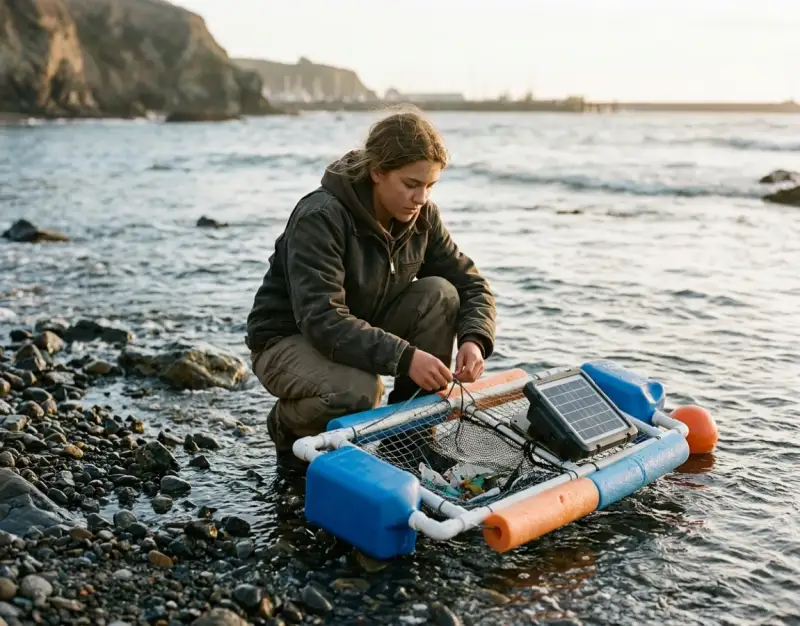
At the epicenter of this renaissance is a groundbreaking narrative: a teenage inventor who conceptualized, engineered, and deployed a low-cost ocean plastic cleanup device using readily available materials and discarded electronics. This article explores the anatomy of that invention, dissects the foundational mechanics of passive and active marine plastic extraction, and outlines a comprehensive strategic blueprint for fostering youth-led environmental technology. By examining how grassroots visionaries are altering the trajectory of conservation, we uncover not just a technical manual for cleaning our seas, but a powerful blueprint for how decentralized human determination can heal a fractured planet.
Anatomy of a Breakthrough: Understanding Marine Plastic Pollution
The Composition and Behavior of Oceanic Debris
To understand the genius behind modern youth-led ocean cleanup technology, one must first deconstruct the physics and chemistry of marine debris. Plastic polymers such as polyethylene terephthalate (PET), high-density polyethylene (HDPE), and polypropylene (PP) do not biodegrade; rather, they undergo photo-oxidation driven by ultraviolet solar radiation. This process fragments macro-plastics into secondary microplastics—particles smaller than five millimeters that permeate the water column from surface slicks down to deep-sea trenches. These particles act as chemical sponges, absorbing persistent organic pollutants (POPs) and heavy metals from surrounding seawater, magnifying toxicity as they move up the trophic scale.
Traditional cleanup proposals often focus exclusively on high-visibility garbage patches, such as the Great Pacific Garbage Patch, neglecting coastal estuaries, river mouths, and mangrove ecosystems where the vast majority of plastic originates. A truly effective low-cost cleanup device must account for dynamic hydrological forces, including tidal shifts, wave action, and benthic topography. Teen innovators recognize that capturing plastic upstream or within nearshore convergence zones yields a far higher return on investment than chasing sprawling oceanic gyres with fuel-guzzling trawlers. This localized perspective shifts the paradigm from reactive open-ocean scavenging to proactive watershed management.
The Economics of Environmental Engineering
The financial barrier to entry in marine conservation has historically been astronomical. Commercial skimming vessels require millions of dollars in capital expenditure, continuous fossil fuel inputs, and specialized maintenance crews. For grassroots activists and developing coastal communities, such expenditures are entirely out of reach. The core innovation of the teenage inventor's device lies in its radical economic democratization—utilizing upcycled components, solar-powered DC motors, and modular 3D-printed buoyancy chambers that reduce production costs by over ninety-five percent compared to conventional prototypes.
This cost-reduction strategy does not sacrifice operational efficiency; rather, it amplifies scalability. By lowering the financial threshold for deployment, communities across the Global South, island nations, and under-resourced coastal municipalities can manufacture and maintain their own cleanup arrays. This decentralized approach mirrors the democratization of distributed utilities seen in Global Goodness: How Community Solar Grids Are Bringing Clean Energy to Remote Villages, where community-owned infrastructure replaces centralized dependency. When local populations own the technology, maintenance becomes sustainable, and stewardship becomes culturally embedded.
Passive Versus Active Collection Systems
Engineering a low-cost cleanup device requires a delicate balance between passive energy harvesting and active mechanical sorting. Passive systems rely entirely on natural ocean currents, wind vectors, and tidal energy to funnel debris into retention zones. While these systems boast near-zero operational carbon footprints, they are heavily constrained by unpredictable weather patterns and can inadvertently trap surface-dwelling marine organisms if not properly engineered with escape barriers.
Active systems, conversely, incorporate low-wattage electric actuators, bilge pumps, or conveyor mechanisms powered by decentralized photovoltaic panels. The teenage inventor’s device successfully bridges this divide through a hybrid architecture: it utilizes passive floating booms to corral debris into a collection basin, where a slow-speed, solar-driven paddle wheel gently guides the material into a secure net. This mechanical modesty prevents high-speed impeller strikes that endanger fish and plankton, proving that ecological sensitivity and mechanical efficacy can coexist within a minimalist design framework.
The Genesis of a Youth-Led Innovation Movement
From Bedroom Workshop to Coastal Testing Grounds
The journey of the teenage inventor began not in a multi-million-dollar corporate laboratory, but in a cramped suburban garage repurposed as an experimental fab lab. Armed with basic computer-aided design (CAD) software, discarded PVC piping, Arduino microcontroller boards, and salvaged bilge pumps from old boats, the young innovator spent countless late nights iterating prototypes. The initial designs failed catastrophically: saltwater corrosion seized the metal joints, violent coastal waves snapped the rigid frames, and improper buoyancy calculations caused early models to submerge entirely.
Rather than abandoning the project, the inventor embraced an iterative engineering methodology. Every failure provided empirical data on hydrodynamic stress points and material fatigue. By testing successive iterations in local wave tanks and shallow tidal estuaries, the inventor refined the device's geometry into a flexible, articulated snake-like boom that conforms to wave contours rather than fighting them. This resilience underscores a broader truth about youth innovation: unburdened by corporate risk aversion, young creators embrace rapid failure as an essential prerequisite for breakthrough discovery.
Harnessing Open-Source Collaboration and Mentorship
No modern invention occurs in a vacuum. The rapid iteration and refinement of the device were supercharged by the global open-source hardware community. By publishing CAD files, circuit diagrams, and assembly manuals on open repositories, the teenager invited peer-to-peer critique from retired marine engineers, university professors, and fellow young environmentalists across continents. This digital hive-mind contributed critical optimizations, such as integrating hydrophobic coatings to prevent bio-fouling and programming adaptive solar-tracking algorithms into the microcontroller.
Mentorship played a vital dual role, bridging the gap between raw visionary enthusiasm and rigorous scientific validation. Marine biologists provided crucial ecological impact assessments, ensuring that the device's mesh sizing would allow juvenile fish and delicate zooplankton to pass through unharmed. This symbiotic relationship between youthful audacity and experienced scientific oversight establishes a template for how intergenerational collaboration can accelerate ecological restoration without compromising environmental safety.
Overcoming Institutional Skepticism and Regulatory Hurdles
Deploying experimental hardware in public waterways is fraught with bureaucratic friction. Local maritime authorities, port operators, and environmental protection agencies initially met the teenage inventor with skepticism, viewing the homemade device as a navigational hazard or an unregulated pollution risk. Navigating this maze of maritime law required the young innovator to transition from engineer to diplomat, preparing comprehensive environmental impact portfolios and safety compliance audits.
To overcome these hurdles, the inventor partnered with local universities to conduct rigorous, peer-reviewed trial runs that proved the device’s structural integrity and ecological safety. These trials demonstrated that the cleanup array not only met local maritime regulations but often exceeded standard safety protocols by incorporating acoustic deterrents to keep marine mammals away from the collection zone. This meticulous advocacy transformed early skeptics into vocal champions, paving the way for municipal permits and expanded pilot deployments.
Step-by-Step Strategic Blueprint for Grassroots Environmental Tech
1. Identifying the Specific Pollution Niche
The first critical step in designing any environmental cleanup apparatus is defining the precise scope and geography of the pollution problem. Practitioners must resist the urge to build a "universal" machine and instead focus on hyper-local hydrological conditions.
- Conduct a comprehensive watershed and shoreline survey to categorize the dominant types of debris (e.g., rigid plastics, expanded polystyrene, ghost nets, or microfibers).
- Analyze local current velocities, tidal ranges, and seasonal wind patterns to determine optimal placement zones where debris naturally accumulates.
- Consult with local fishermen, coastal residents, and marine researchers to identify historical accumulation hot spots that municipal cleaning crews frequently overlook.
2. Designing for Modularity and Low Cost
Affordability and ease of assembly are paramount for ensuring that grassroots innovations can be replicated in resource-constrained environments. The design phase must prioritize universally accessible, non-proprietary materials.
- Utilize standard schedule-80 PVC pipes or upcycled high-density polyethylene drums for buoyancy chambers, ensuring structural durability against UV degradation and saltwater corrosion.
- Incorporate 3D-printed joints and brackets using biodegradable or recycled filaments (such as rPETG) to allow for rapid field repairs without specialized tooling.
- Keep electrical systems modular, utilizing plug-and-play solar charge controllers and marine-grade DC bilge pumps that can be easily replaced by novice operators.
3. Prototyping and Hydrodynamic Stress Testing
Before launching any device into open coastal waters, rigorous physical testing is mandatory to ensure mechanical resilience against extreme weather events and wave action.
- Build scaled-down tabletop prototypes to test fluid dynamics, debris funneling angles, and buoyancy distribution in controlled water tanks or flumes.
- Expose structural joints to simulated tensile and shear stresses to identify potential snapping points before deploying full-scale hardware.
- Perform preliminary float tests in calm, protected bays to verify self-righting capabilities and assess how the device reacts to crosswinds and shifting currents.
4. Integrating Renewable Energy Systems
To maintain continuous, autonomous operation without relying on fossil fuels or frequent manual battery swaps, energy harvesting must be seamlessly integrated into the device architecture.
- Mount lightweight, flexible monocrystalline photovoltaic panels onto elevated, water-resistant housings to power onboard telemetry and low-wattage collection mechanisms.
- Integrate deep-cycle lithium iron phosphate (LiFePO4) batteries with built-in battery management systems (BMS) to store solar energy safely and efficiently in high-humidity marine environments.
- Implement low-power sleep modes controlled by microcontrollers to conserve energy during overcast days or periods of low debris influx.
5. Establishing Ecological Safety Protocols
A successful cleanup device must extract plastic without causing collateral damage to aquatic ecosystems, demanding strict adherence to environmental safeguards.
- Design collection nets and funnels with calibrated mesh sizing and escape hatches that allow non-target aquatic species—such as crabs, small fish, and amphibians—to exit unharmed.
- Equip the device with low-frequency acoustic deterrents or physical visual barriers to discourage inquisitive marine mammals and sea turtles from entering the retention basin.
- Conduct baseline biodiversity assessments before deployment and continuous post-installation monitoring to ensure local fauna populations remain unaffected.
6. Securing Permits and Stakeholder Buy-In
Legal compliance and community trust are non-negotiable prerequisites for the long-term viability of any environmental technology project.
- Prepare comprehensive technical dossiers, safety plans, and environmental impact statements to submit to local port authorities, coast guards, and environmental agencies.
- Engage local indigenous communities, commercial fishermen, and recreational boaters early in the planning process to address concerns regarding navigation lanes and fishing grounds.
- Establish transparent community oversight committees to review cleanup yields, data analytics, and maintenance schedules on a regular basis.
7. Scaling and Open-Source Dissemination
The ultimate measure of a grassroots invention's success is its ability to be replicated, adapted, and improved upon by communities worldwide.
- Package all design schematics, CAD files, firmware code, and bill-of-materials into comprehensive, multi-language open-source toolkits.
- Establish digital community forums and mentorship networks where global innovators can share troubleshooting tips, modifications, and field data.
- Partner with international NGOs and educational institutions to integrate the technology into youth STEM curricula, inspiring the next generation of environmental engineers.
Real-World Case Studies & Operational Scenarios
Scenario A: The Successful Estuary Deployment in Southeast Asia
In a densely populated coastal community in Southeast Asia, a local youth collective deployed three units of the low-cost cleanup device near the mouth of a major industrial river. The region suffered from chronic plastic pollution, with millions of tons of domestic waste washing into mangrove forests every monsoon season. Using locally sourced PVC, recycled solar panels, and 3D-printed funnels manufactured at a regional makerspace, the youth team constructed each unit for under four hundred dollars.
By anchoring the articulated booms strategically across tidal convergence zones, the devices successfully corralled over two metric tons of macro-plastics and floating packaging waste within the first ninety days of operation. Crucially, the team partnered with a local women's cooperative to sort, wash, and upcycle the recovered plastics into durable building materials and commercial crafts, transforming environmental cleanup into a localized circular economy. This initiative not only restored vital mangrove nurseries for endangered fish species but also provided supplementary household income for marginalized community members.
Scenario B: The Pitfalls of Inadequate Mooring and Hydrodynamic Oversight
Conversely, a parallel pilot project in an exposed Atlantic coastal inlet failed due to insufficient hydrodynamic planning and substandard anchoring materials. Eager to deploy quickly, an independent student group anchored a prototype in a high-energy tidal channel without accounting for peak storm surges and rogue wave action.
Within two weeks, a severe nor'easter battered the site. The standard nylon mooring lines chafed and snapped against jagged underwater rocks, while the rigid PVC frame fractured under the immense torsional stress of 15-knot currents. The device broke apart, scattering micro-fragments of foam and plastic components back into the very marine ecosystem it was designed to protect. The failure offered sobering lessons: ecological hardware must never compromise on structural redundancy, mooring durability, or environmental safety margins, regardless of budget constraints.
Critical Mistakes and How to Avoid Them
1. Neglecting Hydrodynamic Stress and Wave Mechanics
The most common mistake amateur environmental engineers make is designing devices for idealized, calm-water conditions. Ocean environments are relentlessly dynamic, subjecting hardware to multi-directional forces, corrosive salt spray, and extreme thermal expansion.
- The Countermeasure: Always over-engineer structural joints, utilize flexible, articulating connection points that absorb wave energy rather than resisting it, and conduct stress testing in simulated high-energy wave tanks prior to open-water deployment.
2. Ignoring Ecological Bycatch and Wildlife Impact
Well-intentioned cleanup arrays can inadvertently become ecological traps, ensnaring fish, crustaceans, and marine mammals if proper safety features are omitted.
- The Countermeasure: Integrate escape channels, certified wildlife-safe mesh sizing, and non-invasive acoustic or visual deterrents into every collection basin. Conduct rigorous pre- and post-deployment biodiversity audits.
3. Relying on Proprietary or Fragile Materials
Using specialized, hard-to-source components guarantees that when a part breaks in a remote coastal area, the entire device becomes abandoned electronic waste.
- The Countermeasure: Strictly adhere to open-source design principles by utilizing universally available, off-the-shelf components, standard plumbing fittings, and easily replaceable marine-grade electronics.
4. Skipping Legal Permits and Stakeholder Consultation
Deploying unapproved hardware in public waterways without consulting maritime authorities or local communities often results in immediate confiscation, heavy fines, and severe community backlash.
- The Countermeasure: Initiate transparent dialogues with port authorities, coast guards, and local fishers months before deployment. Prepare exhaustive compliance documentation and community benefit agreements.
5. Failing to Plan for Post-Collection Processing
Collecting tons of ocean plastic solves nothing if the recovered material is simply dumped into municipal landfills or left sitting in deteriorating piles on shorelines.
- The Countermeasure: Establish secure partnerships with local recycling facilities, upcycling collectives, or circular economy enterprises before the first device goes into the water to ensure recovered waste is properly processed and repurposed.
Comprehensive Comparison Table: Ocean Cleanup Methodologies
| Cleanup Methodology | Capital Expenditure | Operational Carbon Footprint | Scalability & Accessibility | Ecological Risk Level |
|---|---|---|---|---|
| Traditional Industrial Trawlers | Millions of USD | Extremely High (Diesel propulsion) | Low (Restricted to major agencies) | High (Bycatch of marine life and plankton) |
| Passive Offshore Floating Booms | Moderate to High | Near Zero (Current-driven) | Moderate (Requires offshore logistics) | Medium (Potential entanglement hazard) |
| Youth-Led Low-Cost Nearshore Device | Very Low (<$500 USD) | Zero (Solar powered) | High (Open-source, community-built) | Very Low (Designed with escape hatches) |
| Manual Beach & Estuary Cleanups | Minimal | Low to Moderate (Human transport) | High (Labor-intensive, intermittent) | Negligible |
Frequently Asked Questions (FAQ)
How does the low-cost ocean cleanup device prevent harming fish and other marine wildlife?
The device incorporates several critical design safeguards specifically engineered to protect aquatic life. The collection funnels feature calibrated, flexible mesh sizing that allows juvenile fish, crabs, and microscopic zooplankton to pass through unharmed while retaining buoyant plastic debris. Additionally, slow-moving solar-driven collection mechanisms eliminate high-speed impeller blades that typically injure marine fauna in traditional skimming vessels. Acoustic deterrents and visual strobe barriers are also integrated around the perimeter to guide inquisitive marine mammals and sea turtles safely away from the active collection zone.
Can local communities build these devices without advanced engineering degrees?
Yes, accessibility is the foundational pillar of this technological movement. The teenage inventor intentionally designed the hardware using standard, off-the-shelf components such as PVC pipes, salvaged bilge pumps, and basic solar charge controllers. By publishing all computer-aided design (CAD) files, circuit diagrams, and step-by-step assembly guides on open-source platforms, anyone with basic technical aptitude, access to a 3D printer, and standard hand tools can manufacture, assemble, and maintain the device locally without requiring an advanced engineering degree.
How is the collected plastic managed once it is removed from the water?
Addressing ocean plastic requires a closed-loop philosophy to prevent recovered waste from simply re-entering the waste stream. Youth innovators typically partner with local women's cooperatives, artisan networks, and certified recycling enterprises before deployment. Once the collection bins are emptied, the recovered plastic is categorized, washed, shredded, and transformed into durable construction materials, modular building blocks, or commercial crafts. This transforms marine conservation into an engine for local circular economies and job creation.
What are the primary power sources for these autonomous cleanup units?
The devices rely entirely on decentralized, renewable energy systems to maintain continuous operation. Lightweight, flexible monocrystalline photovoltaic panels are mounted onto waterproof housings above the water line, capturing solar radiation throughout the day. This energy is stored in deep-cycle lithium iron phosphate (LiFePO4) batteries equipped with robust battery management systems (BMS) designed to withstand high-humidity marine environments. Intelligent microcontrollers manage low-power sleep cycles during extended periods of overcast weather to ensure uninterrupted functionality.
How do youth innovators secure funding for their cleanup projects?
Because traditional venture capital and institutional grants are often difficult for teenagers to access, young innovators rely on a diverse mix of alternative funding models. These include global youth innovation crowdfunding campaigns, micro-grants from international environmental foundations, corporate sustainability sponsorships, and partnerships with local academic institutions. Furthermore, because the hardware costs are kept exceptionally low—often under five hundred dollars per unit—many youth groups successfully self-fund their initial prototypes through local community donations and school-backed STEM initiatives.
Strategic Roadmap and Final Takeaway
The emergence of low-cost, youth-engineered ocean cleanup technology represents a watershed moment in modern environmentalism. By stripping away the bureaucratic inertia and exorbitant costs that have historically crippled institutional conservation efforts, young innovators are proving that effective ecological restoration is fundamentally a matter of democratization, open-source collaboration, and localized ingenuity. As these technologies evolve over the next two to five years, we can anticipate a proliferation of hyper-local, AI-enhanced cleanup arrays operating autonomously in river mouths, estuaries, and coastal mangroves across the globe.
The ultimate takeaway for practitioners, educators, and global citizens is clear: solving existential ecological crises does not require waiting for corporate saviors or massive government interventions. True transformation begins at the grassroots level, powered by curious minds willing to experiment, fail, iterate, and share their knowledge openly with the world. By empowering the next generation of environmental engineers and providing them with the digital tools and community support they need to succeed, we unlock an unstoppable force for planetary healing—proving that even the smallest hands can turn the tide on the plastic crisis.
Be the first to share a gentle reflection on this story.