
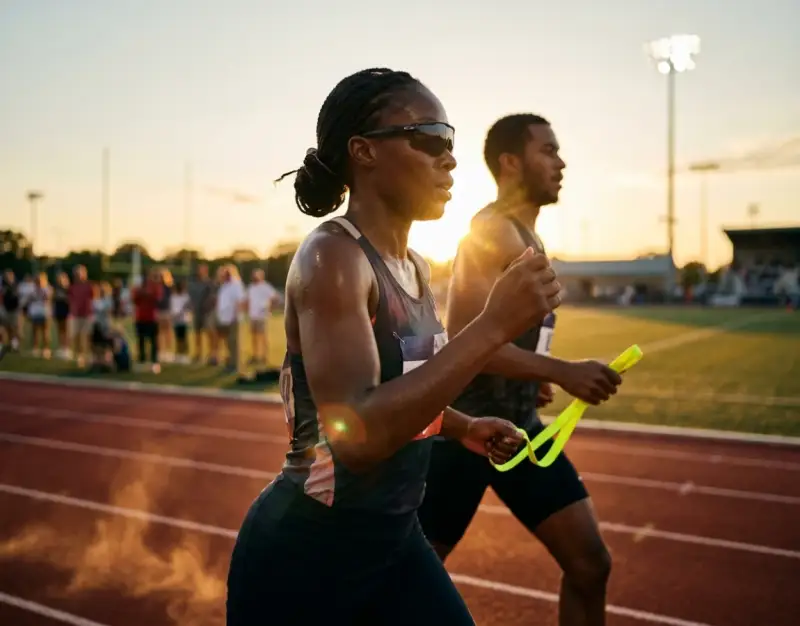
History has consistently proven that true societal paradigms do not shift through quiet contemplation; they evolve when individuals shatter the invisible ceilings of perceived limitations. Across the globe, a profound cultural renaissance is taking root within the realm of adaptive athletics. This movement transcends mere physical endurance—it is a philosophical uprising. When we examine the broader landscape of societal progress, we see deep parallels between athletic resilience and grassroots community reform, much like the breakthroughs highlighted in our exploration of Collaborative Welfare: Tech Giants and Local Nonprofits Team Up to Bridge the Digital Divide, where collective determination overcomes systemic barriers.
For decades, individuals living with severe visual impairments faced a world engineered for the sighted, where societal expectations boxed them into passive roles. Today, that narrative is being aggressively rewritten. The modern voices of change are not just participating in traditional sports; they are dominating endurance marathons, navigating open-water triathlons, and conquering treacherous mountain peaks without the luxury of sight. This surge in visual impairment motivation has fundamentally altered how sports science, coaching methodologies, and public health organizations view human capability. We are witnessing the democratization of physical excellence, proving that athletic greatness originates in the mind and the spirit rather than the optical nerve.
This exhaustive investigative feature explores the mechanics of elite blind athletics, dissecting the training regimens, psychological frameworks, and technological innovations that enable visually impaired athletes to transcend their physical realities. By examining the anatomy of resilience, we uncover actionable strategies that any individual—regardless of ability—can apply to conquer impossible odds. From the nuances of tactile navigation to the psychology of high-stakes competition, this article serves as both a tribute to extraordinary pioneers and a practical blueprint for radical personal transformation.
Foundational Principles and Mechanics of Adaptive Athletics
To truly understand how blind athletes operate at world-class levels, one must first deconstruct the core terminology and biomechanical principles that govern adaptive sports. At its core, adaptive athletics for the visually impaired relies on sensory substitution, spatial mapping, and symbiotic partnerships. Sighted guides, auditory cues, and tactile feedback loops replace the visual data that sighted athletes take for granted every single second. This requires a profound re-engineering of how the human brain processes environmental stimuli, transforming sound, wind resistance, and ground vibration into a precise mental map.
The mechanics of running or cycling without sight demand an unprecedented level of trust and communication. In endurance running, for instance, a blind athlete and their guide are tethered by a short, flexible cord. Every stride must be harmonized; every micro-adjustment in terrain must be communicated through verbal cadences or subtle tugs on the tether. This dynamic creates a singular organism moving with synchronized velocity. Far from being a passive passenger, the blind athlete is the engine, while the guide serves as the navigator—a true partnership built on absolute mutual reliance and split-second cognitive processing.
Furthermore, the physiological response to visual impairment often manifests as heightened proprioception and acute auditory processing. Studies in neuroplasticity reveal that when one sensory pathway is absent, the brain redistributes cortical real estate to enhance remaining senses. Blind athletes leverage this neurobiological adaptation to read their physical environment with startling precision. Recognizing these foundational mechanics allows us to appreciate that adaptive sports are not watered-down versions of traditional sports; they are hyper-refined disciplines requiring superior cognitive endurance and sensory mastery.
The Evolution of Sensory Training and Spatial Navigation
Developing Auditory Spatial Awareness in High-Velocity Environments
High-velocity adaptive sports require athletes to process auditory data at speeds that would overwhelm the average person. When hurtling down a cycling track at thirty miles per hour, a visually impaired athlete cannot rely on sight to judge proximity or obstacles. Instead, they cultivate advanced echolocation and directional hearing techniques. By analyzing the pitch and rebound of ambient sounds—such as tire hums, wind redirection, and vocal cadences—athletes construct a real-time acoustic map of their surroundings.
Coaches working within this space implement rigorous auditory isolation drills. Athletes train in controlled environments where they must identify obstacles solely by the acoustic signature of sound bouncing off stationary objects. This specialized training builds profound confidence, allowing athletes to interpret auditory anomalies instantly. Mastery of this skill reduces reaction latency, ensuring that the athlete can navigate chaotic, dynamic racecourses with the same tactical fluidity as their sighted competitors.
The Biomechanics of the Tethered Partnership
The tether is the literal lifeline connecting the blind athlete to the wider world during competition. Mastering the tether requires specific biomechanical synchronization. If the guide and athlete run with opposing stride frequencies, energy is wasted, and the risk of injury skyrockets. Training regimens focus heavily on cadence matching, hip alignment, and upper-body posture. Both runners must learn to feel the micro-tension in the tether, using it as a conduit for continuous kinetic feedback.
Advanced programs utilize high-speed video analysis to evaluate stride symmetry between guide and athlete. Coaches look for discrepancies in foot strike and arm swing, correcting them through targeted plyometric drills and solo treadmill work. This meticulous attention to mechanical alignment ensures that the partnership operates at peak efficiency, minimizing fatigue over long-distance events like marathons and ultramarathons.
Mental Resilience and Ego Dissolution in Co-Dependent Racing
One of the most profound psychological hurdles in blind athletics is the complete surrender of control. For competitive individuals, relying entirely on another person for directional safety requires a total dissolution of ego. Athletes must learn to trust their guides implicitly, even in high-stress scenarios like navigating a dense pack of runners or descending a steep mountain pass in pouring rain. This mental fortitude is cultivated through months of shared hardship and deliberate trust-building exercises.
Sports psychologists working with adaptive athletes emphasize mindfulness and stress-regulation techniques. When panic arises, athletes are trained to anchor themselves in their breath and focus on controllable variables—their cadence, their heart rate, and their form. This mental discipline not only fuels athletic success but spills over into everyday life, providing a bulletproof psychological framework for How to Create Sensory Gardens for Individuals With Autism and Dementia by understanding inclusive spatial design and sensory processing needs on a deeper, empathetic level.
Technological Innovations Driving the Adaptive Sports Revolution
Wearable Biofeedback and Acoustic Guidance Systems
Modern technology has acted as a profound equalizer in blind athletics. Gone are the days when visually impaired athletes relied solely on human voices. Today, cutting-edge wearable biofeedback devices integrate GPS mapping with spatial audio technology. These systems emit directional chirps through bone-conduction headphones, allowing athletes to hear both the navigational cues and the ambient sounds of their environment simultaneously. This fusion of tech and biology gives solo blind runners unprecedented independence on the track.
Engineers and sports scientists continuously refine these wearables to reduce latency and improve spatial accuracy. Gyroscopes and accelerometers embedded in shoes and clothing provide real-time gait analysis, beaming data directly to a coach's tablet. By leveraging these innovations, athletes can correct form abnormalities before they manifest as chronic injuries, leveling the playing field with elite sighted athletes.
Smart Tactile Paving and Connected Racing Tracks
Infrastructure is also evolving to support the rising wave of adaptive athletes. Specialized training facilities now incorporate smart tactile paving—embedded tracks that emit distinct magnetic or vibrational signals detectable through specially equipped running shoes. These innovations allow blind athletes to run solo on standard tracks without straying into adjacent lanes, fostering a new level of autonomy in track-and-field disciplines.
Furthermore, indoor training complexes are increasingly adopting acoustic dampening materials and directional sound beacons. These architectural enhancements minimize erratic echo chambers, making it significantly easier for visually impaired runners to utilize echolocation. As these technologies scale, the barriers to entry for aspiring blind athletes continue to plummet, paving the way for a more inclusive future in competitive sports.
Data Analytics and Performance Optimization for Visually Impaired Competitors
Data is the currency of modern sports, and adaptive athletics is no exception. Advanced biometric monitors track heart rate variability, VO2 max, lactate thresholds, and stride power output with microscopic precision. For blind athletes, this data is often translated into haptic or auditory feedback loops during training. If a runner's heart rate spikes too high or their cadence drops, a subtle vibration on their wrist signals them to adjust their pace.
Coaches use aggregate data sets to tailor training blocks specifically to the physiological profiles of visually impaired athletes. Because these athletes often expend higher cognitive energy processing environmental sound, their central nervous systems fatigue differently than sighted peers. Tailored recovery protocols, sleep optimization, and nutritional timing based on biometric data ensure that athletes peak precisely on race day, maximizing their genetic potential.
Psychological Fortitude: Overcoming Disability and Societal Stigma
Reframing the Narrative from Deficit to Distinction
The journey of an inspirational blind athlete begins long before they step onto the competitive stage; it starts with an internal war against societal stigma. For generations, disability has been framed through a medical lens of deficit—something to be cured, pitied, or hidden away. Elite blind athletes reject this paradigm entirely. They view their visual impairment not as a tragedy, but as a unique catalyst for developing extraordinary mental toughness and sensory acuity.
This reframing requires conscious psychological conditioning. Athletes actively insulate themselves from patronizing attitudes, replacing external validation with internal mastery. By setting audacious, seemingly impossible goals—such as completing an Ironman triathlon or climbing Mount Kilimanjaro—they forcefully rewrite cultural expectations. They prove that strength is defined by how one responds to adversity, not by the perfection of one's physical anatomy.
Building a High-Performance Support Ecosystem
No athlete succeeds in a vacuum, but for the visually impaired competitor, building a support ecosystem is an intricate logistical operation. This ecosystem extends far beyond coaches and trainers to include family members, dedicated guides, sponsors, and medical professionals who understand the unique physical toll of adaptive endurance training. Cultivating this network requires exceptional communication and leadership skills on the part of the athlete.
Athletes learn to act as the CEO of their own athletic careers, orchestrating schedules, managing guide rotations, and articulating their exact physical and emotional needs. This empowerment transforms them from passive recipients of care into commanding leaders within their communities. Through this process, they inspire others facing physical challenges to take control of their own narratives, fostering a ripple effect of resilience.
Cultivating Radical Acceptance and Emotional Agility
The road to athletic excellence is paved with injury, disappointment, and failure. For blind athletes, these setbacks can feel doubly isolating if they internalize them as reflections of their disability. Developing emotional agility is essential. Athletes practice radical acceptance—acknowledging pain, frustration, and fear without letting those emotions dictate their actions. This psychological resilience mirrors the incredible emotional rehabilitation witnessed in our study on The Healing Power of Pets: How Animals Are Helping Prison Inmates Rehabilitate, proving that restorative breakthroughs stem from unconditional support and deep emotional honesty.
Through mindfulness practices, journaling, and peer support networks, athletes learn to separate their self-worth from their race times. They understand that the true victory lies in the daily commitment to showing up and pushing past perceived boundaries. This unshakeable inner peace is what truly magnetizes spectators, turning these athletes into global icons of human potential.
Real-World Case Studies and Scenarios
Examining the practical application of these principles reveals stark differences between successful execution and common pitfalls. Consider the case of Elena, a marathon runner who lost her sight in her late twenties due to macular degeneration. Initially, Elena fell into the trap of isolation, relying on uncoordinated volunteer guides who lacked pacing synchronization. Her training sessions were fraught with anxiety, miscommunication, and minor injuries caused by erratic tether pulls.
Realizing her trajectory was unsustainable, Elena executed a strategic pivot. She instituted a rigorous vetting and training program for her guide runners, treating the role with the same professionalism as an Olympic partnership. She integrated auditory spatial drills into her weekly routine and began utilizing bone-conduction wearables for solo track sessions. Within eighteen months, Elena shaved over forty minutes off her marathon time, qualifying for major international marathons and inspiring thousands.
Conversely, consider the cautionary scenario of Marcus, a visually impaired triathlete who attempted to bypass the foundational trust-building phase with his guides. Eager to prove his independence, Marcus refused to communicate his fatigue levels or sensory overload during open-water swims. This lack of transparency led to a dangerous panic attack mid-race, requiring emergency rescue. Marcus’s experience underscores a vital truth in adaptive sports: true independence is built on radical honesty and structured collaboration, not reckless ego.
Critical Mistakes and How to Avoid Them
Even the most dedicated athletes and coaches fall victim to predictable pitfalls in adaptive sports. Recognizing these missteps is essential for sustainable progress and injury prevention.
- Neglecting Guide Communication Protocols: Failing to establish clear, concise verbal commands before hitting high-velocity environments creates dangerous misunderstandings. Countermeasure: Develop a standardized lexicon of short, unambiguous commands and test them thoroughly in low-risk environments.
- Isolating Physical Training from Sensory Conditioning: Focusing solely on cardiovascular endurance while ignoring auditory and spatial awareness training leads to sensory fatigue and disorientation. Countermeasure: Dedicate specific training blocks to echolocation drills and acoustic mapping exercises.
- Over-Relying on Unvetted Volunteers: Treating guide runners as casual helpers rather than highly skilled co-athletes jeopardizes safety and performance consistency. Countermeasure: Establish a formal recruitment, training, and synchronization protocol for all guiding personnel.
- Ignoring Central Nervous System Fatigue: Assuming that adaptive athletes recover at the exact same rate as sighted peers ignores the heavy cognitive load of processing sensory data. Countermeasure: Monitor heart rate variability and incorporate extended neurological recovery windows into periodized training plans.
- Permitting Ego to Override Safety: Pushing through physical or psychological panic out of a desire to prove capability often leads to catastrophic failure. Countermeasure: Cultivate radical self-awareness and establish pre-determined abort triggers with your support team.
Comparative Analysis of Adaptive Training Methodologies
| Methodology Focus | Traditional Approach | Modern Adaptive Approach | Primary Benefit |
|---|---|---|---|
| Guidance Systems | Verbal shouting and physical grabbing | Elastic tethering paired with bone-conduction audio | Seamless kinetic synchronization and reduced injury risk |
| Spatial Navigation | Constant sighted escort | Echocentered acoustic mapping and tactile paving | Enhanced individual autonomy and self-reliance |
| Recovery Protocols | Standard muscular rest only | Cognitive load management and neurological downtime | Prevention of central nervous system burnout |
| Data Integration | Manual split times and guesswork | Real-time haptic biofeedback and GPS wearables | Precise form correction and optimized performance |
Frequently Asked Questions (FAQ)
How do blind athletes navigate marathons safely without colliding with other runners?
Blind athletes navigate crowded races through a combination of close-knit tether partnerships with sighted guides and acute auditory spatial awareness. The guide acts as a pilot, calling out upcoming obstacles, changes in terrain, and the positioning of surrounding runners. Additionally, many races provide designated starting waves or polite vocal cues from competitors who are aware of the tether, ensuring a safe and fluid racing environment for everyone involved.
What qualifications are required to become a guide runner for a visually impaired athlete?
While formal certifications are emerging, the most critical qualifications are empathetic communication, compatible pacing speeds, and a deep understanding of biomechanical synchronization. A great guide must possess immense situational awareness, prioritizing the athlete's safety and comfort above their own competitive ego. Training involves learning specific tether management techniques and mastering verbal cueing under high-stress conditions.
How do visually impaired athletes handle unexpected obstacles like potholes or debris?
Unexpected obstacles require split-second communication between the guide and the athlete. Guides are trained to spot hazards well in advance and issue immediate, precise commands—such as "step left" or "curb up." Over time, blind athletes develop heightened reflex responses and spatial positioning skills, allowing them to adjust their stride instantly without losing momentum or balance.
Can visually impaired athletes compete in solo events without a human guide?
Yes, technological advancements are making solo competition increasingly viable. Innovations such as smart tactile paving on tracks, GPS-enabled audio beacons, and bone-conduction wearables that emit directional spatial audio allow blind athletes to train and compete with remarkable independence. While team sports and open-road events still rely heavily on human guides, controlled environments offer expanding opportunities for solo performance.
What role does mental toughness play compared to physical conditioning in adaptive sports?
In elite adaptive athletics, mental toughness and physical conditioning are inextricably linked, but mental fortitude often acts as the ultimate limiter. Because visually impaired athletes expend significant cognitive energy processing environmental stimuli and managing social stigmas, their psychological resilience must be exceptionally robust. Mental conditioning—through mindfulness, stress regulation, and radical acceptance—enables these athletes to push past perceived boundaries and achieve extraordinary feats.
Strategic Roadmap and Final Takeaway
As we look toward the next two to five years, the landscape of adaptive athletics is poised for exponential transformation. The convergence of artificial intelligence, spatial audio wearables, and inclusive community initiatives will continue to dismantle historical barriers. We are moving toward a future where disability is no longer viewed as a barrier to excellence, but as a different lens through which human potential can be expressed. The voices of change echoing across stadiums and running tracks are dismantling outdated stigmas, proving that limits are largely illusions constructed by a hesitant society.
Your actionable next step is to examine the invisible ceilings in your own life. Whether you are an aspiring athlete, a community leader, or simply someone seeking personal growth, adopt the mindset of the adaptive pioneer: embrace radical collaboration, hone your focus, and refuse to let circumstances define your trajectory. By championing inclusivity and resilience, you become part of the global movement reshaping what it means to conquer impossible odds.
Be the first to share a gentle reflection on this story.