
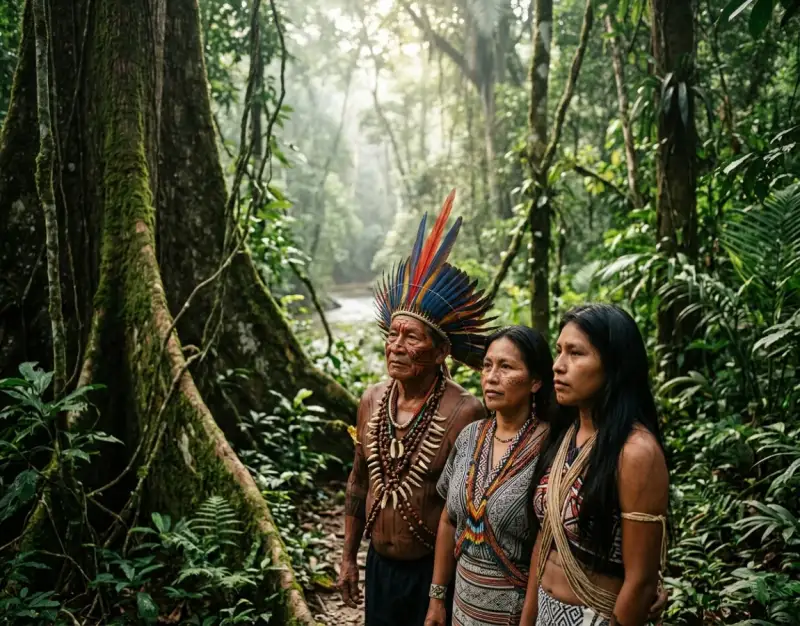
Deep within the sprawling, emerald expanse of the Amazon basin, a quiet yet ferocious battle is being waged for the future of our planet. Often romanticized as the Earth's green lungs, the Amazon rainforest is far more than a picturesque backdrop of biodiversity; it is a planetary life-support system, cycling immense volumes of carbon, regulating global weather patterns, and housing millions of species found nowhere else on Earth. Yet, this magnificent biome faces unprecedented threats from industrial logging, rampant mining, illegal cattle ranching, and climate-induced degradation. In the face of these existential pressures, the most effective guardians of this fragile ecosystem are not high-tech conservation satellites or distant international policymakers, but the indigenous nations who have called these forests home for millennia.
For generations, these communities have operated as the frontline environmental defenders of the Amazon basin. Their stewardship is not merely a lifestyle choice or an economic strategy; it is an intricate worldview rooted in reciprocity, ancestral heritage, and profound ecological science. However, the paradigm of environmental protection has fundamentally shifted over the last decade. As global carbon markets expand and climate threats intensify, the international community has begun to recognize that safeguarding the Amazon requires more than funding distant NGOs—it requires amplifying the voices of change, securing land titles for native communities, and respecting the sovereign rights of those who have successfully managed these lands since long before the advent of modern cartography.
Examining current industry trends reveals a growing convergence between grassroots indigenous resistance and global advocacy networks. Yet, true progress demands that we look beyond headlines to understand the underlying mechanics of indigenous land stewardship. From defending demarcated territories against armed land-grabbers to utilizing geospatial mapping and legal frameworks, these leaders are writing a masterclass in modern conservation. Much like how grassroots community initiatives—such as those highlighted in our piece on Mobile Dental Clinics: Bringing Free Healthcare and Smiles to Underserved Rural Towns—demonstrate the power of direct, localized intervention, the fight for the Amazon proves that hyper-local leadership creates ripple effects of global significance.
Understanding the Mechanics of Indigenous Amazonian Stewardship
To fully grasp how indigenous nations maintain ecological equilibrium across millions of acres of dense jungle, one must examine the foundational principles that govern their relationship with nature. Unlike industrial economic models that prioritize extraction and short-term capital accumulation, indigenous stewardship operates on cyclical timeframes and principles of sustainability. This section breaks down the core mechanisms that make indigenous territories the most biologically intact regions in South America.
Traditional Ecological Knowledge (TEK) as a Scientific Framework
Traditional Ecological Knowledge (TEK) is often mischaracterized in Western discourse as mere folklore or spiritual tradition. In reality, TEK is a rigorous, empirically tested system of observation, hypothesis testing, and ecological management accumulated over hundreds of years. Indigenous elders and resource managers understand soil fertility cycles, animal migration patterns, and medicinal plant properties with a precision that modern science is only beginning to validate. This knowledge allows communities to harvest forest resources without depleting them, ensuring that canopy cover and understory biodiversity remain undisturbed.
Furthermore, TEK informs sophisticated agroforestry techniques such as the creation of terra preta (Amazonian dark earth), a fertile anthropogenic soil that sequesters carbon and enhances agricultural yield without chemical fertilizers. By applying these time-tested methods, indigenous populations demonstrate that human habitation can actually enhance, rather than degrade, forest biodiversity. This symbiotic relationship challenges the dualistic Western notion that pristine nature can only exist in the complete absence of human beings.
Territorial Demarcation and Communal Land Tenure
The single most effective tool for halting deforestation in the Amazon is the formal legal recognition and demarcation of indigenous territories. Data consistently shows that officially titled indigenous lands experience significantly lower rates of deforestation than adjacent non-indigenous areas, even when compared to state-managed national parks. This is because communal land tenure eliminates the concept of private real estate speculation, which drives much of the illegal clearing in the basin.
When a community holds collective title to its ancestral lands, no individual member can sell parcels to corporate conglomerates or speculative developers. The land belongs to past, present, and future generations alike. This legal firewall creates an unbreakable barrier against external encroachment. Consequently, supporting indigenous land rights is not just a matter of social justice; it is the most empirically sound carbon-offset and climate-mitigation strategy available to humanity.
Strategic Blueprint for Amplifying and Protecting Indigenous Voices
Empowering the guardians of the Amazon requires a multi-pronged strategic approach that bridges grassroots mobilization with international legal, financial, and technological resources. Below is a comprehensive operational blueprint detailing how civil society, allies, and indigenous leaders themselves are organizing to secure their territories and futures.
1. Grassroots Surveillance and Technological Integration
Modern environmental defenders in the Amazon do not rely solely on traditional bows and arrows; they pair ancestral tracking skills with twenty-first-century technology. Across the basin, communities are adopting smartphones, drone fleets, and satellite-linked monitoring systems to patrol their borders and document illegal incursions in real time.
Step-by-Step Implementation:
- Training Local Pararangers: Communities select youth and elders to undergo specialized training in GPS mapping, drone piloting, and digital evidence collection.
- Establishing Alert Networks: Data collected during patrols is uploaded to encrypted cloud platforms via satellite internet, bypassing remote areas lacking cellular service.
- Public Exposure & Legal Filing: Geo-tagged evidence of illegal mining barges or logging roads is immediately transmitted to allied legal organizations and international media outlets to trigger swift enforcement actions.
Expert Insider Tip: When deploying technology in remote regions, prioritize rugged, solar-powered hardware and offline-first software applications to ensure equipment reliability in high-humidity, off-grid environments.
2. Legal Empowerment and Human Rights Litigation
While direct action on the forest floor is vital, indigenous leaders are increasingly taking their battles to domestic and international courts. Legal empowerment involves training community paralegals and partnering with pro-bono human rights attorneys to challenge unconstitutional concession permits, demand Free, Prior, and Informed Consent (FPIC), and sue polluting extractive industries.
Step-by-Step Implementation:
- Mapping Ancestral Claims: Gather historical archives, oral histories, and anthropological data to construct bulletproof legal dossiers proving continuous ancestral occupation.
- Leveraging Regional Human Rights Bodies: Bring cases of state negligence and rights violations before the Inter-American Commission on Human Rights (IACHR) to establish binding legal precedents.
- Holding Corporations Accountable: Target international supply chains and financial institutions that back destructive projects, utilizing shareholder resolutions and secondary boycotts.
Expert Insider Tip: Success in international litigation requires centering the voices of indigenous women, who frequently lead front-line community resistance and bring powerful, compelling human testimonies to high-court judges.
3. Direct-Action Financial Mechanisms and Economic Autonomy
Financial precarity is often weaponized by bad actors seeking to bribe or co-opt vulnerable community members into permitting illegal resource extraction. To counteract this, a new wave of direct-action funding models is emerging, bypassing bureaucratic international NGOs to deliver resources straight to indigenous treasuries.
Step-by-Step Implementation:
- Creating Autonomous Funds: Establish community-managed endowments that finance healthcare, education, and cultural preservation without attaching restrictive external conditions.
- Developing Sustainable Bio-Economies: Scale markets for non-timber forest products—such as sustainably harvested açaí, rubber, nuts, and artisanal crafts—ensuring profits remain within the community.
- Direct Carbon Revenue Sharing: Negotiate direct-payment agreements for carbon sequestration that respect indigenous autonomy rather than imposing corporate greenwashing schemes.
Just as transformative acts of radical generosity—such as the anonymous educational funding detailed in Anonymous Scholarship: The Retired Teacher Who Funded College Tuitions for an Entire Class—change life trajectories, direct financial autonomy liberates indigenous communities to focus entirely on planetary defense.
4. Cross-Border Coalition Building and International Advocacy
The threats facing the Amazon—ranging from global commodity markets to international climate policies—are transnational in scale. Consequently, indigenous resistance cannot remain isolated within single villages or even single countries. Leaders are forging powerful continental alliances, such as the Coordinating Body of Indigenous Organizations of the Amazon Basin (COICA), to present a unified front at global climate summits like the UN Climate Change Conferences (COP).
Step-by-Step Implementation:
- Unifying Regional Agendas: Hold pan-Amazonian congresses to harmonize demands regarding mining moratoriums, land titling, and climate reparations.
- Deploying Delegation Envoys: Send frontline leaders directly to global financial capitals to lobby investors, multilateral development banks, and government officials face-to-face.
- Securing Media Visibility: Partner with independent documentary filmmakers and investigative journalists to translate local struggles into globally resonant narratives.
Expert Insider Tip: When engaging in international advocacy, maintain strict message discipline centered on self-determination, refusing to let paternalistic green groups dilute indigenous demands into watered-down conservation compromises.
5. Cultural Preservation and Intergenerational Knowledge Transfer
Colonialism and modernization have long threatened to sever the thread of indigenous heritage, separating youth from their native languages, creation stories, and traditional practices. Protecting the Amazon requires an internal cultural renaissance, ensuring that the next generation possesses both the pride and the practical skills required to inherit the mantle of environmental defenders.
Step-by-Step Implementation:
- Establishing Indigenous-Led Schools: Build bilingual educational curricula that integrate standard academics with intensive instruction in forest ecology, ethnobotany, and traditional crafts.
- Oral History Archiving: Record extensive video and audio testimonies of tribal elders before their wisdom is lost to time or disease.
- Youth Leadership Retreats: Organize immersive wilderness camps where elders teach young community members tracking, survival, and ceremonial stewardship rites.
Expert Insider Tip: Incorporate digital media tools like community radio stations and youth-led TikTok and Instagram accounts into cultural preservation efforts, making traditional wisdom engaging and accessible to digital-native youth.
Real-World Case Studies: Triumphs and Tragedies in the Amazon
To understand the practical realities of defending the Amazon, we must examine concrete case studies where indigenous strategies collided with powerful external forces. These real-world scenarios highlight the razor-thin margins between historic conservation victories and devastating environmental catastrophes.
Case Study A: The Munduruku Resistance Against Mega-Dams
In the Tapajós River basin of Brazil, the Munduruku people faced an existential threat: a government-backed plan to construct a massive complex of hydroelectric dams that would flood sacred ancestral lands, displace hundreds of families, and disrupt vital fish migrations. Rather than waiting passively for eviction, the Munduruku launched a multi-faceted campaign of self-demarcation and legal obstruction.
Execution and Outcome: Armed with GPS units and traditional knowledge, Munduruku warriors mapped their own territory, defying state authorities. Simultaneously, they invited independent scientists to document the unique biodiversity that would be destroyed, and they leaked internal government memos proving corruption in the project's environmental licensing. The resulting international outcry, combined with relentless local pressure, forced the Brazilian environmental agency to suspend the licensing process indefinitely, saving a critical tributary of the Amazon from industrial drowning.
Case Study B: The Pitfalls of Co-Opted Carbon Schemes
Conversely, not all intervention strategies succeed. In a remote sector of the Peruvian Amazon, an external conservation NGO attempted to implement a voluntary carbon-offset project without securing genuine, prior informed consent from all local clans. The organization promised modern infrastructure and jobs in exchange for signing away local timber management rights.
Execution and Outcome: The project suffered from fatal flaws. Profits were funneled through opaque intermediary brokers, leaving local residents impoverished while foreign corporations reaped green PR benefits. Internal divisions fractured the community, and illegal loggers exploited the confusion to seize unprotected timber plots. The project ultimately collapsed in scandal, underscoring that any conservation initiative lacking total indigenous control and transparency is doomed to fail.
Critical Mistakes to Avoid When Engaging in Amazonian Conservation
Well-intentioned allies, donors, and policymakers frequently commit severe errors when attempting to support indigenous environmental defenders. Avoiding these pitfalls is essential for fostering genuine, effective partnerships.
1. Imposing Paternalistic Western Models
A common mistake is treating indigenous communities as passive beneficiaries rather than sovereign political actors. Donors often arrive with rigid bureaucratic frameworks, demanding Western-style accounting and project management that drains community resources. Countermeasure: Shift from a top-down grantor-grantee dynamic to a model of horizontal solidarity, trusting local leaders to allocate funds and design strategies autonomously.
2. Ignoring Internal Community Factions and Dynamics
Outsiders frequently assume indigenous villages are monolithic utopias devoid of internal politics. Extractive industries actively exploit these internal divisions by bribing individual community members to undermine collective consensus. Countermeasure: Support broad-based, transparent community assemblies where decisions require absolute consensus rather than relying on a single co-opted leader's signature.
3. Neglecting Physical Security and Threats of Violence
Environmental defense in the Amazon is one of the deadliest callings on Earth. Scores of indigenous leaders are assassinated annually by illegal land-grabbers, loggers, and drug cartels with near-total impunity. Countermeasure: Prioritize emergency relocation funds, legal defense teams, and international human rights observation over purely ecological projects.
4. Relying Exclusively on Short-Term Grant Cycles
Philanthropic funding is notoriously fickle, often shifting focus every one to two years based on transient political trends. Long-term ecological defense cannot survive on intermittent, short-term cash infusions. Countermeasure: Establish permanent endowment funds and sustainable, self-generating revenue streams that provide financial stability across decades.
5. Treating Indigenous Culture as a Relic of the Past
Many conservation advocates harbor romantic, exoticized stereotypes, expecting indigenous peoples to live in pristine isolation while rejecting modern tools, medicine, and communication technology. Countermeasure: Recognize that indigenous cultures are dynamic, living civilizations perfectly capable of embracing modern legal, technological, and communication strategies while retaining their core ancestral values.
Comparative Analysis of Amazonian Defense Strategies
To evaluate the efficacy of different approaches to forest preservation, examine the comparative matrix below detailing various intervention methodologies:
| Strategy Approach | Primary Mechanism | Deforestation Efficacy | Risk Level for Leaders | Long-Term Sustainability |
|---|---|---|---|---|
| State-Managed National Parks | Government policing and bureaucratic oversight | Moderate (prone to corruption and budget cuts) | Low (state-enforced) | Low-Moderate (subject to political shifts) |
| Corporate Carbon Offsets | Market-based financial credits for standing timber | Low-Moderate (often plagued by greenwashing) | Low | Low (dependent on volatile carbon markets) |
| Indigenous Land Demarcation | Communal legal title and customary stewardship | Extremely High (proven lowest deforestation rates) | High | Maximum (rooted in ancestral permanence) |
| Grassroots Digital Patrolling | Community-led drone/GPS surveillance & exposure | High (fast tactical deterrence) | Critical (direct confrontation with bad actors) | High (empowers local self-reliance) |
Frequently Asked Questions About Amazonian Indigenous Leadership
Why are indigenous territories more effective at stopping deforestation than government-run parks?
Indigenous territories succeed where state parks often fail because indigenous peoples possess a daily, lived stake in the health of their environment. For these communities, the forest is not a remote tourist destination or a government asset; it is home, pharmacy, supermarket, and ancestral sanctuary. Furthermore, state parks in South America frequently suffer from chronic underfunding, political corruption, and staff shortages, leaving vast tracts vulnerable to illegal loggers and miners. In contrast, communal indigenous land tenure creates an unbroken network of vigilant stewards who monitor their borders continuously.
How can international citizens support Amazonian environmental defenders without causing harm?
Global citizens can support frontline defenders by donating directly to autonomous indigenous-led funds—such as COICA or regional tribal federations—rather than routing money through massive, bureaucratic international NGOs that absorb high administrative overhead. Additionally, consumers can boycott commodities linked to Amazonian destruction, such as conflict beef, illegally mined gold, and industrial soy. Finally, amplifying indigenous voices on social media and demanding that your local representatives enact strict supply-chain due diligence laws provides crucial political backing.
What is Free, Prior, and Informed Consent (FPIC), and why is it constantly violated?
Free, Prior, and Informed Consent (FPIC) is a specific right enshrined in international human rights law, notably ILO Convention 169 and the UN Declaration on the Rights of Indigenous Peoples. It dictates that indigenous communities must be fully consulted—without coercion, manipulation, or undue pressure—before any extractive project, dam, highway, or conservation initiative is approved on their lands. FPIC is frequently violated by governments and corporations because extractive industries view indigenous sovereignty as an inconvenient barrier to multi-billion-dollar resource extraction profits, leading them to use bribery, forged signatures, or state intimidation to bypass local opposition.
How are climate change and shifting weather patterns impacting indigenous agriculture in the Amazon?
Climate change is severely disrupting the delicate ecological rhythms upon which traditional indigenous agriculture depends. Prolonged, unprecedented droughts, unpredictable wet and dry seasons, and rising average temperatures have thrown traditional planting and harvesting calendars out of alignment. Furthermore, increased frequency of extreme weather events accelerates soil erosion and triggers devastating forest fires in regions that were historically too humid to burn. In response, elders are pooling traditional knowledge to adapt planting cycles and diversify crop strains, but the pace of industrial climate disruption remains a terrifying existential threat.
What role do indigenous women play in the environmental defense movement?
Indigenous women are the absolute backbone of the Amazonian resistance movement. While men often take visible roles on front-line territorial patrols, women frequently lead the legal, political, and cultural organizing efforts. They spearhead community assemblies, document human rights abuses, lead blockades against mining machinery, and pass down ecological knowledge and native languages to the younger generation. Despite facing intersecting forms of discrimination based on gender and ethnicity, indigenous women have emerged as some of the most formidable, articulate, and fearless voices of change on the global stage.
Strategic Roadmap and Final Takeaway
As we look toward the next two to five years, the fate of the Amazon rainforest hangs in a perilous balance. Tipping points are fast approaching; climate scientists warn that continuous deforestation could soon push the basin past a critical threshold, transforming the lush rainforest into a degraded savanna and releasing billions of tons of carbon into the atmosphere. In this high-stakes historical moment, passive observation is no longer an option.
The definitive path forward is clear: global society must shift from treating indigenous peoples as victims of climate change to recognizing them as the primary strategists and leaders of planetary preservation. Supporting their land rights, funding their autonomous institutions, and amplifying their voices of change is not an act of charity—it is an absolute prerequisite for human survival on Earth. By standing in solidarity with the guardians of the green lungs, we invest in a resilient, breathing future for all generations to come.
Be the first to share a gentle reflection on this story.