
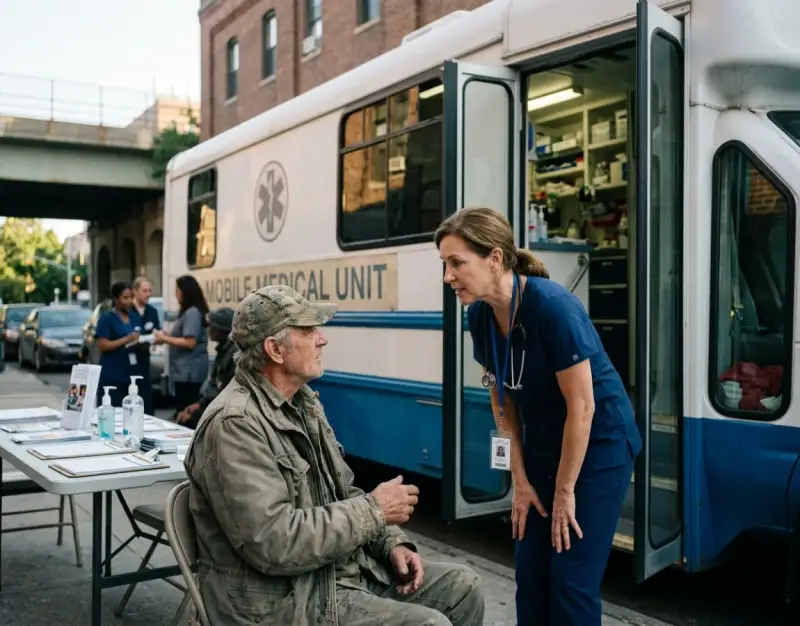
The dawn breaks cold and grey over the concrete canyons of the city, illuminating the shadows where America’s forgotten heroes reside. For thousands of men and women who once donned the uniform to defend the nation, the battlefield has shifted to the unforgiving streets, where chronic physical injuries, untreated post-traumatic stress disorder (PTSD), and acute neglect compound daily. Traditional healthcare systems—often bureaucratic, deeply fragmented, and bound by rigid administrative barriers—routinely fail this vulnerable population. Enter a new breed of voices of change: frontline clinical innovators who refuse to let red tape dictate human survival. At the vanguard of this movement is a dedicated cadre of nurses redefining what it means to heal the wounded, bringing state-of-the-art care directly to the curb.
In recent years, the intersection of community nursing and grassroots activism has birthed a revolutionary paradigm in unhoused veterans care. For decades, the conventional approach demanded that individuals experiencing homelessness navigate complex public transit systems, endure lengthy wait times, and possess valid identification or permanent mailing addresses just to see a primary care physician. These hurdles created an insurmountable wall, leaving conditions like hypertension, diabetes, and open wounds to fester into life-threatening emergencies. Today, however, the paradigm has fundamentally changed. Driven by compassionate practitioners and community coalitions—paralleling grassroots efforts seen in initiatives like Collaborative Welfare: Uniting Churches, Mosques, and Synagogues for a Interfaith Food Drive—civic leaders and healthcare providers are decentralizing medicine, proving that healthcare is a fundamental human right rather than a privilege tied to housing status.
The core thesis of this movement is simple yet profound: if patients cannot reach the clinic, the clinic must go to the patients. Through the deployment of fully equipped mobile medical clinics, visionary nurse leaders are dismantling systemic barriers one street corner at a time. This exhaustive, deeply researched exploration examines the mechanics, strategic blueprints, real-world case studies, and scalable methodologies behind these rolling sanctuaries of healing. By analyzing how these dedicated nurses diagnose, treat, and advocate for unhoused veterans, we uncover a blueprint for modern healthcare delivery that marries clinical excellence with radical empathy.
Foundational Principles and Mechanics of Mobile Veteran Care
Understanding the Triad of Vulnerability
To comprehend why mobile clinics are uniquely successful in serving unhoused veterans, one must first examine the "Triad of Vulnerability": physical trauma, psychological wounds, and systemic alienation. Many veterans carry the lingering impacts of combat—ranging from shrapnel wounds and musculoskeletal degradation to traumatic brain injuries (TBIs). Compounding these physical ailments are psychological battles, including severe PTSD, hypervigilance, and survivor’s guilt, which often manifest as profound distrust of institutional authorities. Traditional hospitals, with their bright fluorescent lights, loud intercoms, and security checkpoints, can inadvertently trigger combat-related trauma, causing veterans to flee before receiving care.
Mobile clinics neutralize these environmental triggers by design. Operating out of converted vans or retrofitted RVs parked in familiar, safe community zones, these units offer a quiet, intimate, and non-threatening atmosphere. The mechanics of engagement rely on trauma-informed care principles, where nurses prioritize establishing emotional safety over immediate clinical interrogation. By meeting veterans on their own turf—whether beneath a bridge or outside a local shelter—these practitioners restore a vital sense of autonomy and dignity to individuals who feel entirely invisible to mainstream society.
Clinical Scope and On-Board Capabilities
A common misconception is that mobile clinics offer only superficial first aid or rudimentary check-ups. Modern mobile medical units are marvels of modern engineering and clinical ingenuity, functioning essentially as primary care offices on wheels. Equipped with advanced diagnostic tools, point-of-care testing laboratories, secure satellite internet for electronic health record (EHR) synchronization, and comprehensive pharmaceutical dispensaries, these units deliver robust, multifaceted healthcare. From managing chronic conditions like diabetes and hypertension to performing minor surgical procedures and administering critical vaccinations, the clinical scope is remarkably wide.
Furthermore, these clinics serve as vital conduits to specialized care networks. When a nurse practitioner identifies a complex cardiovascular anomaly or an advanced oncological concern on board the mobile unit, they do not simply hand the patient a referral slip. Instead, they leverage established partnerships with Department of Veterans Affairs (VA) hospitals and local non-profits to secure expedited appointments, coordinate transportation, and even assist with housing placement applications. This holistic continuum of care ensures that an acute medical intervention evolves into a long-term stabilization strategy.
Strategic Blueprint: Launching and Scaling a Mobile Medical Unit
Phase 1: Needs Assessment and Community Mapping
Launching a successful mobile health initiative requires meticulous logistical planning and deep community immersion. The first step involves conducting an exhaustive needs assessment to map out the geographic distribution, demographic makeup, and specific health burdens of the unhoused veteran population within a targeted municipality. Nurse leaders must collaborate closely with local street outreach teams, police departments, municipal shelters, and VA regional offices to gather quantitative data regarding where veterans congregate and what specific medical deficits they face.
During this foundational phase, practitioners must also establish vital community partnerships to secure parking permissions, utility access points, and local volunteer support. Just as community organizers understand the intricate logistics of urban resource sharing—such as those detailed in guides on How to Start a Community Compost Initiative: Turning Food Waste Into Local Gold—healthcare entrepreneurs must navigate local zoning laws, municipal health department regulations, and commercial vehicle licensing requirements to ensure uninterrupted, legal operation of their mobile units.
Phase 2: Funding, Vehicle Procurement, and Outfitting
Securing capital for a mobile medical clinic is a complex financial undertaking that typically blends philanthropic grants, government subsidies, corporate sponsorships, and private donations. Nurse founders must craft compelling grant proposals that articulate both the humanitarian imperative and the clear economic benefits of their model; treating chronic conditions in a mobile setting drastically reduces emergency room boarding costs and taxpayer-funded acute care expenditures. Once funding is secured, the procurement phase begins.
Vehicle selection is critical. The chassis must be durable enough to handle urban potholes and frequent stop-and-go driving while offering a spacious interior capable of housing an examination table, a refrigeration unit for vaccines, a hand-washing station, and a private consultation area. Outfitting the interior requires specialized medical-grade cabinetry, antimicrobial flooring, independent HVAC systems for climate control, and backup generators to guarantee uninterrupted power during street-side operations. Every square inch must be optimized for workflow efficiency and patient comfort.
Phase 3: Staffing, Protocol Development, and Trauma-Informed Training
The success of a mobile clinic hinges entirely on the competency, empathy, and resilience of its personnel. Staffing models typically feature a hybrid team consisting of a lead nurse practitioner or clinical nurse specialist, a registered nurse (RN) or paramedic, a licensed social worker (LSW) or veteran peer navigator, and a driver who often doubles as an administrative intake coordinator. Recruiting individuals who possess both high-level acute care skills and a profound dedication to social justice is paramount.
Rigorous protocol development must precede the clinic's maiden voyage. Teams must establish clear standard operating procedures (SOPs) for handling medical emergencies, managing controlled substances safely on a vehicle, ensuring data privacy under HIPAA guidelines while operating in public spaces, and de-escalating volatile behavioral health crises. All staff members must undergo comprehensive training in trauma-informed care, cultural competency regarding military service, and harm reduction strategies to ensure every interaction preserves the veteran's dignity.
Operational Execution: Daily Workflow on the Front Lines
Establishing Routine and Building Relational Trust
Trust is the ultimate currency in street medicine. An unhoused veteran who has experienced years of rejection, betrayal, and institutional apathy will rarely open up to a medical provider on the first encounter. Therefore, operational execution must be anchored in radical consistency. Mobile clinics should maintain predictable schedules, parking in the exact same location on the same days of the week so that veterans know when and where to find them. This reliability transforms the mobile unit from a transient vehicle into a familiar, trusted fixture of the neighborhood.
The daily workflow typically begins with site setup: positioning the vehicle, calibrating diagnostic equipment, and staging outreach materials such as clean socks, hygiene kits, and warm meals near the intake area. Often, food or basic supplies act as the initial bridge to medical engagement. Once a veteran approaches, the intake nurse conducts a gentle, non-threatening assessment, focusing first on immediate physical comfort—such as treating a painful foot blister or offering a bottle of water—before diving into deep clinical history-taking. This patient-led pacing ensures the veteran feels completely in control of their healthcare journey.
Integrating Comprehensive Social Services with Medical Care
Clinical medicine alone cannot cure homelessness. A veteran treated for severe respiratory infection who returns to a freezing, damp tent under an overpass will inevitably experience a rapid clinical relapse. Recognizing this ecological reality, modern mobile clinics operate as integrated multi-disciplinary hubs. While the nurse practitioner evaluates vital signs and manages medication refills, the accompanying social worker or veteran peer navigator works in tandem to address the root causes of instability.
This integrated workflow involves several simultaneous actions:
- Housing Navigation: Initiating Housing and Urban Development-VA Supportive Housing (HUD-VASH) voucher applications and connecting veterans with transitional housing beds.
- Benefit Advocacy: Assisting with VA disability claims, pension adjustments, and securing replacement military discharge paperwork (DD-214) required to unlock federal benefits.
- Substance Use and Mental Health Support: Providing peer-led counseling, distributing harm reduction supplies such as Narcan, and facilitating direct warm handoffs to specialized rehabilitation programs.
- Legal Aid Coordination: Partnering with pro-bono legal clinics to clear minor outstanding warrants or fines that frequently prevent unhoused individuals from securing employment or housing.
Real-World Case Studies and Scenarios
Scenario A: The Paradigm of Proactive Engagement
Consider the case of "Veteran X," a 58-year-old Vietnam-era veteran living behind a commercial strip mall. Suffering from unmanaged Type 2 diabetes, peripheral neuropathy, and severe depression, he had not seen a doctor in over a decade. Previous attempts by emergency medical services (EMS) to transport him to the local hospital resulted in him fleeing the emergency room out of panic. When the mobile medical unit parked three blocks away, a peer navigator approached him with a hot cup of coffee and a gentle invitation.
Rather than forcing him into the vehicle, the nurse practitioner conducted an initial visual assessment outside in the open air, checking his swollen lower extremities. Recognizing the early stages of a diabetic foot ulcer that threatened amputation, the nurse offered to clean and dress the wound right there on a fold-out chair while listening to his stories of service. Over the course of three weekly visits, Veteran X built enough trust to step inside the mobile clinic for comprehensive bloodwork and medication stabilization. Within two months, his blood glucose levels normalized, his foot ulcer healed completely, and the social worker successfully placed him in a permanent supportive housing apartment. This is the power of meeting people where they are.
Scenario B: The Pitfall of Bureaucratic Rigidity
Conversely, consider a cautionary case study from a poorly planned pilot project in a mid-sized rust-belt city. A well-funded hospital system launched a mobile clinic with state-of-the-art equipment but staffed it with traditional clinical personnel accustomed to rigid hospital bureaucracy. The team insisted on strict intake paperwork requiring proof of identity, permanent home addresses, and formal insurance pre-authorizations before providing care.
Furthermore, the mobile unit moved locations erratically based on corporate marketing priorities rather than veteran congregation patterns. Within three months, the initiative was a catastrophic failure, serving an average of only two patients per week. Unhoused veterans viewed the clinic as just another bureaucratic trap designed to collect data rather than offer healing. The project was ultimately shelved, highlighting a critical lesson: clinical sophistication is entirely useless without cultural humility, operational flexibility, and unwavering community trust.
Critical Mistakes and How to Avoid Them
Building and operating a mobile clinic for unhoused veterans is fraught with operational challenges. Practitioners and non-profit leaders must proactively identify and neutralize the most common pitfalls that derail these vital initiatives.
- Neglecting Trauma-Informed Environmental Design: Operating a mobile clinic that mimics a sterile, intimidating hospital room with loud paging systems and uniformed security guards will alienate traumatized veterans. Countermeasure: Curate a warm, quiet, non-judgmental interior aesthetic utilizing soft lighting, comfortable seating, and personnel wearing casual or approachable attire instead of rigid clinical uniforms.
- Failing to Secure Sustainable Long-Term Funding: Relying solely on short-term startup grants or volatile philanthropic donations often leads to sudden operational shutdowns, breaking trust with the vulnerable communities who depend on the service. Countermeasure: Diversify revenue streams early by pursuing federal grants (such as VA homeless provider grants), municipal healthcare contracts, and sustainable corporate sponsorships.
- Operating in Silos Without Social Service Integration: Treating medical symptoms without addressing housing instability, mental health, and nutritional deficits creates a revolving-door cycle of chronic illness and emergency room utilization. Countermeasure: Embed social workers, housing navigators, and peer support specialists directly into every mobile clinic deployment.
- Ignoring Logistical and Legal Realities: Parking a massive vehicle on city streets without proper permits, commercial insurance, or compliance with municipal health codes can result in costly citations, towing, or forced closures. Countermeasure: Establish formal memoranda of understanding (MOUs) with city councils, local businesses, and municipal police departments prior to launching operations.
- Imposing Top-Down Clinical Paternalism: Forcing unwanted treatments or demanding immediate lifestyle changes alienates patients who have spent years surviving through self-reliance and autonomy. Countermeasure: Adopt a harm-reduction, patient-led model of care where the veteran dictates the pace and scope of their own healing journey.
Comprehensive Comparison Table: Traditional Healthcare vs. Mobile Clinic Model
| Evaluation Metric | Traditional Hospital / VA Facility Model | Mobile Medical Clinic Model |
|---|---|---|
| Accessibility & Location | Fixed physical structures requiring complex public transit and navigation. | Brought directly to streets, shelters, and encampments where veterans live. |
| Barriers to Entry | Rigid paperwork, identification requirements, and bureaucratic intake processes. | Low-barrier, barrier-free entry prioritizing immediate human connection over paperwork. |
| Psychological Safety | Bright, noisy, institutional environments that often trigger combat-related PTSD. | Quiet, intimate, trauma-informed spaces designed to reduce anxiety and fear. |
| Care Continuity | Fragmented referrals where patients easily fall through administrative cracks. | Integrated multi-disciplinary care connecting medicine, housing, and social services. |
| Cost Efficiency | High cost per patient interaction driven by expensive emergency room boarding. | Highly cost-effective, drastically reducing acute care spending and taxpayer burdens. |
Frequently Asked Questions
What specific qualifications do nurses need to work on a mobile veteran clinic?
Nurses operating on mobile medical units typically require a strong background in emergency nursing, public health, primary care, or psychiatric-mental health nursing. Advanced Practice Registered Nurses (APRNs) and Nurse Practitioners (NPs) are invaluable because they can diagnose illnesses, order diagnostic tests, and prescribe medications independently. Beyond technical credentials, employers actively seek nurses who possess exceptional emotional intelligence, cultural competence regarding military life, and specialized training in trauma-informed care and de-escalation techniques.
How are mobile medical clinics funded and sustained financially?
Funding is typically achieved through a blended financial model. This includes philanthropic foundation grants, state and federal healthcare grants (such as those provided by the Department of Veterans Affairs and the Substance Abuse and Mental Health Services Administration), corporate sponsorships from healthcare conglomerates, and private donations. Many successful programs also integrate billing structures through Medicaid or private insurance for those patients who possess coverage, while absorbing the uncompensated care costs through philanthropic reserves.
How do mobile clinics handle emergency medical crises in the field?
Mobile units are equipped with emergency crash kits, automated external defibrillators (AEDs), oxygen tanks, and advanced life support supplies. Staff members undergo regular simulation training for acute medical and psychiatric emergencies. If a veteran experiences a life-threatening medical emergency beyond the scope of the mobile unit, the clinical team immediately coordinates with local Emergency Medical Services (EMS) for rapid transport to the nearest hospital emergency department while maintaining continuous support and advocacy.
Can unhoused veterans receive long-term prescription management through mobile units?
Yes. Mobile clinics maintain secure, temperature-controlled pharmaceutical storage on board, allowing nurse practitioners to dispense common maintenance medications for chronic conditions like hypertension, diabetes, and asthma directly to patients. For controlled substances or specialized psychiatric medications, clinicians work closely with local pharmacies and VA healthcare systems to set up reliable refill schedules and safe storage solutions that accommodate individuals living without a permanent residence.
How do these clinics address non-medical needs like food insecurity and hygiene?
Holistic street medicine recognizes that survival needs must be met before clinical healing can take root. Mobile medical units routinely stock their vehicles with survival supplies, including clean socks, thermal blankets, hygiene kits, bottled water, and non-perishable food items. Furthermore, nurse leaders partner with community organizations—such as those operating food rescue and animal welfare programs, including efforts highlighted in Rescuing Senior Dogs: The Unexpected Joy of Adopting an Older Shelter Animal—to create comprehensive community support webs that nourish both body and spirit.
Strategic Roadmap and Final Takeaway
As we look toward the next two to five years, the landscape of unhoused veterans care is poised for transformative technological and structural evolution. The integration of telehealth capabilities via satellite and 5G networks will allow on-board nurses to consult in real-time with specialist physicians at major medical centers, expanding the diagnostic reach of mobile clinics into the most remote urban and rural environments. Furthermore, as data analytics and predictive modeling improve, mobile outreach teams will be able to anticipate geographic shifts in unhoused populations, deploying resources proactively before humanitarian crises escalate.
The definitive takeaway from the extraordinary nurses who pioneered mobile clinics for unhoused veterans is that systemic change does not always begin in legislative halls; frequently, it starts on four wheels at the curb. By replacing apathy with empathy, bureaucracy with agility, and isolation with connection, these healthcare heroes prove that no human being is ever too far gone to be saved. For policymakers, healthcare executives, and community advocates alike, the mobile clinic model serves as an undeniable moral imperative and a practical operational roadmap: bring the healing directly to the wounded, restore their dignity, and honor their service through action.
Be the first to share a gentle reflection on this story.