
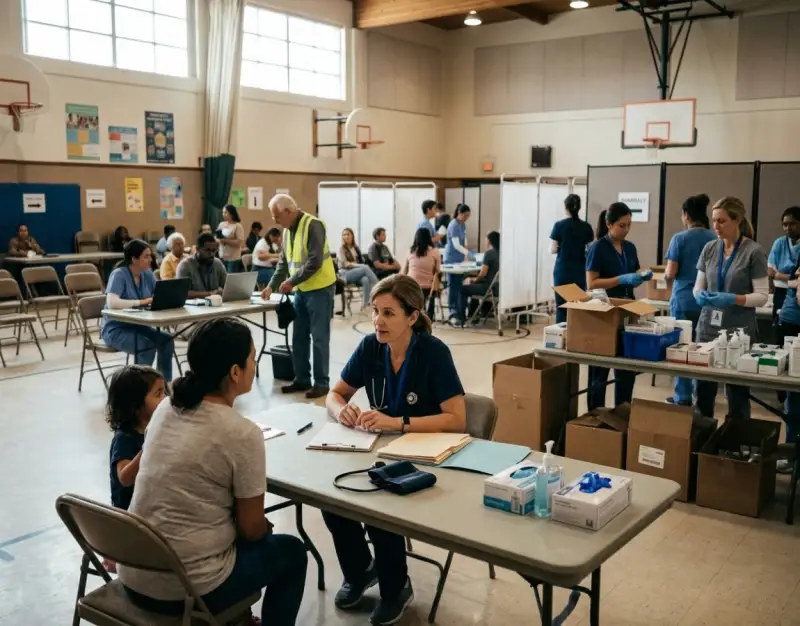
The modern landscape of public health is defined by a persistent, systemic paradox: despite unprecedented advancements in medical technology, pharmaceuticals, and diagnostic precision, millions of individuals remain locked out of basic care simply due to a lack of traditional health insurance. This structural failure places an overwhelming burden on emergency rooms, bankrupts working-class families, and leaves chronic conditions unmanaged until they escalate into life-threatening crises. Yet, within the cracks of this formidable socioeconomic facade, a powerful counter-movement is taking root. Grassroots initiatives and organized humanitarian efforts are mobilizing to bridge the chasms of inequity, proving that medical care can be delivered as a fundamental human right rather than a transactional commodity.
At the beating heart of this transformation are collaborative welfare projects designed to mobilize local resources, leverage philanthropic capital, and harness the profound altruism of medical professionals. Across urban neighborhoods and rural outposts alike, free community clinics have emerged as vital lifelines, offering everything from preventative screenings and acute triage to mental health counseling and chronic disease management. These institutions do not merely dispense prescriptions; they embody a holistic philosophy of collective care, demonstrating that community resilience is directly tied to universal healthcare access. When neighbors look out for neighbors, entire public health ecosystems shift away from reactive despair toward proactive empowerment.
Understanding this movement requires looking beyond surface-level charity to examine the intricate architecture of sustainable, community-driven health delivery. From navigating complex liability frameworks and recruiting specialized medical personnel to securing pharmaceutical supply chains and integrating cutting-edge digital recordkeeping, modern free clinics operate with sophisticated organizational rigor. Just as grassroots environmental initiatives have revolutionized local resource management—similar to the decentralized breakthroughs highlighted in Global Goodness: How Community Solar Grids Are Bringing Clean Energy to Remote Villages—community health models are proving that localized coordination can solve macro-level systemic failures. This comprehensive exploration examines the foundational principles, strategic blueprints, operational challenges, and future outlook of collaborative welfare in healthcare.
Foundational Principles and Mechanics of Collaborative Welfare
To fully grasp how free healthcare facilities manage to operate effectively with minimal or zero overhead fees, one must dissect the underlying economic and social mechanics of collaborative welfare. Unlike conventional private practices or corporate healthcare conglomerates driven by profit margins, community clinics operate on a mixed-economy model fueled by philanthropy, public-private partnerships, and profound civic dedication. The foundational premise rests on resource redistribution and waste mitigation, where surplus medical supplies, expired-soon pharmaceuticals, and unbilled provider hours are channeled directly to populations that would otherwise go without care.
At the center of this ecosystem are the mechanisms of collective responsibility and institutional reciprocity. Local hospitals often partner with free clinics to offload non-emergency care, reducing their own uncompensated emergency department burdens while fulfilling community benefit requirements. Simultaneously, academic medical centers utilize these clinics as clinical training grounds for residents and medical students, fostering a new generation of physicians who understand the realities of healthcare disparities. This symbiotic relationship ensures that community clinics remain economically viable while delivering high-grade medical oversight to society's most vulnerable members.
Furthermore, the operational success of these projects depends on robust legal and administrative frameworks. Because volunteer doctors and nurses donate their licensed expertise, state-level legislation—such as volunteer immunity acts and streamlined credentialing processes—plays an indispensable role in mitigating malpractice liability. By establishing transparent governance models, board oversight, and rigorous compliance protocols, community clinics maintain the highest standards of patient safety, confidentiality, and clinical efficacy, proving that charitable care never has to compromise on quality.
Strategic Blueprint for Establishing and Scaling Free Community Clinics
Phase 1: Needs Assessment and Geographic Mapping
The initial phase of launching a sustainable free clinic requires rigorous epidemiological data gathering and geographic information systems (GIS) mapping to identify high-need, low-access zones. Organizers must conduct comprehensive demographic studies to understand the specific health burdens of the target population—whether that involves high concentrations of uncontrolled diabetes, pediatric asthma, or geriatric cardiovascular disease. Engaging with local community leaders, neighborhood associations, and social service agencies ensures that the proposed clinic addresses actual lived realities rather than assumed deficiencies.
Once geographic parameters are established, planners must evaluate existing local infrastructure to determine whether to build a brick-and-mortar facility, convert an existing community space, or deploy mobile health units. Mobile clinics have proven exceptionally effective in rural and sprawling suburban environments where transportation is a primary barrier to care. By bringing diagnostic equipment, examination tables, and clinicians directly to housing complexes, community centers, and faith-based organizations, clinics can drastically reduce missed appointments and build immediate trust within skeptical or marginalized communities.
Insider tip: Avoid operating in an organizational silo during the assessment phase. Forge early alliances with local county health departments, federally qualified health centers (FQHCs), and social welfare agencies to prevent service duplication and create a seamless referral pipeline for advanced diagnostics and specialty care that the free clinic cannot directly provide on-site.
Phase 2: Securing Funding and Philanthropic Partnerships
Financial resilience is the bedrock of any long-term collaborative welfare project. Because free community clinics do not charge patients for consultations, diagnostics, or medications, they must diversify their revenue streams across grants, private donations, corporate sponsorships, and foundation support. Crafting a compelling value proposition for philanthropic entities requires demonstrating measurable social impact, cost-savings for the local healthcare system, and high operational efficiency ratios.
Grant writing for healthcare initiatives demands precise metrics, tracking indicators such as patient visit volume, chronic disease biomarker improvements (such as reductions in HbA1c levels for diabetic patients), and emergency room diversion rates. In addition to monetary grants, clinics must aggressively pursue in-kind donations. Securing continuous partnerships with pharmaceutical manufacturers, diagnostic laboratories, and medical device companies can slash operational expenses by up to seventy percent through donated medications, discounted lab testing, and surplus equipment allocation.
Expert strategy: Establish a diversified advisory board comprising local business leaders, legal experts, hospital executives, and community advocates. A well-connected board not only opens doors to major philanthropic donors but also provides the multi-disciplinary governance necessary to steer the clinic through economic downturns and changing regulatory landscapes.
Phase 3: Recruiting and Managing Volunteer Doctors and Clinical Staff
The lifeblood of any free health clinic is its clinical workforce. Recruiting and retaining dedicated volunteer doctors, nurse practitioners, physician assistants, and allied health professionals requires a nuanced strategy that respects their time, honors their professional altruism, and eliminates administrative friction. Physicians are often eager to give back to their communities but are easily deterred by cumbersome onboarding processes, scheduling rigidity, and liability concerns.
To streamline recruitment, clinics must establish flexible shift models—ranging from a few hours a month to weekly commitments—and handle all credentialing, background checks, and license verifications internally. Moreover, leveraging retired physicians who maintain active licenses represents an incredible, underutilized talent pool. These seasoned clinicians bring decades of diagnostic wisdom and a generous surplus of time to the clinic floor, mentoring younger volunteers and providing unhurried, compassionate care to patients.
Best practice: Implement robust risk management protocols and ensure comprehensive malpractice coverage through state volunteer medical programs or federal tort claims act protections where applicable. When clinicians feel legally protected, administratively supported, and emotionally fulfilled, volunteer retention rates skyrocket, creating a stable, reliable healthcare delivery machine.
Phase 4: Integrating Comprehensive Pharmacy and Diagnostic Services
A clinical diagnosis is only as good as the patient's ability to act upon the treatment plan. All too often, uninsured individuals receive a prescription from a volunteer doctor only to discover they cannot afford the medication at a commercial pharmacy. Consequently, a truly effective free clinic must integrate an on-site dispensary or maintain direct partnerships with charitable pharmaceutical programs and local compounding pharmacies.
Managing a clinic dispensary requires strict regulatory compliance regarding controlled substances, inventory rotation, temperature controls, and expiration tracking. Many clinics utilize programs like the 340B Drug Pricing Program or partner with pharmaceutical manufacturer patient assistance programs (PAPs) to secure brand-name and generic maintenance medications at deeply discounted or zero costs. Similarly, establishing agreements with commercial labs to process routine bloodwork at cost or pro bono ensures that diagnostic barriers do not impede timely medical interventions.
Actionable insight: Focus heavily on patient education regarding medication adherence. Culturally competent pharmacists and nurse educators must spend adequate time explaining dosage schedules, potential side effects, and storage requirements, ensuring that patients understand not just what to take, but why adherence is critical for managing chronic conditions.
Phase 5: Digital Infrastructure and Patient Data Management
In the digital age, maintaining paper charts or fragmented spreadsheets is a recipe for clinical error and administrative chaos. Free clinics must implement secure, scalable Electronic Health Record (EHR) systems specifically tailored for charitable and low-resource environments. These systems must comply with healthcare privacy regulations while remaining user-friendly enough for rotating volunteer staff who may only use the software intermittently.
Cloud-based EHR solutions allow seamless continuity of care, enabling a volunteer doctor on a Tuesday evening to review lab results ordered by a different practitioner the previous month. Furthermore, robust data management systems empower clinic directors to generate the precise reports required by grant makers, hospital partners, and regulatory bodies, demonstrating transparent accountability and driving continuous quality improvement across all clinical departments.
Tech tip: Seek out technology vendors that offer pro bono or heavily discounted non-profit pricing tiers for healthcare software. Many major EHR providers have philanthropic initiatives specifically designed to support charitable clinics, offering enterprise-grade security and functionality at a fraction of the commercial cost.
Real-World Case Studies: Triumph and Tribulation in Community Health
Examining practical implementations of collaborative welfare reveals the stark contrast between meticulously planned initiatives and those compromised by structural oversight. Consider the case of the *Metro Hope Health Collaborative*, an urban free clinic established in a densely populated, underserved neighborhood. By partnering with three major regional hospital systems, the clinic secured an ongoing funding stream, guaranteed specialty referral pathways, and a steady rotation of resident physicians supervised by attending faculty. Within three years, the clinic reduced local emergency department visits for non-emergent hypertension and diabetes complications by 34%, saving the regional healthcare system millions of dollars annually while drastically improving quality of life for thousands of uninsured residents.
Conversely, consider the cautionary tale of the *Valley Outreach Medical Project*, a rural clinic founded entirely on enthusiasm without adequate administrative infrastructure or legal foresight. Lacking proper risk management protocols and professional liability coverage, the clinic struggled to recruit volunteer doctors due to fears of unmitigated malpractice exposure. Furthermore, without a reliable pharmaceutical supply chain, patients frequently left with prescriptions they could not afford to fill. Within eighteen months, burnout decimated the volunteer corps, funding dried up due to poor metric tracking, and the clinic was forced to close its doors, leaving the local population even more cynical and underserved than before.
The divergence between these two scenarios underscores a fundamental truth: passion and empathy are essential catalysts, but sustainable collaborative welfare requires rigorous planning, administrative competence, legal protection, and strategic community partnerships. When these elements align, free clinics transform from fragile charitable experiments into permanent, robust pillars of public health equity.
Critical Mistakes and How to Avoid Them in Community Clinic Operations
- Underestimating Administrative and Regulatory Burdens: Many founders focus solely on clinical care while ignoring state licensing laws, OSHA compliance, HIPAA regulations, and board governance. Countermeasure: Appoint a dedicated compliance officer and secure pro bono legal counsel before opening clinic doors to ensure all regulatory boxes are meticulously checked.
- Relying on a Single Funding Source: Clinics that depend entirely on one major donor or a single government grant are exceptionally vulnerable to sudden budgetary collapse. Countermeasure: Diversify financial support across corporate sponsorships, private philanthropy, foundation grants, and local fundraising events to build a resilient economic buffer.
- Failing to Combat Volunteer Burnout: Overworking a small group of dedicated volunteer doctors inevitably leads to exhaustion, resentment, and high turnover rates. Countermeasure: Cultivate a large, diverse volunteer pool, implement flexible scheduling, celebrate volunteer contributions publicly, and provide robust administrative support to shield clinicians from bureaucratic tedium.
- Neglecting Culturally Competent Care: Language barriers, cultural misunderstandings, and lack of trust in medical institutions can prevent marginalized populations from utilizing free clinic services. Countermeasure: Hire multilingual staff, recruit volunteers from the local community, and provide ongoing cultural competency training to ensure patients feel welcomed and respected.
- Ignoring Continuity of Care and Chronic Disease Management: Treating only acute symptoms without establishing long-term management plans for chronic conditions results in revolving-door emergency room visits. Countermeasure: Build structured follow-up protocols, patient education programs, and reliable medication distribution systems to support long-term wellness journeys.
Comprehensive Comparison of Healthcare Access Models
| Metric / Feature | Traditional Private Practice | Federally Qualified Health Centers (FQHCs) | Collaborative Free Community Clinics |
|---|---|---|---|
| Primary Funding Source | Private insurance, out-of-pocket fees | Federal grants (HRSA), Medicaid, sliding-scale fees | Philanthropy, donations, grants, in-kind contributions |
| Patient Eligibility | Insured or cash-paying individuals | Universal (sliding fee based on income) | Strictly uninsured or underinsured low-income individuals |
| Staffing Model | Paid salaried physicians and administrative staff | Paid professional medical and support staff | Volunteer doctors, nurses, and administrative volunteers |
| Overhead & Cost Structure | High overhead, profit-driven margin goals | Moderate overhead, mission-driven public service | Minimal overhead, heavily reliant on donated resources |
| Primary Focus | Comprehensive outpatient care and elective services | Primary care, dental, behavioral health for underserved areas | Acute triage, chronic disease management, safety-net care |
Frequently Asked Questions About Free Community Clinics
How do free community clinics ensure the quality of care provided by volunteer doctors?
Free community clinics maintain rigorous clinical standards by subjecting all volunteer physicians, nurse practitioners, and allied health professionals to the exact same credentialing, background checks, and license verifications required by traditional hospitals and private practices. Medical directors oversee clinical protocols, peer review processes, and continuous quality improvement audits. Furthermore, many clinics operate under umbrella malpractice liability protection programs provided by state or federal legislation, ensuring that clinical oversight remains uncompromised and patient safety is prioritized above all else.
Are free community clinics only available to individuals experiencing homelessness?
No, free community clinics serve a broad spectrum of the population far beyond the unhoused community. Their primary demographic includes the working poor, part-time employees, gig economy workers, undocumented immigrants, and individuals who earn too much to qualify for Medicaid but far too little to afford exorbitant private health insurance premiums or high-deductible health plans. Anyone lacking health insurance coverage who meets the clinic's low-income financial threshold is eligible to receive comprehensive care.
How do patients receive prescription medications if they cannot afford them?
Community clinics employ multiple strategies to ensure patients receive necessary pharmaceuticals without financial distress. Many maintain on-site dispensaries stocked through pharmaceutical manufacturer patient assistance programs (PAPs), charitable drug repositories, and bulk donations. Additionally, clinics frequently partner with local compounding pharmacies or utilize discount programs to secure maintenance medications for chronic conditions—such as insulin, antihypertensives, and asthma inhalers—at little to no cost to the patient.
Can medical students and residents volunteer at free community clinics?
Yes, educational integration is a cornerstone of many successful free clinics. Medical students, nursing students, pharmacy interns, and resident physicians frequently volunteer under the direct supervision of licensed attending physicians. This provides invaluable hands-on clinical experience, instills a lifelong commitment to community service, and helps train the next generation of healthcare providers to understand and address socioeconomic health disparities with empathy and cultural competence.
What types of medical services are typically offered at a free community health clinic?
While service offerings vary depending on size and funding, most free clinics provide primary care consultations, acute illness triage, chronic disease management (for conditions like diabetes and hypertension), preventative health screenings, immunizations, and basic lab testing. Many clinics also expand their scope to include mental health counseling, women's health services, dental care, physical therapy, and nutritional education, adopting a holistic approach to patient wellness.
Strategic Roadmap and Final Takeaway
The evolution of collaborative welfare projects and free community clinics represents a profound testament to human solidarity and decentralized problem-solving. As healthcare systems continue to grapple with structural inequities, rising costs, and millions of uninsured individuals, community-driven health delivery will play an increasingly pivotal role in public health resilience. Looking ahead over the next two to five years, we can anticipate greater integration of telehealth platforms within free clinics, allowing volunteer specialists from across the country to consult virtually with patients in rural and urban clinics alike. Additionally, expanded data-sharing partnerships with regional health systems will further bridge the gap between emergency triage and preventative continuity of care.
Ultimately, the success of free community clinics relies not just on medical equipment or financial capital, but on the enduring commitment of individuals who refuse to accept healthcare inequality as an immutable reality. Much like the inspiring youth-led environmental innovations documented in Voices of Change: The Teenager Who Invented a Low-Cost Ocean Plastic Cleanup Device, community health initiatives prove that localized action can spark systemic transformation. Whether you are a practicing physician looking to donate your expertise, a philanthropist seeking high-impact investments, or a community advocate hoping to establish a local safety-net clinic, the blueprint for collaborative welfare is clear. By embracing strategic planning, rigorous compliance, and deep-seated compassion, we can build a healthier, more equitable future where high-quality healthcare is accessible to every human being, regardless of income.
Be the first to share a gentle reflection on this story.