
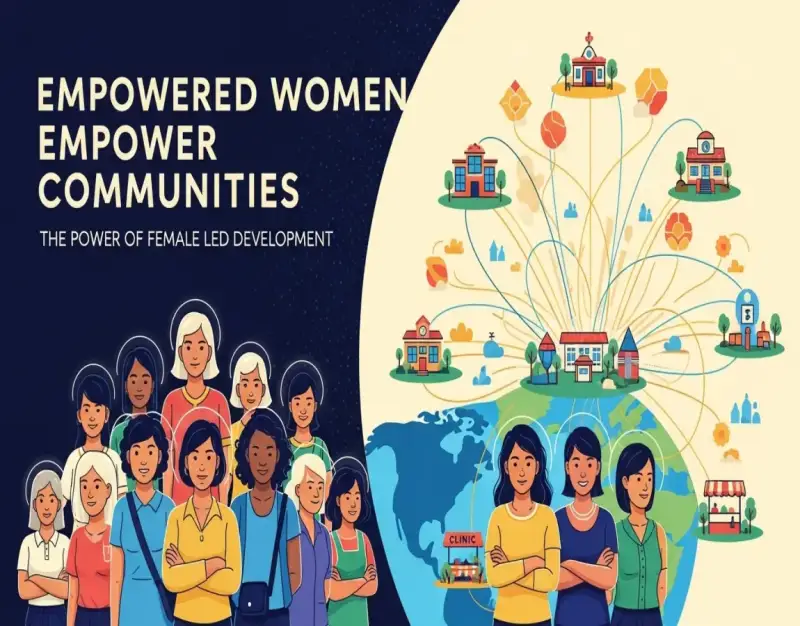
Key Takeaways
-
Empowering women leads to broader social and economic growth for entire communities.
-
Female leaders are more likely to invest in health, education, and family well-being.
-
Women-led initiatives often prioritize community needs and long-term sustainability.
-
Female empowerment increases participation in local governance and decision-making.
-
Women are pivotal in resolving conflicts and rebuilding communities after crises.
-
Entrepreneurship among women boosts local economies and creates jobs.
-
Educated and financially independent women uplift entire households.
-
Gender equity fosters innovation, resilience, and inclusive growth.
Introduction: The Rising Force of Female Leadership
Across the globe, the phrase "Empowered women empower communities" is no longer just a slogan—it’s a proven reality. From grassroots activists and entrepreneurs to policymakers and educators, women are a driving force behind community well-being, resilience, and sustainable progress. Female-led development is transforming social and economic landscapes, breaking down barriers, and rewriting the traditional narratives of leadership.
This article explores the profound and lasting impact that empowered women have on community development and explains why gender equity is not just a moral imperative, but a strategic one.
The Multiplier Effect: Why Empowering Women Matters
Empowering women creates a powerful ripple effect. When women are given equal opportunities in education, employment, and leadership, societies experience higher growth, healthier families, and more equitable governance.
According to the United Nations, women are more likely than men to reinvest their income back into their families and communities. This means better nutrition, improved healthcare, and stronger local economies.
Women bring unique perspectives to the table—perspectives often grounded in collaboration, care, and long-term foresight, which are essential for tackling complex community challenges.
A Community-Centric Approach to Leadership
Women-led initiatives often focus on inclusive and participatory development. Female leaders tend to prioritize essential services like clean water, education, maternal health, and child welfare. Their approach is holistic and grounded in empathy, leading to sustainable, people-centered solutions.
For instance, in Rwanda, a country with one of the highest percentages of women in parliament, female leaders have championed progressive policies in health and education, leading to significant improvements in child mortality rates and school attendance.
Driving Local Economies: Women as Entrepreneurs
Female entrepreneurship is a powerful engine for local development. Women-owned businesses tend to hire from their communities, offer mentorship to other women, and invest in social causes. In many developing countries, microfinance institutions targeting women have unlocked incredible entrepreneurial potential.
A prime example is the Self-Employed Women’s Association (SEWA) in India, which has helped thousands of women achieve financial stability by organizing them into cooperatives and providing the tools to start or scale their businesses. These efforts lift entire families and villages out of poverty.
From Conflict to Community: Women as Peacebuilders
In areas affected by conflict or disaster, women are often on the frontlines of peacebuilding and community healing. As mothers and caretakers, female peacebuilders focus on reconciliation, education, and rebuilding social trust.
The "Women of Liberia Mass Action for Peace" movement is a striking example. Through nonviolent protest and negotiation, these women helped end a brutal civil war in 2003, forcing warring factions to the negotiating table and changing the course of their nation's history.
Overcoming the Barriers to Female Leadership
Despite their proven impact, women still face systemic barriers to leadership, including:
-
Discriminatory laws and social norms.
-
Lack of access to funding and education.
-
Safety concerns and gender-based violence.
Tackling these issues requires intentional policies like gender quotas, investment in girls’ education, affordable childcare, and robust laws against gender-based violence.
Building an Ecosystem of Support: A Call to Action
Empowering women isn’t just about individual success—it’s about building systems that support their growth. This includes mentorship programs, women’s networks, and leadership training.
However, empowering women is not solely a women’s issue; it’s a societal mission.
-
Men must become champions for gender equity.
-
Businesses must create inclusive and safe workplaces.
-
Schools must encourage girls to dream big and lead.
-
Communities must celebrate and elevate women leaders at every level.
Conclusion: When Women Lead, the World Follows
The power of female-led development is undeniable. When women rise, communities rise with them. They bring compassion to policy, empathy to leadership, and sustainability to progress. By breaking down barriers and supporting women-led change, we are not just investing in individuals—we are investing in a brighter, more equitable future for everyone.
Be the first to share a gentle reflection on this story.