
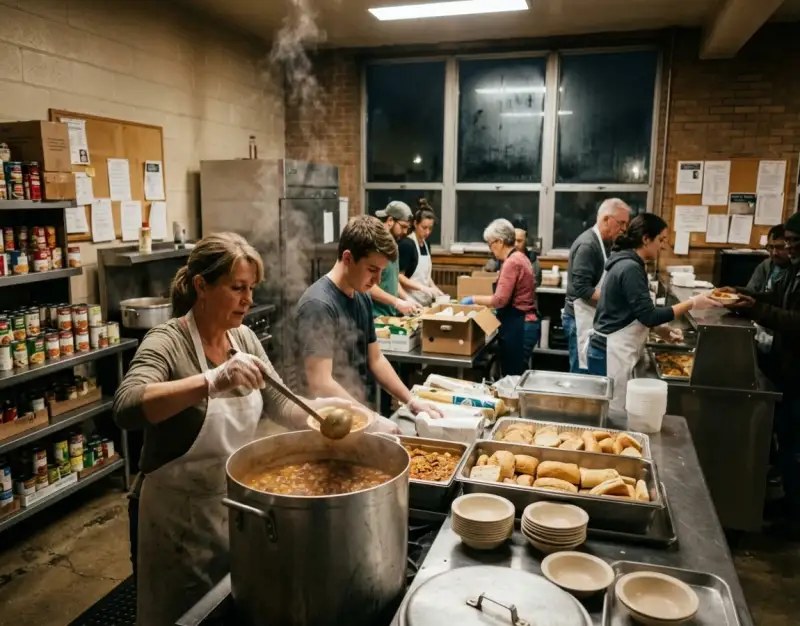
The city clock chimes 2:00 AM, and while the rest of the urban landscape sleeps under a blanket of deceptive quiet, a different rhythm awakens in the alleys, under highway overpasses, and behind shuttered storefronts. This is the realm of the midnight soup kitchen—a decentralized, tireless network of volunteers, grassroots organizers, and dedicated advocates who refuse to let their most vulnerable neighbors fall through the cracks of a fractured social safety net. When formal municipal shelters close their doors at dawn or reach maximum capacity before midnight, these underground culinary operations step into the breach, offering not just a hot, calorie-dense meal, but a profound validation of human dignity in the darkest hours of the night.
For decades, the mechanics of public assistance have relied on rigid bureaucracy, daylight operating hours, and restrictive intake policies that often alienate the chronically unhoused population. However, the modern paradigm of **community welfare** has shifted dramatically. Driven by economic inflation, housing crises, and a widening wealth gap, grassroots organizers are reclaiming the night. This invisible workforce operates outside traditional institutional boundaries, relying on encrypted chat groups, donated surplus food, and midnight distribution routes. It is an intricate, highly coordinated ecosystem that proves survival and solidarity can flourish even when formal societal infrastructure completely collapses.
Understanding this subterranean world requires more than a casual glance at charity work; it demands a deep dive into the operational logistics, emotional resilience, and structural innovations that keep midnight soup kitchens functional. Whether you are an experienced activist looking to scale your local outreach or a curious citizen eager to understand the true anatomy of urban poverty, this guide explores the comprehensive mechanics, challenges, and strategic blueprints required to sustain life on the streets when the sun goes down. Much like the profound lessons learned during grassroots community efforts such as the Global Kindness Challenge: What Happened When I Tried to Make a Stranger Smile in 5 Different Countries, true empathy requires stepping across cultural and comfort boundaries to witness the raw human condition firsthand.
Foundational Principles and Mechanics of Late-Night Outreach
To fully grasp how midnight soup kitchens operate, one must first dissect the fundamental terminology and operational frameworks that govern informal **homeless outreach**. Unlike traditional soup kitchens that operate out of commercial kitchens with institutional funding, midnight operations are typically mobile, agile, and chronically under-resourced. They rely heavily on mutual aid principles—meaning resources are shared horizontally among community members rather than distributed vertically from a charitable donor to a passive recipient. This creates an environment of shared respect, breaking down the traditional hierarchy of charity and replacing it with genuine camaraderie.
The operational mechanics of a midnight feed involve three distinct phases: sourcing, preparation, and distribution. Sourcing relies on food rescue programs, local bakeries, wholesale markets willing to donate day-old goods, and private community donations. Preparation happens in community centers, religious kitchens, or private homes certified for cottage food production, where volunteers prep high-protein, calorie-rich meals designed to sustain individuals through harsh overnight weather. Distribution is the most complex phase, requiring mobile units—ranging from converted vans to cargo bikes—to navigate shifting encampments while maintaining safety, discretion, and reliability.
Furthermore, understanding the sociological dynamics of the unhoused population during nighttime hours is crucial. Houseless individuals face heightened vulnerabilities between midnight and dawn, including exposure to extreme weather, targeted violence, and police sweeps. A midnight **soup kitchen** functions not merely as a mobile dining car, but as a critical safety checkpoint. Volunteers serve as an informal early-warning network, monitoring the health, safety, and immediate needs of individuals who might otherwise perish unnoticed in urban canyons.
Strategic Blueprint for Launching and Sustaining a Midnight Feeding Initiative
Securing and Managing Safe Supply Chains for Perishable Goods
The lifeblood of any midnight feeding operation is a reliable, consistent supply chain. Without access to fresh ingredients and surplus food, operations quickly stall. Organizers must cultivate direct relationships with local grocery stores, farmers markets, and wholesale distributors who often discard tons of edible food daily due to cosmetic imperfections or inventory turnover.
Once sources are secured, establishing a safe cold-chain management system is paramount. Midnight operations cannot afford foodborne illnesses, which means volunteers must be thoroughly trained in Hazard Analysis Critical Control Point (HACCP) principles, temperature logging, and safe food storage. Investing in heavy-duty commercial coolers, insulated transport bags, and reliable refrigeration units ensures that food prepared during the afternoon remains safe, warm, and appetizing by the time it is served at 3:00 AM.
Additionally, inventory rotation and waste minimization strategies must be implemented. By tracking consumption patterns across different routes, coordinators can accurately forecast how many portions of hot soup, sandwiches, and hygiene kits are needed, minimizing waste and maximizing the impact of every donated dollar and ingredient.
Designing High-Nutrient, Low-Cost Menu Architectures
Feeding individuals who live on the streets requires a specific nutritional calculus. Houseless neighbors often experience chronic malnutrition, dental challenges, and extreme caloric deficits due to physical exertion and exposure to the elements. Therefore, menus cannot consist merely of empty carbohydrates; they must be dense in protein, healthy fats, and essential micronutrients.
Soups, stews, and chilis serve as the gold standard for midnight outreach. They are easily scalable, retain heat exceptionally well in thermal dispensers, and can incorporate a wide variety of donated vegetables, legumes, and meats. Furthermore, they are easily consumable for individuals with missing teeth or dental pain, making them universally accessible.
Alongside hot liquids, menus should feature calorie-dense grab-and-go items such as nut-butter sandwiches, boiled eggs, high-protein energy bars, and fresh fruit. Ensuring that food is packaged in sturdy, leak-proof, biodegradable containers with appropriate utensils allows recipients to consume their meals comfortably, whether they are eating immediately or saving a portion for breakfast.
Navigating Street-Level Logistics and Route Planning
Executing a midnight food run requires military-like precision and deep situational awareness. Encampments shift frequently due to municipal ordinances, law enforcement sweeps, and weather patterns. Consequently, route planners must maintain real-time communication channels with street-level informants and advocates to ensure mobile units arrive where they are needed most.
Safety protocols for volunteers must be established and strictly enforced before hitting the streets. Teams should operate in pairs or groups, maintain clear lines of communication with a base dispatcher, and undergo de-escalation training to handle individuals experiencing mental health crises or substance withdrawal. Trust is the ultimate currency on the streets; maintaining consistent schedules builds a reputation of reliability that encourages houseless neighbors to engage openly.
Moreover, drivers and logistics coordinators must understand local parking regulations, traffic patterns, and safe staging areas. Avoiding disruptive behavior, keeping noise levels low during late-night stops, and leaving distribution sites completely free of litter preserves community relations and ensures the longevity of the outreach program.
Integrating Comprehensive Hygiene and Survival Gear Distribution
Food is the primary hook, but midnight outreach is uniquely positioned to address broader survival needs. When temperatures plummet or torrential rains strike, a hot bowl of soup must be paired with physical protection against the elements. Incorporating hygiene and survival gear into the distribution model exponentially increases the life-saving impact of the operation.
Essential non-food items should include mylar emergency blankets, heavy-knit wool socks, hand warmers, rain ponchos, and durable tents or sleeping bags. Hygiene kits—containing toothbrushes, toothpaste, wet wipes, hand sanitizer, and feminine hygiene products—restore a crucial sense of personal hygiene and bodily autonomy to individuals living rough.
Sourcing these items often requires creative community engagement, crowdfunding campaigns, and corporate partnerships with outdoor gear companies. When everyday citizens see tangible proof of how their contributions keep people alive through freezing winter nights, community participation surges, creating a sustainable loop of local philanthropy.
Building Sustainable Volunteer Pipelines and Preventing Burnout
The most fragile component of any grassroots mutual aid network is human energy. Midnight shifts are grueling, emotionally taxing, and physically demanding, leading to high rates of volunteer burnout if proper support systems are not put in place. Building a resilient, self-sustaining volunteer pipeline is essential for long-term viability.
Organizations must implement structured onboarding, comprehensive shadowing programs, and clear role definitions. Volunteers should never be thrown into high-stress street environments without adequate preparation. Pairing novice volunteers with seasoned veteran outreach workers ensures safety, fosters mentorship, and instills confidence.
Furthermore, recognizing emotional fatigue and normalizing mental health debriefings is critical. Providing spaces for volunteers to process the trauma and harrowing realities they witness on the streets prevents compassion fatigue. Just as systemic financial burdens require creative community interventions—similar to how communities tackle broader economic strains like those explored in discussions around Paying Off School Lunch Debt: The Anonymous Donor Who Lifted a Massive Burden Off Parents—caring for the caregivers ensures that the mission outlives individual fatigue.
Real-World Case Studies and Operational Scenarios
To understand the practical application of these strategies, let us examine two contrasting scenarios from urban outreach efforts over the past year. These real-world examples highlight the thin margin between sustainable success and catastrophic failure in midnight community welfare projects.
Case Study A: The Collapse of "Midnight Mercy" (A Lesson in Poor Logistics)
In the winter of 2022, an enthusiastic group of well-meaning volunteers launched "Midnight Mercy" in a major metropolitan downtown area. Driven by pure passion, they prepared 300 gourmet meals in home kitchens without following commercial food safety guidelines or establishing a reliable cold-chain transport system. They arrived at a major downtown encampment at 1:00 AM without prior coordination or establishing trust with camp leaders.
The result was disastrous. The food had dropped into the danger zone temperature-wise during transport, posing a severe health risk. Furthermore, arriving unannounced and shining high-powered flashlights into tents triggered panic and hostility among residents who felt violated and surveilled. Within three weeks, the project was forced to shut down due to community backlash, health department warnings, and complete volunteer burnout.
Case Study B: The Triumph of "Night Watch Mutual Aid" (A Blueprint for Success)
Conversely, "Night Watch Mutual Aid," operating in the Pacific Northwest, scaled a highly successful midnight feeding network by prioritizing trust, safety, and operational rigor. Partnering with certified commercial community kitchens, they prepared standardized, calorie-dense lentil stews and packaged them in insulated thermal carriers. They established fixed, predictable midnight routes communicated discreetly via encrypted messaging apps.
Crucially, Night Watch integrated trained peer navigators—formerly unhoused individuals who understood the cultural nuances and safety protocols of the streets—into every outreach team. They paired hot food distribution with weather-appropriate survival gear and medical referral cards. Over two years, they scaled their operations to serve over 1,000 meals weekly, achieving zero food safety incidents and building an unbreakable bond of trust with local law enforcement, city officials, and the houseless community.
Critical Mistakes and How to Avoid Them
Operating in the shadows of midnight outreach leaves very little room for error. Practitioners frequently stumble into avoidable traps that jeopardize both their volunteers and the houseless individuals they serve. Below are the top five most costly mistakes and their exact countermeasures.
- Mistake 1: Ignoring Municipal Regulations and Food Safety Laws. Cooking in uncertified home kitchens and transporting perishable foods without temperature controls risks mass foodborne illness and legal shutdown. Countermeasure: Partner with licensed commercial kitchens, obtain necessary food handler certifications, and strictly adhere to health department guidelines.
- Mistake 2: Violating Privacy and Dignity through Unannounced Media or Flashlights. Shining bright lights into tents or taking unsolicited photographs violates the privacy and trauma-informed safety of unhoused individuals. Countermeasure: Always announce your presence respectfully, use low-intensity red-light headlamps to preserve night vision, and never photograph individuals without explicit, informed consent.
- Mistake 3: Operating Without De-escalation and Safety Protocols. Sending inexperienced volunteers into volatile late-night environments without security plans or communication devices invites danger. Countermeasure: Mandate comprehensive de-escalation training, establish buddy systems, and maintain a live-check-in dispatcher during every shift.
- Mistake 4: Failing to Establish Consistent Scheduling. Showing up sporadically confuses recipients and destroys the reliability required to build lasting trust on the streets. Countermeasure: Commit to rigid, predictable schedules and communicate route changes clearly through trusted community networks.
- Mistake 5: Neglecting Volunteer Mental Health and Support. Treating volunteers as infinite resources leads to severe emotional trauma, compassion fatigue, and sudden organizational collapse. Countermeasure: Implement mandatory debriefing sessions, peer support circles, and rotational scheduling to ensure sustainable engagement.
Comprehensive Comparison Matrix: Traditional Shelters vs. Midnight Soup Kitchens
To fully appreciate the unique value proposition of midnight outreach, it is essential to compare its structural characteristics against traditional institutional sheltering and daytime feeding programs.
| Operational Metric | Traditional Day Shelters / Kitchens | Midnight Soup Kitchens (Mutual Aid) |
|---|---|---|
| Operating Hours | Daytime or evening hours (typically closed by 9:00 PM). | Late-night to early morning (11:00 PM to 4:00 AM). |
| Intake Barriers | Extensive paperwork, ID requirements, sobriety tests, religious mandates. | Low-barrier, anonymous, judgment-free, immediate access. |
| Mobility & Reach | Fixed brick-and-mortar facilities; requires travel to specific locations. | Highly mobile vans, cargo bikes, and walking teams reaching remote encampments. |
| Power Dynamics | Hierarchical charity model with strict institutional rules. | Horizontal mutual aid model emphasizing dignity and solidarity. |
| Survival Integration | Focus primarily on indoor sheltering and scheduled dining hall meals. | Simultaneous delivery of hot food, extreme weather gear, and hygiene kits. |
Frequently Asked Questions (FAQ)
What is the primary purpose of a midnight soup kitchen compared to a daytime shelter?
While daytime shelters and institutional kitchens focus on long-term case management, housing placement, and scheduled daytime meals, midnight soup kitchens exist primarily as crisis-intervention lifelines. They bridge the gap during the most dangerous hours of the night when institutional doors are locked, providing immediate caloric intake, emotional validation, and life-saving protection against extreme weather and street-level vulnerabilities.
How do midnight outreach teams ensure the safety of their volunteers during late-night shifts?
Safety is maintained through rigorous preparation, strict operational protocols, and situational awareness. Teams operate in buddy systems, undergo professional de-escalation training, and maintain continuous communication with a base dispatcher. Furthermore, partnering with peer navigators who have lived experience on the streets helps teams navigate encampments safely and respectfully.
What types of food are best suited for midnight street distribution?
The ideal foods are high in calories, protein, and essential nutrients while being easily consumable in outdoor settings. Hot, nutrient-dense soups, stews, and chilis served in insulated thermal containers are the gold standard. These should be paired with grab-and-go items such as nutrient-rich sandwiches, boiled eggs, high-protein energy bars, and hydration supplies.
How can everyday citizens get involved if they cannot volunteer during the night?
There are numerous ways to support midnight outreach without walking the streets at 3:00 AM. Citizens can organize supply drives for cold-weather gear, toiletries, and non-perishable goods; donate funds to cover fuel, packaging materials, and food rescue costs; or assist with daytime food preparation, sorting, and kitchen sanitation behind the scenes.
How do midnight soup kitchens prevent food safety violations without commercial facilities?
Responsible mutual aid organizations strictly partner with licensed commercial kitchens, community centers, or certified cottage food operations to prepare meals. They utilize commercial-grade thermal transport containers, digital meat thermometers, and strict HACCP temperature logs to ensure food never enters the unsafe "danger zone" prior to distribution.
Strategic Roadmap and Final Takeaway
As urban centers grapple with deepening housing affordability crises and the visible expansion of unhoused populations, the necessity of grassroots midnight soup kitchens will only escalate. Municipal infrastructure, bound by budgetary constraints and bureaucratic inertia, struggles to meet the round-the-clock realities of street survival. Consequently, the invisible workforce of midnight volunteers remains the ultimate frontline defense keeping our houseless neighbors alive.
Looking ahead over the next two to five years, the evolution of community welfare will likely see increased technological coordination, such as encrypted dispatch applications for real-time food rescue, alongside tighter collaborative networks between mutual aid groups and public health agencies. However, the core ethos must remain anchored in human empathy, dignity, and radical solidarity. Just as modern youth movements are mobilizing around existential crises with fierce determination—echoing the passion seen in initiatives like Youth Voices on Climate Action: Why Teenagers Are Leading the Most Powerful Movement of Our Time—the new generation of welfare advocates is rewriting the rules of community care.
Your immediate takeaway is simple: poverty and homelessness are systemic failures, but survival is deeply personal. Whether you choose to fund a thermal soup container, prep sandwiches in a community kitchen, or simply advocate for low-barrier housing policies in your local municipality, every action matters. The night is dark, but through organized compassion, collective resilience, and relentless solidarity, we can ensure that no human being is ever left to face the shadows alone.
Be the first to share a gentle reflection on this story.