
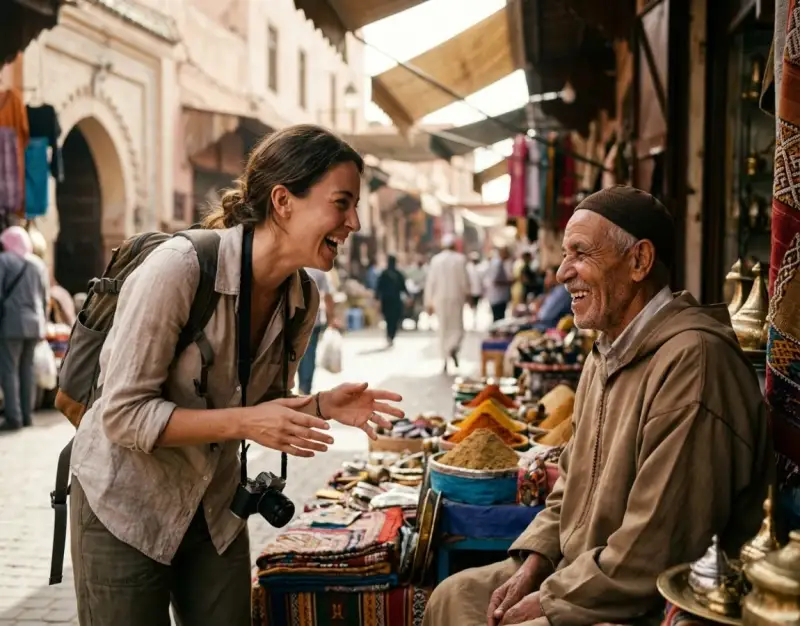
We live in an era characterized by hyper-connectivity yet profound isolation. Every day, algorithms curate our digital environments, pushing us deeper into echo chambers while physical communities frequently fracture along political, economic, and ideological fault lines. Against this backdrop of global alienation, the fundamental desire for genuine human contact remains a powerful undercurrent. International travel, once viewed primarily through the lens of leisure, photography, and consumption, is undergoing a quiet philosophical revolution. Travelers are increasingly asking a more profound question: Beyond taking photographs and collecting souvenirs, how can we actively contribute to the places we visit?
This evolving mindset forms the backbone of the global kindness movement. It challenges the passive tourist paradigm by turning everyday encounters into laboratories for cross-cultural empathy. When we strip away language barriers, societal expectations, and digital screens, a smile remains one of the few truly universal human acts. But does the simple act of making a stranger smile transcend borders? Can a micro-gesture of warmth break through centuries of cultural conditioning, defensive postures, and urban anonymity? To find out, I embarked on an immersive, multi-nation experiment: the Global Kindness Challenge, attempting to elicit a genuine smile from a stranger in five distinct countries across five contrasting cultural landscapes.
The implications of this experiment extend far beyond feel-good travel anecdotes. Psychologists, sociologists, and international relations experts have long studied how micro-interactions shape macro-perceptions. In an interconnected world, fostering international travel that prioritizes psychological safety, emotional generosity, and shared vulnerability can fundamentally shift how nations perceive one another. Just as domestic communities thrive when individuals step up to support one another—whether through local initiatives or community actions such as Paying Off School Lunch Debt: The Anonymous Donor Who Lifted a Massive Burden Off Parents—the global stage relies on decentralized, individual kindness to bridge vast geopolitical divides.
Foundational Principles and Mechanics of Cross-Cultural Kindness
To understand why a smile can spark an international ripple effect, we must first examine the behavioral and neurobiological mechanics underpinning human expression. Kindness is not merely a moral virtue; it is an evolutionary survival strategy. Anthropologically, early human tribes relied on non-verbal cues of safety to signal harmlessness to outsiders. A relaxed jaw, open posture, and an unforced smile act as universal bypass keys to the human amygdala, immediately down-regulating threat detection systems.
The Neurobiology of the Shared Smile
When two individuals make eye contact and share a genuine smile, the brain releases a synchronized cascade of oxytocin, dopamine, and endorphins. This neurochemical mirroring phenomenon is rooted in mirror neurons, specialized brain cells that fire both when an individual performs an action and when they observe someone else performing it. In cross-cultural settings, where spoken language fails, mirror neurons bridge the cognitive gap.
However, applying this mechanism internationally requires acute cultural literacy. A smile that reads as friendly and disarming in North America might be interpreted as intrusive or evasive in regions with high-context communication styles. Understanding these nuances transforms a clumsy tourist gesture into an authentic bridge of human connection. It demands that we look past our own behavioral norms and respect the emotional pacing of our host culture.
The Intersections of Empathy and International Travel
True cultural empathy goes beyond tolerance; it requires active curiosity and emotional availability. When traveling internationally, visitors often project their own cultural anxieties onto local populations, reading guarded expressions as hostility rather than standard urban caution. By intentionally shifting focus from consumption to connection, travelers rewire their own psychological frameworks.
This dynamic mirrors how younger generations are taking charge of systemic issues on a broader scale, viewing activism and empathy not as optional hobbies, but as essential duties of global citizenship, much like the inspiring momentum captured in Youth Voices on Climate Action: Why Teenagers Are Leading the Most Powerful Movement of Our Time. When we apply this same rigorous, intentional energy to interpersonal encounters abroad, we elevate travel from a self-serving holiday to a transformative exercise in global citizenship.
Country One: Breaking Through the Urban Fog in Tokyo, Japan
Tokyo is a masterclass in urban efficiency, architectural harmony, and deliberate public anonymity. The city's millions navigate dense train networks and bustling pedestrian crossings with an unspoken social contract: maintain personal space, avoid eye contact, and minimize disruption. Entering this environment with the explicit goal of making a stranger smile felt, at first, like an exercise in social trespassing.
Navigating High-Context Reserved Spaces
My initial attempts to offer warm greetings to commuters boarding the Yamanote Line were met with polite bows or averted gazes. Japanese culture places a high premium on *ma* (negative space or interval) and *omotenashi* (hospitality), which extends into public courtesy. Forcing direct, prolonged eye contact felt jarring within a culture that views public staring as impolite.
I quickly realized that the key to unlocking human connection in Tokyo was not aggressive friendliness, but subtle, situational kindness. Instead of cornering commuters, I focused on micro-acts of utilitarian helpfulness: silently retrieving a dropped transit pass, holding a heavy sliding door at a neighborhood bakery, or offering a respectful bow when someone navigated past me in a narrow alley.
The Breakthrough Moment
The turning point occurred in a quiet, rain-slicked alleyway in Yanaka, one of Tokyo's historic old towns. An elderly artisan was struggling to secure a canvas awning over his traditional wooden ceramics shop as a sudden gust of wind threatened to pull it free. Without a word, I stepped forward, caught the fluttering fabric, and held it steady while he locked the support bracket into place.
When he turned around, his expression transitioned from startled concern to profound gratitude. He didn't offer a Hollywood-style grin; instead, his eyes crinkled, a deep, gentle smile spread across his face, and he handed me a small, hand-glazed tea cup with a quiet bow. It was a powerful lesson in global kindness: true connection in Japan does not demand loud exuberance; it requires patient attunement to the rhythms of everyday life.
Country Two: Navigating Emotional Intensity in Oaxaca, Mexico
Leaving the structured quiet of Tokyo, I landed in Oaxaca, Mexico—a vibrant cultural capital where life is lived loudly, colorfully, and communally. Here, the challenge shifted entirely. In Oaxaca, strangers do not need a reason to smile; warmth is the baseline of social interaction. The difficulty lay not in eliciting a smile, but in ensuring my gesture was perceived as sincere rather than a superficial tourist platitude.
The Power of Communal Warmth and Shared Spaces
Oaxacan culture is deeply rooted in community, family, and shared public life. Plazas, markets, and street food stalls serve as social living rooms where conversations flow freely between neighbors and passing travelers. Walking through the bustling Mercado de Abastos, I realized that making someone smile required matching their vibrant energy while offering genuine appreciation for their craft.
Rather than executing a random, transactional interaction, I took time to sit at a family-run stall, savor a bowl of artisanal mole, and engage the vendor in broken, enthusiastic Spanish about the recipe's heritage. This shift from an observer to an appreciative participant immediately dissolved the invisible barrier between tourist and local.
The Breakthrough Moment
My breakthrough came while chatting with a local weaver named Sofia outside her workshop in Santo Domingo. She was meticulously threading a backstrap loom, her hands moving with generational expertise. Instead of interrupting her work, I watched quietly for several minutes, marveling at the intricate geometric patterns emerging from the warp threads.
When she looked up, I offered a sincere compliment in Spanish, telling her that the textile looked like a painting of the Oaxacan sunset. Her face lit up with a radiant, open-hearted smile, and she immediately insisted on wrapping a small, hand-woven bracelet around my wrist. It underscored a vital truth of international travel: vulnerability and sincere admiration are the universal currencies of human connection.
Country Three: Defusing Stoicism in Reykjavik, Iceland
From the sun-drenched markets of Oaxaca, my journey took me to the dramatic, windswept volcanic landscapes of Reykjavik, Iceland. Icelandic culture is famously egalitarian, fiercely independent, and characterized by a calm, philosophical stoicism. While Icelanders are unfailingly helpful and honest, their initial public demeanor is often subdued, reflecting a deep historical adaptation to harsh northern climates.
Understanding the Nordic Reserve
In Iceland, personal space is sacred, and small talk with strangers is relatively uncommon. Approaching someone on a downtown street with an unprompted compliment risks triggering immediate cultural suspicion. People wonder: *What does this person want? Are they trying to sell me something?*
To succeed in the Global Kindness Challenge here, I needed a context that felt entirely natural and unforced. That context presented itself in the biting cold of a coastal harbor walk, where sharing warmth becomes a communal necessity rather than a social luxury—much like organizing community support initiatives such as How to Organize a Warmth Drive: Collecting Coats, Blankets, and Essentials for Winter, where people come together to combat physical and emotional chill.
The Breakthrough Moment
While sheltering from a sudden sleet storm inside a small, unassuming harbor cafe, I noticed an older gentleman sitting alone by the window, staring out at the churning North Atlantic. He had a flask of steaming coffee and looked deeply reflective. Instead of offering a loud greeting, I approached the counter, purchased an extra pastry, placed it on his table with a quiet nod, and said, "Wishing you a warm harbor today."
He looked surprised, blinked twice, and then a slow, weathered smile broke across his face. He gestured to the empty seat opposite him and invited me to sit down. For the next twenty minutes, we sat in comfortable silence punctuated by stories of local fishing fleets and the unpredictable fury of Icelandic weather. It proved that cultural empathy often requires no words at all—just a shared acknowledgement of our shared humanity against the elements.
Country Four: Finding Joy Amidst Chaos in Mumbai, India
Mumbai is an explosion of sensory input—a pulsating metropolis of twenty million souls where density, ambition, poverty, and resilience collide in a symphony of sound, color, and movement. In a city where every square foot is contested and survival demands constant vigilance, the concept of stopping to make a stranger smile initially felt naive, if not entirely out of touch.
Decoding Hyper-Dense Urban Resilience
Navigating Mumbai's local trains and bustling bazaars requires a distinct psychological armor. People move with singular purpose, eyes fixed ahead, navigating crowds with practiced precision. Yet, beneath this veneer of urban survival lies an extraordinary, deeply ingrained spirit of collective hospitality known as *Mumbai spirit*.
To connect with strangers here, I had to drop any preconceived notions of personal space and lean directly into the chaos. The strategy shifted from quiet observation to shared laughter over the shared absurdity of urban life—stuck in a gridlock auto-rickshaw or dodging monsoon puddles.
The Breakthrough Moment
The moment happened near Crawford Market, where I sought shelter from a torrential downpour under a tiny canvas awning alongside a weary street vendor selling roasted corn. We were crammed shoulder-to-shoulder, water cascading from the roof inches from our heads.
Catching his eye amidst the roar of traffic, I pointed at the swirling river of water rushing down the street, rolled my eyes, and laughed. He let out a booming laugh that shook his shoulders, patted my arm, and handed me a warm ear of corn slathered in lime and chili powder, refusing any payment. In that shared moment of monsoon madness, cultural boundaries vanished. A simple laugh built an instant bridge of human connection.
Country Five: Reclaiming Public Presence in Marrakesh, Morocco
The final leg of the Global Kindness Challenge brought me to the labyrinthine medinas of Marrakesh, Morocco. Here, the sensory landscape is intoxicating—spices stacked in colorful cones, merchants calling out bargains, and mopeds weaving through narrow pedestrian alleyways. For a traveler, the medina can feel overwhelming, with constant commercial interactions creating a subtle emotional fatigue.
Balancing Commercial Exchanges with Genuine Warmth
In high-tourism hubs like Marrakesh, interactions between locals and travelers are frequently transactional. Shopkeepers call out to tourists continuously, leading many visitors to adopt a defensive posture, avoiding eye contact entirely. This defensive stance, however, creates an artificial barrier that prevents genuine human connection.
My challenge in Marrakesh was to break through this transactional barrier—to engage with people in a way that signaled I was not just a passing wallet, but a fellow human being seeking authentic interaction.
The Breakthrough Moment
Deep within the souks, I stopped to watch a master craftsman carving intricate geometric designs into cedarwood. Instead of asking for prices or inspecting items for purchase, I simply stood quietly, watching his hands with evident awe. When he finished a delicate flourish, I gave him a thumbs-up and placed my hand over my heart in a traditional gesture of respect.
His face lit up with a brilliant, welcoming smile. He set his chisel down, motioned for me to sit on a low wooden stool beside him, and poured two small glasses of steaming, mint-infused sweet tea from a height of two feet. We sat together for ten minutes, communicating entirely through gestures, smiles, and shared laughter over my clumsy attempts at Arabic pleasantries. It was a poignant reminder that human connection flourishes the moment we stop treating each other as economic units and start recognizing each other as souls.
Real-World Case Studies & Scenarios: Success vs. Failure
Analyzing these five international experiences reveals clear operational patterns separating superficial tourism from transformative human connection. Let's examine two contrasting case studies highlighting the mechanics of success and failure in cross-cultural empathy.
| Metric / Approach | Transactional Tourism (Failure) | Mindful Global Kindness (Success) |
|---|---|---|
| Core Motivation | Selfie generation, checking off bucket-list sights, transactional comfort. | Genuine curiosity, emotional generosity, cross-cultural empathy. |
| Behavioral Stance | Loud, invasive, ignoring local social norms and personal space boundaries. | Patient, observant, respectful of local pacing and communication styles. |
| Long-term Impact | Reinforces cultural stereotypes and visitor fatigue in host communities. | Leaves a positive emotional footprint, fostering mutual respect and memory. |
In the failure scenario, travelers often impose their own cultural extroversion onto reserved populations, leading to awkward rejections or offended reactions. Conversely, the success scenario demonstrates that patience, situational awareness, and respect for local customs transform simple gestures into profound international bonds.
Critical Mistakes and How to Avoid Them
Executing a global kindness initiative requires emotional intelligence and strategic self-awareness. Avoid these five costly mistakes:
- Mistake 1: Imposing Domestic Norms Abroad. Assuming that a loud "Hello!" and a big grin work identically in Tokyo and Oaxaca. Countermeasure: Research local communication etiquette and observe public behavior before initiating contact.
- Mistake 2: Treating People as Props. Approaching strangers solely for social media content or photographic validation. Countermeasure: Put the camera away. Prioritize authentic presence over digital documentation.
- Mistake 3: Ignoring Personal Boundaries. Invading personal space in high-context, reserved cultures. Countermeasure: Respect physical distance and rely on situational helpfulness rather than forced verbal engagement.
- Mistake 4: Allowing Rejection to Breed Cynicism. Letting an averted gaze or a cold response discourage future attempts. Countermeasure: Recognize that defensive reactions are usually about local safety or urban fatigue, not personal rejection.
- Mistake 5: Over-reliance on Material Transactions. Trying to buy smiles with money, gifts, or tips rather than genuine emotional presence. Countermeasure: Offer your time, attention, and respect before offering anything material.
Frequently Asked Questions (FAQ)
Is it safe to approach strangers in foreign countries for the Global Kindness Challenge?
Safety is always the primary priority in international travel. Engaging in global kindness does not mean putting yourself in vulnerable or high-risk situations. Focus your efforts in well-lit, populated public spaces such as cafes, markets, parks, and public transit hubs. Always trust your intuition; if a situation feels tense or unsafe, gracefully disengage.
How do you overcome language barriers when trying to make a stranger smile?
Language is only a fraction of human communication. Non-verbal cues—such as a warm nod, a respectful bow, an appreciative hand gesture, or shared laughter over a shared circumstance—transcend linguistic differences. When words are needed, universal phrases like "Thank you," "Please," or a simple local greeting go a long way.
Won't locals think I want something from them, especially in tourist-heavy cities?
In many global tourism hubs, locals are accustomed to transactional interactions driven by commerce. To overcome this skepticism, approach without holding merchandise, brochures, or cameras. Offering unprompted help, showing sincere appreciation for local craftsmanship, or sharing a lighthearted moment about shared weather conditions instantly breaks the transactional mold.
How can I practice global kindness without traveling internationally?
Global empathy starts right in your own backyard. You can practice cultural empathy by welcoming immigrants and refugees in your community, supporting international cultural festivals, learning a new language, or participating in local philanthropic efforts that mirror international aid and solidarity.
What if my attempt at kindness is rejected or ignored?
Rejection is simply a reminder that everyone carries their own invisible burdens, stresses, and cultural norms. An averted gaze is rarely a personal insult; it is often standard urban protection. Smile politely, accept the boundary, and move forward without taking it personally.
Strategic Roadmap and Final Takeaway
As international travel rebounds and evolves over the next two to five years, the paradigm of global tourism must shift from extraction to connection. The future belongs to mindful travelers who recognize that international borders are political constructs, while human emotions are universal.
Your actionable next step is simple: On your next commute, walk, or journey abroad, commit to one micro-act of unprompted kindness. Put down your phone, make eye contact, offer a sincere gesture of help or appreciation, and watch how a single smile can transform not just a stranger's day, but your entire perspective on the world.
Be the first to share a gentle reflection on this story.