
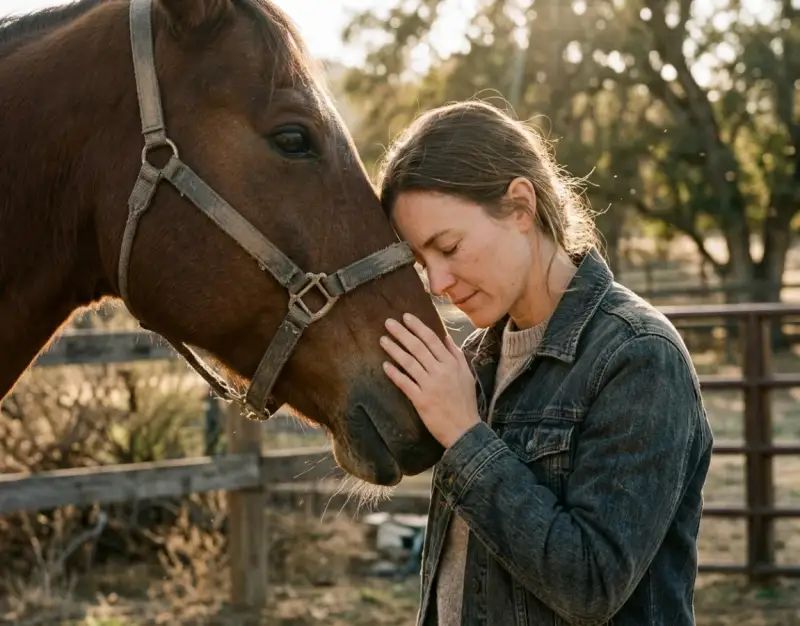
For centuries, humanity has shared an unspoken, symbiotic relationship with the horse. From ancient cavalry companions to modern agricultural pillars, these magnificent creatures have carried our burdens, traversed our frontiers, and mirrored our resilience. Yet, in the landscape of contemporary psychology and specialized clinical care, a quiet revolution is taking place. Equine therapy—often formalized as Equine-Assisted Therapy (EAT) or Equine-Assisted Psychotherapy (EAP)—has emerged as a groundbreaking paradigm in mental health treatment, offering a profound lifeline to those navigating the shattering aftermath of severe trauma.
Trauma, in its myriad manifestations, fundamentally disrupts an individual's sense of safety, agency, and self-worth. Traditional talk therapy, while deeply valuable, often relies heavily on cognitive processing and verbal articulation. For survivors of complex post-traumatic stress disorder (C-PTSD), physical abuse, combat exposure, or chronic neglect, finding the right words can feel like navigating an impossible labyrinth. Words fail where the nervous system remains trapped in a perpetual state of hyper-arousal, hyper-vigilance, or numbed dissociation. This is where equine therapy bridges the chasm. By stepping into an arena with a thousand-pound prey animal, survivors engage in a somatic, non-verbal dialogue that bypasses cognitive defenses, allowing deep-seated emotional wounds to surface, be witnessed, and ultimately begin to heal.
As we examine the broader societal ecosystem of human suffering and recovery, it becomes clear that compassionate interventions must evolve. Just as communities grapple with systemic vulnerabilities—ranging from food insecurity addressed in initiatives like Midnight Soup Kitchens: The Invisible Workforce Keeping Our Houseless Neighbors Alive to everyday acts of empathy explored in the Global Kindness Challenge: What Happened When I Tried to Make a Stranger Smile in 5 Different Countries—our approach to mental health must embrace experiential, dignity-affirming modalities. This comprehensive guide explores the mechanics, strategies, clinical evidence, and transformative potential of equine therapy in helping trauma survivors reclaim their voice, autonomy, and inner peace.
Foundational Principles and Mechanics of Equine Therapy
To fully grasp why equine therapy produces such startling breakthroughs in trauma survivors, one must first understand the physiological and behavioral nature of the horse. Horses are prey animals. In the wild, their survival depends entirely on their hyper-acute awareness of their environment, subtle shifts in energy, and instantaneous threat-detection capabilities. They do not possess the human capacity for verbal language, deceit, or complex cognitive rationalization; instead, they operate entirely in the present moment, reading energetic and physiological cues with astonishing precision.
When a human enters a round pen or pasture with a horse, an immediate, unmediated bio-feedback loop is established. If a trauma survivor is masking severe internal anxiety behind a calm exterior, the horse—registering incongruence—will often step away, exhibit signs of vigilance, or refuse to engage. Conversely, when the survivor drops their armor, achieves genuine emotional alignment, and regulates their nervous system, the horse often mirrors this state, approaching, lowering its head, or exhaling deeply. This dynamic transforms the horse into a living, breathing bio-feedback mirror, offering objective, non-judgmental reflections of the survivor's internal emotional landscape.
Furthermore, the physical act of interacting with an animal of this magnitude fosters a profound shift in power dynamics. Survivors of trauma frequently feel powerless, trapped within bodies that betrayed them or environments they could not control. Leading, grooming, or simply existing safely alongside a powerful animal helps re-establish a sense of physical agency. It teaches survivors that boundaries are not just theoretical constructs, but tangible, energetic boundaries that command respect and safety in real time.
The Neuroscience of Trauma and Equine Interaction
Dysregulation of the Autonomic Nervous System
Trauma fundamentally alters how the brain processes threat and safety. The amygdala—the brain's emotional and threat-detection center—becomes chronically overactive, keeping the sympathetic nervous system locked in a perpetual "fight-or-flight" response, or driving the dorsal vagal system into a state of shutdown and dissociation. In these states, the prefrontal cortex, responsible for executive functioning, verbal processing, and rational thought, goes offline. Traditional talk therapy often struggles here because the patient is literally locked out of the brain regions required for verbal narrative.
Equine therapy bypasses this cognitive blockade by engaging the right hemisphere of the brain and the limbic system directly through somatic experience. As participants groom or lead a horse, tactile sensations, rhythmic movement, and deep breathing stimulate the vagus nerve, initiating parasympathetic nervous system activation. The physical proximity to a calm, grounded animal helps co-regulate the survivor's erratic heart rate and cortisol levels, providing a biological reset that makes cognitive processing possible once again.
Rebuilding Interoception and Body Awareness
A hallmark symptom of chronic trauma is dissociation—the protective disconnection from bodily sensations, physical pain, and emotional needs. Trauma survivors often live entirely "in their heads," viewing their bodies as unsafe or untrustworthy vessels. Equine activities demand physical presence. Brushing a horse's coat, feeling the warmth of its skin, sensing the rhythm of its footsteps, and managing one's own posture require acute interoceptive awareness.
Therapists intentionally guide participants to notice internal bodily shifts during these interactions: Where are you holding tension? What happens to your breathing when the horse steps closer? By gently re-introducing bodily awareness within a safe, controlled relational container, survivors learn to inhabit their physical forms again without fear. This somatic reconnection is a vital stepping stone toward reclaiming one's voice, as authentic self-expression requires a grounded physical foundation from which to speak.
The Clinical Framework: Groundwork Versus Mounted Activities
The Safety of Ground-Based Interventions
A common misconception is that equine therapy invariably involves horseback riding. In clinical trauma recovery, the vast majority of transformative work occurs entirely on the ground—known as ground-based equine-assisted psychotherapy. Groundwork removes the immediate physical risks associated with mounting a horse while maximizing relational interaction. Activities may include haltering, grooming, navigating obstacle courses together, or simply observing herd dynamics from a distance.
Ground-based work allows survivors to establish boundaries at their own pace. If a participant feels overwhelmed, they can step back, re-evaluate, and approach the horse when their nervous system has stabilized. This puts the locus of control squarely back into the hands of the survivor, contrasting sharply with clinical environments where patients may feel pressured to perform or share intimate details before they are psychologically ready. Every micro-decision—whether to approach, touch, or turn away—reinforces personal autonomy.
The Metaphorical Power of Obstacle Courses
Clinical sessions often incorporate structured challenges, such as guiding a horse through a labyrinth or across a series of poles without using physical force. These exercises serve as rich metaphors for the survivor's internal struggles. A survivor might discover that when they become aggressive or overly controlling out of fear, the horse resists and pulls away. When they learn to soften, communicate clear intent, and project steady, calm confidence, the horse follows willingly.
These real-time behavioral insights provide fertile ground for processing within the therapeutic session. The licensed mental health professional working alongside the equine specialist helps the client draw parallels between their interactions with the horse and their interpersonal relationships, workplace dynamics, and internal self-talk. It transforms abstract psychological concepts into tangible, physical experiences that are far more difficult to intellectualize or dismiss.
Translating Equine Metaphors into Reclaimed Voice
Overcoming the Silence of Shame and Fear
Trauma often silences its victims through layers of toxic shame, guilt, and the pervasive fear of not being believed. Many survivors report feeling like ghosts in their own lives—physically present, but lacking an audible, impactful voice. Horses offer an unconditional sounding board that requires no words. A horse does not judge a survivor's past, question their story, or demand explanations. It simply responds to who the person is in the present moment.
This unconditional acceptance creates a psychological safety net where experimentation with voice and expression becomes possible. Practitioners often encourage participants to use verbal cues, vocal modulation, and physical posture to direct the horse. When a survivor utters a command and sees a thousand-pound animal respond respectfully to their voice, a profound cognitive shift occurs: *My voice matters. My presence has an impact on the world around me.*
Assertive Communication and Boundary Setting
Finding one's voice is intimately tied to the ability to set and maintain healthy boundaries. For many trauma survivors, boundaries were historically violated, leading to extreme oscillation between people-pleasing passivity and defensive aggression. Horses provide immediate, unambiguous feedback regarding boundary violations.
If a participant crowds a horse without paying attention to its personal space, the horse will pin its ears, shift its weight, or move away. If the participant remains unaware, the horse may escalate its warning. This teaches survivors to read subtle cues of discomfort—in both animals and humans—and to adjust their behavior accordingly. Conversely, if a survivor is too passive and fails to claim their space, the horse may take charge or ignore them entirely. Through guided practice, survivors learn the "sweet spot" of assertive communication: calm, firm, clear, and respectful.
Structuring a Comprehensive Equine Therapy Program
Initial Assessment and Safety Protocol
Implementing an effective equine therapy regimen requires rigorous protocols to ensure both psychological and physical safety. The process begins long before a participant ever steps foot in the pasture. A comprehensive clinical intake assesses the client's trauma history, physical limitations, specific triggers, and readiness for experiential work. Concurrently, equine specialists evaluate the temperament and training of the therapy horses to ensure they are desensitized to sudden movements, loud noises, and unpredictable emotional outbursts.
Safety education is paramount. Participants are taught basic equine behavior, herd dynamics, and physical safety rules. Establishing this foundation creates a secure container where anxiety is mitigated by knowledge and preparation. Just as systemic financial support—such as the anonymous interventions seen in Paying Off School Lunch Debt: The Anonymous Donor Who Lifted a Massive Burden Off Parents—lifts crushing, invisible weights from families, structured safety protocols lift the invisible anxiety of the unknown from the trauma survivor.
Phase-Based Therapeutic Integration
- Phase 1: Observation and Attunement. Participants observe the horses from outside the enclosure, learning to regulate their breathing while watching herd interactions. This builds foundational emotional safety without direct physical demands.
- Phase 2: Tactile Engagement and Groundwork. Working inside the pen with a halter and lead rope. Focus centers on grooming, spatial awareness, and establishing mutual trust through calm, non-verbal presence.
- Phase 3: Relational Metaphors and Challenges. Navigating obstacle courses and collaborative tasks designed to surface patterns of control, vulnerability, assertiveness, and fear.
- Phase 4: Verbal Integration and Processing. Transitioning from the pasture to the counseling room to verbally debrief the physical experiences, connecting equine interactions to real-world trauma recovery goals.
Real-World Case Studies and Scenarios
To understand the practical impact of equine therapy, examine the contrasting trajectories of two trauma survivors: Sarah and Marcus.
Case Study A: Sarah's Path to Embodied Resilience
Sarah, a 34-year-old survivor of domestic violence, presented with severe C-PTSD, profound dissociation, and selective mutism during high-stress encounters. Traditional talk therapy had stalled after 18 months because Sarah struggled to articulate her internal state, frequently freezing when asked direct questions about her trauma.
Upon entering the equine program, Sarah was paired with a gentle, intuitive gelding named Spirit. In the first three sessions, Sarah remained silent, standing rigidly at the edge of the arena. Spirit consistently turned his back and grazed elsewhere. The licensed therapist did not force interaction, instead inviting Sarah to simply notice her breath while observing the horse.
By session four, prompted by the therapist to experiment with asking the horse to move across the arena, Sarah whispered a hesitant command. Spirit ignored her. The therapist gently asked: *What message is your body sending right now? You are speaking words of direction, but your shoulders are caved in and your energy is withdrawn.*
Encouraged to ground her feet, drop her shoulders, and project quiet authority, Sarah tried again. This time, she spoke with a firmer tone and clearer intention. Spirit immediately turned, lowered his head, and walked toward her. Tears welled in Sarah's eyes as she whispered, "He listened to me." Over the subsequent 12-week program, Sarah transitioned from ground-based groundwork to leading Spirit through complex obstacle courses, anchoring her internal voice and carrying that newfound assertiveness back into her daily life and legal proceedings.
Case Study B: Mismanaged Implementation and Pitfalls
Conversely, consider a poorly managed pilot program at a regional mental health facility that attempted to fast-track veterans with severe PTSD into mounted riding without adequate ground preparation. Lacking trained equine specialists and rushing participants past their baseline tolerance levels, the facility paired hyper-vigilant veterans with skittish, unconditioned horses.
During session two, a sudden loud noise outside the arena startled one of the horses, causing it to bolt and buck. While no participants were severely injured, the psychological fallout was catastrophic. The veterans experienced acute re-traumatization, triggering deep survival panics and reinforcing their belief that the world was inherently unsafe and unpredictable. The program was forced to suspend operations within a month.
Key Lessons Learned:
- Pacing is non-negotiable; rushing trauma survivors into advanced physical activities undermines foundational safety.
- The presence of dual-certified professionals (licensed mental health clinicians alongside certified equine specialists) is mandatory.
- Environmental control and animal selection dictate the difference between profound healing and traumatic re-injury.
Critical Mistakes and How to Avoid Them
As equine therapy gains mainstream momentum, well-intentioned practitioners and facilities occasionally fall into costly operational and clinical traps. Avoiding these missteps is vital for client safety and therapeutic integrity.
1. Treating Equine Therapy as Mere "Recreation" or Horseback Riding
The Mistake: Marketing or executing sessions as casual equestrian lessons or recreational trail rides under the guise of therapy.
The Countermeasure: Ensure every session is guided by a licensed mental health professional (LCSW, PsyD, LMFT) actively bridging equine behaviors with psychological frameworks. Recreation builds horsemanship skills; clinical equine therapy builds emotional resilience and trauma recovery.
2. Ignoring Animal Welfare and Burnout
The Mistake: Overworking therapy horses without adequate rest, turning herd animals into mechanical tools and ignoring signs of equine stress or trauma absorption.
The Countermeasure: Implement strict herd rotation schedules, provide ample pasture turn-out time, and conduct regular behavioral assessments of the animals by equine behaviorists.
3. Neglecting Comprehensive Psychological Screening
The Mistake: Admitting clients with active psychosis, severe unmanaged substance abuse disorders, or extreme animal phobias without proper stabilization.
The Countermeasure: Enforce rigorous clinical intake protocols and collaborate closely with primary psychiatrists and medical teams to ensure client stability before pasture introduction.
4. Rushing the Relational Timeline
The Mistake: Forcing clients to touch, halter, or ride horses before they have established basic nervous system regulation and felt safety in the animal's presence.
The Countermeasure: Honor the client's pace unconditionally. Allow observation-only sessions and validate all expressions of fear, hesitation, or resistance.
5. Failing to Bridge Pasture Insights to Daily Life
The Mistake: Leaving profound emotional breakthroughs in the arena without structured processing or debriefing back in the counseling office.
The Countermeasure: Allocate the final 20-30 minutes of every session to verbal processing, journaling, and concrete action-planning to integrate somatic realizations into cognitive understanding.
Comprehensive Comparison Table
| Modality / Approach | Primary Focus & Mechanism | Ideal Candidate Profile | Key Limitations |
|---|---|---|---|
| Traditional Talk Therapy (CBT/DBT) | Cognitive restructuring, verbal processing, emotion regulation through dialogue. | Verbal clients with strong cognitive baseline and moderate trauma history. | Ineffective for deep dissociation, non-verbal trauma, and chronic hyper-arousal. |
| Equine-Assisted Psychotherapy (EAP) | Somatic co-regulation, non-verbal bio-feedback, boundary work via ground interaction. | Trauma survivors, C-PTSD, veterans, and individuals struggling with verbal expression. | Requires specialized facilities, dual-certified staff, and weather-dependent environments. |
| Therapeutic Riding (Adaptive) | Physical balance, core strengthening, rhythmic movement, and recreational joy. | Physical disabilities, developmental delays, and motor skill rehabilitation. | Less emphasis on deep psychotherapy or psychological trauma processing. |
Frequently Asked Questions (FAQ)
Do I need previous experience with horses to participate in equine therapy?
Absolutely not. In fact, many clinicians find that participants with zero prior horse experience often achieve the most profound breakthroughs. Because they arrive without preconceived notions, habits, or expectations regarding horsemanship, they interact with the animals with pure authenticity and raw presence. Every safety precaution, grooming technique, and handling method is taught step-by-step by certified professionals before you ever step into the enclosure.
Is equine therapy safe for individuals who are afraid of large animals?
Yes, under proper clinical supervision, a healthy fear or hesitation is actually a wonderful starting point for therapeutic exploration. Fear and anxiety are valid emotional responses that can be processed in real time. Therapists never force participants to touch or approach a horse before they feel psychologically ready. Sessions often begin at a comfortable distance outside the arena, allowing the participant to observe the horse's calm demeanor and gradually build trust at their own pace.
How does equine therapy differ from traditional horseback riding lessons?
While horseback riding lessons focus on equestrian skills, animal control, riding posture, and competitive performance, equine therapy is a mental health treatment modality. EAP focuses on psychological healing, emotional regulation, boundary setting, and trauma recovery. The horses serve as co-therapists and sentient mirrors reflecting internal emotional states, and sessions are co-facilitated by licensed mental health professionals.
How many sessions are typically required to see meaningful results?
Every trauma survivor's recovery journey is unique, making a universal timeline impossible to prescribe. However, standard clinical programs generally range from 8 to 12 weekly sessions. Many participants report experiencing significant shifts in somatic awareness, emotional grounding, and vocal confidence within the first 4 to 6 sessions as their nervous systems begin to co-regulate with the herd.
Is equine therapy covered by health insurance?
Insurance coverage for equine therapy varies significantly depending on your geographic location, insurance provider, and the specific clinical credentials of the facility. Because equine therapy is facilitated by licensed mental health professionals, portions of the psychotherapy component may be eligible for out-of-network reimbursement. It is always recommended to contact the treatment center and your insurance provider beforehand to verify specific coverage details.
Strategic Roadmap and Final Takeaway
The integration of equine therapy into mainstream trauma recovery represents a monumental shift toward holistic, somatic, and compassionate mental health care. By acknowledging that trauma lives not only in the mind but deep within the autonomic nervous system and the physical body, we open doors to healing that traditional talk therapy alone cannot unlock. Horses offer trauma survivors a mirror of truth, an anchor of safety, and a catalyst for reclaiming their voice.
As we look to the future of mental health over the next two to five years, the industry is poised for exciting advancements. We anticipate greater standardization of dual-certification training programs, increased integration of equine therapy within Veterans Affairs medical centers, and more robust empirical research validating the neurobiological mechanisms of human-equine co-regulation.
For trauma survivors, advocates, and mental health professionals alike, the path forward is clear: embrace modalities that honor the whole person. Whether you are seeking treatment for yourself, supporting a loved one, or expanding your clinical practice, remember that healing requires patience, safe boundaries, and the courage to step into the arena. Just as a horse responds to quiet, authentic strength, our communities thrive when we cultivate spaces of deep empathy, listening, and shared resilience.
Be the first to share a gentle reflection on this story.