
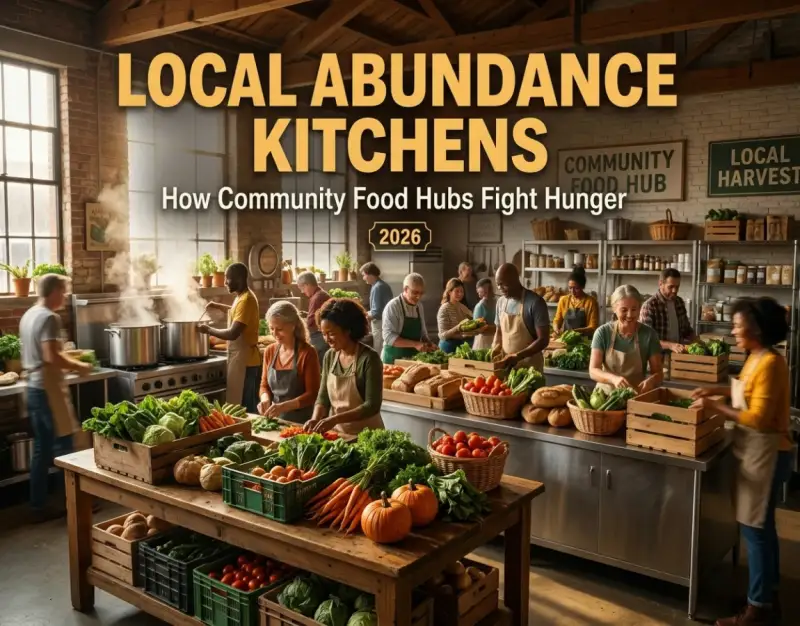
Across urban corridors and rural townships alike, a quiet yet profound revolution is reshaping how society confronts the paradox of food insecurity in an era of agricultural overproduction. While supermarkets discard tons of edible goods daily and supply chains groan under the weight of logistical inefficiencies, millions of households navigate the devastating realities of hunger. Enter the concept of the local abundance kitchen—a decentralized, community-powered hub designed not merely to distribute emergency calories, but to radically transform the journey of food from surplus to sustenance. These dynamic spaces act as culinary incubators, nutritional classrooms, and neighborhood anchors, proving that the solution to hunger is already present within our communities if we organize it effectively.
For decades, traditional charitable food distribution relied on a top-down model: industrialized pantries handing out dented cans and heavily processed shelf-stable items, often exacerbating health disparities while stripping individuals of their culinary agency. Today, however, the landscape of community resilience has fundamentally shifted. Driven by grassroots activism, advances in logistical tracking, and a renewed cultural appreciation for localized systems, modern food hubs emphasize dignity, cultural relevance, and ecological sustainability. They intercept food waste at the farm, grocer, and restaurant levels, channeling those ingredients into commercial-grade community kitchens where volunteers and chefs transform them into nutritious, ready-to-eat meals and teachable cooking workshops.
This comprehensive investigation explores the anatomy, operational mechanics, and transformative potential of the local abundance kitchen. By examining the step-by-step blueprints required to establish these hubs, evaluating real-world case studies, and navigating the operational pitfalls that derail well-meaning initiatives, this article provides an exhaustive manual for community leaders, activists, and changemakers. Whether you are looking to scale an existing pantry into a full-scale culinary hub or seeking to understand how modern philanthropy intersects with grassroots food sovereignty, the roadmap detailed below offers profound insights into building a truly hunger-resistant society.
Understanding the Ecosystem of Modern Food Hubs
Defining the Core Infrastructure
To fully grasp how a local abundance kitchen operates, one must first dissect its architectural and operational anatomy. Unlike a traditional food pantry that functions primarily as a storage and pickup depot, an abundance kitchen is a processing facility. It combines the capabilities of a commercial kitchen, a food rescue clearinghouse, and a community educational center. The physical layout typically features high-capacity refrigeration units for perishable surplus, blast chillers for safe batch cooking, and industrial prep stations capable of handling hundreds of pounds of raw vegetables, grains, and proteins daily.
The mechanical heartbeat of this ecosystem is surplus diversion. By establishing formal partnerships with regional farms, wholesale distributors, and local grocers, these kitchens intercept edible food before it enters the commercial waste stream. This requires a robust cold-chain logistics network, often relying on refrigerated vans and volunteer transport coordinators. Once ingredients arrive at the facility, trained kitchen managers and culinary volunteers triage the items, separating produce destined for immediate meal preparation from items suitable for raw distribution or neighborhood composting initiatives—paralleling holistic approaches seen when Starting a Community Compost Program: The Ultimate Neighborhood Guide [2026] to ensure zero organic waste exits the facility.
The Philosophy of Food Sovereignty and Dignity
Beyond the physical mechanics of processing ingredients, a local abundance kitchen is fundamentally rooted in the philosophy of food sovereignty. Traditional charitable models often force recipients into passive roles, accepting whatever provisions are handed down without regard for dietary restrictions, cultural preferences, or cooking facilities at home. Abundance kitchens flip this paradigm by prioritizing nutritional density and culturally affirming meals. When individuals receive a hot, chef-prepared soup or a ready-to-heat casserole featuring flavors reflective of their heritage, food transitions from a mere survival mechanism to an expression of care and community belonging.
Furthermore, these hubs dismantle the stigma traditionally associated with food assistance. By integrating commercial operations with community dining rooms, pop-up markets, and sliding-scale cafes, the boundary between "donor" and "recipient" dissolves. Neighborhood residents, regardless of socioeconomic status, share meals at communal tables, participate in cooking classes, and contribute their own skills to the collective effort. This participatory model fosters deep social cohesion, turning passive aid recipients into active stakeholders in local food security.
Step-by-Step Blueprint: Establishing an Abundance Kitchen
Phase 1: Needs Assessment and Stakeholder Mapping
Launching a sustainable local abundance kitchen begins long before the first stove is lit; it requires rigorous data collection and community mapping. Organizers must assess the precise contours of food insecurity within their target municipality. This involves analyzing USDA food desert maps, examining local public health metrics related to diet-related illnesses, and conducting qualitative interviews with neighborhood residents, existing pantries, and social service agencies. Understanding what foods are missing from a neighborhood—such as fresh produce or protein sources—shapes the procurement strategy of the future hub.
Simultaneously, mapping local assets is critical. What commercial kitchens sit underutilized during off-peak hours, such as church basements, school home economics rooms, or restaurant spaces? Who are the potential agricultural partners within a fifty-mile radius who routinely experience crop surpluses? By aligning community need with available surplus capacity, organizers can draft a viable operational blueprint. Engaging municipal zoning boards, health departments, and waste management authorities early in this phase ensures regulatory compliance and prevents costly operational delays down the road.
Phase 2: Securing Funding and Financial Sustainability
Financial resilience is the bedrock upon which any community food initiative must be built. Relying solely on sporadic donations or municipal grants leaves a local abundance kitchen vulnerable to economic downturns. Successful founders employ a diversified funding model that blends philanthropic grants, corporate sponsorships, and earned-income strategies. For example, many hubs operate hybrid models where daytime meal preparation focuses on subsidized or free community distribution, while evening hours are dedicated to culinary job-training programs or affordable incubator space rentals for emerging food entrepreneurs.
In the digital age, securing ongoing capital requires sophisticated online engagement strategies. Modern donors expect transparent reporting, impact metrics, and seamless digital giving portals. Integrating lessons from Digital Philanthropy 101: How Online Giving is Reshaping Modern Charities [2026] allows grassroots kitchen organizers to build recurring donor bases through crowdfunding, peer-to-peer fundraising campaigns, and automated micro-contributions that provide predictable monthly revenue streams.
Operational Logistics: From Farm Gate to Neighborhood Plate
Sourcing, Food Safety, and Regulatory Compliance
Navigating the logistical pipeline of rescuing and preparing perishable food demands strict adherence to food safety protocols and regulatory standards. A local abundance kitchen operates under the watchful eye of local health departments, requiring managers to hold ServSafe certifications and enforce rigorous Hazard Analysis Critical Control Point (HACCP) plans. Every batch of rescued produce, meat, and dairy must be logged, temperature-checked upon arrival, and processed within strict window parameters to prevent foodborne illness.
Sourcing from small-scale regional farms also presents unique logistical hurdles. Unlike centralized corporate supply chains that deliver uniform pallets, local farm surplus often arrives unwashed, irregularly sized, and in fluctuating quantities. Kitchen managers must train volunteer corps in rapid triage and preparation techniques—such as quick-pickling, blanching, and freezing—to stabilize glut harvests before they spoil. Establishing clear liability protections, such as those provided by the Bill Emerson Good Samaritan Food Donation Act, gives farmers and grocers the legal confidence to donate surplus goods without fear of civil litigation.
Volunteer Mobilization and Culinary Training
No local abundance kitchen can survive on paid staff alone; volunteer mobilization is the engine that drives daily output. However, managing a volunteer kitchen requires structured onboarding, clear role delineation, and continuous safety training. Volunteers are categorized based on skill level and interest, ranging from prep cooks and delivery drivers to administrative coordinators and workshop facilitators. Establishing standard operating procedures for every station ensures consistency and efficiency, even as volunteer rosters rotate weekly.
Beyond operational labor, progressive abundance kitchens double as workforce development incubators. By partnering with vocational schools, re-entry programs, and social service agencies, these kitchens offer hands-on culinary training to individuals facing employment barriers. Trainees learn knife skills, large-scale batch cooking, inventory management, and kitchen sanitation, earning industry-recognized certifications that pave the way for sustainable employment in the broader hospitality sector while strengthening the community's internal economic resilience.
Scaling Impact: Education, Outreach, and Neighborhood Integration
Nutritional Literacy and Cooking Workshops
Providing immediate caloric relief is essential, but a truly transformative local abundance kitchen addresses the root causes of dietary health disparities by fostering long-term nutritional literacy. Many individuals facing food insecurity live in environments saturated with ultra-processed foods due to the historical absence of fresh grocery options. Abundance kitchens counter this by hosting interactive cooking demonstrations, nutritional workshops, and budget-friendly meal-planning classes designed specifically for families working with limited kitchen equipment and time constraints.
These workshops are intentionally designed to be approachable and culturally resonant. Rather than prescribing rigid dietary guidelines, instructors collaborate with community members to adapt traditional family recipes using surplus ingredients available through the hub. Participants learn how to maximize root-to-stem cooking, stretch expensive proteins with nutrient-dense legumes, and preserve seasonal produce. By empowering residents with practical culinary confidence, these educational programs create generational shifts in dietary habits and household food independence.
Integrating Neighborhood Aesthetics and Public Spaces
Community spaces succeed not only by meeting functional needs but by inspiring civic pride and psychological well-being. A modern local abundance kitchen often serves as an architectural and cultural anchor within its neighborhood. Many facilities incorporate community gardens on their grounds, allowing residents to harvest fresh herbs and greens steps away from where meals are prepared. Furthermore, forward-thinking organizations recognize that visual art plays a vital role in urban revitalization and community trust-building, frequently collaborating with urban beautification initiatives—much like projects documented in discussions surrounding Mural Artists & Urban Development: Transforming Cities Through Public Art—to paint exterior walls with vibrant murals celebrating local food heritage, agricultural roots, and neighborhood resilience.
Real-World Case Studies: Successes and Failures
Case Study 1: The Metro Abundance Collective (Successful Execution)
The Metro Abundance Collective, operating in a mid-sized Rust Belt city, transformed an abandoned auto-repair garage into a state-of-the-art community food hub. Facing severe local food deserts and high rates of diabetes, the founders partnered with fifty regional farms and three major supermarket chains. In its first year of operation, the collective rescued over 300,000 pounds of edible surplus. Utilizing a hybrid model of prepared meal distribution and community cooking classes, the hub served 1,200 hot meals weekly while training forty individuals through its culinary workforce program.
Key Lessons Learned:
- Early engagement with municipal health inspectors streamlined the permitting process by six months.
- Investing in blast-freezing technology allowed the kitchen to preserve peak-season summer produce for use during winter months, smoothing out seasonal supply fluctuations.
- Implementing a digital inventory tracking system reduced food spoilage waste to under 2%.
Case Study 2: The Valley Community Kitchen (Operational Pitfalls)
Conversely, the Valley Community Kitchen initiative launched with high ambitions in a rural county but shuttered within fourteen months. The primary catalyst for failure was severe underestimation of cold-chain logistical costs. Relying on aging volunteer vehicles without proper refrigeration led to multiple food spoilage incidents and subsequent health code violations. Furthermore, the founders failed to conduct a preliminary needs assessment, importing bulk ingredients that did not align with the dietary preferences or cooking capabilities of the target population, resulting in low community adoption and eventual donor fatigue.
Key Lessons Learned:
- Never compromise on cold-chain infrastructure; reliable refrigeration is non-negotiable.
- Community alignment and culturally relevant menu planning are just as important as the food itself.
- Diverse revenue streams must be established prior to launch to absorb unexpected facility maintenance expenses.
Critical Mistakes to Avoid When Operating an Abundance Kitchen
Launching and scaling a local abundance kitchen is fraught with operational challenges. Avoiding the most common pitfalls ensures long-term viability and deep community impact.
- Neglecting Cold-Chain Integrity: Compromising on refrigeration during transit or storage inevitably leads to food spoilage, regulatory penalties, and a loss of public trust. Always invest in certified commercial cooling units and reliable transport vehicles.
- Failing to Engage the Community Early: Designing a program in a vacuum without consulting neighborhood residents results in culturally mismatched food offerings and low participation rates. Co-design every initiative with the people you intend to serve.
- Overlooking Operational Burnout: Relying entirely on unpaid volunteers without structured scheduling, mental health support, and staff appreciation leads to rapid burnout. Maintain a healthy balance of paid professional leadership and dedicated volunteer corps.
- Ignoring Regulatory Compliance: Operating without proper health department permits, zoning clearances, or food safety certifications exposes the organization to catastrophic legal liability and immediate closure. Prioritize legal and sanitary compliance from day one.
- Depending on a Single Funding Source: Relying solely on one major grant or donor creates existential vulnerability. Diversify income through earned revenue, corporate partnerships, and automated digital fundraising campaigns.
Comparative Analysis of Community Food Models
| Model Feature | Traditional Food Pantry | Traditional Soup Kitchen | Local Abundance Kitchen |
|---|---|---|---|
| Primary Output | Shelf-stable boxed/canned goods | Immediate, single hot meals | Rescued surplus processed into meals, classes, & fresh packs |
| Food Waste Diversion | Low to Moderate | Moderate | Extensive (Farm-to-table surplus intercept) |
| Educational Impact | Minimal | Minimal | High (Nutritional workshops & culinary training) |
| Dignity & Agency | Variable (Often stigmatizing) | Transient | High (Communal dining, participatory co-design) |
| Economic Resilience | Dependent on donated goods | Dependent on food donations | Diversified (Grants, earned income, digital giving) |
Frequently Asked Questions (FAQ)
What is the primary difference between a traditional food pantry and a local abundance kitchen?
While a traditional food pantry functions primarily as a storage and distribution point for shelf-stable packaged items, a local abundance kitchen is an active processing and culinary hub. It rescues perishable surplus food from farms and grocers, transforming those ingredients into chef-prepared, culturally affirming meals while simultaneously offering educational cooking workshops and workforce development programs. This shifts the focus from emergency calorie distribution to holistic community nutrition and food sovereignty.
How do abundance kitchens legally manage food safety when accepting farm surplus?
Abundance kitchens operate under strict health department guidelines, adhering to Hazard Analysis Critical Control Point (HACCP) protocols and standard food safety certifications. Furthermore, organizations operating within the United States are protected by the Bill Emerson Good Samaritan Food Donation Act, which shields farmers, grocers, and non-profit kitchens from civil and criminal liability when donating apparently wholesome food in good faith to charitable organizations.
Can a small neighborhood group start an abundance kitchen without a commercial facility?
Starting without a dedicated facility is entirely feasible by utilizing a phased approach. Many successful kitchens begin by partnering with existing commercial entities—such as church kitchens, community center facilities, or restaurant prep spaces during off-peak hours—to process rescued food. Once the program demonstrates operational viability and secures baseline funding, organizers can transition into a dedicated permanent facility.
How do these kitchens fund their ongoing operations?
Sustainable abundance kitchens utilize a diversified funding ecosystem. This includes traditional philanthropic grants, corporate sponsorships from agricultural and grocery partners, and modern digital fundraising campaigns. Additionally, many hubs incorporate earned-income strategies, such as offering commercial kitchen incubator space to local food entrepreneurs or operating sliding-scale community cafes that help subsidize free neighborhood distribution programs.
What role does the community play beyond receiving food?
Community members are active stakeholders rather than passive recipients in an abundance model. Residents participate in meal planning, volunteer as prep cooks and logistics coordinators, attend nutritional literacy workshops, and enroll in culinary job training programs. This participatory framework ensures that the kitchen reflects the true cultural identity and nutritional needs of the neighborhood it serves.
Strategic Roadmap & Final Takeaway
As we look toward the future of community development and social resilience over the next two to five years, the local abundance kitchen model stands out as an indispensable blueprint for structural change. The convergence of rising food costs, mounting agricultural waste, and persistent socioeconomic disparities demands solutions that move beyond temporary charity toward permanent empowerment. By transforming surplus into sustenance, fostering nutritional literacy, and honoring human dignity, these hubs redefine what it means to build a resilient community.
For changemakers, activists, and local leaders ready to take the next step, the mandate is clear: assess your local food landscape, forge strategic alliances with regional growers, prioritize rigorous safety and financial protocols, and—above all—co-create solutions directly with the neighbors you aim to serve. The abundance is already out there waiting to be harvested; our collective task is simply to build the kitchens that bring it home.
Be the first to share a gentle reflection on this story.