
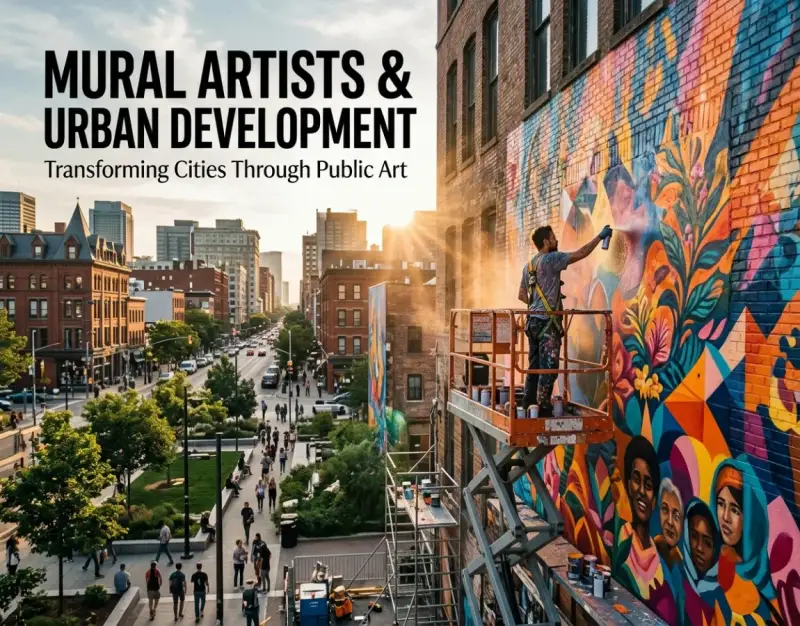
Walk through any rapidly evolving urban center today, and you will witness a profound metamorphosis. Gray, monolithic concrete facades and neglected brick alleyways are giving way to sweeping, vibrant narratives told in vibrant acrylics, weather-resistant enamels, and dynamic aerosol strokes. This is not merely cosmetic decoration; it is the physical manifestation of a modern urban renaissance. As cities grapple with the pressures of gentrification, economic shifts, and social fragmentation, municipal planners and community organizers are increasingly turning to a powerful catalyst for civic renewal: the professional muralist.
The intersection of public art and city planning has evolved from a sporadic, decentralized beautification effort into a sophisticated discipline. Today, a mural artist in urban development is not just a decorator of walls, but a frontline social architect, community historian, and economic engine. By converting underutilized public spaces into open-air galleries, these artists spark crucial dialogues, heal historical fractures, and rebrand neglected neighborhoods without displacing the communities that built them. This dynamic synergy challenges the traditional, top-down approaches of municipal development by placing creative agency directly into the hands of the citizens.
For Caring Connections, investigating this artistic evolution is essential to understanding how healthy, resilient communities take root. Just as grassroots infrastructure projects—such as How to Build a Neighborhood Tool-Sharing Library: A Step-by-Step Community Guide—foster social capital and local self-reliance, large-scale public art projects anchor civic identity and cultivate a profound sense of place. This comprehensive guide explores the mechanics, strategies, case studies, and systemic impact of integrating mural artists into the core of urban development initiatives, offering an exhaustive roadmap for artists, planners, and community advocates alike.
Foundational Principles and Mechanics of Public Art in Urban Planning
To understand how mural art successfully shapes urban centers, one must first deconstruct the core principles of placemaking. Placemaking capitalizes on a local community's assets, inspiration, and potential, resulting in public spaces that promote people's health, happiness, and well-being. When a mural artist enters the urban development ecosystem, they operate at the intersection of architecture, sociology, and visual communication. Unlike gallery art, which exists within a neutral, controlled environment, public murals must actively negotiate with their surroundings, including sunlight exposure, foot traffic patterns, historical context, and architectural quirks.
The mechanics of urban muralism require a deep understanding of structural integrity and chemical science. Artists and urban planners must evaluate substrate conditions—whether aging brick, corrugated metal, or porous stucco—and select appropriate primers and UV-resistant, elastomeric coatings that can withstand extreme weather fluctuations. Furthermore, the mechanics extend into the socio-political realm. Effective public art requires navigating zoning laws, historic preservation guidelines, property ownership agreements, and community consensus-building. Without mastering these logistical layers, even the most aesthetically stunning mural can face removal, controversy, or premature physical decay.
At its core, the philosophy behind mural-driven urban development rests on the premise that cities are living narratives. When residents see their stories, ancestral histories, and contemporary struggles reflected on a three-story wall, psychological ownership of the neighborhood increases. This sense of ownership directly correlates with lower rates of vandalism, increased local foot traffic, and heightened civic participation. By transforming hostile or ignored urban gaps into visual landmarks, mural artists alter the psychological geography of a city, making vast, alienating metropolitan landscapes feel intimate, human-scale, and deeply interconnected.
Strategic Blueprint: Integrating Mural Artists into Urban Renewal
1. Community Outreach and Participatory Design Frameworks
The foundation of any successful mural project in urban development begins long before the first brush touches the wall. Participatory design ensures that the final artwork genuinely reflects the demographic fabric of the neighborhood. Planners and lead artists must conduct town hall meetings, interactive workshops, and digital surveys to harvest local motifs, color preferences, and historical narratives. This initial phase prevents outside imposition and fosters immediate community buy-in.
During these sessions, the mural artist acts primarily as a facilitator rather than a solitary genius. By utilizing collaborative sketching exercises and storytelling circles, the artist translates raw community sentiment into a cohesive visual language. This meticulous groundwork ensures that vulnerable populations—who are often excluded from traditional urban planning decisions—have a direct voice in shaping their physical environment. The resulting design becomes a collective mirror rather than a dictatorial statement from municipal authorities.
To execute this phase seamlessly, project coordinators must establish clear accountability metrics. Documenting attendance at community forums, categorizing recurring thematic motifs, and publishing transparent design iterations build enduring trust. When residents witness their direct contributions appearing in the preliminary sketches, skepticism evaporates, replaced by an infectious sense of anticipation and shared stewardship for the upcoming installation.
2. Site Selection, Zoning Compliance, and Structural Analysis
Strategic site selection dictates the visibility, impact, and longevity of an urban mural. Planners must analyze pedestrian and vehicular traffic flows to identify focal points where art can naturally interrupt the monotony of daily commutes. High-impact locations often include commercial corridors, transit hubs, and transitional zones between industrial parks and residential neighborhoods. Evaluating these vectors ensures maximum public exposure and cultural return on investment.
Simultaneously, rigorous technical vetting of the physical surface is mandatory. The mural artist and structural engineers must inspect the wall for moisture infiltration, efflorescence, structural cracks, and historical landmark status. If a wall is unsealed or crumbling, painting over it without remediation guarantees catastrophic peeling within seasons. Navigating municipal zoning codes and securing permits from city planning commissions requires patience and precision, ensuring the installation complies with local signage ordinances and aesthetic regulations.
Drafting ironclad legal agreements between property owners, the city, and the commissioning arts organization is the final administrative hurdle. These contracts must outline wall usage rights for a guaranteed lifespan—typically five to ten years minimum—as well as maintenance protocols, liability insurance, and provisions for accidental damage or future building renovations. Proactive legal scaffolding protects both the artist's intellectual property and the public's investment.
3. Material Science, Surface Preparation, and Execution Techniques
Once permits are secured and the wall is cleared, the physical transformation begins with meticulous surface preparation. The mural artist must pressure-wash the substrate to remove atmospheric grime, pollutants, and loose particles. Depending on the substrate porosity, masonry sealers and specialized primers must be applied to create a chemically stable, non-porous foundation that prevents alkali migration from destroying the topcoats.
The choice of medium depends on the local climate and the artist's stylistic approach. High-grade, 100% acrylic exterior house paints, heavy-body artist acrylics, and aerosol paints specifically rated for UV stability are standard industry tools. Master muralists often employ a hybrid technique, utilizing masonry primers and rollers for large field blocking, fine-spray aerosols for smooth gradient transitions, and traditional brushes for intricate, high-detail focal points.
Weather management is an operational variable that can make or break an installation. Extreme heat causes paint to skin over prematurely, while freezing temperatures prevent proper polymer coalescence. Artists must schedule their production windows around optimal seasonal parameters and apply professional, UV-blocking clear topcoats upon completion. These protective sealants shield the pigments from fading under intense solar radiation and provide a washable shield against airborne pollutants and graffiti.
4. Economic Impact Modeling and Neighborhood Revitalization
Public art is increasingly recognized by economists and urban developers as a powerful driver of equitable economic growth. When drab commercial strips are transformed by world-class murals, pedestrian foot traffic increases exponentially. Shoppers linger longer in revitalized districts, directly boosting sales for local mom-and-pop storefronts, cafes, and independent vendors. This organic foot traffic forms a vital economic buffer against corporate homogenization.
Furthermore, mural installations serve as the centerpiece for cultural tourism and placemaking marketing campaigns. Cities leverage these visual landmarks to attract visitors, creative class professionals, and sustainable investments. Importantly, progressive urban developers utilize public art as a soft indicator of neighborhood vitality, proving that community-led investment can precede speculative real estate development. For instance, initiatives that mirror the grassroots organizing seen in Starting a Community Compost Program: The Ultimate Neighborhood Guide [2026] demonstrate how hyper-local interventions elevate neighborhood pride and attract sustained philanthropic support.
Measuring this economic lift requires robust data collection, including baseline retail sales tax analysis, foot traffic sensor tracking, and intercept surveys administered to visitors and business owners. By quantifying the economic return of public art, urban advocates can successfully lobby municipal governments for dedicated permanent arts funding, shifting muralism from an expendable line item to an essential pillar of urban infrastructure.
5. Long-Term Maintenance, Conservation, and Community Stewardship
The completion of a mural is not the end of the process; it is merely the beginning of its life cycle. Public art is inherently vulnerable to environmental degradation, vandalism, and structural shifts in the host building. Establishing a long-term conservation plan is vital to protect the public's emotional and financial investment. City agencies and community groups must set aside maintenance endowments to fund touch-ups, cleaning, and protective recoating every three to five years.
Community stewardship plays an equally critical role in conservation. When local youth and neighborhood associations are actively involved in the painting process, they become the de facto guardians of the artwork. Graffiti vandals are far less likely to deface a mural that was painted by their peers or neighbors. Educational programming, such as youth mentorship apprenticeships during the painting phase, instills deep respect for public property and fosters the next generation of urban artists.
When unexpected damage or tag vandalism does occur, rapid response protocols must be in place. Utilizing sacrificial anti-graffiti clear coats allows maintenance crews to wash away unauthorized spray paint with specialized solvents without damaging the underlying mural artwork. Maintaining a pristine, vibrant appearance signals to the community that the space is deeply valued, actively monitored, and fiercely protected.
Real-World Case Studies & Scenarios: Success Versus Failure
To truly grasp the dynamics of mural artist urban development, we must examine real-world implementations where public art either catalyzed thriving community renewal or exacerbated urban decay. Analyzing these contrasting outcomes provides invaluable lessons for urban planners and artists navigating complex municipal landscapes.
Case Study A: The Industrial Corridor Revival (Philadelphia, PA)
In a historically underfunded manufacturing district suffering from severe economic disinvestment, a coalition of city planners, community organizers, and master mural artists launched a multi-block public art initiative. Instead of imposing abstract designs, the team embedded the lead artists within local community centers for three months of ethnographic research. The resulting murals depicted the neighborhood's immigrant labor history, industrial heritage, and contemporary cultural diversity.
The Execution & Data Points: Over an 18-month period, twelve massive building facades were transformed. The city tracked a 34% increase in pedestrian foot traffic along the commercial corridor within the first year. Local small businesses reported a 22% rise in weekend sales, and the initiative directly employed 45 local youth as paid artistic apprentices. Crucially, the project utilized anti-gentrification covenants and community land trusts to ensure property taxes remained stable, preventing the displacement of longtime residents.
Lessons Learned: Deep, authentic community engagement paired with economic safeguards transforms public art into an engine of inclusive growth. By giving residents ownership over the narrative, the project successfully bridged cultural divides and revitalized the local economy without triggering predatory real estate speculation.
Case Study B: The Top-Down Gentrification Trap (Midtown Metropolis - Hypothetical Composite)
Conversely, a major municipal government partnered with an out-of-state real estate developer to commission a series of high-end, abstract murals across a rapidly transitioning working-class neighborhood. The project bypassed local community boards entirely, hiring internationally renowned street artists with no connection to the local demographic. The stated goal was to accelerate neighborhood "revitalization" and attract luxury retail tenants.
The Execution & Data Points: While the murals were visually striking and generated considerable social media engagement, the reaction on the ground was hostile. Residents viewed the artwork as a blatant symbol of impending displacement and cultural erasure. Within eighteen months, average rents in the immediate vicinity spiked by 41%, forcing dozens of legacy small businesses and longtime families out of the neighborhood. The local community organized protests, and three of the primary murals were defaced with critical slogans.
Lessons Learned: Public art weaponized without community consent accelerates green gentrification. When murals are deployed solely as marketing collateral for real estate speculators rather than authentic expressions of local identity, they alienate residents, trigger social backlash, and fail to achieve sustainable urban health.
Critical Mistakes in Mural Urban Development and How to Avoid Them
Navigating the complex ecosystem of public art and urban planning is fraught with potential pitfalls. Recognizing these frequent missteps allows practitioners to safeguard their projects and maximize community impact.
- Mistake 1: Ignoring Substrate Chemistry and Weatherproofing. Painting directly over unprimed, porous masonry without sealing moisture entry points leads to rapid bubbling, peeling, and structural decay. Countermeasure: Always conduct rigorous moisture testing, pressure-wash surfaces, and apply commercial-grade masonry sealers and UV-resistant topcoats.
- Mistake 2: Bypassing Community Co-Creation. Imposing outside artistic visions onto a neighborhood without local input breeds resentment and triggers accusations of cultural imperialism or gentrification. Countermeasure: Institutionalize participatory design workshops, town halls, and local advisory committees from day one.
- Mistake 3: Failing to Secure Long-Term Legal Agreements. Investing thousands of dollars into a mural without guaranteed wall usage rights often results in the artwork being abruptly painted over or demolished during building renovations. Countermeasure: Draft comprehensive, legally binding contracts ensuring a minimum five-to-ten-year lifespan with building owners and municipal authorities.
- Mistake 4: Neglecting Maintenance and Conservation Budgets. Treating murals as permanent, set-it-and-forget-it installations leads to severe fading, environmental staining, and unaddressed vandalism over time. Countermeasure: Allocate 10-15% of total project budgets toward a dedicated maintenance endowment for periodic washing and touch-ups.
- Mistake 5: Overlooking the Safety and Ergonomics of Installation. Rushing large-scale wall execution without proper scaffolding, harnesses, or safety certifications endangers artists and violates OSHA regulations. Countermeasure: Partner with certified rigging professionals, secure proper liability insurance, and strictly adhere to industrial safety standards.
Comparative Analysis: Approaches to Urban Public Art
Different methodologies of public art yield vastly different outcomes for cities and their residents. The comparative table below outlines the structural differences between traditional top-down municipal decoration and modern, community-centered muralism in urban development.
| Metric / Feature | Top-Down Municipal Beautification | Community-Centered Muralism |
|---|---|---|
| Decision-Making | Bureaucratic panels and outside developers | Participatory workshops and local residents |
| Thematic Focus | Generic aesthetics or corporate branding | Hyper-local history, culture, and social justice |
| Community Buy-In | Low; often viewed as imposed decoration | High; deep psychological and civic ownership |
| Economic Impact | Often triggers speculative gentrification and displacement | Stimulates inclusive retail growth and local tourism |
| Longevity & Care | Rarely maintained after initial unveiling | Backed by stewardship programs and maintenance funds |
Frequently Asked Questions (FAQ)
How do mural artists typically secure funding for large-scale urban development projects?
Funding for urban murals is typically assembled through a hybrid model involving municipal percent-for-art programs, state arts council grants, private corporate sponsorships, crowdfunding, and community foundation endowments. In many progressive cities, urban development policies require private developers to dedicate a specific percentage of their construction budgets to on-site public art, ensuring a steady stream of financial support for professional muralists.
What legal permissions are required before painting a mural on a public or private building?
Artists and project coordinators must navigate a multi-layered legal approval process. This includes securing a signed building owner consent agreement, obtaining structural permits from the municipal department of building and safety, ensuring compliance with local zoning and historic preservation ordinances, and drafting copyright agreements that protect the artist's intellectual property rights under the Visual Artists Rights Act (VARA).
How do modern muralists protect outdoor art from weathering and graffiti?
Conservation relies on high-grade chemical formulations. Artists use 100% acrylic exterior paints and UV-resistant aerosol pigments that resist solar fading. Upon completion, technicians apply a professional, clear polyurethane or fluoropolymer topcoat. This creates an impermeable barrier against acid rain, airborne pollutants, and allows easy removal of unauthorized graffiti using specialized safe solvents without harming the artwork underneath.
Can public mural projects inadvertently accelerate gentrification?
Yes, when public art is deployed as a speculative tool by real estate developers without community protections, it can signal impending neighborhood transformation, driving up property values and displacing legacy residents and businesses. To prevent this, successful urban development frameworks pair mural projects with anti-displacement policies, community land trusts, and affordable housing initiatives.
How does community participation change the design of an urban mural?
Community participation shifts the mural from a solitary artistic statement to a collective visual archive. Through workshops, surveys, and storytelling sessions, residents contribute specific cultural symbols, historical touchstones, and personal narratives that the artist weaves into the composition. This guarantees that the final artwork authentically represents the lived reality of the neighborhood rather than external stereotypes.
Strategic Roadmap and Future Outlook
As we look toward the next decade of urban evolution, the role of the mural artist in urban development will only expand in scope and sophistication. The convergence of art, technology, and city planning is opening unprecedented frontiers. We are already witnessing the rise of augmented reality (AR) integrated murals, where static painted walls come alive with animated historical narratives and interactive data visualizations when scanned with a smartphone. This technological layer allows murals to serve as dynamic educational platforms and digital community bulletin boards.
Furthermore, climate-conscious urban design is integrating eco-active public art. Cutting-edge muralists are beginning to utilize titanium dioxide-infused photocatalytic paints that actively scrub nitrogen oxides and harmful pollutants from the urban atmosphere when exposed to sunlight. By combining aesthetic placemaking with tangible environmental remediation, mural artists are positioning themselves as indispensable partners in building sustainable, resilient cities.
For municipal leaders, urban planners, and community advocates, the mandate is clear: public art is no longer a superficial luxury to be added after a city is built; it is the vital cultural mortar that holds healthy communities together. By centering community voices, ensuring rigorous technical standards, and investing in long-term stewardship, cities can harness the transformative power of mural art to build vibrant, equitable, and deeply human urban landscapes for generations to come.
Be the first to share a gentle reflection on this story.