
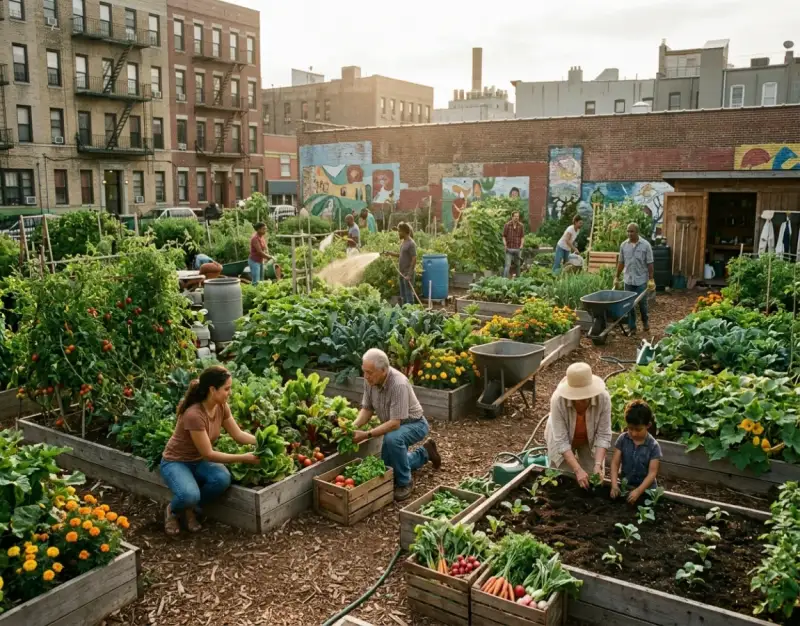
Across hundreds of metropolitan centers worldwide, a silent crisis unfolds within plain sight of glistening skyscrapers. Entire neighborhoods—often populated by low-income families, elderly residents, and marginalized populations—exist in systemic food isolation. Walking down these city avenues, one finds an abundance of fast-food outlets, convenience marts selling processed items, and liquor stores, but a complete absence of fresh, affordable, and nutrient-dense produce. These geographic areas, officially classified as food deserts, represent a profound public health breakdown, contributing directly to soaring rates of cardiovascular disease, type 2 diabetes, and chronic nutritional deficiencies.
However, beneath the asphalt and amidst vacant industrial lots, a quiet revolution is taking root. Urban community gardens and decentralized agricultural initiatives are transforming neglected spaces into vibrant sanctuaries of biological abundance. Driven by grassroots activists, neighborhood elders, ecological engineers, and community organizers, urban farming has evolved from a nostalgic hobby into a critical piece of municipal infrastructure. As global supply chains face unprecedented pressure from climate volatility, economic inflation, and geopolitical instability, hyper-local food production is emerging as a primary catalyst for urban resilience and economic self-determination.
This comprehensive guide examines the mechanical, sociological, and financial blueprints required to turn urban land into sustainable agricultural hubs. By addressing the root causes of food insecurity, executing targeted soil remediation, and establishing equitable community governance, urban community gardens offer a proven pathway toward erasing food deserts and establishing true food sovereignty for future generations.
Foundational Principles: Deconstructing Food Isolation and Urban Agriculture
To implement effective solutions, community organizers and urban planners must first establish a precise understanding of the structural dynamics underlying modern food systems. Food insecurity within urban centers is rarely an accidental phenomenon; rather, it is the direct outcome of historical disinvestment, exclusionary zoning, and commercial market failures.
Defining Food Deserts, Swamps, and Apartheid
The term food desert was originally coined by the United States Department of Agriculture (USDA) to designate low-income census tracts where a substantial number of residents reside more than one mile from a supermarket in urban areas (or ten miles in rural regions). While useful for mapping, critics note that this term implies a natural geographic phenomenon. To capture the socio-economic realities more accurately, scholars and community leaders utilize two additional terms:
- Food Swamps: Neighborhoods flooded with high-calorie, low-nutrient food options (fast food, corner markets) that outnumber healthy options, actively displacing nutritious eating habits.
- Food Apartheid: A structural framework acknowledging that systemic racial, economic, and policy decisions—such as historical redlining and predatory commercial zoning—created nutrient scarcities along distinct socio-economic lines.
The Concept of Food Sovereignty
While food security focuses primarily on ensuring individuals have access to sufficient food, food sovereignty asserts the right of communities to control their own food and agricultural systems. This includes deciding how food is produced, harvested, targeted, and distributed. Urban community gardens represent the practical manifestation of food sovereignty. By transferring ownership of the supply chain directly to local residents, communities break their reliance on external supply chains that historically neglected their nutritional needs.
Biophysical and Sociological Mechanics of Urban Plots
At an operational level, urban farming operates at the intersection of biological science and community organizing. Urban plots counteract the "urban heat island" effect by replacing reflective pavement with photosynthetic canopy, improve localized microclimates, and manage municipal stormwater runoff. Sociologically, these spaces serve as essential "third places"—spaces outside the home and workplace—where neighborhood residents forge cross-generational bonds, transfer traditional ecological knowledge, and practice collective self-governance. Rebuilding these social bonds requires intentional dialogue; learning The Art of Active Listening: How Deep Empathy Heals Loneliness and Rebuilds Trust is just as vital to garden governance as understanding soil chemistry.
Step-by-Step Strategic Blueprint for High-Impact Urban Gardens
1. Site Selection, Land Tenure, and Municipal Zoning
Securing Legal Access and Long-Term Tenure
The most common vulnerability facing urban agricultural projects is real estate insecurity. Gardens established on informal or temporary agreements are frequently displaced when land values rise or real estate developers step in. Organizers must prioritize securing long-term land access through one of three legal vehicles:
- Municipal Land Use Agreements: Long-term leases (5-10+ years) arranged directly with city governments for vacant municipal parcels.
- Community Land Trusts (CLTs): Non-profit entities that acquire and hold land permanently in trust for community benefit, effectively removing the plot from the speculative real estate market.
- Private Conservation & Agricultural Easements: Legal covenants registered on deed titles restricting land usage strictly to agricultural and ecological purposes.
Navigating Urban Zoning and Permitting Frameworks
Before introducing tools to a site, urban farmers must audit local zoning codes. Many municipalities traditionally categorized agriculture under industrial or commercial designations, creating regulatory barriers for residential plots. Successful initiatives work with local planning boards to secure conditional use permits or rezone parcels under dedicated urban agriculture overlays. Ensure that permits cover essential infrastructure: municipal water access, tool shed structures, high-tunnel green houses, and on-site composting bins.
2. Soil Assessment, Lead Mitigation, and Environmental Remediation
Executing Comprehensive Soil Testing
Urban soil frequently carries legacy industrial contamination, including heavy metals like lead (Pb), cadmium (Cd), arsenic (As), and polycyclic aromatic hydrocarbons (PAHs). Planting directly into un-tested urban dirt presents direct health risks to gardeners and consumers. Complete the following mandatory testing protocol before planting:
- Collect core soil samples across a grid pattern at depths of 0–6 inches and 6–12 inches.
- Send composite samples to an accredited environmental laboratory for Heavy Metal Inductively Coupled Plasma (ICP) analysis.
- Analyze soil pH, organic matter percentage, cation exchange capacity (CEC), and primary N-P-K nutrient levels.
Engineered Raised Beds and Phytoremediation Protocols
If soil lead levels exceed 100 parts per million (ppm), direct in-ground planting of root crops and leafy greens should be avoided. The standard industry countermeasure is the deployment of **capped raised bed systems**.
Construct raised beds using non-toxic, untreated timber, corrugated galvanized steel, or masonry block. Line the bottom of the bed with a geotextile permeable weed barrier, establishing a physical barrier against underlying contaminated subsoil. Fill beds with clean, laboratory-certified soil mixes comprising 50% high-grade organic compost, 30% topsoil, and 20% coarse perlite or vermiculite for aeration. For peripheral non-edible zones, utilize phytoremediation—planting hyper-accumulating flora like sunflowers (Helianthus annuus) or mustard greens to extract metal contaminants over consecutive micro-seasons.
3. High-Density Spatial Infrastructure and Water Systems
Optimizing Yield via Vertical and Micro-Space Design
Urban gardens operate within constrained square footage. Maximizing nutritional output per square foot requires micro-farming designs optimized for spatial yield efficiency:
Deploy vertical trellising networks for vining crops (tomatoes, cucumbers, pole beans, squash), utilizing space up to 8 feet high. Implement intensive intercropping methods such as the "Three Sisters" framework or Square Foot Gardening protocols to keep soil covered and maximize harvest windows. In indoor or covered facilities, integrate vertical hydroponic A-frames or aeroponic towers, which yield up to 10 times more produce per square foot than traditional horizontal beds while consuming 90% less water.
Establishing High-Efficiency Water Delivery Networks
Consistent, cost-effective water delivery is essential for urban farm survival. Relying solely on municipal fire hydrants or basic garden hoses is unsustainable long-term. Build a dual-source irrigation system:
- Rainwater Harvesting Aggregation: Install food-grade cisterns connected to adjacent roof structures, equipped with first-flush diverters and sediment filters.
- Sub-Surface Drip Irrigation: Install pressure-compensating drip lines beneath organic mulch beds. Drip irrigation reduces water loss from evaporation by over 60% compared to overhead sprinklers, delivering targeted hydration directly to plant root zones.
4. Democratic Community Governance and Inclusive Design
Constructing Transparent Operational Hierarchies
Technical success means little if the local community feels alienated from the project. Gardens designed by outside entities without local leadership frequently fail within 24 months. Establish a democratic steering committee composed of neighborhood residents, allocating at least 51% of leadership votes to individuals residing within a half-mile radius of the site.
Formalize operational responsibilities through written bylaws covering plot allocations, shared chore commitments, conflict resolution workflows, and tool maintenance. Community security and stability go hand-in-hand with housing security; long-term agricultural initiatives thrive best when families enjoy residential stability, such as the transformative peace experienced in stories like the Surprise Mortgage Payoff: The Life-Changing Moment a Struggling Family Received a Debt-Free Home.
Cultivating Culturally Relevant Crops and Multi-Generational Workspaces
To establish deep community root systems, crop planning must reflect the cultural identity and culinary preferences of the immediate neighborhood. Survey local residents prior to spring planting to determine desired crops (e.g., specific pepper varieties, collard greens, bok choy, callaloo, or specialized herbs).
Design physical pathways and work stations for universal accessibility (ADA compliance). Build elevated standing beds (36 inches high) for senior gardeners or individuals with mobility restrictions, and incorporate child-friendly sensory plots to encourage early childhood environmental education.
5. Sustainable Financial Models and Economic Micro-Enterprises
Diversifying Revenue Streams
Relying exclusively on philanthropic foundation grants creates long-term operational vulnerability. A resilient urban garden employs a hybrid financial framework combining non-profit mission funding with revenue-generating micro-enterprises:
- Tiered Community Supported Agriculture (CSA): Offer sliding-scale subscription boxes where higher-income households subsidize fresh produce access for lower-income neighbors.
- Value-Added Product Processing: Convert surplus seasonal harvests into high-margin artisanal goods (e.g., hot sauces, herbal teas, jams, honey, and natural soaps).
- Commercial Restaurant Partnerships: Supply high-value microgreens, specialty edible flowers, and rare heritage herbs to high-end downtown culinary establishments to generate stable operating cash flow.
Integrating Therapeutic and Vocational Programs
Broaden community impact by partnering with social service organizations, local schools, and rehabilitation institutions. Transform urban farm sites into practical outdoor classrooms and vocational rehabilitation sites. Similar to successful rehabilitation programs like Paws Behind Bars: Prison Dog Training Programs That Transform Inmates and Shelter Animals, agricultural vocational programs offer structured, skill-building opportunities that empower participants through hands-on restoration work and environmental stewardship.
6. Ecological Soil Building and Closed-Loop Composting Systems
Setting Up Municipal-Scale On-Site Organic Composting
Diverting urban food waste from landfills into community compost systems solves two challenges simultaneously: municipal waste mitigation and localized soil enhancement. Construct a heavy-duty, three-bin wooden or cinder-block compost system to manage carbon-to-nitrogen ratios effectively:
Maintain a strict ratio of 30 parts Carbon ("Browns": dry leaves, wood chips, straw) to 1 part Nitrogen ("Greens": food scraps, coffee grounds, green garden waste). Monitor internal core temperatures weekly using long-stem dial thermometers, ensuring thermophilic activity reaches 135°F–160°F for a minimum of 15 consecutive days. This heat profile neutralizes weed seeds and human pathogens, turning organic municipal waste into rich biological humus.
Deploying Integrated Pest Management (IPM)
Eliminate chemical synthetic pesticides, which destroy localized pollinator populations and introduce toxic residues into urban ecosystems. Implement a natural Integrated Pest Management program:
- Biological Controls: Introduce native beneficial predatory insects, such as ladybugs (Coccinellidae), green lacewings, and predatory mites, to control aphid and thrip populations.
- Insectary Border Strips: Plant sweet alyssum, marigolds, fennel, and dill around crop perimeters to attract native parasitoid wasps and pollinators.
- Physical Exclusion: Utilize lightweight floating row covers over brassicas to prevent diamondback moth infestation.
Real-World Case Scenarios: Failure vs. Flourishing Execution
Analyzing real-world applications highlights the operational differences between projects that fail quickly and those that achieve self-sustaining stability.
Scenario A: The Failed Top-Down Model (The "Parachuted" Garden)
An outside philanthropic organization secured a $150,000 grant to build an urban farm in an underserved neighborhood. The organization imported pre-fabricated garden structures, planted exotic organic crops without consulting local residents, and retained all administrative management off-site. No soil testing was performed on peripheral ground areas, and water access relied entirely on a paid municipal meter hookup.
The Outcome: Within 14 months, the grant funding was exhausted. Local residents, feeling excluded from the project's design and decision-making, rarely visited the site. When municipal water bills went unpaid, the city shut off supply lines, causing crops to wither. The site was abandoned and eventually paved over by municipal developers.
Scenario B: The Flourishing Grassroots Collective (The Resilient Farm)
A coalition of local residents, public health advocates, and neighborhood youth formed an agricultural trust to transform two vacant city lots into a community garden. They negotiated a 10-year municipal land trust lease, conducted thorough soil core testing, and constructed capped raised beds filled with local composted bio-soil.
The Outcome: The project established a democratic steering committee with 70% local resident representation. They launched a sliding-scale CSA program, selling produce to local restaurants while offering low-cost farm boxes to neighborhood families. Over three years, the garden produced over 8,000 pounds of fresh produce annually, reduced neighborhood organic waste by 12 tons through composting, and established a sustainable operating budget supported by artisanal product sales and local institutional micro-grants.
Top 5 Costly Mistakes in Urban Agriculture & How to Avoid Them
| # | Critical Mistake | Primary Root Cause | Systemic Impact | Actionable Countermeasure |
|---|---|---|---|---|
| 1 | Un-tested Soil Usage | Rushing setup without environmental audits | Heavy metal uptake in crops; public health hazards | Execute mandatory laboratory ICP heavy-metal testing; build capped raised beds with clean imported bio-solids. |
| 2 | Top-Down Governance | Excluding neighborhood residents from planning | Lack of local community investment; eventual site abandonment | Establish democratic bylaws reserving majority vote for hyper-local residents; co-design crop layouts. |
| 3 | Unstable Water Planning | Relying exclusively on temporary or costly water connections | Crop loss during summer heat waves; unsustainable operational costs | Install dual water infrastructure combining rainwater cistern systems with sub-surface drip irrigation networks. |
| 4 | Single-Source Financing | Over-reliance on short-term foundation grants | Financial insolvency when grant cycles end | Build a hybrid business model incorporating sliding-scale CSAs, restaurant sales, and value-added goods. |
| 5 | Poor Tenure Security | Operating on informal or short-term land agreements | Displacement by commercial real estate development | Secure 5–10+ year municipal land leases or transfer property deeds into a Community Land Trust (CLT). |
Comprehensive Technical Framework Comparison
Selecting the right urban farming methodology depends on site topography, available funding, technical expertise, and production goals. The table below compares the primary urban agricultural systems currently deployed across global cities.
| Farming System Framework | Relative Yield Potential | Upfront Capital Investment | Labor & Tech Requirements | Water Efficiency Index | Soil Contamination Risk | Ideal Urban Context |
|---|---|---|---|---|---|---|
| Capped Raised Beds | Moderate to High | Low to Moderate ($500 - $3,000) | Low / Accessible to volunteers | Moderate (70% efficiency with drip lines) | Zero (isolated from native subsoil) | Vacant lots, residential plots, schoolyards with legacy soil pollution. |
| In-Ground Sub-Soil Beds | High | Very Low ($200 - $1,000) | Moderate / Traditional farming knowledge | Low to Moderate (Requires deep mulching) | High (Requires extensive prior soil testing) | Suburban edge-plots, verified non-industrial greenfields, parks. |
| Vertical Hydroponics / Aeroponics | Extremely High (8-10x) | High to Very High ($10,000 - $50,000+) | High / Specialized technical monitoring | Maximum (90-95% recirculated efficiency) | Zero (Soilless growing mediums) | Indoor warehouses, rooftops, shipping containers, tight urban footprints. |
| Rooftop Open-Air Gardens | Moderate | High (Requires structural engineering load audits) | Moderate to High | Moderate (High wind evaporation rates) | Zero (Engineered lightweight medium) | Commercial roof decks, municipal buildings, multi-family apartment complexes. |
Frequently Asked Questions (FAQ)
How much does it cost to start a community urban garden from scratch?
Initial capital requirements range widely based on scale, system design, and land condition. A basic 1/4-acre community garden featuring 15–20 wooden raised beds, basic drip irrigation, compost bins, simple hand tools, and soil testing generally costs between $3,000 and $8,000.
Conversely, high-tech indoor vertical hydroponic farms or extensive rooftop build-outs can require initial capital expenditures ranging from $25,000 to over $100,000 for structural engineering assessments, specialized lighting systems, and automated nutrient pumps. Community groups typically cover startup costs through municipal grant funds, corporate sponsorships, community crowdfunding campaigns, and micro-donations.
Are crops grown in urban environments safe to eat regarding air pollution?
Yes, provided proper preparation and management protocols are followed. While airborne particulate matter from vehicular traffic and industrial emissions can settle on plant surfaces, research demonstrates that heavy metals rarely translocate into the edible tissue of fruit-bearing plants (such as tomatoes, peppers, and squash) from the air.
To ensure food safety, erect living hedgerows or tall physical fencing along high-traffic roadways to intercept airborne dust. Additionally, thoroughly wash all harvested produce in a mild vinegar-water solution to remove surface particulates prior to consumption or distribution.
How do urban gardens access water during severe drought conditions?
Resilient urban gardens implement multi-layered water preservation strategies. Primary reliance should always center on high-capacity rainwater collection systems attached to large roof structures, storing thousands of gallons during rainy periods for summer application.
Furthermore, applying a 3- to 4-inch layer of organic mulch (straw, wood chips, or shredded leaves) over soil beds dramatically reduces evaporative loss, keeping soil moist longer during dry spells. Combining heavy mulching with subsurface drip irrigation lines ensures minimal water loss even under strict municipal water restrictions.
What can community gardens do to prevent crop theft and vandalism?
Preventing site destruction relies primarily on social engagement rather than security infrastructure like chain-link fences and security cameras. Gardens that prioritize open, welcoming design elements, host regular community events, and involve local youth naturally build strong neighborhood pride and self-policing support.
Practical design strategies also help mitigate potential losses. Plant designated "welcome beds" filled with free-for-harvest produce near exterior borders, along with clear signage inviting visitors to enjoy fresh samples. Reserve interior beds for member-allocated harvests. Maintaining clean, well-lit site perimeters also discourages vandalism.
Can urban farming truly solve large-scale metropolitan food insecurity?
Urban farming is not a complete replacement for broad-acre regional agriculture, but it serves as an essential strategic buffer within localized food supply chains. While growing resource-intensive field crops like wheat, corn, and rice inside urban boundaries is impractical, urban gardens excel at producing high-value, nutrient-dense fresh produce—such as leafy greens, brassicas, berries, tomatoes, and culinary herbs.
Integrating high-density urban agriculture into city networks directly addresses the fresh produce deficits that define food deserts, offering reliable access to vital micronutrients right where people live.
Strategic Roadmap & Final Takeaways
The urban agricultural landscape is shifting from fragmented grassroots initiatives into a core pillar of modern municipal planning. Over the next two to five years, several key developments will reshape urban food systems:
- Integration of Smart Micro-AgTech: Low-cost Internet-of-Things (IoT) soil sensors, solar-powered automated drip controllers, and hyper-local weather monitoring will streamline resource management for community volunteer teams.
- Municipal Zoning Reforms: Forward-thinking metropolitan councils are moving to mandate urban agricultural integration within all new large-scale housing developments, guaranteeing permanent land access for city growers.
- Carbon Credit Recognition: As cities race to meet net-zero carbon mandates, community compost networks and urban tree canopies will increasingly participate in carbon offset markets, creating new financial returns for local farms.
Erasing food deserts requires more than just shipping fresh produce into marginalized neighborhoods; it requires building decentralized local production models that belong to the communities they serve. By turning neglected urban land into biological sanctuaries, community gardens restore access to fresh food, strengthen social ties, and empower neighborhoods to take charge of their own nutritional future.
Whether you are a municipal leader, a non-profit organizer, or a concerned neighbor, the path forward begins with a single plot of land. Test the soil, engage your community, establish fair governance, and start planting the seeds for a resilient, food-secure future today.
Be the first to share a gentle reflection on this story.