
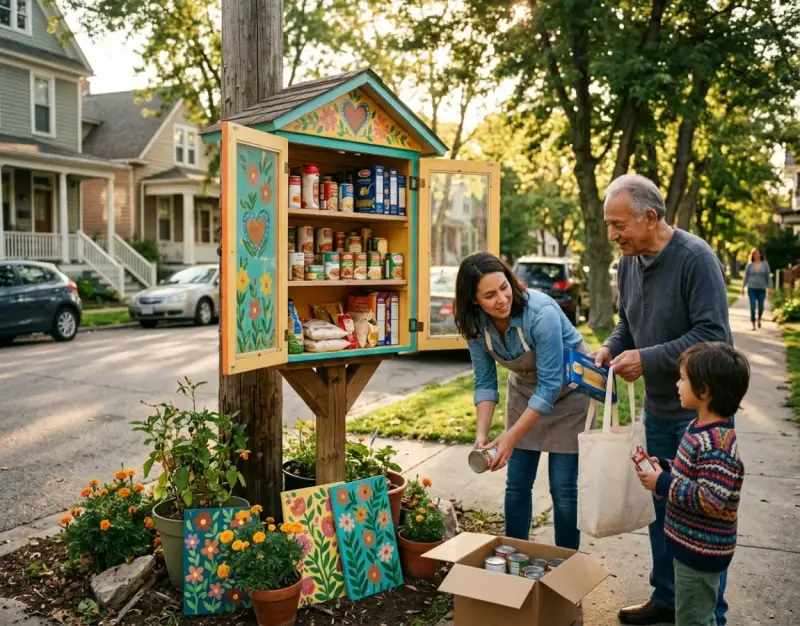
Across suburban cul-de-sacs, bustling urban sidewalks, and quiet rural crossroads, a quiet revolution is taking root in plain sight. It looks unassuming—often a wooden cabinet mounted on a post, painted in vibrant hues, or repurposed from an old bookshelf. Yet, these modest installations represent a powerful paradigm shift in how modern society confronts structural hardship. As economic uncertainties persist and traditional safety nets experience unprecedented strain, everyday citizens are taking matters into their own hands. This grassroots movement of decentralized food sharing is redefining the landscape of social welfare, proving that systemic transformation often begins with a single box, an open door, and a neighbor willing to share.
The urgency behind this movement cannot be overstated. Food insecurity remains an invisible crisis affecting millions of households, cutting across demographic lines to touch families who slip through the cracks of institutional assistance programs. Traditional food banks, while vital, are frequently hampered by rigid bureaucratic requirements, limited operating hours, and severe logistical bottlenecks. In contrast, little free pantries operate on an ethos of radical accessibility: 24/7 availability, no paperwork, no questions asked, and absolute anonymity. This frictionless model has transformed how communities think about hunger, shifting the narrative from charity to solidarity. By lowering the barrier between those who have surplus and those in immediate need, these installations restore dignity to the exchange of essential goods.
For those committed to uplifting communities, understanding the mechanics of grassroots mutual aid is essential for creating lasting impact. Beyond simply stocking shelves with canned goods, building and maintaining a neighborhood pantry is an exercise in civic engagement, trust-building, and localized resilience. Just as communities find innovative ways to address systemic hardships—such as the inspiring initiatives highlighted in our feature on Kindness in Action: Paying Off School Lunch Debt for an Entire Elementary School—establishing a micro-pantry requires intentional strategy, regulatory awareness, and deep community buy-in. This guide provides a comprehensive blueprint for launching, maintaining, and scaling a neighborhood food pantry that will stand the test of time and truly serve its intended population.
Understanding the Ecosystem of Grassroots Mutual Aid
The Philosophy Behind Decentralized Food Sharing
To fully appreciate the impact of little free pantries, one must examine the foundational philosophy of mutual aid. Unlike top-down charitable models that often reinforce power asymmetries between the donor and the recipient, mutual aid is rooted in reciprocity, cooperation, and shared responsibility. It operates on the premise that communities possess the collective intelligence and resources necessary to sustain themselves when institutional structures fail. When a neighbor places a box of pasta or a can of soup into a sidewalk pantry, they are not acting as a distant benefactor; they are participating in a localized web of care.
This horizontal approach fosters profound social cohesion within neighborhoods. People who might otherwise never interact cross paths at the pantry box, breaking down socioeconomic isolation. Furthermore, the anonymity of the exchange preserves the dignity of individuals experiencing acute food insecurity. There is no intake form, no proof of income required, and no judgment. This psychological safety valve is a critical component of food insecurity solutions, ensuring that pride or fear does not prevent an individual from accessing sustenance during a moment of vulnerability.
The Anatomy of Modern Food Insecurity
Food insecurity is rarely just about a lack of food; it is inextricably linked to housing instability, transportation deserts, unpredictable wage labor, and inflation. Traditional food pantries often require personal vehicles to transport bulky boxes, daytime availability during standard working hours, and fixed addresses for registration. For hourly workers, single parents balancing multiple jobs, and unhoused individuals, these hurdles can make institutional aid effectively inaccessible.
Neighborhood pantries bridge these gaps precisely because they are hyper-local and frictionless. Placed along walking routes, near public transit stops, or outside residential properties, they meet people where they already are. By acknowledging the complex, multi-faceted nature of modern hardship, grassroots mutual aid provides a nimble, responsive layer of support that complements larger food distribution systems without duplicating their bureaucratic inefficiencies.
The Ripple Effect on Neighborhood Resilience
When a community actively participates in maintaining a local pantry, something remarkable happens to its social fabric. Crime rates often drop as foot traffic and informal neighborhood surveillance increase. Neighbors develop lines of communication that extend far beyond food distribution, organizing block parties, emergency response networks, and mutual support groups for other domestic needs.
This localized resilience mirrors the transformative community-building strategies seen in global grassroots efforts. Much like the profound civic empowerment documented in Global Goodness: How One Village in Kenya Turned Plastic Waste Into School Uniforms, establishing a physical infrastructure for mutual aid forces a neighborhood to confront its collective challenges head-on. The pantry becomes a physical manifestation of shared values, signaling to every passerby that this neighborhood cares for its most vulnerable members.
Site Selection and Legal Frameworks
Evaluating Foot Traffic and Accessibility
Choosing the right location for a neighborhood pantry can mean the difference between a thriving community hub and an abandoned wooden box. The ideal site balances high visibility with pedestrian accessibility. Locations near bus stops, community centers, public libraries, places of worship, or residential property lines facing active sidewalks are prime candidates. The goal is to make access discreet for those who need privacy, yet accessible enough that donors can easily drop off supplies without obstructing traffic.
Accessibility also encompasses physical mobility considerations. Ensure the pantry is not installed behind steep stairs, deep gravel, or muddy patches that would pose hazards for individuals using wheelchairs, walkers, or strollers. The ground immediately surrounding the post should be level, well-drained, and ideally paved with concrete stepping stones or flagstones to maintain year-round usability regardless of weather conditions.
Navigating Zoning Laws and Municipal Regulations
Before driving a single post into the ground, prospective organizers must investigate local zoning ordinances, homeowners association (HOA) covenants, and municipal right-of-way regulations. In many jurisdictions, small structures placed on private property are entirely permissible under accessory structure rules. However, placing a structure on city-owned property—such as the grassy strip between a sidewalk and a street—often requires an encroachment permit or explicit municipal approval.
Proactive engagement with local government officials can prevent costly removals and foster unexpected partnerships. Schedule a conversation with your local city council representative or zoning board member before installation. Frame the project as an initiative that directly addresses community welfare and beautifies public space. Often, municipal leaders are eager to support grassroots solutions that alleviate pressure on city services, provided the installation adheres to basic safety and clearance codes.
Securing Private Property Partnerships
If public right-of-way regulations prove too cumbersome, partnering with private property owners is an exceptionally effective alternative. Local businesses, churches, cafes, and residential homeowners with welcoming front yards make ideal hosts. Establish a clear, written agreement with the property owner outlining maintenance responsibilities, liability boundaries, and operational hours if applicable.
When businesses host a pantry, it often creates a symbiotic relationship. Foot traffic generated by the pantry can introduce potential customers to local storefronts, while the business owner provides a secure anchor point, access to outdoor lighting, and an extra set of eyes to deter vandalism. Always ensure that insurance considerations are addressed, though standard homeowner or business liability policies typically cover minor accessory installations on the premises.
Design, Construction, and Weatherproofing
Structural Engineering and Material Selection
A neighborhood pantry must withstand brutal environmental conditions, including driving rain, heavy snowfalls, blistering summer UV rays, and potential vandalism. Consequently, structural integrity is paramount. Avoid flimsy particle board or untreated softwoods that will warp and rot within a single season. Instead, utilize exterior-grade plywood, cedar, redwood, or pressure-treated lumber that can handle moisture.
The roof design is critical for weatherproofing. A flat roof will collect standing water and eventually leak, rotting the interior shelves. Always construct a pitched or sloped roof with an adequate overhang that directs rainwater away from the door seams. Seal all joints with exterior-grade waterproof wood glue, and countersink all screws to prevent rusting and subsequent wood discoloration.
Glass, Plexiglass, and Door Mechanics
Users need to see the contents of the pantry at a glance without having to open the door in freezing or inclement weather. Therefore, incorporating a transparent window into the door is standard best practice. While actual glass offers supreme clarity, plexiglass (polycarbonate) is significantly safer, highly impact-resistant, and less prone to shattering if the door slams shut in high winds.
Hinges and latches must be heavy-duty and corrosion-resistant. Stainless steel or brass hinges prevent rust streaks from ruining the exterior paint job. Utilize a magnetic catch or a simple gravity-drop latch that can be easily operated by children, the elderly, or individuals with limited manual dexterity. Avoid complex padlocks or keyed locks; the core philosophy of these pantries is unconditional access, and locking them defeats their fundamental purpose.
Aesthetics, Signage, and Community Branding
The visual presentation of a little free pantry plays a massive psychological role in its success. An unpainted, weathered box looks abandoned and invites neglect, whereas a brightly painted, thoughtfully decorated pantry invites participation and respect. Use non-toxic, exterior-grade acrylic paints and finish with a UV-resistant polyurethane clear coat to protect the artwork from fading.
Clear, welcoming signage is vital. The exterior should feature bold, legible lettering identifying the installation—such as "Take What You Need, Leave What You Can" or "Little Free Pantry." Additionally, include a small weatherproof placard with contact information for the steward, guidelines on acceptable food items, and a gentle reminder that the space is monitored and cared for by the community.
Sourcing, Stocking, and Inventory Management
Curating an Optimal Balance of Goods
Stocking a neighborhood pantry is an exercise in nutritional mindfulness and logistical balance. While canned goods are the traditional mainstay, relying exclusively on heavy cans can quickly overwhelm limited shelf space and create challenges for individuals lacking manual openers. A well-curated pantry features a diverse array of items catering to varied dietary needs and living situations.
Organizers should strive to stock shelf-stable proteins (tuna pouches, canned chicken, peanut butter), easy-open meals (soup, chili, pasta with pop-tops), grains (rice, oats, pasta), and healthy snacks (granola bars, applesauce cups). Crucially, do not neglect personal care and hygiene items. Travel-sized toothbrushes, toothpaste, soap, menstrual products, socks, and hand warmers are frequently in higher demand and shorter supply than food items.
Just as creative therapeutic spaces—like the initiatives explored in our feature on Social Change Agents: Using Art Therapy to Heal Trauma in Refugee Communities—must remain sensitive to the holistic needs of vulnerable populations, a food pantry must look beyond bare calories to support the full dignity and well-being of every community member.
Safety Standards and Expiration Date Protocols
Maintaining food safety is the absolute responsibility of the pantry steward. While most shelf-stable items remain safe long past their "best by" dates, clear protocols must be established to inspect inventory regularly. Expiration dates are generally indicators of peak quality rather than safety, but items that are dented, bloated, rusted, or structurally compromised must be discarded immediately.
During extreme weather events, inventory management requires heightened vigilance. In freezing winter months, canned liquids can expand and burst, while glass jars can shatter. In scorching summer heat, chocolate items melt, and certain packaged goods degrade rapidly. Stewards should conduct daily or bi-daily sweeps to rotate stock, remove spoiled or damaged goods, and ensure the interior remains clean and pest-free.
Mobilizing Local Donors and Supply Chains
Relying solely on random, spontaneous donations can result in feast-or-famine inventory cycles. Successful pantry operators build sustainable supply chains by engaging local community networks. Partner with neighborhood schools, scout troops, religious congregations, and local businesses to host periodic neighborhood food drives.
Leverage digital communication tools to streamline donor contributions. Create a dedicated social media page, a neighborhood WhatsApp group, or a digital wishlist where community members can see what items are currently depleted. When donors know that the peanut butter shelf is empty, they are far more likely to specifically target that need during their weekly grocery trips.
Maintenance, Hygiene, and Pest Control
Establishing Routine Cleaning Schedules
A neglected pantry quickly attracts unwanted attention from insects, rodents, and vandals, ultimately leading to community complaints and forced removal. Establishing a rigorous, routine cleaning schedule is non-negotiable. At least once a week, the pantry should be completely emptied, wiped down with eco-friendly, non-toxic disinfectant wipes, and inspected for structural wear or moisture accumulation.
Pay special attention to crumbs, sticky spills from leaked honey or syrup, and moisture buildup in corners. Left unattended, these minor issues become breeding grounds for ants, mice, and mold. Keeping the interior pristine reassures users that the food is safe, clean, and handled with care.
Deterring Pests and Managing Environmental Threats
Pests are the number one operational enemy of outdoor food pantries. Mice, rats, ants, and raccoons possess an uncanny ability to sniff out sugar, grains, and protein. To prevent infestations, strictly prohibit the donation of unsealed, homemade, or opened food items. All donated goods must be in their original, factory-sealed commercial packaging.
Furthermore, apply food-safe deterrents around the base of the installation. Diatomaceous earth sprinkled around the support post can prevent crawling insects from ascending into the cabinet. Ensure that all ventilation holes—if included for airflow—are covered with fine stainless steel mesh to block insects while maintaining proper air circulation.
Vandalism Prevention and Restorative Responses
While the vast majority of community interactions with neighborhood pantries are overwhelmingly positive, occasional vandalism, tipping, or malicious dumping can occur. Rather than reacting with immediate closure or heavy-handed security measures, organizers should view these incidents through a lens of restorative community engagement.
Mounting the pantry securely to a deeply buried, concrete-anchored post is the best structural defense against physical tipping. If graffiti or minor damage occurs, repair and repaint it as quickly as possible. A freshly maintained pantry signals ongoing community presence and care, which statistically deters repeat vandalism far more effectively than punitive warnings or cameras.
Community Engagement and Scaling the Network
Leveraging Digital Platforms and Social Media
While physical pantries rely on analog interactions, their operational success in the digital age depends heavily on online connectivity. Establishing an online footprint helps mobilize volunteers, coordinate maintenance shifts, and broadcast urgent inventory needs. Platforms like Facebook Groups, Instagram, and Nextdoor allow stewards to build a digital community of supporters who are emotionally invested in the pantry's success.
Encourage users and donors to tag the pantry in their social media posts using a localized hashtag. This organic user-generated content raises awareness, attracts new donors, and normalizes the presence of mutual aid infrastructure within the broader municipal consciousness. Transparency regarding what goes in and out builds radical trust among participants.
Building Leadership Continuity and Succession Plans
One of the most common failure modes for grassroots initiatives is founder burnout. A single dedicated individual carrying 100% of the financial, physical, and administrative burden will inevitably exhaust their capacity, leading to pantry abandonment. Sustainable projects require distributed leadership and robust succession planning from day one.
Form a core stewardship committee consisting of at least three to five individuals who share operational duties on a rotating schedule. Create a shared digital folder containing resource lists, permit documentation, donor contacts, and maintenance logs. When leadership responsibilities are shared, the initiative becomes resilient to individual life changes, ensuring the pantry endures for years to come.
Transitioning from a Single Box to a Network
Once a single neighborhood pantry is operating smoothly and maintaining a reliable donor base, organizers often feel inspired to scale their impact. Expanding from an isolated installation into an interconnected network of micro-pantries across an entire city or region dramatically amplifies food security solutions.
When scaling, adopt a neighborhood-by-neighborhood approach. Identify food deserts—areas lacking grocery stores and public transit—and prioritize those zones for new installations. Collaborate with local community organizers, municipal agencies, and grassroots collectives to establish standardized branding, shared resource pools, and centralized distribution hubs that can efficiently supply multiple neighborhood boxes.
Real-World Case Studies & Scenarios
Case Study A: The Oak Street Micro-Pantry Success
In a mid-sized Rust Belt city experiencing post-industrial economic transition, a local resident named Marcus noticed an increase in families struggling to make ends meet between paychecks. Drawing on community organizing principles, Marcus partnered with a local bakery to install a weather-sealed double-decker pantry on the edge of a commercial parking lot.
By establishing a rotating schedule with five local neighbors, the Oak Street pantry maintained a 98% stock availability rate over three years. They integrated hygiene products into the lower shelf and created a dedicated QR code on the side of the box linking to a digital community board. The project scaled into a network of 12 pantries citywide, proving that decentralized mutual aid can successfully bridge institutional gaps in urban environments.
Case Study B: The Pitfalls of the Unmanaged Pine Ridge Box
Conversely, a suburban neighborhood association installed a hastily constructed pine pantry without waterproofing, anchoring, or assigned stewardship. Within two weeks, heavy autumn rains warped the door shut, trapping moisture inside and ruining dozens of donated cardboard food boxes.
Without a designated cleaning schedule, unsealed goods attracted ants and mice, prompting nearby homeowners to file health code complaints with the local municipality. The box was ultimately dismantled and removed. This cautionary tale illustrates that good intentions without structural engineering, weatherproofing, and active inventory management inevitably lead to project failure and community friction.
Comparative Analysis: Mutual Aid Models vs. Traditional Food Distribution
| Operational Metric | Traditional Food Banks | Little Free Neighborhood Pantries |
|---|---|---|
| Accessibility & Hours | Restricted operating hours; requires appointments or rigid scheduling. | Available 24/7/365 with zero waiting periods or operational barriers. |
| Anonymity & Dignity | Requires intake paperwork, proof of income, and formal registration. | Completely anonymous; preserves personal dignity and privacy. |
| Logistical Overhead | High overhead requiring commercial warehouses, refrigerated fleets, and paid staff. | Low overhead powered by volunteers, grassroots donations, and micro-spaces. |
| Community Cohesion | Operates primarily as a transaction between provider and recipient. | Fosters deep horizontal reciprocity, trust, and neighborhood solidarity. |
| Scalability & Speed | Slow deployment due to institutional funding cycles and regulatory hurdles. | Rapid deployment; can be planned, built, and installed in a single weekend. |
Critical Mistakes and How to Avoid Them
1. Neglecting Weatherproofing and Structural Integrity
The Mistake: Building a pantry out of indoor shelving materials, untreated softwoods, or flat roofs that allow water infiltration.
The Countermeasure: Use exterior-grade marine plywood, cedar, or pressure-treated lumber. Construct a pitched roof with an adequate overhang and seal all joints with waterproof adhesive and clear polyurethane coats.
2. Operating Without a Stewardship Team
The Mistake: Leaving a single individual entirely responsible for stocking, cleaning, and maintenance, leading to rapid burnout.
The Countermeasure: Form a core committee of at least three to five rotation-based stewards before installation to share physical and administrative labor.
3. Ignoring Local Zoning and Property Laws
The Mistake: Installing a box on public or private property without checking municipal easements, right-of-way codes, or landowner permissions.
The Countermeasure: Conduct a preliminary zoning check, secure written permission from private property hosts, or coordinate with municipal representatives prior to setup.
4. Failing to Monitor Food Safety and Inventory Quality
The Mistake: Allowing expired, damaged, or unsealed homemade items to accumulate unchecked in the box.
The Countermeasure: Implement a mandatory weekly cleaning and inspection routine to remove compromised goods, rotate stock, and disinfect the interior.
5. Lack of Community Integration and Communication
The Mistake: Erecting a pantry in isolation without informing neighbors or establishing digital channels for community feedback.
The Countermeasure: Engage local residents early, create social media groups or digital wishlists, and ensure clear, welcoming signage on the exterior of the structure.
Frequently Asked Questions (FAQ)
What types of items are best to donate to a neighborhood pantry?
Shelf-stable items with high nutritional value and easy preparation requirements are ideal. This includes canned meats (tuna, chicken), peanut butter, beans, rice, pasta, canned soups, and boxed meals. Additionally, pop-top cans are exceptionally helpful for individuals who may not have immediate access to a traditional can opener. Do not forget non-food essentials: travel-sized toiletries, toothbrushes, toothpaste, soap, socks, and feminine hygiene products are constantly in high demand.
How do I handle expired or damaged items left in the pantry?
Routine checks are essential for maintaining community trust. Stewards should inspect the pantry at least two to three times a week. Remove any items with rusted, severely dented, or bloated cans, as well as ripped packaging or unsealed containers. While manufacturers' "best by" dates are generally indicators of peak quality rather than food safety, heavily expired goods or items showing signs of mold, pest contamination, or temperature damage should be disposed of immediately.
Do I need permission from the city before installing a little free pantry?
It depends entirely on your exact geographic location and where the structure is placed. If the pantry is installed entirely on private property with the owner's explicit consent, municipal permits are rarely required. However, if the structure is placed on the public right-of-way—such as the grassy boulevard between a sidewalk and street—you may need an encroachment permit. It is always wise to consult your local zoning office or city council representative before installation to avoid unexpected removal orders.
How can I protect the pantry from vandalism and pests?
Structural resilience and cleanliness are your best defenses. Secure the main support post deeply into the ground using quick-set concrete to prevent tipping. Use weather-sealed doors with magnetic latches or gravity drops to keep rain and insects out, and cover any ventilation holes with fine stainless steel mesh. To deter ants and crawling pests, apply natural deterrents like food-grade diatomaceous earth around the base of the post. Never permit unsealed or homemade food items inside the cabinet.
What should I do if the pantry becomes consistently overwhelmed or depleted?
Fluctuating inventory is common, but chronic imbalances indicate a need for community outreach. If the pantry is constantly empty, mobilize local networks by partnering with schools, places of worship, or neighborhood associations to host food drives, and utilize digital wishlist groups to signal specific shortages. Conversely, if the pantry is constantly overflowing with unorganized clutter, establish clearer signage regarding donation limits and coordinate with local food pantries to redirect excess overflow.
Strategic Roadmap and Final Takeaway
The rise of little free pantries represents a profound evolution in modern community resilience. As we look toward the next two to five years, the decentralized mutual aid movement is poised to expand beyond isolated street-corner boxes into sophisticated, digitally coordinated regional networks. By integrating smart inventory tracking, expanding into personal care and resource distribution, and forging deeper partnerships with municipal agencies, grassroots food sharing will continue to serve as a vital, humane complement to institutional welfare systems.
Building and sustaining a neighborhood pantry is much more than a logistical project—it is a tangible declaration of empathy, solidarity, and civic responsibility. Whether you are an individual looking to plant a single wooden box in your front yard or a community organizer preparing to scale a citywide network, every action matters. Take the first step today: evaluate your neighborhood's needs, rally a small team of dedicated peers, and help build a future where no neighbor goes hungry and every community thrives together.
Be the first to share a gentle reflection on this story.