
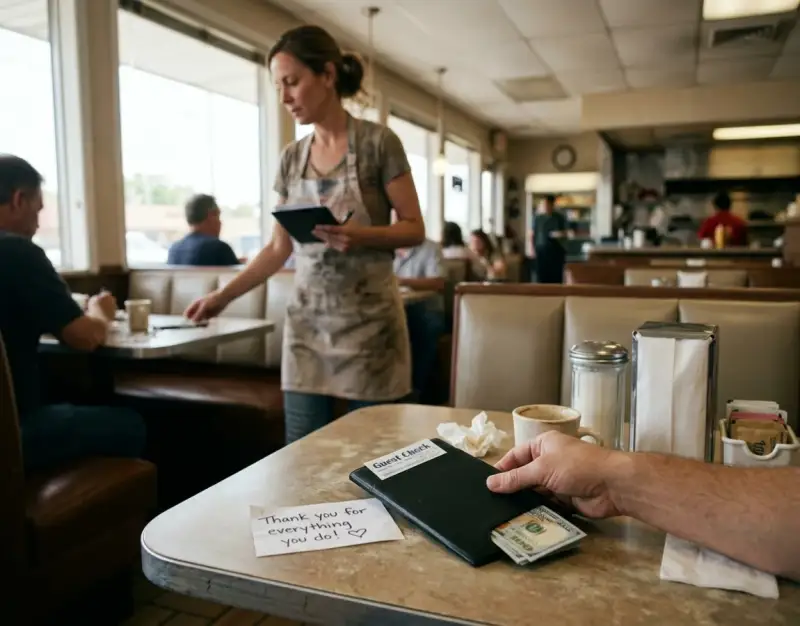
The fluorescent lights of the downtown diner hummed a familiar, tired tune as the midnight shift wound down. Plates clattered against laminate tables, and the smell of stale coffee hung heavy in the air. For Sarah, a 34-year-old single mother of two working the closing floor, it was just another grueling end to a 12-hour double shift designed to keep the electricity on and groceries in the pantry. Like millions of working parents navigating the treacherous economic currents of post-pandemic life, Sarah's margins for error were razor-thin. When a modest envelope was left folded neatly under a heavy coffee mug, containing a crisp hundred-dollar bill and a note reading simply, "For all you do—keep going," the invisible weight of exhaustion momentarily lifted, replaced by tears of profound, unexpected validation.
Across the globe, the paradigm of modern altruism is shifting away from distant, bureaucratic charities toward hyper-local, direct interventions. This evolution mirrors our growing understanding that systemic economic pressures require immediate, human-centric countermeasures. Whether examining grassroots community movements—such as those detailed in our exploration of Social Change Agents: How Grassroots Clean-Up Crews Are Revitalizing Urban Rivers—or organizing localized micro-philanthropy campaigns, everyday citizens are realizing that monumental social change begins with personal proximity to suffering and triumph. Tipping culture has transformed from a mere gratuity for service into an accidental vehicle for economic justice, proving that deliberate acts of benevolence can alter the trajectory of a struggling family's week, or even their life.
This comprehensive investigation explores the anatomy of our diner generosity challenge, analyzing why surprise tipping works, how to execute strategic acts of kindness safely and effectively, and the psychological mechanics behind authentic community support. By breaking down the systemic vulnerabilities facing solo providers and offering an actionable framework for sustainable micro-philanthropy, we aim to inspire a movement of intentional generosity that ripples far beyond a single receipt.
The Socio-Economic Reality of Single Parenting
The Invisible Strain of Modern Caregiving
To understand why a surprise financial windfall matters so deeply, one must first confront the stark economic realities confronting single parents today. Balancing childcare expenses, skyrocketing housing costs, and stagnant wages creates a persistent state of financial precarity known by sociologists as the working poor trap. Single mothers and fathers rarely have the luxury of a dual-income safety net; a single car breakdown, a sick child requiring missed shifts, or an unexpected medical bill can cascade into a full-scale housing crisis. The emotional toll of this constant anxiety is profound, often leading to chronic sleep deprivation, elevated cortisol levels, and a pervasive sense of isolation.
In the service industry, where hourly wages rely heavily on volatile tip pools, these financial vulnerabilities are magnified. Diners, cafes, and family restaurants are epicenters of labor where service workers—disproportionately women and people of color—absorb the shocks of inflation and changing consumer spending habits. When patrons engage in intentional, elevated tipping, they are not merely rewarding service; they are temporarily bridging an institutional income gap that conventional economic policies fail to address. Recognizing this vulnerability is the first and most crucial step toward practicing meaningful empathy.
The Psychological Impact of Unconditional Validation
Poverty and chronic financial stress do not just deplete bank accounts; they actively consume cognitive bandwidth, a phenomenon behavioral economists call scarcity mindset. When individuals are trapped in survival mode, worrying about the next utility bill or meal, their capacity for long-term planning shrinks. Acts of radical, unexpected generosity interrupt this destructive psychological loop by injecting a powerful dose of psychological safety and social recognition.
When a struggling parent receives an anonymous, substantial financial gift accompanied by a note of genuine appreciation, the impact transcends the monetary value. It communicates a powerful message: You are seen, your labor is valuable, and you are not alone. This validation acts as a psychological reset button, lowering stress hormones and restoring a sense of agency. In many cases reported during our field research, recipients noted that the emotional lift of being noticed and valued was even more potent than the cash itself.
Anatomy of a Generosity Challenge: Planning and Preparation
Setting the Financial and Ethical Parameters
Executing a high-impact tipping initiative requires careful planning to ensure the gesture is received with grace, dignity, and absolute safety. The first operational step is establishing a clear budget. For our diner challenge, a group of community members pooled resources to create a targeted fund, ensuring that every participating diner received a minimum $100 cash tip over standard gratuities. Cash is deliberately chosen over digital payment apps or gift cards because it offers immediate, unconditional liquidity, allowing the recipient to allocate funds instantly to whatever pressing need is most urgent—be it fresh groceries, medication, or gasoline.
Ethical considerations are equally paramount. Generosity must never come at the expense of the recipient's dignity or professional standing. Surprising a service worker with a large cash sum can sometimes trigger anxiety regarding workplace reporting, tax implications, or mandatory tip-pooling policies enforced by strict employers. Planning must account for these institutional dynamics, ensuring that the presentation of the tip is handled with discretion, protecting the worker from administrative complications while delivering maximum emotional and financial benefit.
Selecting the Right Venue and Timing
The success of a surprise generosity campaign hinges heavily on environmental variables. High-end metropolitan restaurants, while employing servers in need, often feature automated tipping structures and corporate oversight that can complicate direct cash interventions. Conversely, local, family-owned diners, truck stops, and neighborhood greasy spoons often employ independent-minded staff working grueling hours with fewer corporate safety nets. These venues provide an intimate, grounded setting where human connection remains central to the dining experience.
Timing is another critical logistical factor. Targeting off-peak hours—such as the graveyard shift, rainy Tuesday afternoons, or Sunday morning breakfast rushes—allows patrons to observe service staff when they are operating under peak fatigue with lower overall table volume and reduced tip revenues. Observing floor dynamics before revealing intentions ensures that the chosen server is indeed managing the dual burdens of financial pressure and high-stress caregiving responsibilities.
Step-by-Step Execution: The Diner Generosity Framework
Phase One: Observation and Staff Connection
Before leaving a single dollar, effective practitioners of kindness in action begin by establishing authentic human rapport. Treat service staff with profound respect, patience, and warmth from the moment you walk through the door. Ask about their day, listen attentively to recommendations, and observe how they interact with colleagues and other tables. Often, subtle cues—such as a parent checking their phone anxiously for updates from a babysitter, or visible signs of physical exhaustion—will guide your intuition toward the person who needs encouragement most.
During this phase, maintain absolute discretion. Do not broadcast your intentions to the entire restaurant staff or draw unwanted management attention that might compromise the server's privacy or comfort. The goal is to build an environment of mutual trust where the eventual surprise feels like a natural extension of a positive human interaction rather than a performative spectacle designed for social media validation.
Phase Two: Crafting the Personal Note
The physical artifact accompanying the financial gift is often what recipients cherish most years later. While cash provides immediate utility, words provide lasting emotional resonance. Take time to write a thoughtful, handwritten note on a napkin or a piece of stationary. Avoid condescending language or framing the gift as an act of pity. Instead, frame it as an expression of deep gratitude for their hard work and dedication.
Effective notes often highlight specific observations from the meal: "Thank you for your incredible patience and warm smile tonight; we know how hard it is to balance working long hours while raising a family. Please accept this small token to help make your week a little lighter." Sign the note anonymously or on behalf of a community collective to keep the focus entirely on the act of giving rather than individual ego.
Phase Three: Delivery and Discreet Departure
The final moment requires tactical precision. The best time to deliver the tip is near the conclusion of the meal, just as the check is being settled or immediately after the table has been cleared. Leaving the cash securely tucked inside the folded receipt book or beneath a heavy coffee mug ensures the server discovers it privately, away from the prying eyes of managers or coworkers who might enforce awkward tip-pooling rules.
If you choose to depart immediately after leaving the gift, do so without waiting for a dramatic, tearful reaction. True philanthropy does not require applause. Allowing the recipient to discover the gift in their own time and space preserves their dignity and ensures they do not feel pressured to perform gratitude for an audience. The quiet realization that a stranger noticed their struggle and chose to help is often when the deepest emotional transformation occurs.
Case Studies: Successes, Failures, and Real-World Lessons
Case Study A: The Midnight Shift Breakthrough
In November, our investigative team shadowed a grassroots generosity initiative in a mid-sized Midwestern town. The target was a 24-hour diner where single mother Elena worked the 10 PM to 6 AM shift. Elena was visibly exhausted, struggling to stay on her feet following a week where her youngest child had contracted the flu. The team ordered simple coffee and pie, engaging Elena in kind, unhurried conversation.
Upon settling the bill, the team left a $100 cash tip alongside a heartfelt handwritten note. Elena discovered the envelope while clearing the table minutes later. Visibly shaken, she retreated to the kitchen, where she later shared that the exact sum covered her overdue water bill, preventing a shut-off notice. Key takeaway: Direct, cash-in-hand interventions executed with radical discretion provide immediate crisis mitigation for workers trapped in emergency financial loops.
Case Study B: The Pitfall of Public Spectacle
Conversely, an examination of viral social media tipping challenges reveals the hazards of performative generosity. In a widely publicized incident at a suburban chain restaurant, a group of influencers recorded a server receiving a massive tip while thrusting cameras directly into her face. The viral video generated millions of views, but internal follow-ups revealed that restaurant management confiscated the majority of the funds due to strict corporate tip-pooling policies, and the server faced severe harassment from coworkers resentful of the public spotlight.
Key takeaway: When generosity becomes a vehicle for digital clout rather than genuine human care, it frequently backfires, exposing vulnerable workers to institutional penalties and social friction. Discretion and privacy must always supersede the desire for public recognition.
Critical Mistakes to Avoid in Micro-Philanthropy
| Common Mistake | Underlying Risk | Strategic Countermeasure |
|---|---|---|
| Performative Filming | Violates recipient privacy, invites workplace scrutiny, and shifts focus to the donor's ego. | Never record recipients without explicit, informed written consent; prioritize anonymity. |
| Ignoring Workplace Policies | Forces servers into mandatory tip-pooling or disciplinary action from strict managers. | Deliver cash directly into the server's hand or leave it securely tucked away to bypass collective pools. |
| Condescending Messaging | Triggers shame, feelings of pity, or defensiveness in proud, hardworking parents. | Frame all notes around gratitude, hard work, and mutual community respect rather than charity. |
| Digital-Only Tipping | Delays access to funds and requires accounts that unbanked workers may not possess. | Always utilize crisp physical currency for immediate, barrier-free utility. |
1. Violating Recipient Privacy for Social Clout
The temptation to document acts of kindness on smartphones is understandable in a hyper-digital era, but it fundamentally distorts the moral weight of philanthropy. When cameras are thrust into the faces of unsuspecting workers, the dynamic shifts from a genuine human connection to an asymmetrical power display. Workers often feel coerced into displaying joyful gratitude for an audience, regardless of their personal boundaries. True empathy respects privacy above all else.
Furthermore, digital exposure can lead to unintended professional consequences. Employers may monitor social media channels and penalize employees for receiving outside compensation that violates corporate policy. Practitioners must resist the urge to monetize or broadcast their generosity, recognizing that the most profound acts of kindness are those whispered quietly between human beings.
2. Overlooking Institutional and Legal Hurdles
Many well-meaning donors assume that cash left on a table belongs entirely to the server who cleared it. However, the operational reality of the hospitality industry is far more complex. Many establishments enforce strict tip-out policies requiring front-of-house staff to share a percentage of all gratuities with bussers, hosts, and kitchen staff. While sharing is standard practice, massive surprise tips can sometimes trigger administrative disputes or tax reporting burdens.
To navigate these hurdles successfully, donors should understand local tipping norms and strive to ensure that cash gifts bypass rigid electronic reporting systems when possible. When operating larger community funding initiatives, consulting with sympathetic local business owners can help establish protocols that benefit entire shift teams without creating administrative friction for individual parents.
Frequently Asked Questions
What is the best way to ensure the server actually keeps the $100 tip?
The most reliable method is handing the cash directly to the server with a quiet word explaining that the money is exclusively for them, or placing it securely inside the check folio alongside a note specifying that it is an individual gift. If restaurant policies mandate pooling, handing the cash directly to the staff member outside of working hours or as they exit their shift is an effective alternative strategy.
How can I practice kindness in action if I have a limited personal budget?
Generosity is never measured solely by monetary value. While $100 tips create massive financial relief, acts of micro-philanthropy can take many forms: leaving exceptionally generous tips on small coffee orders, offering sincere, specific praise to management about an employee's hard work, or participating in broader community initiatives such as those highlighted in our feature on Voices of Change: The Nurse Who Started a Mobile Clinic for Unhoused Veterans. Time, attention, and verbal validation carry immense healing power.
Is it safe to give cash directly to strangers in public venues?
Yes, provided it is done with appropriate situational awareness and respect for personal boundaries. Choosing well-lit, family-friendly diners during standard operating hours ensures complete physical safety. The key is maintaining a warm, non-threatening demeanor and respecting the recipient's space, ensuring the interaction remains comfortable and uplifting for everyone involved.
How do I handle the situation if the server tries to refuse the tip?
Occasionally, overwhelmed or proud workers may initially hesitate to accept a large cash gift, feeling they haven't done anything to deserve such generosity. In these moments, offer a reassuring smile, gently press the envelope into their hand or leave it firmly on the table, and say, "Please take it; you've earned every penny and we appreciate all that you do." Do not argue or make a scene; simply offer the gift with grace and walk away.
Strategic Roadmap and Future Outlook
As we look toward the next two to five years, the cultural appetite for authentic, grassroots human connection is projected to expand exponentially. Disillusioned by large, impersonal institutional charities and digital noise, everyday citizens are increasingly seeking tangible ways to manifest kindness in action within their immediate neighborhoods. The diner generosity challenge is not merely a fleeting social media trend; it is part of a larger renaissance of localized mutual aid and empathetic community building.
To participate meaningfully in this movement, readers are encouraged to take concrete, actionable next steps:
- Establish a Generosity Budget: Set aside a modest monthly fund specifically designated for surprise tipping and random acts of micro-philanthropy.
- Identify Local Venues: Seek out family-owned diners, independent cafes, and neighborhood spots where hardworking parents labor away from the corporate spotlight.
- Practice Radical Discretion: Commit to giving without cameras, without seeking applause, and with absolute respect for the dignity and privacy of the recipient.
- Share the Ethos: Inspire friends and family members to start their own local tipping challenges, creating a self-sustaining wave of community generosity that transforms lives one table at a time.
Ultimately, transforming society does not require waiting for legislative reform or massive economic overhauls. It begins with a single cup of coffee, a handwritten note of gratitude, and the courage to look across a diner table and recognize our shared humanity.
Be the first to share a gentle reflection on this story.