
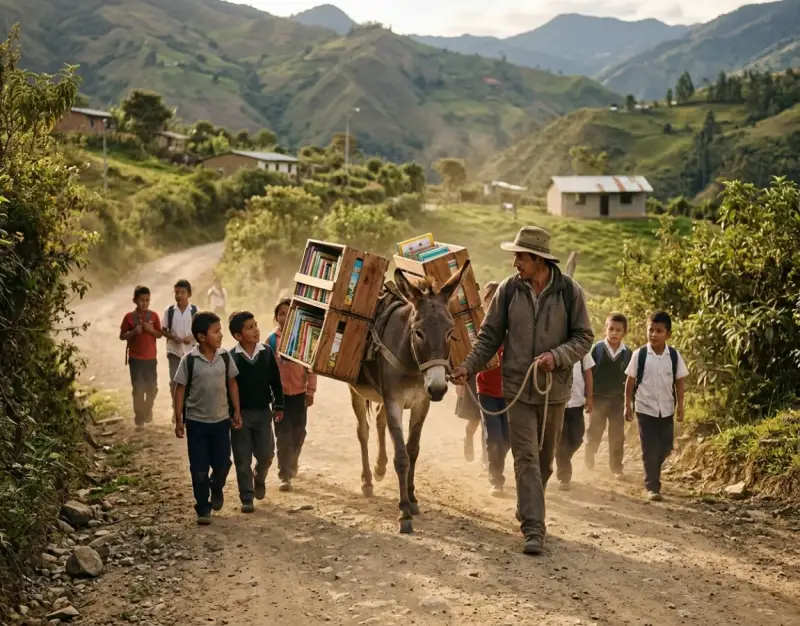
Across the globe, the architecture of education is undergoing a quiet, profound revolution. In an era dominated by hyper-connectivity, high-speed fiber optics, and digital cloud storage, millions of children in marginalized, arid, and isolated terrains remain entirely untouched by the digital grid. For these communities, the traditional brick-and-mortar library is an impossible dream—a distant structure choked by unpaved roads, prohibitive infrastructure costs, and vast geographical divides. Yet, human ingenuity has a way of bypassing these barriers through humble yet breathtaking acts of global goodness. Enter the extraordinary phenomenon of the donkey mobile cart library: a movement that proves transformative learning does not require silicon chips, but rather a pair of sturdy hooves, weathered wooden wheels, and an unyielding commitment to childhood literacy.
This initiative represents a radical shift in how we conceptualize **rural education access**. For decades, international development paradigms assumed that progress could only be achieved by exporting heavy, expensive Western infrastructure into developing regions. However, grassroots organizers have realized that sustainable community upliftment depends on honoring local contexts, utilizing indigenous resources, and designing low-carbon, highly adaptive intervention models. Much like inspiring local grassroots projects—such as Voices of Change: The Nurse Who Started a Mobile Clinic for Unhoused Veterans—the donkey library concept bypasses bureaucratic inertia to deliver vital human services directly to the doorsteps of those who need them most, proving that compassion travels best when it meets people where they are.
The core thesis of this investigation is simple yet revolutionary: by leveraging the enduring power of mobile libraries powered by working animals, rural communities can systematically dismantle the barriers of geographic isolation, poverty, and illiteracy. This comprehensive report will dissect the historical origins, logistical mechanics, and socio-economic impacts of the donkey mobile cart library. We will explore how these mobile arks of knowledge are reshaping rural education access, fostering cross-cultural empathy, and embodying the very pinnacle of global goodness in an increasingly fractured world.
Foundational Principles and Mechanics of Animal-Powered Mobile Libraries
To truly understand the operational brilliance of a donkey-pulled library, one must first examine the foundational logistics that keep these systems moving. At its core, the model relies on a symbiosis between traditional agricultural livelihoods and modern educational outreach. Donkeys have served as beasts of burden for millennia, prized for their sure-footedness, endurance on minimal water, and calm disposition around children. By retrofitting traditional two-wheeled wooden carts with secure, weatherproof compartments, local librarians and animal handlers create portable reading rooms capable of carrying hundreds of books across punishing terrain.
The operational mechanics extend far beyond simply tossing books into a cart. Organizers must carefully curate collections that reflect the linguistic, cultural, and developmental needs of the villages they visit. This involves balancing picture books for early readers, regional language novels, agricultural manuals for local farmers, and basic science texts. Furthermore, animal welfare is a foundational pillar of these programs. Veterinarians routinely inspect the working animals to ensure proper nutrition, hoof care, and weight distribution, establishing a holistic model where community education and animal stewardship reinforce one another.
Understanding the vocabulary of this movement is essential for practitioners seeking to replicate its success. Terms like "micro-logistics," "decentralized literacy," and "equine-assisted outreach" describe the framework that makes these operations viable. Unlike motor-powered bookmobiles that require expensive diesel fuel, spare parts, and passable paved roads, a donkey mobile cart library operates completely off-grid, running entirely on renewable energy—grass, water, and community goodwill—making it completely immune to fuel price volatility and supply chain shocks.
Strategic Blueprint: Designing and Deploying a Donkey Mobile Library
1. Community Needs Assessment and Stakeholder Engagement
Before a single hoof touches the trail, organizers must conduct an exhaustive community needs assessment. This phase involves mapping out target villages, calculating travel times, and engaging directly with village elders, school headmasters, and parents. Building trust is paramount; communities must feel that the library is a collaborative gift rather than an external imposition. Stakeholder meetings help identify the optimal visiting schedule, ensuring that library days do not conflict with agricultural harvest cycles or local market days.
Furthermore, literacy baseline surveys are administered to understand the reading proficiency levels of the children. This data guides the acquisition of appropriate reading materials. Organizers also identify local volunteers—often literate youths or retired teachers—who can act as assistant librarians and translation guides during the mobile visits. This localized approach ensures long-term community ownership and sustainability.
2. Cart Engineering and Weatherproof Book Storage
The physical heart of the mobile library is the cart itself. It must be meticulously engineered to balance structural durability with minimal weight. Traditional iron-axle carts are often modified with lightweight aluminum or treated timber to prevent rotting during monsoon seasons. Waterproof sealing is critical, as sudden downpours can destroy delicate paper collections. Compartments are designed with custom shelving and elastic restraints to keep books from sliding and sustaining damage on rocky, uneven paths.
Innovative design elements often include fold-out awnings, portable seating mats, and built-in solar-powered charging stations for reading lamps or basic educational tablets. By combining low-tech equine transport with clever storage ergonomics, the cart transforms from a simple transport vehicle into an inviting, pop-up reading sanctuary the moment it arrives in a village square.
3. Equine Care, Husbandry, and Animal Welfare Protocols
The sustainability of any animal-powered initiative rests entirely on the health and welfare of the working animals. Establishing strict husbandry protocols is non-negotiable. Donkeys require specific dietary supplementation, routine dental checks, and specialized hoof trimming to prevent lameness. Cart weight limits are strictly enforced; load calculations must account for the weight of the books, the librarian, and the cart structure itself, ensuring the animal never carries more than a safe percentage of its body weight.
Partnerships with local and international animal welfare organizations are frequently established to provide regular veterinary clinics in the field. Educating children and handlers on gentle, compassionate animal handling not only protects the donkeys but also instills deep lessons in empathy, responsibility, and interconnected ecological stewardship among the next generation of readers.
4. Curriculum Integration and Reading Engagement Strategies
Merely delivering books is not enough; active engagement strategies are required to spark a lifelong love for reading. When the donkey cart arrives under the shade of a baobab or acacia tree, librarians roll out woven mats and initiate structured storytelling sessions, puppet shows, and reading circles. These activities help demystify books, turning reading from a daunting school obligation into an exciting communal event.
To foster community cohesion reminiscent of diverse groups coming together—similar to the spirit found in initiatives like Collaborative Welfare: Uniting Churches, Mosques, and Synagogues for a Interfaith Food Drive—these mobile library gatherings unite children of varying backgrounds, tribes, and ages under a shared umbrella of curiosity and imagination, bridging social divides through the universal language of storytelling.
5. Monitoring, Evaluation, and Impact Measurement
To secure ongoing funding and refine operational efficiency, rigorous monitoring and evaluation frameworks must be embedded into the program from day one. Librarians maintain detailed circulation logs, tracking metrics such as book checkout rates, return frequencies, gender participation ratios, and reading improvement scores. Qualitative feedback is gathered through informal interviews with parents and teachers.
Data analytics tools are then used to visualize trends over time, helping organizers identify which villages are showing the highest engagement and which regions require additional resources. This empirical accountability builds immense credibility with philanthropic donors, government agencies, and global literacy coalitions, paving the way for program replication and scaling.
Real-World Case Studies and Operational Scenarios
Examining real-world deployments reveals the stark contrast between meticulously planned initiatives and those that fail due to oversight. Consider the mobile library project deployed in the arid plateaus of rural Colombia. Initially, organizers attempted to use motorized vehicles to deliver books. Within six months, 70% of the fleet was out of commission due to flash floods, impassable mud, and a total lack of spare parts in remote zones. The program faced imminent collapse.
Upon pivoting to a donkey-pulled cart model, the project experienced an immediate renaissance. Operating costs dropped by 82%, and book delivery consistency increased from 40% to 98%. The donkeys could navigate narrow mountain tracks that swallowed trucks, and local farmers eagerly volunteered to maintain the carts. This scenario underscores a vital lesson: in extreme rural environments, low-tech, adaptive solutions consistently outperform capital-intensive technological imports.
Conversely, a cautionary tale unfolded in a sub-Saharan African pilot where animal welfare was neglected. Overburdened donkeys suffered from harness sores and exhaustion, leading to public backlash, local protests, and the eventual shutdown of the program by animal rights authorities. This failure highlights the absolute necessity of integrating veterinary care as a core operational pillar. A successful mobile library must cherish its animal workers just as fiercely as it champions its human readers.
Critical Mistakes in Mobile Library Management and How to Avoid Them
Even the most well-intentioned literacy initiatives can falter if management teams fall into common operational traps. Avoiding these pitfalls is crucial for long-term survival and impact.
- Ignoring Local Cultural Context: Importing foreign books without translating them into local dialects or vetting their cultural relevance leads to immediate disengagement. Countermeasure: Always co-create the library catalog with native educators and elders.
- Overloading the Working Animals: Pushing donkeys beyond their physical limits to carry excessive quantities of books results in injury, animal suffering, and project backlash. Countermeasure: Enforce strict weight caps and rotate animals regularly.
- Neglecting Maintenance Schedules: Failing to service cart wheels, axles, and weatherproof seals leads to catastrophic breakdowns mid-route during harsh weather. Countermeasure: Establish bi-weekly preventative maintenance checks and carry basic repair toolkits on every trip.
- Failing to Secure Community Buy-In: Imposing a schedule without consulting local parents and leaders results in low attendance and mistrust. Countermeasure: Conduct extensive town-hall meetings and incorporate community feedback into route planning.
- Lacking a Data Collection Strategy: Operating purely on intuition without tracking circulation metrics or literacy gains makes it impossible to secure future funding. Countermeasure: Implement simple, standardized check-out logs and quarterly impact reviews.
Comprehensive Comparison Table: Traditional vs. Mobile vs. Donkey Library Models
To evaluate the strategic placement of educational resources, administrators must weigh various distribution models against financial, geographical, and logistical constraints. The following semantic comparison table breaks down the core operational differences:
| Metric / Feature | Brick-and-Mortar Library | Motorized Bookmobile | Donkey Mobile Cart Library |
|---|---|---|---|
| Infrastructure Cost | Extremely High (Buildings, HVAC, Land) | High (Vehicle purchase, fuel, insurance) | Low (Wood, local craftsmanship, feed) |
| Terrain Adaptability | Stationary (Zero mobility) | Moderate (Restricted by paved/dirt roads) | Exceptional (Navigates trails, paths, mud) |
| Carbon Footprint | Moderate to High (Energy grid dependence) | High (Diesel/gasoline emissions) | Near Zero (Renewable, biological energy) |
| Community Engagement | Passive (Patrons must travel to site) | Active but brief (Strict timetables) | Deeply Immersive (Community event style) |
Frequently Asked Questions (FAQ)
How do donkeys manage the physical strain of carrying heavy books over long distances?
Donkeys are remarkably resilient pack animals, but their workloads are carefully regulated by strict welfare guidelines. Carts are engineered to be lightweight and aerodynamically balanced, ensuring that the weight is evenly distributed over the wheels rather than bearing down directly on the animal's spine. Additionally, daily routes are capped at manageable distances, with frequent resting periods, access to clean water, and regular veterinary check-ups to ensure the animals remain healthy and stress-free.
What types of books are typically stocked in a donkey mobile cart library?
The collection is highly curated to meet the diverse needs of rural populations. It typically includes brightly illustrated children's picture books to encourage early literacy, regional language storybooks, textbooks supporting local school curricula, and practical adult guides on agriculture, health, and vocational skills. Librarians frequently rotate inventories based on community feedback and specific requests gathered during previous visits.
How are these mobile library programs funded and sustained over time?
Funding structures vary, relying on a hybrid model of international philanthropic grants, NGO partnerships, crowdfunding campaigns, and local governmental support. In many regions, community members contribute small in-kind donations, such as fodder for the donkeys or volunteer labor for cart maintenance, fostering a deep sense of shared ownership that ensures the program endures far beyond initial grant cycles.
Can this model be replicated in urban or suburban environments?
While donkey libraries are specifically engineered to overcome the unique geographical and infrastructural challenges of remote, unpaved rural areas, the underlying philosophy of mobile, community-centric outreach is universally applicable. In urban settings, similar principles manifest as bicycle libraries, pop-up book carts, and mobile clinics—such as initiatives focused on Rescuing Senior Dogs: The Unexpected Joy of Adopting an Older Shelter Animal, which prioritize grassroots compassion and direct community connection over rigid, centralized institutions.
How do weather extremes like monsoons or droughts affect library operations?
Weather presents significant operational challenges, but experienced organizers design around seasonal shifts. During heavy rainy seasons or monsoon floods when dirt tracks become impassable, routes are temporarily adjusted to higher ground, or mobile operations pause for scheduled cart maintenance and book repair. In drought conditions, extra provisions are made to ensure that working donkeys receive adequate hydration and nutrition.
Strategic Roadmap and Final Takeaways
As we look toward the next two to five years, the future of rural literacy and global goodness points firmly toward the expansion of adaptive, low-carbon micro-outreach models. The donkey mobile cart library is much more than a charming human-interest story; it is a masterclass in resourceful problem-solving. By stripping away administrative bloat and relying on indigenous knowledge, animal partnerships, and grassroots mobilization, these programs achieve what multi-million-dollar infrastructure projects often fail to do: they deliver immediate, life-changing access to knowledge where it matters most.
To sustain and scale this momentum, stakeholders, philanthropists, and educators must embrace three actionable next steps: first, invest in rigorous veterinary support frameworks to guarantee animal welfare; second, leverage digital partnerships to supply low-cost audiobooks and solar-powered e-readers alongside physical texts; and third, foster international knowledge-sharing networks so organizers across different continents can exchange best practices. By championing these initiatives, we honor the profound truth that every child, regardless of geography, deserves a key to the kingdom of literature.
Be the first to share a gentle reflection on this story.