
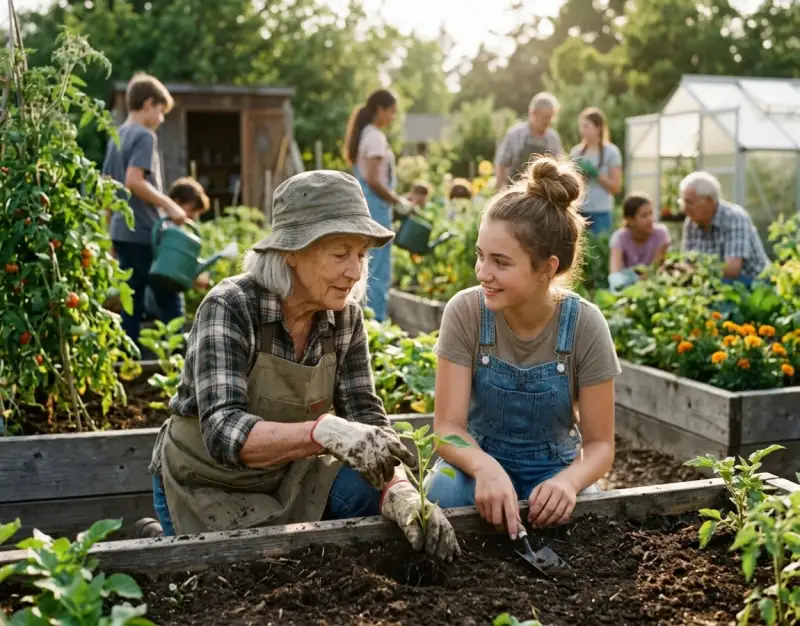
Across modern urban landscapes and quiet suburban neighborhoods alike, a silent crisis persists: the epidemic of loneliness. While hyper-connectivity via digital screens promises endless engagement, it has concurrently birthed a profound societal fracture, leaving older adults isolated in senior living facilities and youth navigating unprecedented waves of anxiety and detachment. Yet, nestled between rows of heirloom tomatoes and fragrant lavender beds, a quiet revolution is taking root. By intentionally pairing generations in shared horticultural spaces, communities are discovering that the simple act of digging in the dirt possesses extraordinary restorative power. These initiatives are not merely about growing vegetables; they are dynamic, living laboratories of human connection.
When we examine the landscape of modern social architecture, the imperative for innovative collaborative welfare projects becomes glaringly apparent. For decades, urban planning and social services have segregated populations by age. Seniors are tucked away in retirement villages, while children and adolescents are siloed within schools and digital spheres. This age-segregated design has stripped away the natural, historical rhythms of community life where wisdom was freely exchanged across the porch railing. Today, however, pioneering civic leaders, geriatricians, and educators are dismantling these artificial barriers. They are proving that when youth and elders work side-by-side toward a common, living goal, both groups experience remarkable psychological, emotional, and physical rejuvenation.
At its core, this movement represents a return to fundamental human interdependence. As communities grapple with the multifaceted burdens of elderly isolation—which public health officials liken to smoking fifteen cigarettes a day in terms of mortality risk—horticultural therapy offers a non-clinical, universally accessible antidote. Pairing a teenager struggling with identity formation alongside an octogenarian carrying a lifetime of untold stories creates a unique crucible for empathy. In these shared green spaces, performance pressures melt away. Success is measured not by grades or corporate ladder-climbing, but by a sprouting seed, a well-watered row, and the quiet, comforting cadence of shared silence broken only by the hum of bees and shared laughter.
Foundational Principles and Mechanics of Intergenerational Horticulture
To truly understand how intergenerational gardening transforms communities, we must first unpack the underlying mechanics that make these programs so uniquely effective. Unlike traditional structured volunteering, which often maintains hierarchical boundaries between the helper and the helped, gardening creates a flat, egalitarian plane of interaction. Both the teenager learning how to prune a rose bush and the elder demonstrating the technique are operating in real-time with living organisms that demand patience, care, and acute observation.
The success of these initiatives rests upon reciprocal empowerment. Elders often suffer from a debilitating loss of purpose, feeling that society views them as obsolete. By positioning them as horticultural mentors—keepers of seasonal wisdom, soil chemistry intuition, and heirloom seed lore—these programs restore a profound sense of utility and respect. Conversely, youth are frequently talked down to by adults; in the garden, however, their agility, physical strength, and technological literacy in researching modern organic pest management make them invaluable partners. This dynamic shatters age-based stereotypes, replacing them with mutual admiration and authentic friendship.
Furthermore, the physical environment of a garden serves as a therapeutic third space. Nature itself acts as a social lubricant. Direct eye contact can be intimidating for a shy teenager or an anxious elder, but looking downward together at a shared garden bed bypasses social awkwardness. Focusing on a physical task allows conversations to flow naturally, organically weaving personal narratives into the rhythm of planting, weeding, and harvesting. This environmental design is a cornerstone of modern community welfare, proving that architectural and spatial modifications can directly heal psychological wounds.
Designing the Blueprint: Establishing a Sustainable Intergenerational Garden
Launching a successful intergenerational gardening initiative requires meticulous planning, stakeholder alignment, and an unwavering commitment to accessibility. You cannot simply hand a shovel to a senior and a teenager and hope for magic. It requires intentional scaffolding to ensure that both populations feel safe, valued, and physically accommodated.
Assessing Community Needs and Partnering with Local Institutions
The first critical phase in building an intergenerational garden involves mapping your local ecosystem. This means identifying nearby senior living facilities, retirement communities, local high schools, youth centers, and urban agriculture networks. Establishing formal partnerships early on ensures a steady, reliable influx of participants from both ends of the age spectrum. Organizers must conduct baseline surveys to understand the specific mobility limitations of the elders and the scheduling constraints of the youth, tailoring the project scope accordingly.
Once partners are secured, the collaborative planning committee must define the core mission of the project. Will the harvest be donated to local food banks, cooked in communal community center kitchens, or taken home by the participants? Defining these goals collectively fosters shared ownership from day one. Additionally, exploring broader community support models, much like the community-driven frameworks seen in initiatives providing vital local services, helps organizers secure sustainable funding, volunteer networks, and municipal backing for long-term viability.
Universal Design and Horticultural Accessibility
Physical infrastructure can make or break an intergenerational project. If a garden features narrow, muddy pathways and low-to-the-ground beds, it immediately alienates elders with arthritis, wheelchair users, or individuals with balance impairments. Universal design is non-negotiable. Raised garden beds standing between thirty and thirty-six inches tall, paired with wide, wheelchair-accessible gravel or paved pathways, ensure that mobility challenges never become barriers to participation.
Beyond raised beds, tool ergonomics play a pivotal role. Organizers should invest in lightweight, long-handled, and grip-assisted gardening tools that reduce strain on aging wrists and knuckles while remaining comfortable for younger hands. Vertical gardening structures, such as trellises for pole beans and hanging baskets for cherry tomatoes, bring the plants up to eye level, allowing participants who cannot bend down to still experience the joy of harvesting. Shade sails, sturdy seating areas, and nearby hydration stations are equally vital to ensure participant safety and comfort during long outdoor sessions.
Curating Collaborative Activities for Maximum Engagement
Keeping participants engaged across vast generational divides requires structured yet flexible activities that cater to varying energy levels, attention spans, and physical capabilities. A successful program avoids treating participants as monolithic groups, instead recognizing the diverse skills and interests individuals bring to the soil.
Season-by-Season Planting Schedules and Shared Rituals
Nature operates on a predictable yet ever-changing calendar, providing a natural rhythm for program milestones. Springtime brings the anticipation of seed-starting and soil preparation. During this phase, elders can share generational knowledge about frost dates, companion planting, and soil pH, while youth can utilize their fine motor skills to plant delicate seeds into germination trays.
As summer shifts into harvest season, the garden transitions into a space of celebration and communal cooking. Intergenerational culinary workshops where elders teach youth traditional family recipes using ingredients harvested straight from the garden bridge cultural and generational divides. Just as nature heals through cyclical renewal, other community-rooted movements—such as those exploring the profound Human-Animal Bonds: The Surprising Way Goats Are Helping Clear Invasive Weeds Sustainably—demonstrate how integrating diverse living elements into civic projects exponentially amplifies therapeutic outcomes for all involved.
Storytelling Circles and Oral History Integration
The garden bed is an outdoor classroom where history comes alive. Organizers should intentionally embed storytelling sessions into the routine. While taking a break from weeding, youth can interview elders about their childhoods, historical events they witnessed, or agricultural practices from decades past. These conversations can be recorded, transcribed, and archived as part of community history projects.
This exchange validates the elders' lived experiences, ensuring their legacies are honored rather than forgotten. Simultaneously, it provides youth with historical context that textbooks simply cannot replicate. Listening to an eighty-year-old recount growing vegetables during wartime rationing instills a deep, intuitive appreciation for food security and resilience that stays with a teenager long after they leave the garden gate.
Overcoming Logistical, Social, and Psychological Barriers
Even the most well-intentioned intergenerational projects face friction. Bringing together two distinct cohorts with different communication styles, physical tempos, and cultural backgrounds inevitably surfaces challenges that require proactive mediation and thoughtful operational design.
Bridging the Communication and Cultural Divide
Generation gaps manifest in vocabulary, humor, and digital habits. Initially, teenagers and seniors may eye each other with hesitation, bound by mutual stereotypes—elders viewing youth as glued to their phones and disrespectful, and youth viewing elders as out-of-touch or frail. Facilitators must actively dismantle these misconceptions through icebreakers, collaborative team-building games, and guided conversation prompts during the first few sessions.
Establishing clear community agreements is essential. Respect for differing communication styles, active listening protocols, and patience must be modeled by program leaders. When an elder takes extra time to explain a concept, or when a teenager patiently shows an elder how to use a smartphone to photograph a rare caterpillar, facilitators should publicly praise these moments of bridging connection, reinforcing positive behavioral norms.
Managing Health, Safety, and Energy Fluctuations
Working with vulnerable populations—both elderly participants with chronic health conditions and minors requiring supervision—demands rigorous safety protocols. Background checks for adult volunteers working closely with youth, comprehensive first-aid training for staff, and clear emergency response plans are foundational requirements. Additionally, organizers must remain acutely aware of energy fluctuations. Seniors may tire quickly under the midday sun, while teenagers might lose focus if tasks become repetitive or monotonous.
Flexible scheduling is the antidote to burnout and fatigue. Sessions should be kept to manageable windows—typically ninety minutes to two hours—with built-in rest breaks, shaded seating, and light refreshments. Allowing participants to drop in and out based on their daily health and energy levels prevents the garden from feeling like an obligation, maintaining its status as a sanctuary of joy and connection.
Measuring Impact: Metrics, Evaluation, and Long-Term Sustainability
To secure ongoing funding, municipal support, and community buy-in, program coordinators must rigorously evaluate the impact of their intergenerational gardens. Qualitative stories of friendship are deeply moving, but quantitative data is what convinces grantmakers, healthcare providers, and local governments to invest in collaborative welfare initiatives.
Tracking Psychological and Social Well-Being Indicators
Evaluating the success of these projects requires validated psychosocial assessment tools. Organizers can implement pre- and post-program surveys measuring self-reported loneliness, perceived social support, sense of purpose, and intergenerational attitudes. Standardized scales, such as the UCLA Loneliness Scale or custom well-being indices, help quantify the emotional dividend yielded by the garden.
Beyond surveys, observational data collected by staff and volunteers provides rich qualitative texture. Documenting frequency of attendance, spontaneous peer-to-peer interactions outside of scheduled sessions, and qualitative interview snippets creates a holistic picture of transformation. When funders see empirical proof that elderly isolation scores drop by forty percent and youth empathy metrics surge, the value proposition of the garden becomes undeniable.
Securing Financial Resilience and Community Ownership
Long-term sustainability hinges on diversifying funding streams and embedding the project into the municipal or organizational fabric. Relying solely on a single annual grant leaves the project vulnerable to economic shifts. Successful gardens build coalitions with local businesses, garden centers, healthcare organizations, and philanthropic foundations interested in preventative health and social welfare.
Ultimately, the goal is to foster community ownership where the participants themselves—seniors and youth working in tandem—take over the governance of the garden committee. When the participants transition from being mere attendees to active stewards and board members, the project achieves true self-sufficiency, ensuring it will thrive for generations to come.
Real-World Case Studies: Triumph Versus Pitfall
Examining concrete implementations reveals the profound difference between a thriving intergenerational garden and one that quietly withers. Consider the GreenBridge Initiative in Portland, Oregon. Launched as a pilot project pairing an urban high school with an adjacent residential care facility, GreenBridge began with twenty raised beds and a shared vision of reducing youth alienation and elder loneliness. By incorporating weekly joint planting sessions, harvest cooking clubs, and oral history recording days, the program saw a dramatic seventy-five percent retention rate over three years. Participants reported significant drops in feelings of isolation, and local health clinics noted a marked improvement in participating seniors' mobility and mental outlook.
Contrast this with the cautionary tale of the Oakwood Community Plot in Ohio. Initiated without adequate front-end community assessment, the organizers built ground-level garden plots without consulting the local senior center regarding mobility needs. Furthermore, they scheduled sessions exclusively during mid-afternoon weekday hours, completely ignoring high school academic schedules and senior resting routines. Within four months, elder participation plummeted due to physical strain and inaccessible pathways, while youth attendance dwindled from scheduling conflicts. The project collapsed under the weight of poor logistical design and lack of genuine stakeholder input.
The lessons from these contrasting scenarios are clear. Success requires radical accessibility, deep respect for participants' time and physical capacities, and an unwavering focus on relational bonding over mere agricultural output. When communities invest in thoughtful planning, the garden flourishes into a permanent fixture of social healing.
| Project Dimension | Failing Approach (The Pitfall) | Sustained Approach (The Blueprint) |
|---|---|---|
| Physical Infrastructure | Low ground beds, narrow muddy paths, heavy tools. | Raised beds (30-36 inches), wide paved paths, ergonomic lightweight tools. |
| Scheduling & Timing | Rigid times conflicting with school and elder rest hours. | Flexible windows with built-in rest breaks, shade, and refreshments. |
| Participant Roles | Hierarchical (staff dictate tasks, recipients just obey). | Egalitarian and reciprocal (elders share lore, youth contribute energy and tech). |
| Evaluation & Metrics | Zero tracking; relying solely on anecdotal assumptions. | Pre/post psychosocial surveys, attendance logs, and qualitative oral histories. |
| Community Integration | Siloed operation with zero institutional partnerships. | Coalitions with schools, senior homes, local clinics, and municipal agencies. |
Top 5 Costly Mistakes in Intergenerational Projects (And How to Fix Them)
Even seasoned community organizers can stumble when navigating the delicate intersection of youth development and elder care. Avoiding these five critical missteps will safeguard your project's longevity and impact.
- Ignoring Physical and Ergonomic Realities: The Mistake: Designing a garden using standard agricultural layouts without accounting for arthritis, wheelchair access, or fatigue. The Countermeasure: Prioritize universal design principles from day one, incorporating raised beds, sturdy seating, and lightweight, ergonomic tools.
- Treating Participants as Passive Recipients: The Mistake: Structuring the program so that elders and youth are merely told what to do by staff, preventing genuine organic bonding. The Countermeasure: Design collaborative tasks that allow both groups to teach and learn from each other, fostering mutual respect and shared ownership.
- Failing to Establish Clear Safety and Screening Protocols: The Mistake: Bringing minors and vulnerable seniors together without proper background checks, emergency plans, or supervisory frameworks. The Countermeasure: Implement rigorous vetting, comprehensive first-aid training, and clear codes of conduct for all adult volunteers and staff.
- Neglecting Cultural and Generational Communication Barriers: The Mistake: Assuming participants will instantly bond without acknowledging differing communication styles, generational slang, or preconceived stereotypes. The Countermeasure: Facilitate structured icebreakers, guided storytelling circles, and active listening workshops during initial sessions to break the ice.
- Relying on a Single Funding Source: The Mistake: Funding the entire project through one short-term grant, leaving the initiative financially stranded when the grant cycle ends. The Countermeasure: Diversify revenue streams by building partnerships with local businesses, healthcare organizations, and municipal welfare programs to ensure long-term resilience.
Frequently Asked Questions About Intergenerational Gardening
How do you overcome the initial awkwardness between teenagers and seniors in a garden setting?
Initial hesitation is completely normal when bringing two isolated age groups together. The most effective way to break the ice is to utilize the physical environment of the garden as a natural conversational catalyst. Instead of forcing participants to sit in a circle and make small talk, pair them immediately on a tangible, low-pressure task—such as planting seeds or painting garden markers. Shared physical focus reduces social anxiety. Additionally, facilitators can use structured prompts during rest breaks, asking elders to share a gardening tip from their youth and teenagers to share a favorite modern plant fact. Over time, shared labor breeds organic, lasting friendship.
What are the best plants to grow in an intergenerational garden for maximum engagement?
The best plants offer sensory stimulation, rapid growth cycles, and high culinary or aesthetic value. Fast-sprouting seeds like radishes, bush beans, and sunflowers allow youth to see tangible results quickly without losing patience. Sensory-rich plants such as culinary herbs (rosemary, mint, basil), fragrant lavender, and tactile plants like lamb’s ear engage participants with visual, olfactory, and touch impairments. Furthermore, heirloom vegetables—such as Cherokee Purple tomatoes or heritage pumpkins—provide elders with an opportunity to share personal stories and cultural memories associated with specific foods, bridging the gap between agriculture and storytelling.
How can projects be sustained during harsh winter months when outdoor gardening stops?
When freezing temperatures or inclement weather halt outdoor operations, intergenerational projects must transition indoors to maintain momentum and combat isolation during the loneliest months of the year. Indoor activities can include seed-starting in greenhouses or sunny windowsills, propagating houseplants, building hydroponic or vertical indoor tower gardens, and hosting cooking workshops using preserved garden harvests. Additionally, winter is an ideal season for intensive oral history recording projects, scrapbook creation documenting the previous growing season, and planning crop rotations for the upcoming spring.
What specific qualifications or training do project facilitators need?
Facilitators do not necessarily need a degree in horticulture, though a solid understanding of basic gardening is helpful. Crucially, successful coordinators possess strong interpersonal skills, cultural competency, and experience working with both youth and aging populations. Training in trauma-informed care, basic first aid, and youth protection guidelines is mandatory. Facilitators must act as empathetic mediators who can read social dynamics, defuse misunderstandings, encourage quiet participants, and ensure that every individual feels psychologically safe, respected, and valued throughout the program.
How can small community groups secure funding for an intergenerational garden?
Securing funding requires crafting a compelling narrative that addresses multiple community needs simultaneously—such as elder health, youth development, urban greening, and food security. Small groups should look beyond traditional grants and build local coalitions. Pitching the project to local hospitals or health insurance networks—which increasingly recognize social isolation as a major healthcare cost driver—can yield preventative health grants. Additionally, partnering with local garden centers for discounted supplies, launching crowdfunding campaigns, and applying for municipal green space grants can successfully cover startup and operational costs.
Strategic Roadmap and Future Outlook
As we look toward the next two to five years, the intersection of community horticulture and social welfare is poised for profound expansion. Driven by aging global demographics and a surging mental health crisis among youth, municipal planners and healthcare systems are increasingly recognizing that social prescription—such as prescribing community gardening in lieu of or alongside pharmacological interventions—is a vital, cost-effective public health strategy. In the near future, we can expect to see intergenerational gardens formally integrated into urban development master plans, senior living facility designs, and public school curricula.
For community leaders, activists, and changemakers reading this, the call to action is clear. You do not need a massive budget or sprawling acreage to ignite change. Begin by reaching out to a local retirement community or high school. Secure a small plot of land, build a single raised bed, and bring a teenager and an elder together with a pair of trowels. In doing so, you are not merely growing vegetables; you are repairing the frayed social fabric of our society, proving that healing isolation is as simple, and as profound, as planting seeds of connection in shared soil.
Be the first to share a gentle reflection on this story.