
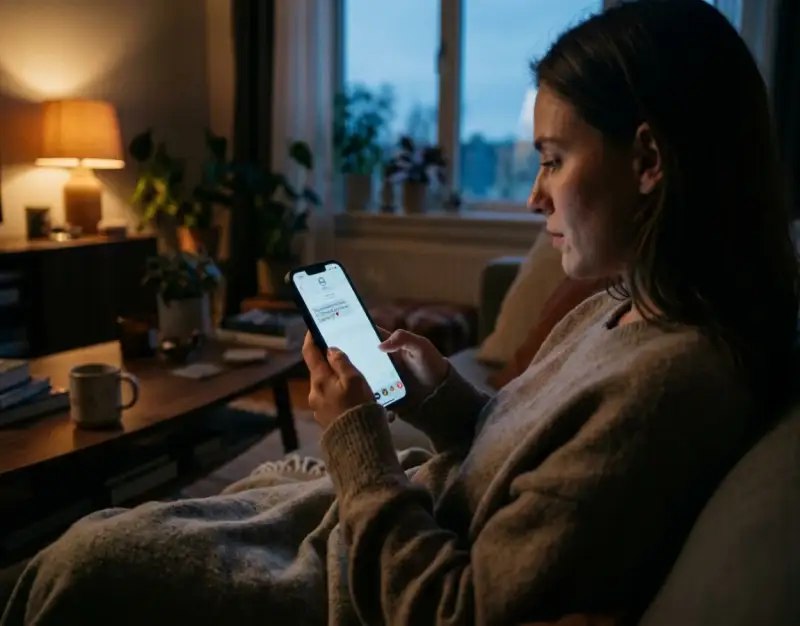
On a rainy Tuesday afternoon in autumn, Sarah received a text from a friend she hadn't spoken to in nearly four months: "Hey, saw this ridiculous coffee mug shaped like a sleeping cat and immediately thought of you. No need to reply, just hope your week is off to a gentle start." To an outside observer, the message was trivial—a throwaway snippet of digital banter. To Sarah, who had spent the preceding seventy-two hours sitting on the edge of her bed contemplating whether her absence would lighten the emotional load on her family, those twenty-one words operated as an unexpected anchor to existence. It was not a grand crisis intervention or a dramatic psychological breakthrough; it was a low-pressure signal that she was remembered, valued, and tethered to a world outside her own mind.
We are currently living through a paradoxical era of hyper-connectivity and profound isolation. Despite possessing the technological infrastructure to instantly reach virtually anyone on the planet, global public health authorities report unprecedented spikes in loneliness, emotional burnout, and suicidal ideation. The traditional models of mental health support, while indispensable, often suffer from high barriers to entry: long therapy waitlists, prohibitive costs, and systemic societal stigma. In response to this widening care gap, clinical researchers and suicide prevention specialists are increasingly turning their attention to asynchronous, low-friction digital micro-interventions. Among these, the humble check-in text has emerged as one of the most cost-effective, scalable, and deceptively potent instruments in modern crisis prevention.
This comprehensive guide explores the psychological mechanics, evidence-based frameworks, and strategic nuances of text-based reaching out. By shifting our understanding of suicide prevention from extreme emergency responses to continuous, low-intensity relational maintenance, we can equip individuals, communities, and organizations with the tools necessary to intercept emotional crises long before they escalate into irreversible tragedy. The fundamental thesis is clear: saving a life rarely requires an heroic, cinematic intervention; more often, it requires sustained, quiet micro-touchpoints that dismantle the overwhelming feeling of total isolation.
Foundational Principles & Mechanics of Text-Based Micro-Interventions
To understand why a simple text message can hold life-altering power, one must first examine the psychological architecture of severe emotional distress. Suicidal ideation rarely develops in a vacuum. According to Dr. Thomas Joiner’s Interpersonal Psychological Theory of Suicide, severe self-harm ideation primarily emerges at the intersection of two distinct cognitive states: thwarted belongingness (the feeling that one is fundamentally disconnected from others) and perceived burdensomeness (the lethal conviction that one’s existence imposes a heavy drain on loved ones and society).
When an individual sinks into deep clinical depression or acute crisis, their brain undergoes severe cognitive narrowing. They experience a form of emotional tunnel vision where negative beliefs become absolute truths. During this phase, the prospect of placing a phone call, composing a detailed email, or scheduling an emergency therapy session can feel like climbing a mountain with lead weight attached to every limb. High-effort communication channels inadvertently reinforce the perception of burdensomeness—the struggling person thinks, "If I tell them how bad it is, I will ruin their day or force them to fix me."
Asynchronous check-in texts circumvent this psychological friction through several core mechanisms:
- Elimination of Immediate Reciprocity Pressure: By explicitly structuring a message so it does not demand an immediate or complex response, the sender removes the cognitive load from the recipient.
- Disruption of Solitary Rumination: An unexpected text acts as an external cognitive interrupt, momentarily breaking the feedback loop of painful internal thoughts.
- Object Permanence of Care: Unlike a transient phone call, a text message remains stored on a device. A person in crisis can re-read a supportive text fifty times throughout a dark night, deriving repeated reassurance long after the sender has gone to sleep.
- Low-Stigma Touchpoint: Texting is an everyday, normative action. It allows individuals to exchange warmth without invoking the clinical weight of an official "intervention," making it accessible even to those who fiercely resist therapy or psychiatric assistance.
This digital strategy directly adapts a landmark clinical protocol known as Motto’s Caring Letters. In the 1970s, psychiatrist Jerome Motto conducted a revolutionary study involving patients who had refused ongoing psychiatric treatment after a depressive crisis. Motto’s team sent these individuals short, periodic, non-demanding postal letters over several years simply stating that the team cared about their well-being and wished them well, asking for nothing in return. The result was a statistically significant, long-term reduction in suicide rates compared to the control group. Modern text messaging represents the digital evolution of Motto’s findings—delivering micro-doses of unconditional human connection at zero financial cost.
The Step-by-Step Strategic Blueprint for High-Impact Check-Ins
While the act of sending a text is simple, crafting a message that effectively pierces through deep emotional isolation without provoking defensive withdrawal requires intentionality. Below is an evidence-based operational blueprint for deploying check-in texts across varying levels of relational intimacy and crisis severity.
1. The Anatomy of a High-Impact Check-In Text
Low-Pressure Prompting vs. High-Demand Inquiries
The standard, default inquiry modern society relies on—"How are you?"—is notoriously ineffective for someone experiencing severe distress. To a person in crisis, this question feels like a trap. Answering honestly requires exposing deep pain, while lying creates further emotional disconnect. A high-impact check-in replaces broad inquiries with low-pressure, concrete statements that do not force emotional exposure.
Instead of asking, "Are you doing okay?", frame the message around your own experience while referencing them warmly: "Hey, was just thinking about that funny story you told me last month. Hope your week is moving smoothly. Absolutely zero need to reply to this, just wanted to send some good energy your way." Notice how this structure grants explicit permission to remain silent while establishing that they remain present in your thoughts.
The Role of Specificity and Shared Memory
Depression tells the individual that they are disposable and easily forgotten. Generic messages like "Thinking of you" are helpful, but highly specific messages are transformative. Anchoring your text in a shared history, a mutual inside joke, or a specific detail about their preferences validates their unique place in your life.
Referencing a specific detail—such as a favorite song, a shared project, or a past trip—activates memory pathways associated with positive social bonding. Just as empathetic caretakers discover when learning The Ultimate Guide to Fostering Orphaned Wildlife: What It Takes to Raise Baby Animals, structured, patient intervention requires recognizing delicate signs of distress before escalation occurs. In human relationships, that patient structure manifests as low-demand, hyper-specific care.
Removing the Burden of Response
The single most revolutionary phrase in text-based suicide prevention is: "No need to reply." When someone is overwhelmed, the unread notification badge on their phone can feel like an insurmountable task list. Adding an explicit release valve transforms the text from a chore into a pure gift of emotional support.
Phrases such as "No reply needed," "Don't worry about texting back, I know you're super busy," or "Leaving this here for whenever you wake up, no response required" radically lower the barrier to reception. The recipient can absorb the warmth of the connection without feeling guilty about their inability to perform social enthusiasm.
2. Timing, Frequency, and Digital Cadence Optimization
Identifying "Silent Signals" and Behavioral Shifts
Crisis prevention relies heavily on early identification. While some individuals express distress outwardly, many exhibit subtle digital withdrawal patterns long before reaching a breakdown point. Recognizing these shifts allows you to deploy check-in texts proactively rather than reactively.
Key behavioral signals to monitor include:
- Sudden Digital Silence: A normally active group chat participant completely stopping engagement for several consecutive days.
- Changes in Tone or Brevity: Shifts from expressive, multi-sentence messages to brief, passive one-word answers (e.g., "Fine," "Yeah," "Sure").
- Unusual Late-Night Activity: Posting cryptic content or sending messages during peak insomnia hours (2:00 AM – 5:00 AM).
- Self-Deprecating Deflection: Increased frequency of jokes about feeling useless, tired, or wanting to "disappear."
The Post-Crisis Aftercare Protocol
The period immediately following an acute crisis—such as a hospital discharge, a bereavement event, a job loss, or a public breakup—is characterized by extremely high vulnerability. Frequently, an individual receives an initial wave of support during the immediate emergency, followed by a total drop-off in communication two weeks later as the community moves on. This post-crisis drop-off is precisely when feelings of abandonment peak.
Establishing an aftercare cadence requires deliberate scheduling. Rather than checking in once and stepping back, create a soft, predictable calendar cadence. For example, send a low-pressure text every Tuesday morning for six weeks. This predictable cadence creates a invisible safety rail, assuring the individual that long after the initial emergency splash has dissipated, the underlying support structure remains completely solid.
Sustaining Long-Term Consistency Without Burnout
Helpers often crash into personal emotional exhaustion when attempting to support a struggling friend. Burnout occurs when the helper tries to play the role of an untrained therapist, engaging in three-hour late-night texting sessions that drain their own emotional reserves. To remain effective over the long term, helpers must adopt sustainable operational boundaries.
Understand that your role is to provide relational connection, not clinical treatment. Keeping check-in texts short, steady, and spread out prevents helper fatigue. It is far better to send a two-sentence text once a week for six months than to engage in an intense, overwhelming five-hour texting exchange for two days and subsequently disappear out of exhaustion.
3. Navigating High-Risk Disclosures and Crisis Escalation
Direct Assessment Without Panic
If a check-in text yields a response indicating severe hopelessness—such as "I honestly can't do this anymore" or "Everyone would be better off without me"—the helper must transition from casual care to clear, direct safety assessment. A common misconception is that asking someone directly about suicide will "plant the idea" in their head. Decades of suicidology research prove the exact opposite: direct, non-judgmental inquiries reduce anxiety and lower immediate risk.
Maintain an even, calm tone. Avoid responding with dramatic panic, toxic positivity (e.g., "You have so much to live for!"), or dismissive scolding. Instead, use clear, precise language:
"I am so glad you told me how heavy things are right now. When you say you can't do this anymore, I want to ask directly: Are you thinking about ending your life?"
Warm Handoffs and Resource Bridging
If the person confirms they are experiencing active suicidal ideation with intent or plan, your immediate goal is to bridge them to professional crisis services. Do not try to solve their life problems over SMS. Instead, facilitate a "warm handoff."
A warm handoff involves remaining digitally alongside them while connecting to specialized crisis lines. Offer specific, actionable choices rather than generic commands:
- "I want to make sure you're safe right now. Can I text the crisis line (like 988) with you, or would you prefer I call someone to sit with you?"
- "I’m going to stay on text with you until we get a crisis counselor connected. You don't have to navigate this dark moment alone."
Provide them with exact contact info for immediate support services (such as dialing or texting 988 in the US and Canada, or contacting local emergency services). If there is immediate, imminent physical danger, do not hesitate to contact emergency services while doing everything possible to maintain empathetic communication with the person in distress.
Establishing Safety Boundaries for the Helper
While supporting a friend through a severe crisis, maintaining your own sanity and boundaries is essential. If a person in crisis demands that you keep their immediate intent to commit suicide a secret, you must firmly break that confidentiality to preserve their life. Express love while maintaining clear boundaries: "I care about your life too much to keep this secret. I am reaching out to professional help because I want you to be safe."
4. Tailoring Messages Across Demographics and Relationships
Men’s Mental Health and Non-Traditional Outreach
Statistically, men complete suicide at significantly higher rates than women across most global regions, largely due to societal conditioning that discourages open vulnerability and help-seeking behaviors. Direct, emotionally heavy texts like "Tell me about your deepest pain" often cause men to shut down or deflect with aggressive humor.
Effective check-in texts for men frequently utilize side-by-side connection frameworks—focusing on shared activities, projects, or casual updates rather than face-to-face emotional interrogations. Consider the difference between these two approaches:
| Traditional Approach (High Resistance) | Side-by-Side Action Approach (High Engagement) |
|---|---|
| "You seem really depressed lately. We need to sit down and talk about your mental health." | "Hey, taking the truck out to grab parts this Saturday. Need a copilot and some coffee. You free for an hour?" |
| "Why haven't you been opening up to the family?" | "Found this crazy clip from the 2008 game we watched. Reminded me of that insane touchdown. Hope work isn't crushing you today man." |
By framing the touchpoint around an activity or a simple, non-threatening touchpoint, you create a safe physical or digital environment where emotional disclosures can happen naturally without forcing the individual into an uncomfortable spotlight.
Youth and Gen-Z Digital Native Dynamics
For younger generations, digital messaging is not an alternative to real life; it *is* real life. Gen-Z and younger Millennials communicate using nuanced digital cues, meme culture, and informal punctuation dynamics. A formal text ending in a rigid period can sometimes be misread by a teenager as anger or stern disapproval.
When checking in on youth, matching their communication style increases receptivity. Utilizing humorous visual media, short voice notes, or platform-native interactions (such as sending a relatable reel or TikTok) serves as a valid, low-barrier entry point for support. The key is demonstrating authentic presence without sounding clinical, performative, or overly authority-driven.
Reaching Isolated Seniors in a Tech-Forward Era
Elderly individuals represent one of the highest-risk demographics for suicide, often compounding emotional distress with physical pain, loss of independence, and severe social isolation. While many seniors have adopted smartphones, text messaging strategies must be tailored for accessibility.
Keep texts clear, use full sentences, and avoid ambiguous internet shorthand. If an elderly relative or neighbor lives alone, pair digital check-in texts with concrete physical offers: "Good morning Clara! I'm heading to the grocery store around 2:00 PM. Would love to drop off some fresh apples or milk for you—let me know if you need anything!" This approach bridges digital outreach directly into tangible, real-world community care.
5. Institutional and Organizational Implementation of Text-Based Caring
Workplace Peer-Support Networks
Modern corporate wellness programs often rely on Employee Assistance Programs (EAPs) that suffer from notoriously low utilization rates. Employees are frequently hesitant to use company-sponsored therapy due to privacy concerns or bureaucratic friction. Integrating horizontal, peer-to-peer text check-in protocols transforms workplace culture from cold performance metrics into an ecosystem of genuine psychological safety.
Organizations can implement lightweight "Buddy Systems" during high-stress operational cycles, tax seasons, or corporate restructures. Encouraging team leads to normalize brief, non-work check-in texts (e.g., "Great job on the presentation today. Take the evening completely off—no need to answer work chats until tomorrow!") significantly reduces burnout and absenteeism.
This collective approach mirrors the restorative dynamics observed in urban renewal projects—detailed in Healing Through Art: How Community Mural Projects Are Transforming High-Crime Neighborhoods—where shared, visible care creates an umbrella of psychological safety for vulnerable populations.
Academic and Campus Wellness Systems
Universities facing mental health crises among students are moving beyond centralized counseling centers. Forward-thinking universities now deploy automated, opt-in "Caring SMS" platforms. These systems send periodic, non-academic check-ins during high-stress windows like midterms and final exams.
Crucially, these text systems are monitored by trained peer supporters who can instantly step in if a student replies with statements indicating acute emotional suffering or distress. By meeting students directly on their personal screens, educational institutions lower barriers to care and intercept distress long before academic failure or self-harm occurs.
6. The Neuroscience and Psychological Cascades of Asynchronous Micro-Kindness
Neurochemical Responses to Unexpected Connection
What happens inside the human brain when a phone vibrates with a supportive message? In states of isolation and depression, the brain's default mode network (DMN)—associated with self-referential thought and rumination—becomes hyperactive. At the same time, stress hormones like cortisol remain chronically elevated, keeping the nervous system in a state of low-grade fight-or-flight.
Receiving an unexpected, caring text message triggers a immediate neurological shift. The brain recognizes positive social connection, prompting a release of oxytocin (the bonding hormone) and a subtle bump in dopamine. This neurochemical release helps calm the amygdala, reducing feelings of immediate threat and lowering cortisol levels. Even if the text is small, the brain receives a tangible biochemical signal: "You are part of a pack. You are safe."
Dismantling the Cognitive Distortion of Solitude
Cognitive Behavioral Therapy (CBT) highlights that severe depression distorts perception, convincing individuals of absolute falsities: "Nobody cares about me," "I am totally alone," or "If I disappeared, no one would notice." These distortions act as a wall, blocking out past memories of love and support.
A check-in text functions as physical evidence that contradicts these cognitive distortions. It is an unassailable fact sitting on a screen that directly disproves the lie of complete solitude. Much like the intergenerational stewardship highlighted in Voices of the Amazon: The Indigenous Leaders Protecting the Earth's Green Lungs, protecting community well-being relies on proactive, distributed networks of care rather than reactive emergency measures.
Real-World Case Studies & Scenarios
The following anonymized scenarios illustrate the practical application of text-based check-ins, comparing flawed approaches with evidence-based strategies.
Scenario A: The Overwhelmed Graduate Student
Context: Marcus, a 24-year-old engineering student, vanished from social events for three weeks during final exams. He stopped replying to group chats and missed multiple family dinners.
The Flawed Approach: A friend sent a frustrated, high-demand text: "Where have you been? You're flaking on everyone and we're getting mad. Call me right now."
Outcome: Overwhelmed by guilt and anxiety, Marcus muted his phone, sank deeper into isolation, and missed two exams.
The Strategic Countermeasure: A classmate sent a low-pressure, supportive text: "Hey Marcus, know finals week is completely crushing everyone right now. Dropping a warm cup of coffee outside your apartment door at 4 PM. Don't worry about coming to the door or texting back. Just want to make sure you're fed. You've got this."
Outcome: Marcus retrieved the coffee, felt a sudden relief from oppressive solitude, and texted back two hours later asking to study together. The low-pressure entry point successfully prevented further crisis escalation.
Scenario B: The Post-Divorce Isolation Crisis
Context: Elena, a 42-year-old accountant, recently experienced a difficult divorce and moved into a new apartment alone. Her sister noted Elena was sounding increasingly hopeless during brief calls.
The Flawed Approach: Her sister sent toxic positivity texts: "Everything happens for a reason! Cheer up, you have so much to be thankful for! Smile!"
Outcome: Elena felt invalidated and completely misunderstood, confirming her belief that her real feelings were too uncomfortable for others to handle. She stopped answering calls entirely.
The Strategic Countermeasure: Her sister shifted to an honest, validating check-in cadence: "Hey Elena. Just sitting here thinking about how unfair this whole situation has been on you. You don't have to put on a brave face for me ever. I'm free all Sunday—if you want to sit on the couch in total silence and watch bad movies, I'm there. If you want to be alone, zero worries. Sending love."
Outcome: Elena accepted the offer for Sunday. The non-judgmental stance provided a safe space that allowed her to vent her pain constructivel and reconnect with professional counseling resources.
Critical Mistakes & How to Avoid Them
Even well-intentioned individuals can make critical errors when reaching out to someone in emotional distress. Here are the top five most common mistakes and the exact countermeasures to ensure your outreach is helpful, safe, and effective.
-
The Over-Invasive Interrogation:
Mistake: Firing off rapid, intrusive questions (e.g., "Why aren't you answering? What's wrong? Are you mad at me? Tell me what happened!"). This shifts the focus onto the helper's anxiety and forces the recipient to manage the helper's emotions.
Countermeasure: Keep the focus entirely on validating the recipient. Send calm, grounded messages that offer support without demanding immediate explanations.
-
The Toxic Positivity Trap:
Mistake: Offering cliché platitudes (e.g., "Look on the bright side!", "What doesn't kill you makes you stronger!", "Count your blessings!"). To a suicidal or deeply depressed person, platitudes sound like dismissive scolding.
Countermeasure: Practice emotional validation. Acknowledge that things feel awful right now (e.g., "It makes total sense that you are completely exhausted right now. This situation is incredibly hard.").
-
The Ghosting Effect After Initial Outreach:
Mistake: Sending one supportive text during a crisis, receiving a brief reply, and then vanishing for three months. This reinforces the victim's fear that support is temporary or performative.
Countermeasure: Build a steady, manageable routine. Set a recurring reminder on your phone to send a quick, low-demand check-in text every week or two.
-
Trying to Act as a Substitute Therapist:
Mistake: Attempting to diagnose, analyze, or single-handedly resolve complex trauma and clinical depression over text messages late into the night.
Countermeasure: Focus on human connection while encouraging professional care. Gently guide the person toward therapists, support groups, or crisis lines (988) when clinical support is needed.
-
Panicking and Breaking Trust Recklessly:
Mistake: Calling emergency services impulsively for mild sadness, or conversely, promising to keep active, explicit plans of suicide completely secret.
Countermeasure: Learn to accurately evaluate risk levels. For general sadness, provide calm ongoing connection. For active, imminent self-harm threats, reach out to professional crisis resources or emergency services directly while staying transparent with the individual.
Comprehensive Comparison of Digital Support Approaches
Understanding how different messaging styles impact a person in distress is crucial for effective intervention. The table below compares common communication strategies, their underlying psychological impact, and their recommended application.
| Messaging Framework | Primary Objective | Psychological Mechanics |
|---|
Be the first to share a gentle reflection on this story.