
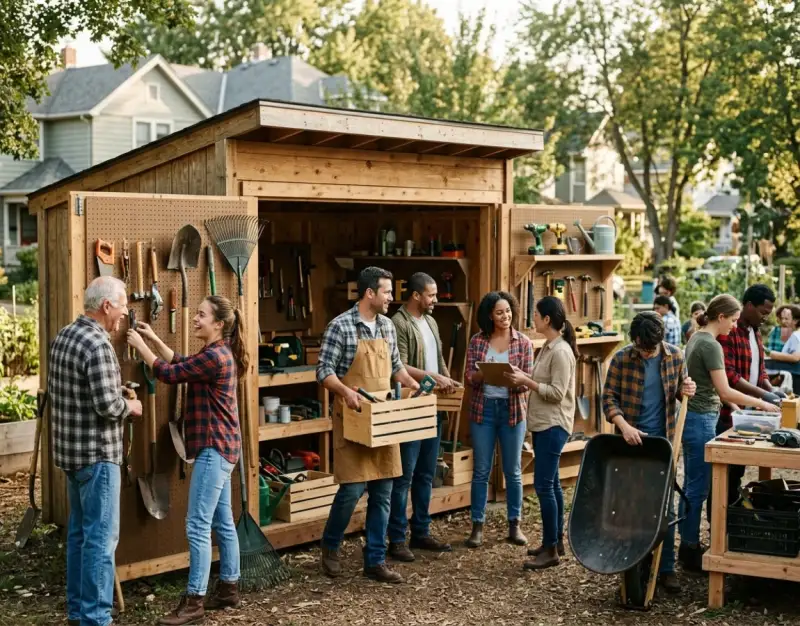
Picture this: It is a crisp Saturday morning, and Mrs. Higgins down the street needs to trim an overgrown maple branch before a seasonal storm hits. Two doors away, a young couple is desperately trying to assemble a nursery crib but lacks the precise hex-wrench sizing required. Meanwhile, sitting idle in dozens of backyard sheds and cluttered garages across the block are high-end pole saws, impact drivers, tile cutters, and pressure washers, gathering dust for 364 days of the year. This economic and ecological inefficiency is the silent tax of modern hyper-individualism. We live side-by-side yet isolated, each household duplicating exorbitant capital expenditures for goods utilized merely a fraction of one percent of their operational lifespan.
Enter the transformative power of neighborhood collaboration and the sharing economy. Building a tool-sharing library is far more than an exercise in efficient household budgeting or garage decluttering; it is a profound catalyst for social cohesion. When neighbors pool their material resources, they simultaneously construct invisible bridges of trust, resilience, and mutual aid. As communities increasingly grapple with economic volatility, supply chain disruptions, and the urgent imperatives of ecological sustainability, local sharing initiatives have graduated from fringe utopian experiments to essential civic infrastructure. This comprehensive guide serves as your definitive master blueprint, transforming abstract goodwill into a concrete, highly functional operational engine that will fortify your neighborhood for generations to come.
As part of our broader commitment to fostering resilient, hyper-connected neighborhoods at Caring Connections, we recognize that true sustainability begins at the hyper-local level. Whether you are exploring sustainable communities through initiatives like Fixing the Food Desert Crisis: How Urban Community Gardens Are Feeding the Future, or seeking to deepen interpersonal bonds through shared physical labor and resource exchange, establishing a communal tool library is one of the most powerful actions you can take. By following this exhaustive, step-by-step framework, you will navigate every logistical, legal, and interpersonal hurdle, ensuring your neighborhood tool library becomes a vibrant, enduring cornerstone of collective kindness.
Foundational Principles and Mechanics of Neighborhood Resource Sharing
Before driving a single nail or cataloging your first cordless drill, it is vital to understand the underlying architecture of community resource pools. At its core, a tool-sharing library operates on the principles of collective consumption and distributed stewardship. Unlike commercial tool rental agencies driven by profit margins, a neighborhood library thrives on reciprocity, social capital, and environmental stewardship. The mechanics balance supply acquisition, equitable access protocols, maintenance accountability, and interpersonal trust management.
To ensure long-term viability, organizers must grapple with the concept of the "commons"—a shared resource system subject to collective governance. Without clear operational parameters, shared resources can easily fall victim to neglect, loss, or hoarding. Therefore, the foundational phase requires establishing transparent bylaws, robust digital or analog tracking systems, and a culture of radical accountability. When participants view the library not as "someone else's stuff" but as an extension of their own property, theft and damage rates plummet dramatically.
Furthermore, the psychological shifts generated by tool-sharing cannot be overstated. When neighbors must communicate, negotiate, and coordinate to borrow and return equipment, they break through the modern epidemic of urban and suburban isolation. Much like The Art of Active Listening: How Deep Empathy Heals Loneliness and Rebuilds Trust, maintaining a shared community asset requires open dialogue, patience, and mutual respect. Every transaction at the tool library counter is an opportunity for human connection, transforming a mundane errand into a community-building touchpoint.
Step 1: Assessing Community Readiness and Mapping Stakeholders
Identifying the Core Organizing Committee
No sustainable community project succeeds through solitary effort. Attempting to launch a tool library single-handedly is a recipe for burnout. Your first operational imperative is to recruit a core organizing committee of three to five dedicated neighbors who possess complementary skill sets. Look for individuals with backgrounds in logistics, carpentry, basic legal or liability management, and community outreach. This steering committee will
Be the first to share a gentle reflection on this story.