
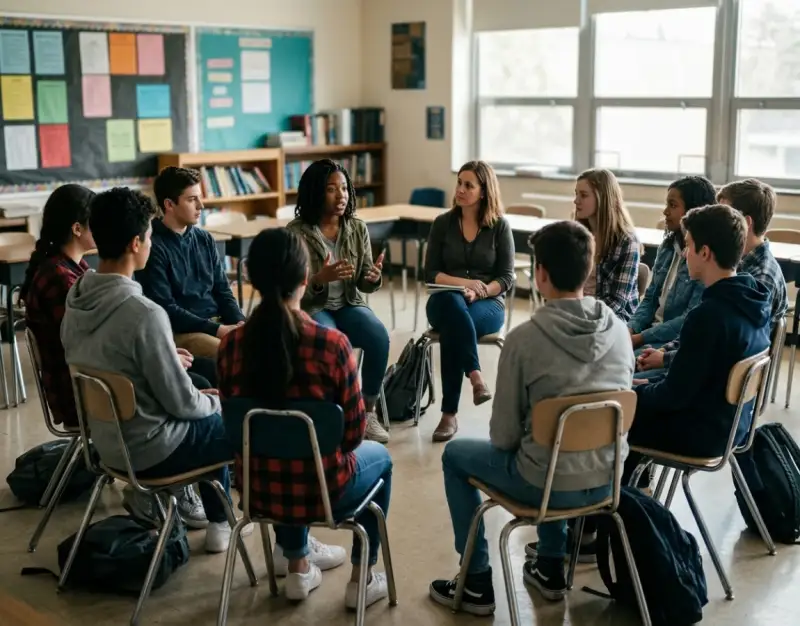
For decades, the standard operating procedure for student misbehavior in secondary and middle schools across the globe has been swift, punitive, and exclusionary: out-of-school suspensions. Intended to act as a deterrent, this zero-tolerance approach has instead quietly dismantled educational pathways, widened the achievement gap, and fueled a pipeline from school hallways directly into the juvenile justice system. Yet, within modern educational ecosystems, a profound cultural shift is underway. Across progressive school districts, young people are no longer just passive subjects of administrative rulings; they are stepping up as dynamic social change agents, spearheading the integration of restorative justice in schools to fundamentally rewrite how disciplinary infractions are handled.
This paradigm transformation represents much more than a mere shift in administrative policy. It is a comprehensive philosophical revolution that trades retribution for rehabilitation, isolation for community integration, and top-down authoritarianism for youth empowerment. As educators and policymakers grapple with the long-term psychological and academic fallout of exclusionary discipline, student-led circles, peer mediations, and accountability boards are proving that adolescents possess a profound capacity for empathy, fairness, and structural leadership. Much like the innovative community-driven infrastructure seen in stories highlighting sustainable transformations such as Global Goodness: The School Built entirely From Recycled Plastic Bottles, reinventing school discipline requires trusting local stakeholders—in this case, the students themselves—to design and maintain the systems that affect them most.
To fully grasp the mechanics of this movement, we must examine how student leadership can transform chaotic or punitive school environments into thriving incubators of emotional intelligence and civic responsibility. When implemented correctly, alternative discipline models do not let students off the hook; rather, they hold them rigorously accountable to the communities they have harmed while preserving their dignity and educational trajectory. In this exhaustive, deep-dive investigative guide, we will unpack the core principles, strategic blueprints, real-world case studies, common pitfalls, and future outlook of student-led restorative justice programs.
Foundational Principles and Mechanics of Restorative Discipline
Understanding the Shift from Retributive to Restorative Frameworks
Traditional disciplinary systems operate on a fundamentally retributive model: a rule has been broken, an authority figure determines guilt, and a punitive measure—such as a suspension, detention, or expulsion—is levied. This model asks three narrow questions: What rule was broken? Who broke it? What punishment do they deserve? While simple to administer, this approach ignores the root causes of behavior, breeds resentment, and alienates the student from the school community. In contrast, restorative justice flips the diagnostic lens entirely by asking an entirely different set of questions: Who was harmed? What are their needs? Whose obligation is it to put things right?
By shifting the focus from punishment to repair, schools create an environment where accountability is active rather than passive. Instead of sitting at home during a suspension—often unsupervised and falling further behind academically—a student who commits an infraction is brought into a structured dialogue with those affected. They must confront the human impact of their actions, listen to the grievances of peers or teachers, and collaboratively construct a binding restitution plan. This foundational shift transforms discipline from an act of exclusion into a powerful teaching moment, cultivating critical emotional competencies that students will carry into adulthood.
The Anatomy of Student-Led Restorative Circles
The operational core of any effective restorative program is the circle process. Unlike conventional mediation where an adult authority figure acts as an arbiter, student-led circles place trained youth at the helm as circle keepers and facilitators. These student leaders undergo rigorous professional development in active listening, non-violent communication, bias awareness, and trauma-informed care. Armed with a talking piece—an object that grants the holder the exclusive right to speak while others listen—these youth-led circles establish a safe, egalitarian psychological space where all participants are treated as equals.
During a restorative circle, the conversation moves through carefully sequenced phases: setting community guidelines, exploring the incident and its context without interruption, articulating the emotional and material impact on the community, and brainstorming actionable steps for repair. Because the facilitation is peer-led, participants frequently drop their defensive postures. Adolescents are naturally attuned to peer dynamics; hearing hard truths from a fellow student carries an authenticity and gravity that administrative lectures simply cannot replicate. This peer-to-peer accountability structure disarms defiance and accelerates authentic remorse and behavioral correction.
Core Terminology and Conceptual Pillars
To navigate the landscape of restorative practices successfully, educational leaders and student advocates must master a specific lexicon. Affective statements are concise, personal expressions of how a student's behavior impacts others, shifting the focus from moral condemnation to relational awareness (e.g., "I felt anxious when you disrupted the classroom discussion because I was trying to concentrate"). Harm restoration plans are specific, measurable agreements generated by the parties involved to repair the specific damage done, ranging from peer tutoring and community service to restorative art projects or formal apologies.
Another crucial pillar is relational safety, which recognizes that learning cannot occur without a deep sense of belonging and physical-emotional security. When schools prioritize relational safety over compliance-based control, minor behavioral disruptions are intercepted long before they escalate into suspendable offenses. By weaving these conceptual pillars into the daily fabric of school life, institutions build a resilient immune system against systemic dropouts, chronic absenteeism, and disciplinary disproportionality.
Building the Blueprint: A Step-by-Step Guide to Student-Led Restorative Systems
Phase 1: Cultivating Institutional Buy-In and Stakeholder Alignment
Launching a student-led restorative justice initiative requires meticulous groundwork. The very first step involves conducting an exhaustive school climate audit. Student leaders, in partnership with supportive faculty advisors, must analyze historical suspension data to identify systemic disparities, peak times for disciplinary infractions, and the specific behavioral pain points plaguing the campus. Armed with concrete data, this coalition can present an irrefutable business case to school boards, administrators, and union representatives who may initially view alternative discipline as "soft" on misbehavior.
To secure genuine buy-in, stakeholders must be invited to immersive restorative circles themselves. Administrators and teachers often resist change until they experience the profound emotional depth and efficacy of the circle process firsthand. By holding orientation circles for faculty, parent-teacher associations, and school boards, the organizing committee demystifies the practice. They frame restorative justice not as a replacement for accountability, but as a superior, evidence-based mechanism that delivers true, lasting accountability while protecting the school's instructional time and funding metrics.
Furthermore, establishing a clear memorandum of understanding (MOU) between student leaders, school administration, and district legal counsel is vital. This document explicitly outlines the scope of student-led interventions, defines which types of infractions qualify for peer mediation versus administrative intervention, and guarantees student privacy and confidentiality. Without this formal legal and administrative architecture, even the most enthusiastic student-led programs can easily be derailed by risk-averse district policies.
Phase 2: Recruiting and Training the Student Leadership Corps
The success of any student-led disciplinary framework hinges on the caliber, diversity, and training of its youth leaders. Recruitment must never be limited to straight-A student council members; instead, it must intentionally draw from a cross-section of the student body, including young people who have direct lived experience with the school's disciplinary system. These students often possess unmatched credibility, emotional intelligence, and street-smart authority that make them exceptionally effective peer mediators.
Training programs must be intensive, comprehensive, and ongoing. Rather than a one-time workshop, schools should implement a semester-long elective course or rigorous after-school fellowship dedicated to restorative leadership. The curriculum must cover trauma-informed de-escalation, cultural humility, microaggression identification, confidentiality ethics, and consensus-building techniques. Role-playing complex scenarios—such as mediating intense interpersonal conflicts, managing emotional outbursts, and navigating power imbalances between peers—prepares student leaders for the unpredictable realities of conflict resolution.
Just as resilience and determination are championed in profiles celebrating remarkable individuals, such as the inspiring journey documented in Voices of Change: The Blind Athlete Inspiring Others to Conquer Impossible Odds, student restorative leaders must be cultivated to overcome institutional skepticism and push past bureaucratic roadblocks with unwavering resolve. Certification ceremonies upon completion of the training validate their vital role, elevating peer mediators from informal helpers to recognized campus leaders.
Phase 3: Designing the Tiered Intervention and Referral Pathway
A functional student-led restorative program requires a transparent, tiered referral pathway that seamlessly integrates with existing school operations. Tier 1 encompasses universal classroom practices, where daily morning or advisory circles build community, establish shared norms, and prevent conflicts before they spark. When a minor behavioral disruption occurs, teachers or students initiate Tier 2 interventions, which involve peer-led mini-circles or informal restorative chats conducted during non-instructional periods.
For more serious infractions—such as verbal altercations, property damage, or chronic truancy—Tier 3 formal restorative conferences are triggered. In these high-stakes scenarios, a trained student facilitation team, accompanied by a supportive faculty sponsor, convenes the offender, the victim, and relevant community members. The referral mechanism must be accessible via a digital portal or physical intake form that allows teachers, counselors, or students themselves to request a circle. Crucially, administration must pledge that participation in a restorative conference diverts the student from out-of-school suspension, provided they successfully complete the agreed-upon harm repair plan.
Transparency is paramount during this phase. The entire school community—from freshmen to senior staff—must understand the precise criteria for restorative diversion. Flowcharts detailing the disciplinary pathway should be posted in classrooms and student handbooks, ensuring that students never feel that discipline is applied arbitrarily or unfairly.
Phase 4: Establishing Peer Accountability Boards and Restitution Protocols
At the heart of the alternative discipline model is the peer accountability board—a quasi-judicial body of trained students who review complex or repeat behavioral infractions. When a student is referred to the board, the proceedings are designed to be rigorous yet empathetic. The board reviews incident reports, listens to statements from all affected parties, and engages in deep questioning to uncover the underlying catalysts of the misbehavior, such as food insecurity, bullying, academic frustration, or domestic stress.
Once the facts and emotional impacts are fully aired, the board collaborates with the responsible student to craft a meaningful restitution contract. Unlike punitive suspensions that breed alienation, restitution contracts focus on skill-building and community reinvestment. Examples include designing an educational campaign against cyberbullying, maintaining the school garden, tutoring younger students struggling with literacy, or attending specialized emotional regulation workshops.
To ensure fairness and prevent abuse of power, every restitution contract must be reviewed and co-signed by a faculty advisor. Furthermore, the board implements a tracking mechanism where student mentors check in weekly with the participant to monitor progress, offer encouragement, and provide academic or emotional support until the contract is successfully fulfilled.
Phase 5: Continuous Monitoring, Data Evaluation, and Program Iteration
No social change initiative can survive without rigorous, transparent data collection and continuous evaluation. School administrators and student leaders must establish a dashboard to track key performance indicators, including suspension rates, chronic absenteeism, academic GPA improvements, campus climate survey scores, and recidivism rates among students who participate in restorative circles.
Data should be disaggregated by race, gender, socioeconomic status, and special education classification to ensure that the alternative discipline model is actively closing achievement and discipline gaps rather than inadvertently replicating them. Monthly review meetings between the student leadership corps and school administration allow for rapid course corrections. If data reveals that a specific grade level or classroom is underutilizing restorative pathways, targeted training and outreach can be deployed immediately.
Public accountability is equally essential. Publishing an annual Restorative Justice Impact Report written and presented by student leaders fosters immense community pride and transparency. It demonstrates to parents, taxpayers, and district officials that student-led alternatives to suspension are not only ethically superior but also yield measurable improvements in school safety and academic performance.
Real-World Case Studies: Successes, Failures, and Hard-Won Lessons
Case Study A: The Urban High School Transformation
In 2021, Roosevelt High School—a sprawling urban institution plagued by high rates of fighting, chronic absenteeism, and out-of-school suspensions—decided to pilot a student-led restorative justice initiative funded by a federal grant and championed by a coalition of passionate juniors and seniors. Initially, the faculty was deeply resistant. Teachers accustomed to the traditional removal model feared that eliminating suspensions would result in a lawless campus where disruptive students faced zero consequences.
To address this, the school launched a comprehensive pilot in the freshman academy. A core group of 25 student leaders, diverse in academic standing and disciplinary history, underwent intensive training in circle facilitation. When a major physical altercation broke out between two freshmen in October, instead of instantly issuing mandatory 10-day out-of-school suspensions, the administration diverted the students to a peer-led restorative conference facilitated by two trained senior leaders.
The results were transformative. Over a grueling three-hour evening circle, the two combatants broke down their underlying territorial grievances, understood the terror their fight caused their classmates, and agreed to a rigorous harm-repair plan that included peer mediation training and joint restorative presentations to their advisory classes. Neither student was suspended, neither re-offended, and both saw their grades improve by a full letter grade by the end of the semester. Within two years, Roosevelt High School recorded a staggering 68% drop in total out-of-school suspensions and a 24% increase in standardized test proficiency.
Case Study B: The Pitfalls of Superficial Implementation
Conversely, the cautionary tale of Oakridge Middle School highlights the catastrophic risks of implementing restorative justice as a superficial "box-ticking" exercise without genuine institutional commitment. In an effort to look progressive, Oakridge administration mandated that teachers hold "restorative circles" every Monday morning without providing adequate training to staff or empowering student leaders.
Teachers, overwhelmed by crowded classrooms and lacking facilitation skills, treated the circles as mandatory chore sessions. Students quickly picked up on the insincerity, treating the sessions as a joke or an opportunity to mock the process. Furthermore, when serious behavioral infractions—such as weapon possession or severe targeted bullying—occurred, administrators attempted to handle them using amateurish peer circles without involving law enforcement or specialized crisis interventionists, leading to compromised campus safety.
Within one academic year, teacher burnout spiked, student chaos escalated due to a lack of clear boundaries, and panicked parents successfully lobbied the school board to scrap the program entirely, reverting to strict zero-tolerance suspensions. The core lesson from Oakridge is unequivocal: restorative justice cannot survive as an administrative fad. It requires deep ideological buy-in, rigorous training, robust student leadership, and an absolute commitment to structural fidelity.
Critical Mistakes in Restorative Discipline and How to Avoid Them
Transitioning from punitive suspensions to student-led restorative justice is a complex sociological journey fraught with hidden traps. Recognizing and avoiding these critical missteps is essential for long-term programmatic survival.
- Mistake 1: Coercing Forced Apologies and Artificial Remorse. Rushing students into a circle and demanding an immediate, scripted apology destroys the psychological safety of the process.
Countermeasure: Prioritize authentic emotional processing. If a student is not yet ready to take accountability, pause the process and allow time for cooling down, ensuring that restorative work is voluntary, reflective, and deeply felt. - Mistake 2: Failing to Address Power Dynamics and Systemic Biases. Ignoring existing racial, gender, or social hierarchies within student mediation teams can lead to peer facilitators inadvertently bullying or silencing vulnerable participants.
Countermeasure: Diversify leadership corps, institute mandatory anti-bias training, and always pair student facilitators with experienced, culturally responsive faculty supervisors. - Mistake 3: Treating Restorative Justice as a Soft "Get Out of Jail Free" Card. Eliminating suspensions without replacing them with rigorous, demanding accountability structures creates a vacuum where misbehavior goes unchecked.
Countermeasure: Emphasize that restorative justice is far harder than a suspension. Craft demanding, meaningful harm-repair contracts that require active community service, skill-building, and behavioral modification. - Mistake 4: Excluding Teachers and Staff from the Restorative Culture. Focusing exclusively on student behavior while leaving punitive, authoritarian teacher practices unchanged creates an untenable institutional cognitive dissonance.
Countermeasure: Mandate restorative professional development for all faculty and staff. Teachers must model restorative communication in their classrooms daily for the culture to take root. - Mistake 5: Neglecting Longitudinal Data and Programmatic Iteration. Operating on anecdotal success stories without tracking hard disciplinary, academic, and attendance data leaves the program vulnerable to political pushback.
Countermeasure: Build a robust data-tracking dashboard from day one, disaggregating metrics by demographics and publishing annual impact reports to maintain stakeholder trust.
Comprehensive Comparison Table: Traditional Suspension vs. Student-Led Restorative Justice
| Metric / Dimension | Traditional Out-of-School Suspension | Student-Led Restorative Justice |
|---|---|---|
| Core Philosophy | Retributive, punitive, and exclusionary; focuses on isolating the offender. | Rehabilitative, relational, and inclusive; focuses on repairing harm and community building. |
| Student Role | Passive recipient of administrative punishment; isolated from peers. | Active social change agent, circle keeper, peer mediator, and accountability leader. |
| Impact on Academics | Interrupts instructional time, lowers GPA, and drastically increases dropout risk. | Preserves instructional time, supports academic recovery, and improves engagement. |
| Disciplinary Equity | Historically disproportionate, heavily penalizing students of color and special education youth. | Centers equity, utilizes cultural humility, and actively closes racial discipline gaps. |
| Long-Term Recidivism | High rates of repeat offenses; feeds the school-to-prison pipeline. | Significantly reduced recidivism through deep emotional growth and skill-building. |
Frequently Asked Questions (FAQ)
What happens when a student refuses to participate in a restorative circle?
Participation in restorative justice must be voluntary to be psychologically authentic, but opting out does not mean escaping accountability. If a student refuses to engage in a peer-led circle or rejects a harm-repair contract, schools must have a transparent escalation protocol in place. This may involve a meeting with school administration, parents, and support counselors to determine alternative interventions, such as intensive counseling, guided independent study, or specialized behavioral support plans. The key is ensuring that refusal does not automatically default to exclusion, but rather triggers a higher level of targeted multidisciplinary support.
How do you ensure student confidentiality during sensitive peer mediations?
Confidentiality is the bedrock of trust in any restorative program. Before entering the leadership corps, every student facilitator must sign a binding confidentiality agreement detailing strict ethical boundaries regarding peer disclosures. Incidents involving immediate physical danger, abuse, weapons, or illegal activities are explicitly exempted and must be reported immediately to designated administrators or school social workers. For standard interpersonal conflicts, student facilitators are trained to treat all shared personal details with the utmost discretion, ensuring that peer circles remain safe sanctuaries for vulnerability.
Are student-led restorative practices legally permissible under school district policies?
Yes, but implementation requires careful navigation of local, state, and federal education codes. Many progressive school districts have officially embedded restorative justice mandates into their student codes of conduct. However, to ensure full legal compliance, schools must establish a formal Memorandum of Understanding (MOU) between student leaders, school administration, and district legal counsel. This document outlines the exact scope of student authority, ensures adult supervision and oversight, and guarantees that student-led interventions operate within established due process frameworks.
How can schools fund a comprehensive student-led restorative justice program?
Funding can be sourced through multiple innovative channels, including federal Title funds earmarked for school climate improvement, state restorative justice grants, local philanthropic foundations, and corporate partnerships similar to the collaborative welfare initiatives explored in Collaborative Welfare: Tech Giants and Local Nonprofits Team Up to Bridge the Digital Divide. Furthermore, schools can reallocate portions of their existing security and disciplinary budgets toward peer leadership training, restorative coordinator stipends, and circle materials, proving that investing in alternative discipline is both financially and ethically sound.
Do student-led restorative systems compromise school safety or order?
Extensive empirical research demonstrates the exact opposite: when implemented with high fidelity, restorative practices significantly enhance campus safety and order. Punitive suspensions often mask problems by sweeping troubled students out of sight, leaving underlying tensions to fester and erupt later. Restorative justice tackles root causes, de-escalates conflicts before they turn violent, and builds deep relational trust across the student body. Schools with robust restorative programs consistently report calmer hallways, lower rates of bullying, and vastly improved teacher-student relationships.
Strategic Roadmap and Final Takeaway
As we look toward the next two to five years, the educational landscape is poised at a critical crossroads. The old paradigms of zero-tolerance suspensions and exclusionary discipline are collapsing under the weight of their own systemic failures. In their place, youth-led restorative justice is rapidly emerging as the gold standard for progressive educational institutions. As upcoming generations demand greater autonomy, equity, and voice in their institutions, empowering students to act as social change agents within their own hallways is no longer a radical experiment—it is an absolute necessity.
The roadmap forward demands courage from educational leaders and unwavering investment in youth leadership. School districts must move beyond surface-level compliance and commit to deep, systemic culture shifts. By funding comprehensive training programs, establishing transparent tiered pathways, embracing rigorous data accountability, and trusting young people to hold their peers accountable with empathy and wisdom, we can dismantle the school-to-prison pipeline once and for all. The future of education belongs to communities that choose healing over punishment, dialogue over exclusion, and youth empowerment over authoritarian control.
Be the first to share a gentle reflection on this story.